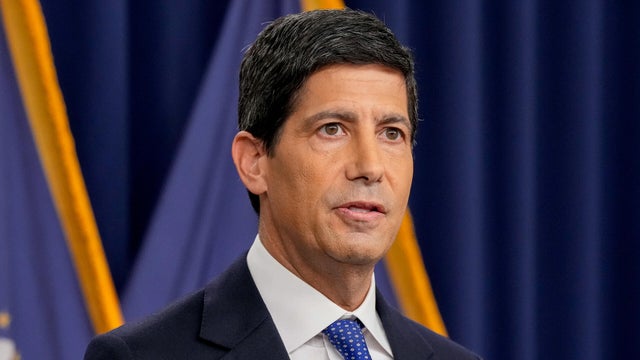
The Fed’s Aggressive Pivot: What the New Rate Hike Cycle Reveals About Trump, Kevin Warsh, and the Inflation Shock
The Federal Reserve’s decisive interest rate hike has sent shockwaves through global financial markets, signaling a profound shift in monetary policy that stretches far beyond mere basis points. While the immediate market reaction was characterized by a sharp spike in volatility, the deeper narrative reveals a complex intersection of political pressure, institutional credibility, and a battle over the future of American economic policy. This pivotal rate decision does not merely target consumer prices; it exposes the growing influence of Donald Trump’s economic circle, the resurgence of hawkish monetary theorists like Kevin Warsh, and the Fed��s desperate scramble to regain control of the inflation narrative.
The Battle for Credibility: Why the Fed Had to Act
For months, critics have argued that the central bank was "behind the curve" on inflation. By delivering a robust interest rate hike, Federal Reserve Chairman Jerome Powell and the Federal Open Market Committee (FOMC) have signaled a commitment to restoring their inflation-fighting credentials. However, this hawkish turn has left Wall Street distinctly edgy. Investors, accustomed to cheap capital and a highly accommodative central bank, are now facing the reality of a sustained tightening cycle.
The move is a direct response to persistent supply-chain disruptions, tight labor markets, and wage growth that threathens to entrench inflation. By raising the cost of borrowing, the Fed aims to cool economic demand. Yet, the risk of a policy misstep—cooling the economy so rapidly that it triggers a recession—remains exceptionally high, keeping equity markets on a knife-edge.
The Shadow of Kevin Warsh: A Return to Monetary Orthodoxy

To understand the ideological undercurrents of this rate hike, one must look to Kevin Warsh, the former Federal Reserve Governor whose name has once again risen to the top of economic circles. Warsh, a long-time critic of prolonged quantitative easing (QE) and zero-interest-rate policies, has frequently warned that the Fed's bloated balance sheet and delayed reaction to rising prices would culminate in a severe inflation shock.
This recent rate hike is, in many ways, a vindication of the "Warsh doctrine." Warsh’s economic philosophy advocates for a leaner, more proactive central bank that prioritizes price stability over market appeasement. For years, Warsh argued that the Fed was overly sensitive to Wall Street's tantrums. Today’s aggressive rate-hiking path suggests that the current Fed leadership has finally adopted this hawkish stance, realizing that protecting institutional credibility is more critical than propping up stock valuations.
The Trump Factor: Fiscal Ambition Meets Monetary Reality
The political dimensions of this rate hike are deeply tied to former President Donald Trump and his economic platform. Trump’s stated economic policies—including sweeping tariffs on imports, tax cuts, and deregulation—are widely viewed by economists as highly stimulative and potentially inflationary.
This creates a fundamental friction point between the White House and the Eccles Building:
- The Tariff Dilemma: Tariffs naturally push consumer prices higher. If Trump implements aggressive trade barriers, the Fed may be forced to raise interest rates even higher to combat the resulting inflation, effectively neutralizing Trump's growth initiatives.
- Political Jawboning: Trump has historically been a vocal critic of high interest rates, frequently demanding that the Fed keep rates low to fuel stock market gains. A hawkish Fed sets up a direct confrontation over economic control.
- The Battle for Fed Leadership: Kevin Warsh remains a highly favored candidate in conservative circles to lead the Federal Reserve in a future administration. A Warsh-led Fed would likely enforce a strict, rules-based monetary policy, resisting political pressure to monetize federal deficits.
Macroeconomic Indicators at a Glance
The following table outlines key economic indicators that have driven the Federal Reserve's hawkish pivot and how they compare to historical averages:
| Economic Indicator | Pre-Hike Level | Post-Hike Target Range | Strategic Outlook |
|---|---|---|---|
| Core CPI Inflation | Elevated (Above 4.0%) | Targeting 2.0% | Remains sticky; requires sustained restrictive policy to cool demand. |
| Unemployment Rate | Historically Low (~3.7%) | Projected rise to 4.1% | The Fed expects labor market softening as borrowing costs squeeze corporate margins. |
| Fed Funds Rate | Highly Accommodative | Restrictive Territory | Marks the end of the "easy money" era, forcing a repricing of risk assets globally. |
| U.S. 10-Year Treasury | Yields surging | Expected stabilization | Reflects market expectations of a longer, higher interest rate environment. |
Investor Implications: Navigating the "Higher for Longer" Era
For global investors, this hawkish turn represents a tectonic shift in portfolio management. The traditional 60/40 portfolio is being challenged, and cash is no longer just a defensive asset but a competitive yield-generator. Real estate, highly sensitive to mortgage rates, is facing a severe affordability squeeze, while corporate debt refinancing costs are poised to rise sharply over the next 18 months.
However, the Fed’s aggressive stance also offers a silver lining. By demonstrating a willingness to break inflation, the central bank reduces the risk of long-term stagflation—a scenario that would be far more damaging to corporate earnings and equity valuations than a standard, controlled economic slowdown.
Future Outlook: Will the Hawk Fly Too Close to the Sun?
Looking ahead, the Federal Reserve’s path is fraught with peril. If inflation proves resistant to these initial hikes, the Fed will be forced to push rates deeper into restrictive territory, increasing the probability of a hard landing. Conversely, if the Fed pauses prematurely due to political pressure or market panic, it risks unanchoring inflation expectations permanently.
Ultimately, this rate hike reveals that the Fed has chosen its side in the great economic debate. It has prioritized price stability over market comfort, aligning closely with the hawkish warnings of Kevin Warsh, and setting up an inevitable, high-stakes collision course with the expansionist fiscal ambitions of a potential second Trump term.
Frequently Asked Questions (FAQ)
1. Why does Kevin Warsh’s perspective matter during this Fed rate hike cycle?
Kevin Warsh represents the hawkish wing of monetary policy, which has long argued that the Fed’s prolonged easy-money policies paved the way for current inflation. His rising influence and potential future nomination as Fed Chair indicate that the era of aggressive central bank intervention and massive balance sheets may be permanently winding down in favor of strict price stability.
2. How does Trump’s economic platform complicate the Fed's inflation fight?
Donald Trump’s proposed policies, such as sweeping tariffs and tax cuts, are inherently stimulative and can drive prices higher. A hawkish Federal Reserve must raise interest rates to counter these inflationary pressures, creating a structural conflict between the administration's fiscal goals and the central bank's monetary mandate.