Executive Takeaways
- The Paradigm Shift: Artificial intelligence is no longer just an administrative efficiency tool or a defensive shield; it has evolved into an automated zero-day discovery and exploitation engine capable of weaponizing legacy government code at machine speed.
- Regulatory Pressure Points: Federal mandates, including stringent executive orders on AI safety, are forcing Chief Information Officers (CIOs) and Chief Information Security Officers (CISOs) in the public sector to reallocate capital toward real-time Large Language Model (LLM) security and automated vulnerability hunting.
- Economic & Operational Fallout: Public sector infrastructure scalability is being tested as agencies attempt to balance digital modernization with the stark reality of asymmetric cyber warfare, threatening enterprise ROI and operational resilience across civil and defense agencies.
- Urgent Strategic Action: Organizations must transition from reactive patching to proactive, AI-driven threat intelligence frameworks to prevent systemic compromise of critical national infrastructure.
WASHINGTON — In the dimly lit corridors of federal cyber command centers and state-level technology agencies, a quiet realization has taken hold: the rules of engagement in digital warfare have fundamentally broken. For decades, the asymmetry of cyber attacks favored the defender in terms of resource visibility, even if attackers held the initiative of surprise. Today, that calculus is being obliterated by generative artificial intelligence and machine learning models capable of discovering, weaponizing, and executing zero-day exploits faster than human security analysts can parse a diagnostic log.
According to threat intelligence briefings and recent telemetry released by cybersecurity leader Trend Micro, the intersection of advanced AI architectures and vulnerability research has birthed what experts are calling the "zero-day machine." For public sector organizations—whose legacy systems, sprawling contractor ecosystems, and citizen-facing portals present an irresistible digital surface area for nation-state actors and advanced persistent threat (APT) groups—this development represents an unprecedented structural crisis.
The Catalytic Shift: From Human Discovery to Algorithmic Exploitation
Test Our Free AI & Tech Utilities Suite
Calculate LLM API token costs, analyze article dwell-time, or simulate tech DCA returns.
Historically, finding a zero-day vulnerability—a flaw unknown to the vendor or public—required specialized human researchers spending weeks or months combing through binary code, fuzzing inputs, and constructing complex proof-of-concept exploits. This friction acted as a natural rate limiter on the velocity of high-impact cyber attacks.
That friction has evaporated. Modern LLMs and specialized neural networks trained on vast corpuses of source code, vulnerability databases, and protocol specifications can now analyze software repositories at incomprehensible speeds. These systems do not merely assist human developers; they autonomously identify logical flaws, race conditions, and memory corruption bugs in critical infrastructure software, instantly drafting functional exploit payloads.
For Chief Information Officers across federal, state, and municipal governments, this technological leap shatters traditional risk mitigation models. Public sector agencies, historically hamstrung by bureaucratic procurement cycles, legacy debt, and talent acquisition shortages, now face adversaries wielding automated exploitation suites. As underscored by recent federal policy directives, including comprehensive AI executive orders, the race to secure government LLMs and underlying cloud compute architectures is no longer a matter of IT compliance—it is an existential question of national security.
Anatomy of the Threat: Inside the AI-Powered Vulnerability Factory
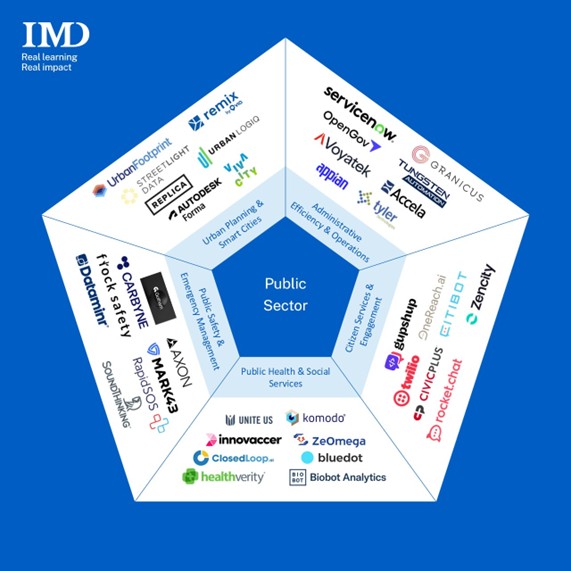
To understand why public sector entities are uniquely vulnerable, one must examine how threat actors operationalize AI for vulnerability research. Security researchers monitoring global threat landscapes have identified a tripartite framework being deployed by sophisticated adversaries:
- Automated Code Auditing: Adversarial AI models ingest millions of lines of open-source and proprietary code utilized within government supply chains, flagging subtle vulnerabilities that evade traditional static application security testing (SAST) tools.
- Synthetic Payload Generation: Once a weakness is identified, reinforcement learning models iteratively test exploitation variations in sandboxed environments, refining the attack vector until it achieves near-100% reliability against target configurations.
- Evasion and Polymorphism: AI-generated malware dynamically rewrites its own codebase during execution, altering its digital signature to bypass conventional endpoint detection and response (EDR) agents deployed across government workstations.
This automated capability compresses the vulnerability lifecycle from months to mere minutes. By the time a vendor or agency patches a known issue, auxiliary variants synthesized by machine learning algorithms are already probing secondary perimeters.
| Metric / Dimension | Traditional Cyber Threat Model | AI-Driven Zero-Day Machine Era |
|---|---|---|
| Vulnerability Discovery Velocity | Weeks to months (Human-led research) | Minutes to hours (Algorithmic fuzzing & LLM analysis) |
| Exploit Customization | Manual scripting and localized tuning | Automated polymorphism and real-time adaptation |
| Defense Paradigm | Signature-based detection & periodic patching | Continuous behavioral monitoring & AI-augmented hunting |
| Capital Allocation Focus | Perimeter security and compliance checklists | Infrastructure scalability, LLM guardrails, and zero-trust |
Industry & Market Implications: Capital Allocation in the Age of Algorithmic Warfare
The transformation of AI into a zero-day machine sends shockwaves far beyond government IT departments, fundamentally reshaping enterprise software markets, insurance valuations, and federal procurement budgets.
On the vendor side, cybersecurity firms specializing in AI-driven threat hunting and automated red teaming are experiencing exponential valuation multiples. Companies that can successfully operationalize machine learning to defend against machine-speed attacks are capturing oversized market share. Conversely, legacy software vendors whose codebases are riddled with technical debt face severe reputational and financial liability as government procurement officers demand rigorous software bill of materials (SBOM) transparency and verifiable resilience against AI-assisted fuzzing.
From a capital allocation perspective, public sector budgetary planners are being forced to pivot funds away from administrative digitization toward aggressive risk mitigation frameworks. The economic cost of a successful zero-day breach on critical government infrastructure—spanning compromised citizen databases, disrupted energy grids, and paralyzed transit networks—dwarfs the upfront capital required for robust cloud compute architecture and advanced LLM security safeguards.
Frequently Asked Questions (People Also Ask)
What is an AI-powered zero-day machine?
An AI-powered zero-day machine refers to the use of advanced machine learning models, Large Language Models (LLMs), and automated testing frameworks to discover software vulnerabilities and synthesize functional exploits at machine speed, drastically bypassing human research timelines.
Why are public sector organizations specifically targeted by AI-driven cyber threats?
Public sector organizations manage vast amounts of sensitive citizen data, operate extensive legacy IT infrastructure that is difficult to patch quickly, and maintain complex supply chain networks with third-party contractors, presenting high-value targets for state-sponsored threat actors.
How can government agencies secure their Large Language Models (LLMs) against these attacks?
Agencies must implement strict LLM security protocols, including continuous red-teaming, rigorous input sanitization, deployment of robust guardrails against prompt injection, and continuous behavioral monitoring of AI systems integrated into administrative and operational workflows.
What role do federal executive orders play in mitigating AI cybersecurity risks?
Federal executive orders establish mandatory security baselines, procurement standards, and transparency requirements for AI technologies deployed across government agencies, ensuring that security is prioritized alongside innovation during capital allocation and infrastructure development.
Future Outlook: Navigating the Next Horizon of Cyber Resilience
As we look toward the remainder of the decade, the trajectory of artificial intelligence in cyber operations points toward complete automation of both offense and defense. The concept of human-in-the-loop security operations is reaching its operational limits; future-proof organizations will be those that successfully transition to autonomous, AI-driven cyber defense grids capable of predicting and neutralizing zero-day exploits before execution.
For public sector leaders, the mandate is clear. Clinging to compliance-driven security checklists is no longer a viable defense strategy. Agency executives must champion aggressive infrastructure modernization, foster public-private intelligence sharing, and invest heavily in the secure deployment of AI tools. In an era where algorithms write the exploits, only algorithms can guard the gates.