Executive Takeaways
- Critical Threat Vector: A newly uncovered zero-day vulnerability targeting Cisco Secure Firewall Management Center (FMC) has triggered an urgent Cybersecurity and Infrastructure Security Agency (CISA) warning, impacting global enterprise perimeter security.
- Capital & Risk Impact: Chief Information Security Officers (CISOs) are facing emergency patch cycles, forcing sudden reallocations of IT capital expenditure to maintain regulatory compliance and prevent catastrophic data exfiltration.
- Market & Valuation Repercussions: Institutional investors are closely monitoring infrastructure scalability and vendor accountability, as enterprise buyers re-evaluate risk mitigation strategies and hardware-software supply chain dependencies.
- Remediation Urgency: Unlike standard advisory bulletins, this active exploitation forces organizations to balance operational continuity with immediate patching protocols to preserve market liquidity and corporate reputation.
Global enterprise infrastructure is facing an unprecedented perimeter security crisis following the disclosure of a critical zero-day vulnerability targeting Cisco Systems hardware. The exploit, which directly threatens the Cisco Secure Firewall Management Center (FMC), has forced the Cybersecurity and Infrastructure Security Agency (CISA) to issue emergency directives. For chief technology officers, chief information security officers, and enterprise risk committees, the discovery disrupts routine risk mitigation frameworks, exposing vulnerabilities in core cloud compute architecture and corporate networks.
As telemetry data from international incident response firms indicates active exploitation in the wild, financial markets and technology desks are assessing the fallout. Enterprise IT budgets are absorbing unexpected shocks as organizations scramble to deploy emergency patches. This deep-dive investigative report examines the genesis of the zero-day flaw, the technical architecture at risk, the broader implications for corporate risk mitigation, and the financial ramifications for enterprise capital allocation.
The Anatomy of the Zero-Day Exploitation
Test Our Free AI & Tech Utilities Suite
Calculate LLM API token costs, analyze article dwell-time, or simulate tech DCA returns.
The unfolding security crisis centers on the Cisco Secure Firewall Management Center, the administrative heartbeat of Cisco’s enterprise security portfolio. FMC acts as the centralized management console for firewall deployment, VPN configuration, policy enforcement, and real-time threat defense across distributed corporate footprints. When a zero-day vulnerability compromises such an administrative nexus, the blast radius encompasses entire enterprise networks.
According to preliminary intelligence disclosed by federal security agencies and threat intelligence analysts, the vulnerability allows unauthenticated remote attackers to execute arbitrary code or bypass authentication protocols within the management interface. Because the FMC often resides within a privileged segment of the network architecture—frequently accessible via secured VPNs or dedicated management VLANs—compromise of this single control point grants threat actors lateral movement capabilities across the entire enterprise stack.
The discovery underscores a persistent vulnerability in modern IT ecosystems: the paradox of centralized management. While consolidated control planes optimize administrative overhead and enhance operational efficiency, they simultaneously create high-value single points of failure. For malicious actors, targeting the management plane yields maximum leverage, bypassing localized endpoint protection and deep packet inspection systems.
Regulatory Scrutiny and CISA’s Emergency Response
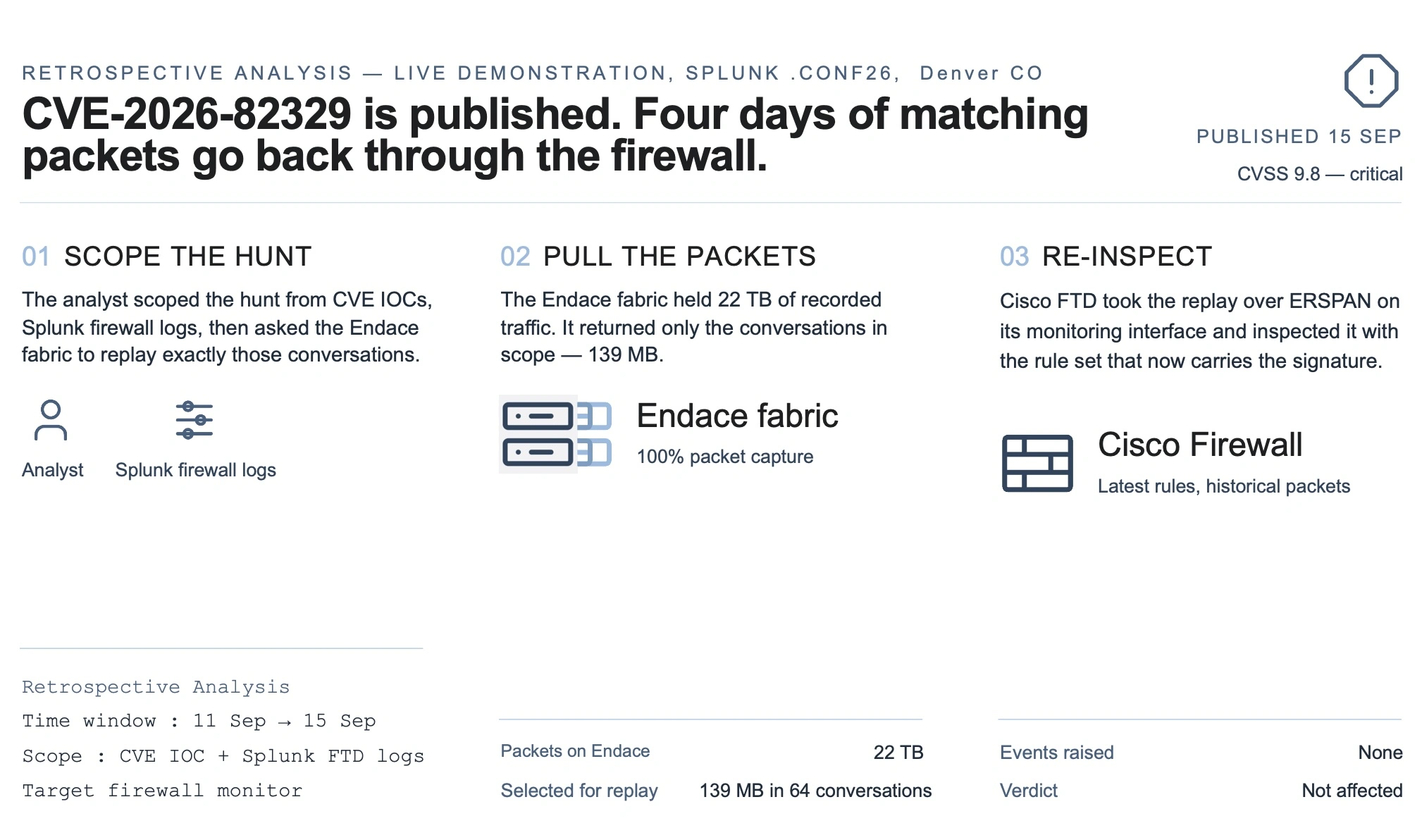
The intervention of CISA marks a critical inflection point for the incident. Federal directives mandate immediate remediation steps for federal civilian executive branch (FCEB) agencies, serving as a de facto compliance benchmark for Fortune 500 enterprises, financial institutions, and critical infrastructure providers.
Regulatory compliance frameworks—including the Securities and Exchange Commission’s (SEC) stringent cybersecurity disclosure rules—place immense pressure on publicly traded corporations to communicate material cyber risks transparently and expeditiously. A zero-day exploit impacting foundational firewall infrastructure directly engages executive accountability. Boards of directors are demanding real-time risk assessments from their engineering leadership, questioning whether existing cloud compute architecture and network perimeters remain resilient against sophisticated state-sponsored and financially motivated syndicates.
Furthermore, failure to comply with CISA emergency directives or maintain adequate regulatory compliance can expose corporations to severe legal liabilities, shareholder derivative lawsuits, and regulatory penalties. Consequently, CISOs are authorized to bypass standard change-management freezes, deploying emergency patches outside normal maintenance windows to safeguard institutional balance sheets.
Verified Data and Technical Metrics Breakdown
To contextualize the scale of the Cisco zero-day incident, the following comparative matrix outlines key operational metrics, response timelines, and technical parameters:
| Metric / Parameter | Pre-Incident Baseline | Current Status (Post-Disclosure) | Enterprise Strategic Impact |
|---|---|---|---|
| Advisory Source | Standard Vendor Patch Bulletins | CISA Emergency Directive & Wire Alerts | Accelerated escalation to executive boards. |
| Target Component | Secure Firewall Management Center (FMC) | Active Zero-Day Exploitation Vector | Compromise of centralized administrative plane. |
| Patch Deployment SLA | 14 to 30 Days (Standard Cycle) | 24 to 72 Hours (Emergency Protocol) | Operational disruption and overtime labor costs. |
| Financial Risk Exposure | Projected Annual Cybersecurity Budget | Unplanned Capital Allocation & Consulting Fees | Temporary compression of quarterly operating margins. |
Industry & Market Implications: Winners and Losers
Major cybersecurity incidents inevitably reshape market dynamics, influencing vendor valuation multiples, competitive positioning, and enterprise capital allocation strategies. The Cisco firewall zero-day is no exception, creating ripple effects across the enterprise technology landscape.
Who Wins: Specialized Remediation and Alternative Vendors
In the wake of infrastructure-level vulnerabilities, alternative network security vendors and managed detection and response (MDR) providers often experience an influx of enterprise interest. Organizations actively seeking architectural diversification—moving away from single-vendor monolithic deployments toward multi-vendor "defense-in-depth" models—drive demand for competing firewall and cloud security platforms. Furthermore, incident response retainers and specialized vulnerability assessment firms witness immediate surges in billable hours and contract renewals as enterprises rush to audit their perimeters.
Who Loses: Short-Term Vendor Sentiment and IT Efficiency
Cisco Systems faces near-term reputational scrutiny and brand headwinds. While enterprise-grade technology providers routinely encounter sophisticated threat actors, high-profile zero-day exploits can temporarily weigh on investor sentiment and valuation multiples. More broadly, corporate IT departments bear the operational brunt. Engineers and systems administrators must divert focus from revenue-generating digital transformation initiatives to emergency patch deployment, degrading operational velocity and compressing IT infrastructure scalability projects.
People Also Ask (FAQ)
Frequently Asked Questions
What is the exact Cisco product affected by the new zero-day vulnerability?
The primary threat targets the Cisco Secure Firewall Management Center (FMC), the centralized administrative console used to manage security policies, threat defense, and VPN configurations across enterprise firewall deployments.
How are enterprise organizations responding to the CISA warning?
Organizations are bypassing standard maintenance windows to execute emergency patch deployments, conducting comprehensive log audits for signs of lateral movement, and temporarily restricting administrative access to FMC interfaces via strict IP whitelisting and zero-trust network access (ZTNA) policies.
What are the financial and operational implications for corporate IT budgets?
The incident forces an unplanned reallocation of enterprise capital. Budgets are diverted toward emergency consulting fees, overtime labor, and expedited risk mitigation tools, temporarily impacting IT efficiency and operational margins.
Are cloud-based firewall deployments equally vulnerable?
Vulnerability scope depends on whether instances are self-managed virtual editions or cloud-native managed services. Organizations utilizing legacy on-premises or self-hosted virtual FMC instances face the highest immediate remediation burden, while cloud architectures benefit from automated vendor-managed orchestration where available.
Future Outlook and Strategic Milestones to Watch
As the incident lifecycle evolves, enterprise leadership must monitor several critical milestones to safeguard their digital assets and ensure long-term risk mitigation:
- Vendor Patch Maturity: Verification of subsequent firmware releases from Cisco to ensure that initial emergency patches do not introduce regression bugs or performance bottlenecks in high-throughput enterprise environments.
- Federal Enforcement Metrics: Tracking CISA follow-up audits and potential updates to emergency directives, which will set compliance precedents for government contractors and regulated financial institutions.
- <Threat Intelligence Indicators: Monitoring indicators of compromise (IoCs) shared by cybersecurity information sharing and analysis centers (ISACs) to detect persistent threat actor dwell time within compromised enterprise networks.
- Strategic Architecture Shifts: Accelerating transitions toward decentralized, zero-trust network architectures that minimize reliance on centralized management consoles, ensuring that future perimeter breaches remain strictly isolated.
Ultimately, the Cisco firewall zero-day serves as a stark reminder of the fragile equilibrium underpinning modern digital enterprise. As threat actors leverage sophisticated exploits against core infrastructure, corporate governance must treat cybersecurity not merely as an IT operational checkbox, but as a foundational pillar of enterprise valuation, risk management, and market liquidity.