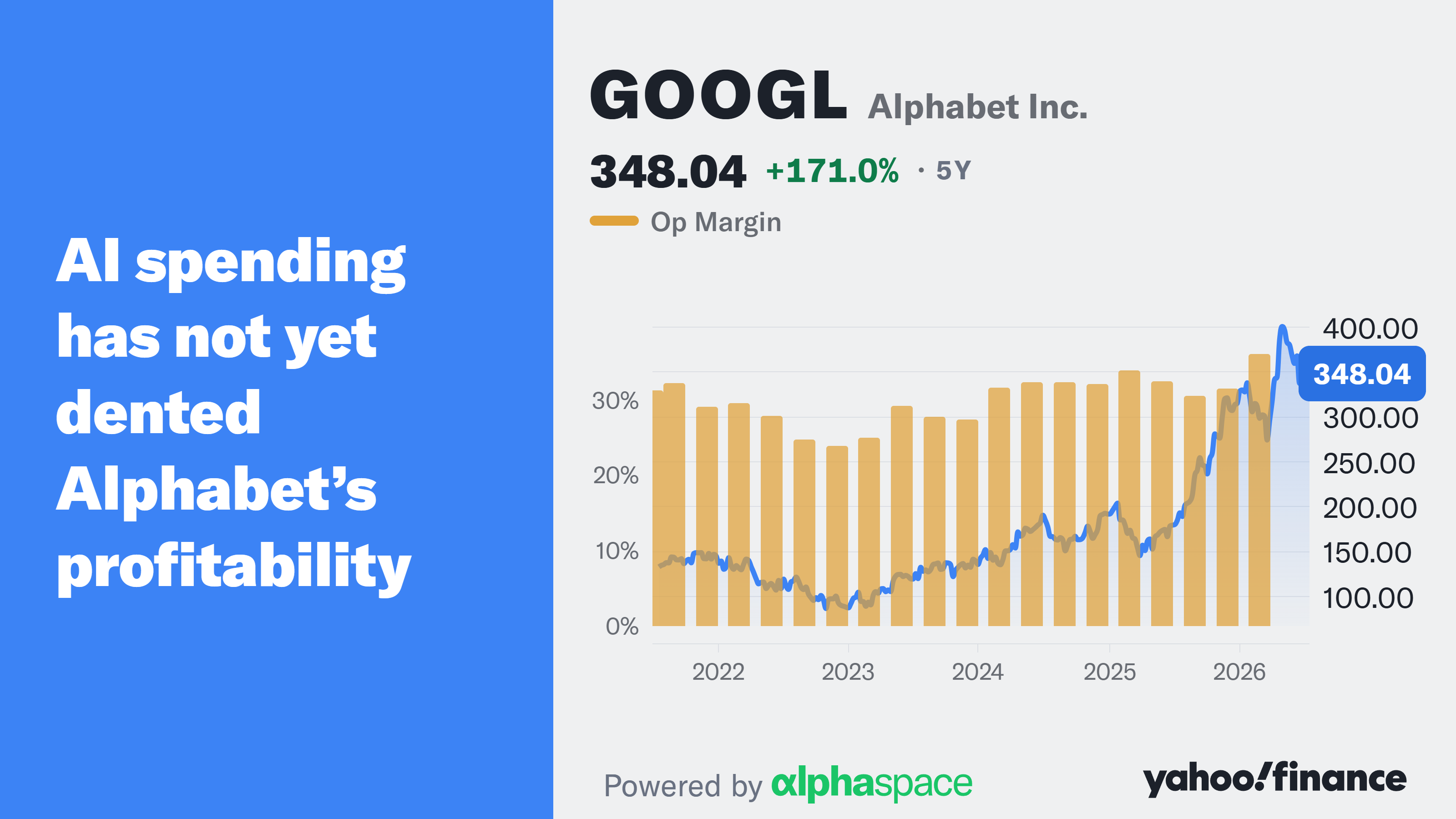
- Escalating Outlays: Alphabet has aggressively revised its 2026 capital expenditure (capex) forecast to an unprecedented $205 billion, significantly outpacing consensus Wall Street expectations.
- Infrastructure Overhaul: The historic spending blitz is directly fueling next-generation cloud compute architecture, specialized Tensor Processing Units (TPUs), and massive data center expansions to support generative AI workloads.
- Investor Anxiety: While tech giants champion long-term infrastructure scalability, institutional shareholders are increasingly scrutinizing enterprise ROI, compressed valuation multiples, and the pressure on near-term free cash flow.
- Competitive High-Stakes: Google is locked in an existential capital arms race alongside Microsoft, Amazon, and Meta, where stopping short risks obsolescence, but spending unchecked threatens capital allocation discipline.
SAN FRANCISCO — For the better part of three decades, Wall Street has evaluated Google through the lens of high-margin digital advertising, predictable cash generation, and disciplined capital allocation. Today, that financial paradigm is undergoing a violent stress test. According to recent disclosure updates and market data, Google has dramatically accelerated its infrastructure spending, driving its 2026 capital expenditure forecast to a staggering peak of up to $205 billion. This breathtaking acceleration has sent shockwaves through institutional trading desks, igniting an intense debate over whether the search behemoth is executing a brilliant, unassailable defensive moat or embarking on a high-stakes capital allocation gamble with diminishing marginal returns.
The announcement underscores a stark reality across the technology sector: the generative artificial intelligence revolution is fundamentally an infrastructure play. Building, training, and deploying frontier foundational models requires a physical footprint, power grid capacity, and silicon supply chains that dwarf any previous technological transition in corporate history. As Google races to cement its dominance across enterprise AI, Google Cloud, and consumer-facing search integration, the financial toll of maintaining technological supremacy is escalating far faster than even the most aggressive sell-side analysts had modeled.
The Catalyst: Why Google’s Spending Curve Has Gone Vertical
Test Our Free AI & Tech Utilities Suite
Calculate LLM API token costs, analyze article dwell-time, or simulate tech DCA returns.
To understand the sheer magnitude of a $205 billion annual capex run-rate, one must examine the compounding pressures facing Mountain View. Over the past twenty-four months, the competitive landscape transformed from a leisurely research race into a ruthless war of attrition. OpenAI, backed by Microsoft’s formidable balance sheet, along with aggressive plays from Amazon Web Services and Meta Platforms, forced Google into an accelerated posture.
The primary driver behind this ballooning expenditure is twofold: compute scarcity and power acquisition. Training models like Gemini require clusters comprising tens of thousands of specialized accelerators operating in continuous concert. Google is not merely purchasing off-the-shelf hardware; it is aggressively fabricating its proprietary Tensor Processing Units (TPUs) while simultaneously procuring Nvidia’s latest high-end Blackwell architectures. Securing these components requires multi-billion-dollar commitments executed years in advance.
Simultaneously, the physical constraints of data center architecture have shifted the battleground from software code to electrical engineering. Modern AI clusters demand unprecedented megawatt capacities. Google’s recent capital injection is heavily earmarked for securing long-term power purchase agreements—including pioneering investments in small modular nuclear reactors (SMRs) and renewable energy grids—to ensure uninterrupted data center scalability without triggering grid bottlenecks or regulatory penalties.