Executive Takeaways
- Apple Margin Compression: Cupertino issued a cautious forward-looking gross margin outlook, sparking institutional sell-offs despite inline headline revenue metrics.
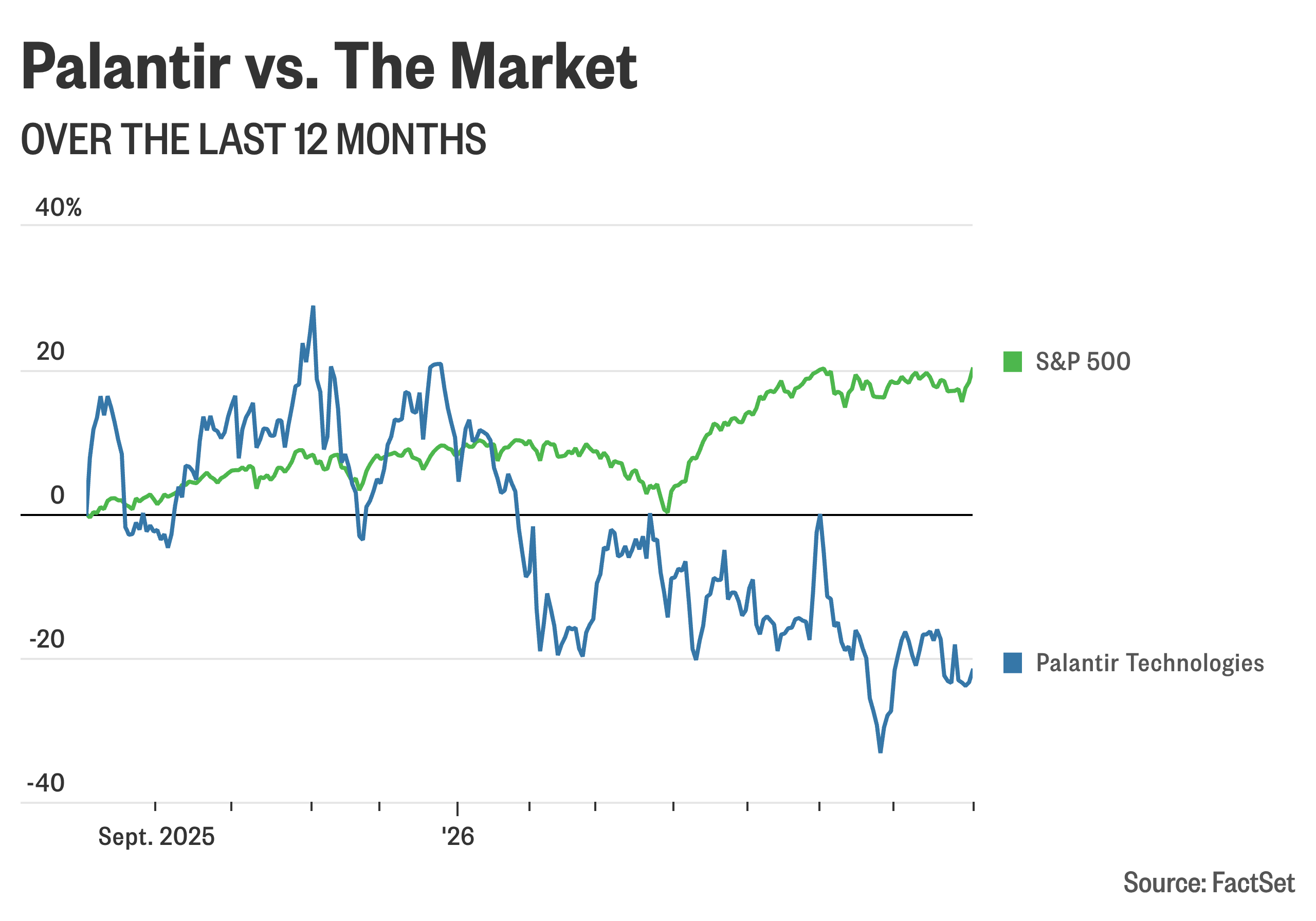
- Palantir Valuation Realignment: Shares dropped over 6% as Wall Street scrutinized enterprise ROI timelines and lofty valuation multiples, overriding strong commercial revenue expansion.
- Broader Market Sentiment: Institutional capital allocation is pivoting toward risk mitigation, demanding higher infrastructure scalability and concrete monetization paths for AI investments.
WALL STREET — Global equity markets experienced a sharp reality check on Thursday as two stalwarts of modern technological dominance—Apple Inc. and Palantir Technologies&mdashfaced intense scrutiny over profitability metrics, capital allocation strategies, and frothy valuation multiples. While macroeconomic indicators suggest resilient consumer spending, institutional investors and enterprise portfolio managers are increasingly unwilling to overlook margin compression and extended enterprise ROI horizons.
The twin sell-offs underscore a broader tactical shift across Wall Street trading desks. As central banks navigate complex monetary policy pivots, institutional liquidity is fleeing growth-at-all-costs models in favor of rigorous capital efficiency, predictable cash flow generation, and verifiable cloud compute architecture optimization. For Apple, the concern centers on hardware margin headwinds and escalating regulatory compliance costs. For Palantir, the market is grappling with whether its blockbuster commercial contract expansion can justify a pricing model priced to absolute perfection.
The Apple Sell-Off: Dissecting the Hardware Margin Squeeze
Test Our Free AI & Tech Utilities Suite
Calculate LLM API token costs, analyze article dwell-time, or simulate tech DCA returns.
Apple Inc. shares retreated following a quarterly earnings report that initially appeared robust on the surface. However, a granular examination of the forward-looking guidance revealed a cautious gross margin outlook that rattled institutional equity analysts. Component cost inflation, shifting product mixes toward entry-level configurations, and mounting regulatory compliance expenses across the European Union have combined to pressure profitability.
During the earnings call, Chief Financial Officer Luca Maestri pointed to supply chain pressures and foreign exchange headwinds as contributing factors to the softer margin trajectory. Furthermore, heavy capital expenditure directed toward artificial intelligence integration—specifically the localized processing requirements of Apple Intelligence—is weighing on near-term operating margins. Portfolio managers are now forced to reevaluate whether the tech giant can sustain its historical pricing power in an era of constrained consumer upgrade cycles and elongated replacement windows.
Supply Chain Complexities and Regulatory Compliance
The friction facing Apple extends far beyond cyclical consumer demand. Supply chain diversification efforts, while critical for long-term risk mitigation, introduce short-term operational inefficiencies and higher baseline production costs. Moving manufacturing nodes across Southeast Asia and India requires massive capital expenditure in infrastructure scalability, which temporarily depresses free cash flow margins.
Simultaneously, regulatory interventions such as the EU's Digital Markets Act (DMA) are fundamentally altering Apple’s high-margin Services ecosystem. Sideloading mandates and alternative app store payment processing force the company to surrender lucrative commissions, directly impacting one of its fastest-growing revenue streams. Institutional investors are factoring these structural headwinds into lower terminal valuation multiples.
Palantir Plummets 6%: Valuation Realignment Meets Enterprise Reality

Meanwhile, Palantir Technologies endured a volatile trading session, shedding more than 6% in value following its latest financial disclosure. Despite reporting impressive year-over-year growth in its U.S. commercial customer count and validating the massive market appetite for its Artificial Intelligence Platform (AIP), Wall Street reacted decisively against the stock's elevated valuation multiple.
Trading at a forward price-to-earnings ratio that leaves zero margin for operational missteps, Palantir found itself caught in a classic "sell-the-news" dynamic. While revenue acceleration in the commercial sector proved that AIP bootcamps are successfully converting into high-value enterprise contracts, institutional investors demanded greater visibility into long-term enterprise ROI and gross margin stability.
The AIP Boot Camp Conversion Paradox
Palantir’s go-to-market strategy has shifted aggressively toward immersive "boot camps," designed to compress enterprise sales cycles by allowing prospective clients to build operational workflows on AIP within days. While this strategy has supercharged customer acquisition, it has also introduced lumpiness into top-line conversions and escalated sales and marketing expenses.
Enterprise clients are increasingly demanding flexible deployment models, balancing multi-tenant cloud compute architecture with strict data sovereignty requirements. Navigating these complex integration demands requires substantial professional services overhead, which can weigh on gross margins during rapid scaling phases. Wall Street's recent pullback reflects a growing caution regarding how quickly these customer additions translate into bottom-line net income.
Market Metrics & Financial Breakdown
The following comparative data table outlines the core financial metrics, valuation pressures, and strategic headwinds driving recent market reactions for both corporate equities:
| Metric / Indicator | Apple Inc. (AAPL) | Palantir Technologies (PLTR) |
|---|---|---|
| Immediate Market Reaction | Moderate slide on guidance | Sharp 6% contraction |
| Primary Catalyst | Cautious gross margin outlook | Lofty valuation vs. ROI timeline |
| Valuation Multiple Pressure | Hardware P/E normalization | Extreme forward multiple compression |
| Key Growth Driver | Services & Apple Intelligence | U.S. Commercial AIP Bootcamps |
| Primary Headwind | Regulatory compliance & component costs | Sales cycle lumpiness & deployment costs |
Industry & Market Implications: Winners, Losers, and Economic Ripples
The simultaneous recalibration of Apple and Palantir shares sends a powerful signal across the broader technology landscape. We are transitioning from an era where speculative enthusiasm for artificial intelligence and software scalability drove indiscriminate buying, into a disciplined period where capital allocation requires demonstrable unit economics.
Who Wins: Value-oriented technology enterprises, hardware suppliers with high operational efficiency, and cybersecurity firms with sticky, non-discretionary enterprise spending profiles stand to benefit as capital rotates out of over-extended growth stocks. Cloud infrastructure providers that can prove immediate infrastructure scalability without excessive capital expenditure burn are also capturing institutional interest.
Who Loses: High-multiple software-as-a-service (SaaS) providers and consumer electronics manufacturers facing replacement cycle fatigue. Companies unable to clearly articulate a direct path from AI capital expenditures to net margin expansion will continue to face aggressive institutional shorting and multiple contraction.
Frequently Asked Questions (People Also Ask)
Why did Apple shares slide despite solid revenue numbers?
While Apple’s top-line revenue met or slightly exceeded consensus Wall Street estimates, the company issued a cautious forward-looking gross margin outlook. Investors were spooked by rising hardware component costs, supply chain restructuring expenses, regulatory compliance burdens in international markets, and the heavy near-term capital expenditures required to deploy localized artificial intelligence features.
What drove the 6% drop in Palantir shares following earnings?
Palantir’s drop was primarily driven by valuation exhaustion rather than operational failure. Despite reporting robust U.S. commercial growth and strong adoption of its Artificial Intelligence Platform (AIP), the stock's lofty forward P/E multiple left no room for error. Institutional investors capitalized on the earnings release to lock in gains, demanding greater clarity on long-term enterprise ROI timelines.
How do regulatory pressures impact Apple's long-term profitability?
Regulatory frameworks like the European Union's Digital Markets Act (DMA) directly challenge Apple's high-margin Services division by mandating alternative payment systems and app distribution channels. These interventions reduce commission revenues and force costly structural modifications to iOS, squeezing overall corporate gross margins over time.
What does this market reaction signify for the broader tech sector?
It marks a decisive pivot toward financial rigor. Institutional capital allocators are shifting away from speculative growth models and penalizing companies that cannot demonstrate immediate operational efficiency, disciplined capital allocation, and clear monetization pathways for heavy AI infrastructure investments.
Future Outlook: Strategic Milestones to Watch
As equity markets digest these earnings reports, the coming quarters will serve as a critical stress test for mega-cap technology valuations. For Apple, investors will closely monitor the adoption rates of Apple Intelligence features, consumer upgrade cycles for upcoming hardware generations, and the degree to which Services revenue can offset hardware margin compression.
For Palantir, the market's focus will remain squarely on commercial contract conversion rates. Management must prove that AIP boot camps can consistently scale into multi-million-dollar enterprise deployments without eroding professional services margins. Until these milestones are decisively achieved, trading desks should anticipate continued volatility as Wall Street continually re-anchors valuation multiples to tangible macroeconomic realities.