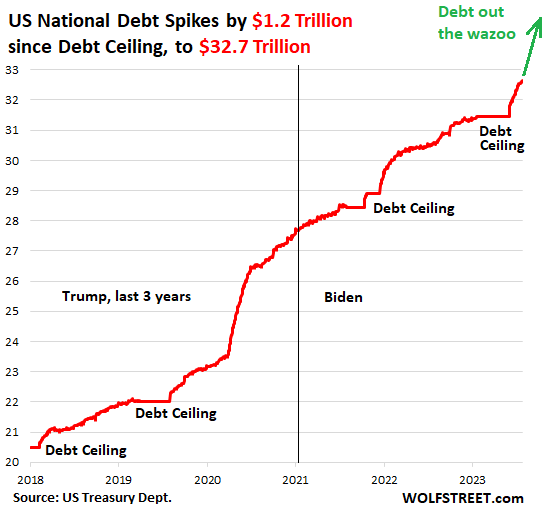
WASHINGTON & NEW YORK — The mathematical realities of sovereign borrowing have finally caught up with Capitol Hill. In a development sending shockwaves across global trading desks, surging long-term US Treasury yields are triggering acute alarms regarding the federal government's escalating debt-servicing trajectory. As institutional investors reassess risk mitigation strategies and demand higher term premia, the structural mechanics of US debt issuance are threatening to upend capital allocation models, compress equity valuation multiples, and force a radical rethinking of fiscal policy.
Drawing on exclusive market intelligence and reports from Funds Society, this investigative report unpacks the systemic vulnerabilities exposed by the latest yield curve movements, examining the nexus between runaway federal outlays, dwindling market liquidity, and the looming crunch in global debt financing.
Executive Takeaways
- Escalating Borrowing Costs: Long-term US Treasury yields are surging, directly translating into higher debt-servicing burdens for the federal government amid an expanding national deficit.
- Squeeze on Capital Markets: The heavy supply of sovereign paper is crowding out private sector capital allocation, driving up corporate borrowing costs, and pressuring equity valuation multiples.
- Re-emergence of Bond Vigilantes: Institutional investors are demanding higher yields to compensate for ballooning supply and persistent inflation risks, effectively penalizing fiscal inertia.
- Global Spillover Effects: As the risk-free rate climbs, international central banks and currency markets face heightened volatility, forcing a synchronized re-evaluation of global portfolio risk mitigation.
The Anatomy of a Sovereign Debt Squeeze
Test Our Free AI & Tech Utilities Suite
Calculate LLM API token costs, analyze article dwell-time, or simulate tech DCA returns.
For decades, US Treasury securities served as the ultimate anchor of the international financial architecture—a frictionless, deep, and liquid asset class that dictated global pricing benchmarks. However, the post-pandemic macroeconomic landscape, characterized by persistent structural deficits and aggressive quantitative tightening by the Federal Reserve, has fundamentally altered this paradigm.
The core catalyst behind the current market anxiety is not merely the absolute size of the national debt—which has breached historic nominal thresholds—but the velocity of its expansion relative to nominal GDP growth. To fund ongoing fiscal shortfalls, the US Department of the Treasury has been forced to flood the primary dealer network with an unprecedented volume of coupon-bearing debt. This massive supply glut has collided directly with a structural reduction in traditional buyer appetite, most notably from foreign central banks and domestic commercial banks nursing unrealized portfolio losses.
As primary dealers struggle to absorb successive waves of Treasury auctions without significant price concessions, yields have marched steadily upward. This dynamic has severely tested the limits of market liquidity, forcing asset managers to recalibrate their duration risk models. The term premium—the compensation investors demand for holding long-term bonds instead of rolling over short-term bills—has turned decisively positive, signaling that the market no longer views long-dated US sovereign debt as a risk-free proposition.
Catalytic Events and Market Mechanics

The friction in the Treasury market has been exacerbated by the simultaneous runoff of the Federal Reserve’s balance sheet via quantitative tightening (QT). By stepping back as a permanent buyer of first resort, the central bank has transferred the burden of debt absorption entirely to private wealth managers, pension funds, and foreign institutional accounts.
Institutional portfolio managers note that corporate treasury departments are feeling the immediate pinch. As the risk-free rate moves higher, the cost of capital for corporate debt issuance scales proportionally. Organizations attempting to fund large-scale infrastructure scalability, digital transformation initiatives, or enterprise ROI-driven capital expenditures are finding that debt financing has become notably cost-prohibitive. Consequently, corporate balance sheets are pivoting toward conservative liquidity management, postponing strategic M&A, and prioritizing operational risk mitigation over aggressive expansion.
| Metric / Indicator | Current Baseline | Historical Average (Pre-2020) | Systemic Impact |
|---|---|---|---|
| 10-Year Treasury Yield | Elevated / Volatile Range | 2.2% – 2.8% | Sets the baseline hurdle rate for global borrowing, mortgages, and corporate credit. |
| Federal Interest Outlays | Exceeding Defense Spending | Significantly Lower Share of Outlays | Crowds out discretionary fiscal spending and heightens default risk perceptions. |
| Treasury Auction Bid-to-Cover | Subdued / Erratic Spreads | Robust and Stable (>2.5x) | Indicates softer primary dealer appetite and potential indigestion in long-dated paper. |
| Term Premium | Positive & Widening | Frequently Negative / Flat | Reflects heightened investor demand for inflation and supply-risk compensation. |
Industry & Market Implications: Winners and Loses
The structural shift in US debt financing creates a stark divergence in market outcomes across sectors:
- The Winners:
- Cash-Rich Enterprises & Money Market Funds: Entities holding substantial liquid reserves are generating exceptional yields on short-duration cash equivalents without taking on duration risk.
- Alternative Asset Managers & Private Credit: With traditional bank lending constrained by capital requirements and rising funding costs, private credit funds are stepping in to provide bespoke financing, commanding highly attractive yields.
- The Loses:
- High-Growth & Tech Sectors: Companies reliant on long-duration future cash flows face severe valuation multiple compression as the discount rate applied to their models rises in tandem with Treasury yields.
- Real Estate & Capital-Intensive Industries: Commercial and residential real estate markets face refinancing walls as legacy low-rate mortgages and corporate loans mature into a sharply elevated interest rate environment.
Frequently Asked Questions (People Also Ask)
Why are US Treasury yields rising despite expectations of Federal Reserve rate cuts?
While the Federal Reserve dictates short-term interest rates via the federal funds rate, long-term Treasury yields (such as the 10-year and 30-year bonds) are determined by market supply and demand dynamics. The surge in long-term yields reflects heavy sovereign debt issuance, an expanding term premium, and investor anxiety over persistent structural fiscal deficits.
How do rising Treasury yields impact everyday consumers and businesses?
Higher Treasury yields directly benchmark consumer borrowing costs, including residential mortgages, auto loans, and credit card rates. For businesses, it increases the cost of corporate debt issuance, leading to tighter lending standards, restricted capital expenditure budgets, and potentially slower economic growth.
What is the "term premium," and why is its recent movement significant?
The term premium is the extra compensation investors demand for the risk of holding long-term bonds over a series of rolling short-term bills. A rising term premium signals that investors are demanding higher yields to offset risks related to future inflation, massive debt supply, and macroeconomic instability.
Are foreign central banks still buying US Treasury debt?
Foreign official holdings of US Treasuries have experienced mixed demand patterns. While traditional key buyers have diversified their reserve portfolios to mitigate geopolitical and currency risks, private international asset managers continue to participate, albeit with heightened sensitivity to auction pricing and bid-to-cover ratios.
Future Outlook and Strategic Milestones
As institutional investors navigate the complexities of modern sovereign debt financing, the trajectory of US Treasury yields will remain the definitive bellwether for global financial stability. Market participants must monitor several critical milestones over the coming quarters:
- Treasury Quarterly Refunding Announcements: Scrutiny will remain high on the Treasury Department's borrowing estimates and the specific composition of debt issuance between bills, notes, and bonds.
- Primary Dealer Absorption Capacity: Watch for tail events or weak tailing in long-dated auctions, which would serve as immediate smoke signals of market indigestion.
- Fiscal Policy Adjustments: Any credible legislative or executive efforts toward long-term fiscal consolidation will be heavily rewarded by the bond market, whereas continued fiscal expansion risks accelerating the steepening of the yield curve.
Ultimately, the era of frictionless, low-cost sovereign borrowing has drawn to a close. Navigating this new financial reality requires rigorous risk mitigation, disciplined capital allocation, and a keen eye on macroeconomic fundamentals as the market enforces fiscal accountability.