The De-Dollarization Playbook: Cambodia Integrates India’s UPI into Bakong Network, Upending Southeast Asian Retail Liquidity
By linking the KHQR standard directly to NPCI’s rails, Phnom Penh and New Delhi bypass Western clearing networks, slash cross-border transaction frictions by up to 80%, and challenge legacy payment hegemony across ASEAN.
Executive Takeaways
- Historic Expansion: Cambodia officially becomes the 9th sovereign state to activate direct merchant acceptance for India’s Unified Payments Interface (UPI), integrating with the National Bank of Cambodia’s (NBC) Bakong-powered KHQR system.
- Interchange & Margin Compression: The deployment sidelines international card schemes—namely Visa and Mastercard—substituting typical 2.5%–3.5% cross-border merchant discount rates (MDR) with an estimated sub-0.5% sovereign rail fee structure.
- Dual-Currency Settlement Engine: The technical bridge facilitates real-time foreign exchange conversions between Indian Rupees (INR) and Cambodian Riel (KHR), systematically blunting dependence on the US Dollar across Cambodia’s dual-currency economy.
- Geopolitical Rebalancing: The integration represents a decisive expansion of India's Digital Public Infrastructure (DPI) export policy, providing ASEAN a counterweight to China’s ubiquitous UnionPay, Alipay, and WeChat Pay ecosystem.
The Phnom Penh-New Delhi Corridor: Strategic Convergence
In a financial maneuver that signals escalating geopolitical competition over the world’s digital payment conduits, Cambodia has formally deployed cross-border interoperability between its national payment infrastructure and India’s Unified Payments Interface (UPI). The formal integration, executed via NPCI International Payments Limited (NIPL) and the National Bank of Cambodia (NBC), elevates Cambodia to the ninth sovereign jurisdiction to operationalize UPI rails—joining an elite corridor that includes Singapore, the United Arab Emirates, Mauritius, Nepal, Bhutan, France, Sri Lanka, and the Maldives.
Behind the ceremonial announcements lies an aggressive, calculated modernization of sovereign capital flows. For decades, retail settlements between Southeast Asia and South Asia were hostage to the SWIFT banking complex, legacy credit card conglomerates, and multi-tier correspondent banking networks. By establishing a direct, API-driven retail messaging and clearing corridor between NPCI’s core architecture and Cambodia's distributed-ledger Bakong platform, both central banks have structurally engineered an alternative to Western-dominated payment plumbing.
The strategic deployment comes at a pivotal inflection point for Cambodia. The Southeast Asian nation has struggled to manage the systemic volatility of a hyper-dollarized commercial economy, where approximately 80% of internal liquidity operates in greenbacks. By routing trade, tourism, and micro-remittances directly through the KHR-INR currency pair, the NBC secures a critical mechanism to fortify its domestic currency while catering to the world’s fastest-growing outbound travel and consumer cohort.
Under the Hood: Engineering the UPI–Bakong Linkage

To institutional investors and technology architects, the UPI-Cambodia integration represents a rare, large-scale synthesis of distinct modern fintech topologies: a centralized, high-throughput instant payment network (UPI) interfacing seamlessly with an enterprise permissioned blockchain system (Bakong).
1. The Architectural Interlock
Cambodia’s Bakong network, engineered by the National Bank of Cambodia in collaboration with Japanese distributed ledger technology firm Soramitsu, runs on a Hyperledger Iroha-derived framework. Bakong's consumer layer relies on KHQR—a standardized universal Quick Response code framework mandated across all merchant acquiring banks in the country. Under the new arrangement, NIPL and the NBC have established an automated transaction gateway that translates ISO 20022 and native UPI protocol messages into the cryptographic settlement requests required by the Bakong engine.
2. Dynamic Real-Time Foreign Exchange Clearing
The operational triumph of the corridor resides within its clearing mechanism. Previously, an Indian retail consumer purchasing goods in Siem Reap or Phnom Penh endured a double-conversion penalty: INR converted to USD, and USD converted to KHR at the merchant POS terminal, laden with FX spreads and foreign transaction surcharges often clearing north of 450 basis points. The new direct pipeline functions as follows:
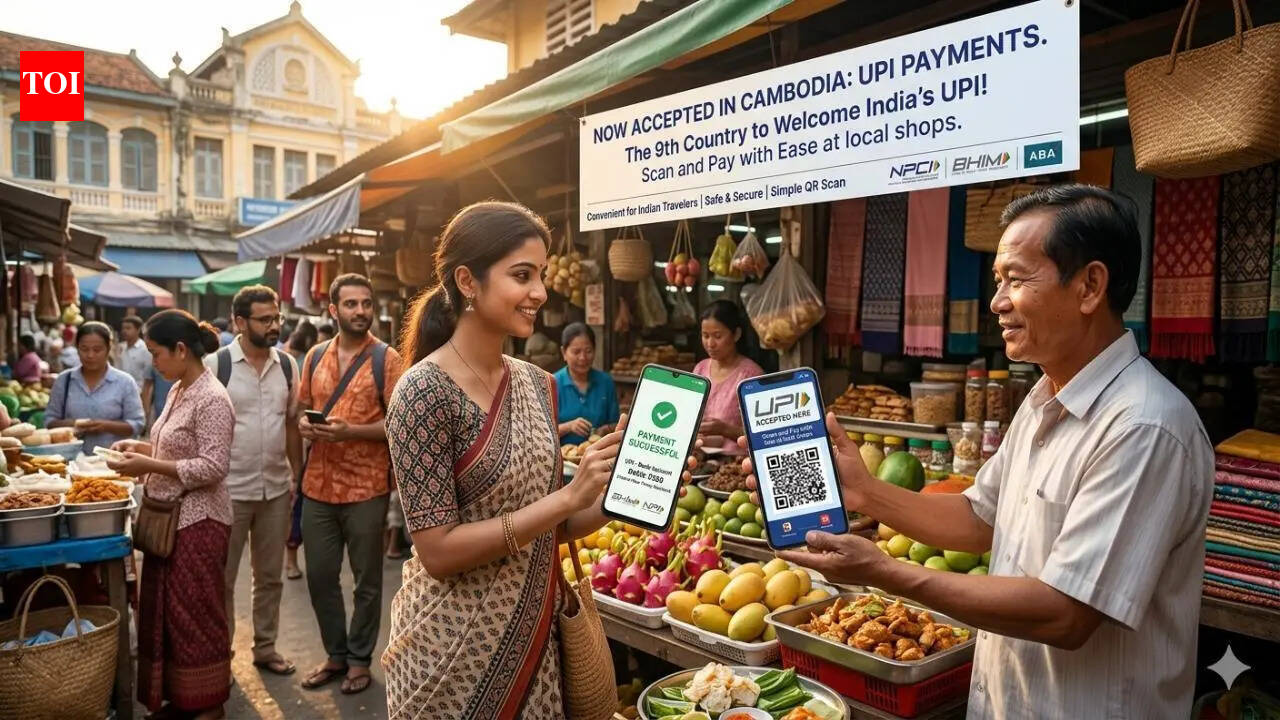
- Initiation: An Indian tourist scans a standard KHQR merchant code using any UPI-compliant app (e.g., PhonePe, Google Pay, BHIM).
- Real-Time Message Translation: The acquirer network sends the transaction payload through the NBC-NIPL clearinghouse, where real-time FX pricing engines peg the KHR/INR exchange rate against central bank benchmark bands.
- Settlement Liquidity: The Indian payer’s bank debits rupees instantly under India’s Immediate Payment Service (IMPS) backend; settlement guarantees are balanced via central bank-supervised nostro-vostro bilateral accounts, while the Cambodian merchant receives credit denominated in Cambodian Riel within seconds.
Verified Structural Breakdown: Global UPI Expansion Matrix
The following verified matrix contrasts Cambodia’s implementation parameters against leading global UPI corridors, underscoring structural shifts in clearing latency, fee dynamics, and network interoperability.
| Jurisdiction | Local Integration Partner | Technical Framework | Avg. Merchant Spread | Settlement Latency | Strategic Mandate |
|---|---|---|---|---|---|
| Cambodia | National Bank of Cambodia (NBC) | KHQR via Bakong DLT | < 0.65% | < 4 seconds | De-dollarization & Tourism Retail |
| Singapore | Monetary Authority of Singapore (MAS) | PayNow Linkage (API-to-API) | < 0.50% | Instant (P2P/P2M) | Cross-border Remittances & Trade |
| UAE | Mashreq / NeoPay / Jaywan | Card Rails & Merchant POS API | 0.75% – 1.10% | Near Real-Time | High-Volume Expatriate Remittances |
| France | Lyra Network | Gateway E-Commerce & In-Store | 1.20% – 1.80% | Near Real-Time | Luxury Outbound Tourism Capture |
| Nepal | Nepal Clearing House (NCHL) | Direct National Switch Interlink | < 0.35% | Sub-second | Sovereign Economic Integration |
Industry Disruption: Market Reallocations & Interchange Squeeze
The geopolitical elegance of the UPI-Bakong rail masks a broader corporate threat confronting traditional financial payment intermediaries. As national instant payment systems cross sovereign borders, legacy card schemes face structural margin compression.
The Losers: Legacy Acquirers and FX Arbitrage Kiosks
Global credit card duopolies have long relied on high-margin cross-border card transactions to juice enterprise revenues, levying interchange fees, card-network processing assessments, and foreign currency markup fees that collectively total 3% to 5% per transaction. When payments run over local sovereign rails like UPI and KHQR, these multi-party tollbooths disappear entirely.
Concurrently, traditional brick-and-mortar foreign currency exchanges stationed across key nodes such as Phnom Penh International Airport and Angkor Wat face severe demand destruction. As instant QR scanning democratizes interbank wholesale exchange rates at street-level stalls, the economic utility of physical currency arbitrage evaporates.
The Winners: Tier-2 Merchants, FinTech Aggregators, and Trade Balances
For Cambodia’s micro, small, and medium enterprises (MSMEs)—which comprise 98% of all domestic firms—the implementation offers transformative liquidity advantages. Small merchants in the informal sector who historically could not afford enterprise Point-of-Sale (POS) terminal leases from traditional merchant banks can now capture cross-border enterprise spend through a laminated paper KHQR sheet.
From a macro perspective, the corridor also acts as an engine for Indian consumer technology players. Ecosystem champions like Walmart-backed PhonePe, NPCI-promoted BHIM, and Paytm expand their active daily utility well beyond the domestic borders of the subcontinent, effectively converting domestic Indian fintech apps into international travel wallets without requiring capital-intensive overseas balance sheets.
Geopolitical Calculus: The Indo-Pacific Currency War
The technical deployment of UPI in Cambodia cannot be evaluated strictly as a commercial retail innovation; it is a structural vector in an escalating regional struggle over digital financial sovereignty. Cambodia has historically maintained intimate political and infrastructural ties with Beijing, becoming a critical staging ground for Chinese commercial investments and China UnionPay/Alipay integration across Indochina.
India’s strategic deployment of its Digital Public Infrastructure (DPI)—an interconnected stack consisting of biometric identity (Aadhaar), open data sharing, and real-time sovereign payments (UPI)—presents developing global economies with an open-source, interoperable blueprint. Unlike proprietary corporate ecosystems, UPI's integration with sovereign platforms like Bakong preserves host-nation autonomy, preventing capital flows from being sequestered exclusively inside foreign tech platform silos.
By securing Cambodia as the 9th node in its global grid, New Delhi solidifies a vital beachhead inside ASEAN, signaling to neighboring markets—including Thailand, Vietnam, and Indonesia—that India’s open protocols provide a reliable alternative to both Western-dominated credit channels and proprietary Chinese platforms.
Frequently Asked Questions (People Also Ask)
How does UPI work in Cambodia for Indian travelers?
Indian travelers can open any UPI-enabled mobile application (such as BHIM, PhonePe, or Google Pay) and scan Cambodia’s universal KHQR codes displayed at local merchants. The backend automatically computes the real-time foreign exchange conversion from Indian Rupees to Cambodian Riel. The transaction executes instantaneously, debiting the traveler's domestic Indian bank account without requiring an international credit card or local foreign exchange conversion.
Which 9 countries currently accept or support UPI payments?
As of the milestone reached with Cambodia, the nine countries that have operationalized bilateral integrations or direct retail acceptance for UPI include: Singapore, the United Arab Emirates (UAE), Mauritius, Nepal, Bhutan, France, Sri Lanka, the Maldives, and Cambodia. Additional pilot integrations and regulatory memorandums of understanding continue across several other African and Southeast Asian jurisdictions.
What is Cambodia's KHQR system and how is it related to Bakong?
KHQR is Cambodia's standardized QR code system introduced by the National Bank of Cambodia to streamline retail merchant payments across all financial institutions under a single interoperable QR code. KHQR operates directly atop the Bakong system, a distributed ledger-based sovereign backbone developed with Japanese tech firm Soramitsu that handles instant interbank transfers, clearing, and digital fiat settlements.
Will the UPI-Cambodia integration reduce US Dollar usage?
Yes. Cambodia’s retail sector has historically relied heavily on physical US dollar notes for routine transactions. By facilitating direct merchant settlement in Cambodian Riel (KHR) funded by Rupee-denominated Indian accounts, the system incentivizes the everyday use of local currency, directly assisting the National Bank of Cambodia’s long-term sovereign strategy to de-dollarize its domestic economy.
Future Outlook: Toward Project Nexus and Multilateral Corridors
The operational linkage between India and Cambodia serves as a real-world sandbox for the Bank for International Settlements' (BIS) ambitious Project Nexus—an initiative designed to permanently connect national real-time payment networks across borders into an automated, self-clearing global liquidity web. As bilateral connections proliferate, the marginal cost of adding subsequent jurisdictions decreases exponentially.
Market observers should anticipate the next phase of this deployment: enabling reverse clearing flows. While current phases prioritize outbound Indian expenditure across Cambodian merchant terminals, secondary technical implementations aim to empower Cambodian citizens to execute instant retail payments inside India using Bakong wallets.
Over the next 24 to 36 months, the true test of this burgeoning rail will hinge on liquidity depth and corporate treasury adoption. If bilateral trading firms leverage these retail-engineered settlement pipes to settle micro-invoices and B2B commercial transfers without touching traditional SWIFT intermediaries, the India-Cambodia payment bridge will evolve from a traveler’s convenience into a disruptive blueprint for the future of cross-border financial plumbing.