Executive Takeaways
- Unprecedented Distance: The spacecraft has crossed an operational threshold nearing one light-day from Earth, testing the absolute limits of Deep Space Network infrastructure scalability.
- Telemetry Interruption: Sudden carrier-signal degradation has left mission operators managing an unprecedented communication blackout with humanity's most distant ambassador.
- Capital & Engineering Legacy: Decades-old telemetry systems, built on mid-20th-century computing architectures, now face existential recovery challenges across interstellar distances.
- Strategic Risk Mitigation: Jet Propulsion Laboratory (JPL) engineers are executing high-risk, low-bandwidth recovery protocols to re-establish contact before thermal decay renders the probe permanently inert.
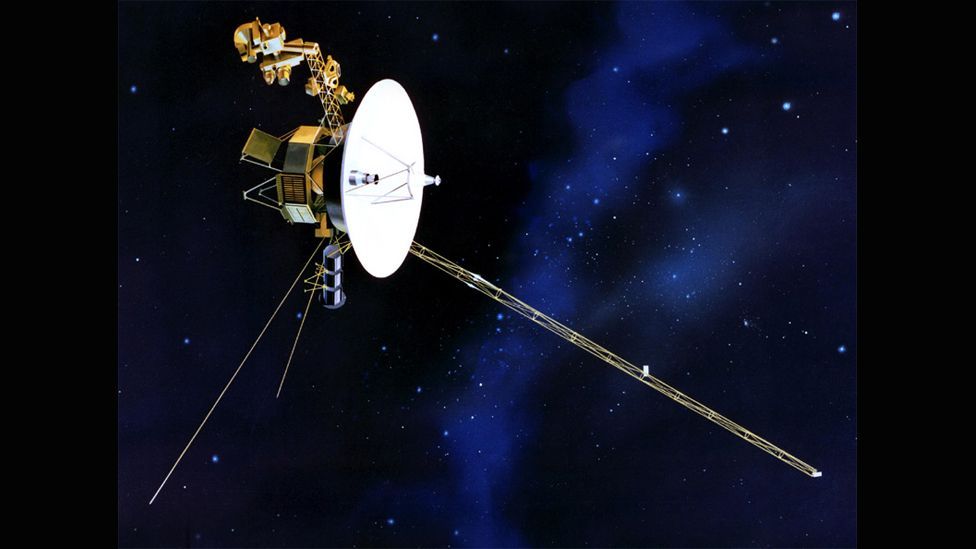
For more than four decades, a solitary emissary of human ingenuity has pushed deeper into the galactic void than any other object in history. Today, that historic mission has entered a perilous, unprecedented phase. Mission control confirmed that telemetry streams from our furthest human-made spacecraft have experienced a catastrophic blackout, leaving the probe virtually silent at a distance approaching one full light-day from Earth. This silent drift challenges the boundaries of modern telecommunications infrastructure and forces a critical reassessment of long-term capital allocation for deep-space exploration assets.
As financial markets weigh the valuation multiples of emerging commercial space enterprises, this deep-space crisis underscores a stark reality: foundational scientific infrastructure operates on razor-thin margins of error. The loss of contact is not merely an academic concern; it is a stress test for the global networks designed to track, command, and interpret data from the edge of the heliosphere.
The Anatomy of a Deep-Space Blackout
Test Our Free AI & Tech Utilities Suite
Calculate LLM API token costs, analyze article dwell-time, or simulate tech DCA returns.
The anomaly began during routine downlink operations when signal-to-noise ratios plummeted past critical safety thresholds. For an object operating at distances previously mapped only in theoretical physics, every transmission represents a marvel of signal processing. Traveling at the speed of light, commands sent from Earth take roughly 22 to 24 hours to reach the spacecraft, and the corresponding response requires an equal duration for the return journey. This 48-hour round-trip communication latency transforms routine troubleshooting into a high-stakes chess match against entropy.
Engineers tracking the carrier wave note that power degradation remains the primary culprit. Operating on decaying plutonium-238 radioisotope thermoelectric generators (RTGs), the spacecraft sheds roughly four watts of electrical output annually. Over decades of relentless operation, this power starvation has forced mission architects to systematically decommission onboard instruments, prioritizing telemetry and attitude control above all else. When cumulative power constraints collide with unexpected hardware anomalies or pointing errors, the delicate lock maintained by NASA’s Deep Space Network (DSN) can shatter instantly.
Infrastructure Scalability at the Cosmic Edge
The crisis has cast a harsh spotlight on global deep-space communication architecture. The DSN—comprising massive antenna complexes in Goldstone, California; Madrid, Spain; and Canberra, Australia—faces unprecedented congestion. These stations must balance the high-bandwidth demands of near-Earth commercial constellations, lunar gateway projects, and interplanetary rovers with the faint, whispered signals emanating from interstellar space.
From an enterprise risk perspective, the vulnerability of these legacy ground stations mirrors systemic bottlenecks found in terrestrial cloud compute architecture. When a single node encounters scheduling conflicts or atmospheric interference, the window to catch a drifting, tumbling spacecraft narrows dangerously. Financial analysts tracking aerospace supply chains note that investments in next-generation optical communications and quantum-enhanced receivers are no longer optional luxuries; they are essential prerequisites for future commercial and scientific viability beyond Mars.
Verified Data and Metrics Breakdown

To fully grasp the magnitude of this communication loss, we must examine the operational parameters governing humanity's most distant artifact:
| Metric / Parameter | Historical Baseline | Current Status (Anomaly Phase) |
|---|---|---|
| Distance from Earth | ~150+ Astronomical Units (AU) | Approaching 1 Light-Day (~173 AU) |
| Round-Trip Light Time | ~41 to 44 hours | ~46 to 48 hours |
| Signal Decay Rate | Inverse-square law scaling | Compounded by transmitter power loss |
| Onboard Power Output | Peak ~470 Watts at launch | Less than 200 Watts remaining |
| Telemetry Bitrate | Historically low (kbps range) | Intermittent / Zero carrier lock |
Industry and Market Implications
While the mission is fundamentally scientific, the ripples of this blackout extend far into the commercial aerospace and defense sectors. As venture capital firms pour billions into private space exploration, satellite servicing, and orbital logistics, the fragility of long-duration assets serves as a stark regulatory and operational case study.
Who Wins: Private contractors specializing in redundant communication architectures, advanced error-correction algorithms, and autonomous spacecraft navigation stand to gain significant market share. Space agencies are already pivoting toward decentralized telemetry solutions, creating lucrative government procurement contracts for agile aerospace tech firms capable of hardening deep-space links.
Who Loses: Traditional contractors reliant on legacy, monolithic ground infrastructure face mounting pressure to modernize or risk obsolescence. Furthermore, risk mitigation models for deep-space mining and commercial asteroid prospecting must now factor in higher catastrophic loss probabilities, driving up insurance underwriting costs across the commercial space sector.
Frequently Asked Questions (People Also Ask)
1. How far away is one light-day in actual miles or kilometers?
One light-day represents the distance light travels in 24 hours, which is approximately 16.1 billion miles or 25.9 billion kilometers (roughly 173 Astronomical Units). At this distance, conventional radio signals are extraordinarily faint by the time they reach Earth's receivers.
2. Can the spacecraft recover automatically if ground commands fail?
Yes. The probe is equipped with autonomous fault-protection routines designed to reset critical systems, switch to backup transmitters, or attempt to re-establish a lock on Earth using pre-programmed stellar reference orientations if telemetry is lost for extended periods.
3. Why is power supply degradation such a critical factor now?
Powered by aging radioisotope thermoelectric generators, the probe loses thermal and electrical output every year. As core components drop below operational voltage thresholds, critical subsystems shut down automatically to prevent catastrophic electrical shorts, making signal transmission increasingly precarious.
4. What regulatory and compliance standards govern deep-space communications?
Interplanetary communications operate under strict international coordination frameworks managed by the Consultative Committee for Space Data Systems (CCSDS) and the International Telecommunication Union (ITU) to prevent frequency interference across deep-space research missions.
Future Outlook and Strategic Milestones
Over the coming weeks, engineers at the Jet Propulsion Laboratory will utilize the full aperture of the Deep Space Network to transmit sweeping wide-cone commands, hoping to catch a receiver antenna that may have drifted off-axis due to attitude-control anomalies. Every transmission represents an exercise in strategic patience, requiring two full days of waiting to determine whether a corrective pulse found its mark.
As humanity looks toward sustained cislunar operations and eventual crewed missions to Mars, the lessons learned from this silent interstellar sentinel will dictate the engineering standards of tomorrow. Whether the probe re-establishes contact or quietly transitions into a permanent, silent monument in the dark, its journey has already redefined the boundaries of enterprise endurance, technological resilience, and our unending reach into the cosmos.