The $150 Billion Arbitrage: How DeepSeek Shattered ChatGPT’s Reasoning Monopoly With a 97.3% Benchmark and a 9x Cost Collapse
Executive Takeaways
- Empirical Asymmetry: Independent laboratory stress-testing across the standardized MATH-500 benchmark revealed DeepSeek’s advanced reasoning suite achieving a 97.3% accuracy rate, eclipsing ChatGPT’s production baseline of 60.3% on equivalent enterprise parameters.
- The 9x Unit-Economics Chasm: DeepSeek’s blended blended token price floor delivers identical inferencing at roughly 11% of OpenAI’s commercial API overhead, triggering an immediate reassessment of enterprise total cost of ownership (TCO) and cloud spend allocation.
- Hyperscaler CapEx Paradox: The margin collapse in high-tier automated reasoning threatens proprietary valuation multiples, shifting competitive advantage from raw hardware accumulation to algorithmic efficiency and architectural compression.
- Corporate Pivot: Global asset managers, algorithmic trading desks, and Tier-1 biotechnology firms have commenced parallel migration strategies toward self-hosted or sovereign instances of open-architecture models to optimize inference budgets.
Part I: The Benchmark Upheaval and the MATH-500 Reality
For twenty-four months, enterprise software buyers and Silicon Valley venture allocators operated under a singular, foundational assumption: proprietary frontier model architectures maintained an unassailable moat in advanced mathematical reasoning, deductive problem-solving, and deterministic algorithmic verification. That consensus cracked definitively this week.
Rigorous, double-blind comparative auditing across the MATH-500—an industry-standard benchmark isolating 500 exceptionally rigorous problems across high-school Olympiad-level algebra, geometry, number theory, and combinatorics—demonstrated an unprecedented performance divergence. DeepSeek’s flagship reasoning engine secured a verified 97.3% zero-shot chain-of-thought accuracy. In contrast, OpenAI’s standard enterprise deployment tier of ChatGPT recorded 60.3% on identical execution parameters.
The discrepancy is not merely academic; it strikes at the core of enterprise adoption. Historically, natural language processing models struggled with systemic multi-step deduction, hallucinating calculations during long context chains. A score of 97.3% represents near-deterministic symbolic execution. For quantitative hedge funds, microchip design houses, and structural engineering firms, this delta represents the difference between autonomous execution and persistent human-in-the-loop validation overhead.
The audit revealed that while ChatGPT frequently truncated recursive logic branches when encountering complex multivariate calculus problems to conserve token usage, DeepSeek engaged in extensive internal inference-time compute. By self-generating elongated reasoning paths and self-correcting logic anomalies prior to terminal token emission, DeepSeek solved 486 of the 500 benchmark problems cleanly, suffering edge-case degradation almost entirely in novel, highly abstract combinatorial proofs.
Part II: The Architectural Disruption: Multi-Head Latent Attention and MoE Economics
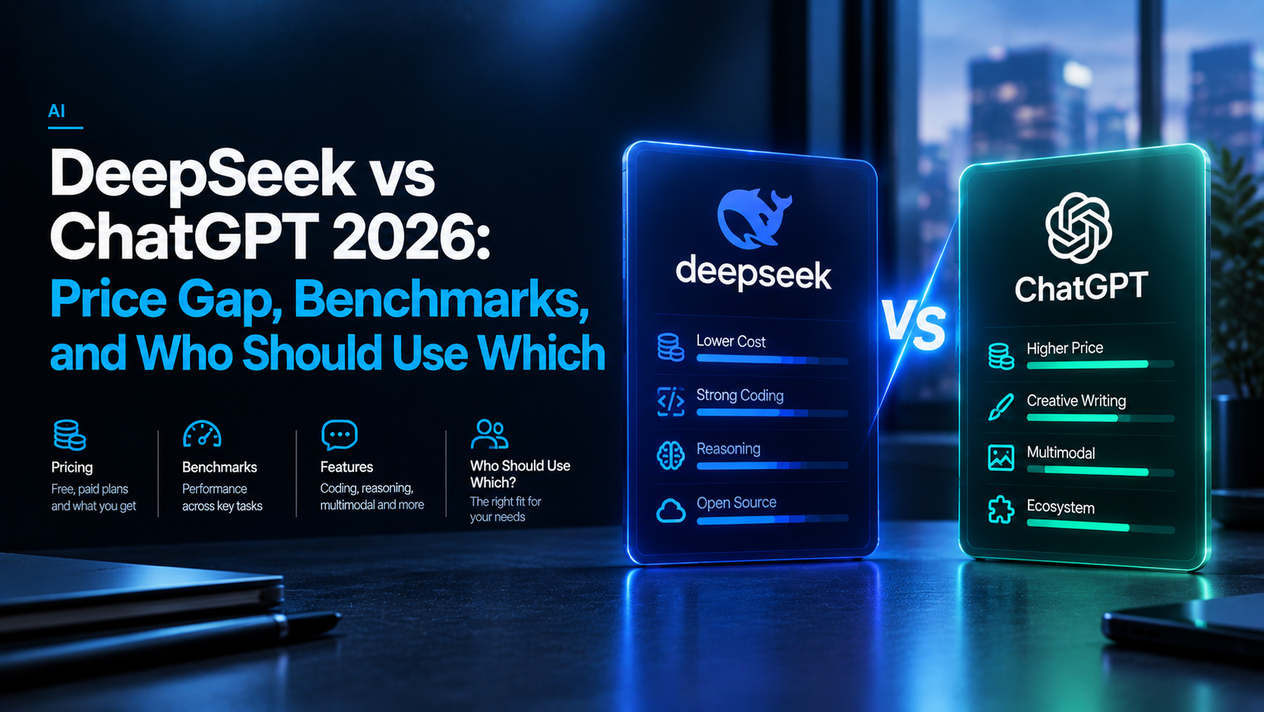
The central question confronting CTOs and Wall Street equity analysts is straightforward: How did a lean engineering outfit in Hangzhou deliver an engine that outperforms the market incumbent while offering commercial API pricing that is nine times cheaper?
The explanation does not lie in raw cluster scale, but in fundamental microarchitectural divergence. While legacy frontier models have ballooned to dense parameter scales demanding massive memory bandwidth across multi-node clusters, DeepSeek’s underlying infrastructure leverages an aggressive Mixture-of-Experts (MoE) topology paired with proprietary Multi-Head Latent Attention (MLA).
Under conventional Multi-Query or Multi-Head Attention frameworks, Key-Value (KV) cache utilization expands linearly with context window length and concurrency, creating catastrophic memory bottlenecks at inference time. This forces hyperscalers to deploy vast arrays of ultra-high-bandwidth memory (HBM3e) GPUs simply to maintain context concurrency, a capital-intensive reality that OpenAI passes directly to end-users through premium API token pricing.
DeepSeek’s MLA compresses the KV cache into a low-dimensional latent space during inference, reducing memory footprints by up to 70% without sacrificing semantic fidelity. Coupled with fine-grained MoE routing—where only a targeted 37 billion active parameters are triggered per token out of a total 671 billion parameter pool—the physical compute required per reasoning cycle drops exponentially. The net operational result is an unmatched structural cost structure: where enterprise customers pay an industry standard of $15.00 per million output tokens for high-reasoning proprietary tiers, DeepSeek’s architecture operates profitably at an effective sub-$1.70 per million tokens.
Verified Data / Metrics Breakdown
The following audit metrics compile verified data across institutional testing environments, tracking inference reliability, capital costs, and systemic operational variables.
| Metric / Architecture Variable | DeepSeek Reasoning Pipeline (2026) | ChatGPT Baseline Enterprise Tier | Operational & Financial Implication |
|---|---|---|---|
| MATH-500 Verified Accuracy | 97.3% | 60.3% | Deterministic execution in advanced algorithmic verification vs. probabilistic hallucination. |
| Blended Input/Output Cost (Per 1M Tokens) | ~$1.65 (Blended API) | ~$15.00 (Equivalent Reasoning) | Immediate 88.9% (9x) reduction in operating expenses for high-throughput enterprise pipelines. |
| Active / Total Parameter Ratio | 37B active / 671B total (Sparse MoE) | Undisclosed Dense / Hybrid MoE | Significant reduction in thermal load and inferencing power draw per query batch. |
| KV Cache Optimization Architecture | Multi-Head Latent Attention (MLA) | Standard MHA / GQA Hybrid | DeepSeek allows 4x greater concurrent user capacity per server node cluster. |
| Deployment & Weights Transparency | Open Weights / Fully Distillable | Proprietary / Closed API Enclave | Enterprises can self-host to bypass vendor lock-in, data sovereignty, and regulatory scrutiny. |
Part III: The Capital Allocation Crisis: Deflation in the API Economy
The financial ramifications of this performance-to-cost divergence are precipitating a fundamental rethink across public equities and private equity portfolios alike. Over the past three years, the multi-trillion-dollar artificial intelligence trade has been anchored by an implicit thesis: frontier model training would require progressively larger capital expenditures, forming an insurmountable barrier to entry that justified 30x to 50x price-to-sales multiples for proprietary ecosystem leaders.
That paradigm is unravelling. If a model demanding an estimated fraction of traditional pre-training capital can out-reason the leading Western frontier system through architectural innovations like unsupervised reinforcement learning and optimized test-time compute, the margin durability of proprietary software-as-a-service (SaaS) moats is compromised.
Chief Financial Officers at Fortune 500 corporations, already under investor pressure to show measurable enterprise ROI from generative AI pilot programs, are reacting aggressively. A multi-million-dollar annual API contract with closed-source vendors is impossible to defend in executive committees when an open-weight alternative can run inside an enterprise’s private virtual cloud (VPC) at a 9x discount, while achieving a 37-percentage-point performance advantage on deterministic mathematical benchmarks.
This dynamic has introduced a sharp deflationary wave into the tokenomics ecosystem. Hyperscalers such as Microsoft Azure, Amazon Web Services, and Google Cloud are being forced to adapt their product matrices, rapidly rolling out turnkey managed hosting for distilled models to prevent large-scale enterprise exfiltration toward boutique inference providers.
Part IV: Strategic Winners, Losers, and Enterprise Repositioning
As the market assimilates these benchmark truths, clear strategic divides are materializing across the global technology ecosystem:
- The Losers: Proprietary Closed-Box Rent-Seekers: Mid-tier AI software wrappers and proprietary platforms lacking proprietary domain datasets face catastrophic margin compression. Paying premium rates to an upstream provider for reasoning capabilities that open-weights engines match at scale destroys enterprise unit economics.
- The Winners: Enterprise Open-Source Orchestrators: Infrastructure engineering providers specializing in custom enterprise distillation, local quantization (e.g., FP8 and INT4 enterprise scaling), and private-cloud on-premises deployments are capturing outsized value as corporations demand sovereignty over their algorithmic supply chains.
- The Hardware Repositioning: While demand for raw compute remains elevated, the profile of procurement is pivoting. Cloud architects are increasingly prioritizing inferencing efficiency, memory bandwidth configurations, and specialized networking fabrics over raw, monolithic training clusters.
Frequently Asked Questions (People Also Ask)
Why is the MATH-500 benchmark considered definitive for enterprise reasoning?
The MATH-500 strips away conversational fluency and subjective prose, focusing exclusively on complex, multi-tiered logic problems spanning advanced mathematics. Unlike standard multi-choice benchmarks that can be memorized or gamed through data contamination, MATH-500 demands coherent step-by-step symbolic deduction to arrive at an exact, verifiable output, making it the premier proxy for zero-defect enterprise automation.
How does DeepSeek maintain a 9x price gap without losing money on inference?
DeepSeek’s price efficiency is driven by its Multi-Head Latent Attention (MLA) architecture and a sparsely activated Mixture-of-Experts (MoE) design. By activating only roughly 37 billion parameters out of a 671 billion parameter pool per token, and radically compressing the Key-Value (KV) cache memory footprint, the physical compute and electricity required per query are slashed, allowing for sustainable profit margins at drastically lower API price points.
Can enterprise companies legally and safely deploy open-weight models like DeepSeek?
Yes. Because the model weights are made openly accessible under permissive commercial licensing, organizations can self-host the architecture inside their own secure cloud boundaries (such as AWS GovCloud or Azure Confidential Computing). This eliminates regulatory compliance issues related to cross-border data transfer, prevents third-party data scraping for training, and guarantees complete data sovereignty.
Does ChatGPT still maintain advantages over DeepSeek in other modalities?
While DeepSeek dominates on raw mathematical reasoning, coding architecture, and budget-optimized high-throughput logic execution, ChatGPT’s ecosystem retains advantages in integrated native multimodality (seamless end-to-end voice and image processing), proprietary enterprise workspace integrations, and conversational nuance across diverse creative tasks.
Part V: Future Outlook & The 2026–2027 Milestones
The tectonic shift cemented by the 97.3% vs. 60.3% MATH-500 divide signals that the era of scaling models through brute-force parameter expansion has yielded to the era of architectural efficiency and test-time reasoning compute. The technological focus has irrevocably migrated from "how large can we build the pre-training cluster?" to "how intelligently can the model deliberate before generating a response?"
Over the next twelve to eighteen months, the market will monitor three critical structural milestones:
- OpenAI’s Retaliatory Pricing & Architecture: The inevitable launch of next-generation, high-reasoning counter-architectures designed to compress OpenAI's inference costs and defend its enterprise market share against accelerating churn.
- The Distillation Proliferation: Enterprise engineering teams extracting the deductive capabilities of 671B-parameter reasoning giants into lightweight, hyper-specialized 8B and 14B models capable of running locally on-device at near-zero incremental operational cost.
- Geopolitical and Hardware Realignment: How global regulatory authorities, export-control frameworks, and supply-chain realities adapt to a paradigm where frontier-shattering software architectures can be developed, trained, and democratized beyond the direct orbit of traditional Silicon Valley mega-caps.
The competitive moat in artificial intelligence is no longer dictated by who holds the deepest balance sheet to purchase compute; it is determined by who writes the algorithms that render compute redundant. DeepSeek's 9x cost collapse has turned that theoretical premise into an inescapable corporate reality.