Executive Takeaways
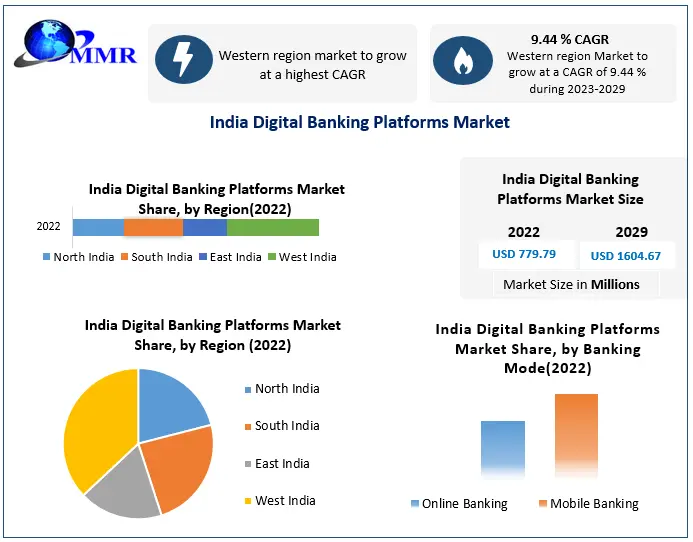
- Staggering Scale: The Unified Payments Interface (UPI) processed a monumental 24,161.69 crore transactions totaling Rs. 314 lakh crore ($3,552.94 billion) during FY2025–26, registering an explosive volume growth of roughly 30%.
- Capital Allocation & Tech Stack: India's "India Stack" architecture—comprising Aadhaar, UPI, and Account Aggregator frameworks—has drastically compressed enterprise customer acquisition costs (CAC) while scaling cloud compute infrastructure nationwide.
- Global Export Potential: Sovereign financial technology models pioneered in South Asia are now being exported to emerging and developed economies, fundamentally challenging legacy Western payment rails and cross-border settlement monopolies.
- Regulatory & Risk Mitigation Imperatives: As transaction velocities accelerate, central banking authorities are ramping up cyber-resilience frameworks, fraud analytics, and liquidity risk mitigation protocols to safeguard system integrity.
The Catalytic Engine of a Trillion-Dollar Digital Economy
In the annals of modern financial technology, few transformations match the velocity, systemic integration, and sheer transactional mass of India’s digital banking revolution. According to benchmark data released by the India Brand Equity Foundation (IBEF), the subcontinent's financial ecosystem has crossed a Rubicon of economic scale. For the fiscal year 2025–26, the Unified Payments Interface (UPI) alone processed an astounding 24,161.69 crore transactions, aggregating an economic value of Rs. 314 lakh crore—translating to approximately US$3,552.94 billion. This represents a robust volume expansion of roughly 30% year-over-year, cementing digital rails as the core infrastructure of India's macroeconomic engine.
To understand the gravity of these numbers is to examine a structural pivot away from cash-dominant commerce toward a state-backed, interoperable public digital good. Institutional investors, venture capital syndicates, and global banking conglomerates are recalibrating their strategic portfolios to capture value within this ecosystem. The implications for enterprise ROI, market liquidity, and valuation multiples across fintech and banking sectors are profound, establishing India not merely as a domestic growth market, but as the world’s premier sandbox for population-scale financial engineering.
Deconstructing the India Stack: Architecture and Enterprise Implications

The bedrock of India’s digital banking surge is the "India Stack"—a foundational, open-API digital public infrastructure (DPI) that seamlessly integrates biometric identification (Aadhaar), instantaneous payment routing (UPI), paperless verification (DigiLocker), and consented data sharing (Account Aggregator framework). Unlike Western fintech models built on proprietary, siloed legacy architecture, India’s public-private partnership model has drastically lowered systemic friction.
For commercial banks and non-banking financial companies (NBFCs), this infrastructure scalability translates directly into bottom-line efficiencies. Customer onboarding that once demanded physical documentation, manual underwriting, and weeks of latency has been reduced to a sub-minute, API-driven e-KYC handshake. Consequently, customer acquisition costs (CAC) have plummeted by over 80% for tier-1 lenders, allowing institutions to profitably service micro-segments previously deemed financially unviable. Enterprise tech budgets are now heavily skewed toward cloud compute architecture, real-time fraud analytics engines, and advanced machine learning models designed to process millions of concurrent micro-transactions without systemic latency.
Verified Data & Metrics Breakdown
A granular review of IBEF data reveals the sheer magnitude of transaction throughput and valuation dynamics shaping the digital banking landscape:
| Metric Indicator | FY2025–26 Performance Data | Macroeconomic Impact & Analysis |
|---|---|---|
| UPI Transaction Volume | 24,161.69 Crore transactions | Demonstrates near-universal adoption across urban and rural retail networks. |
| Aggregate Financial Value | Rs. 314 lakh crore (~US$3,552.94 billion) | Rivals the national GDP outputs of major G7 economies in digital throughput. |
| YoY Volume Growth Rate | ~30% Expansion | Outpaces traditional retail banking growth curves by a factor of four. |
| Regulatory Compliance Focus | Enhanced Cyber-Resilience & Liquidity Audits | Mandated real-time fraud mitigation to protect systemic liquidity and consumer trust. |
Industry Implications: Winners, Losers, and Economic Restructuring
The structural shift toward digital banking is creating stark bifurcations across the corporate landscape. Identifying who wins and who loses is essential for institutional capital allocation:
The Winners
- Tech-Forward Private Lenders: Banks that invested early in cloud-native core banking systems are capturing high-margin retail credit and low-cost current/savings account (CASA) deposits at unprecedented rates.
- Fintech Enablers & Gateway Providers: Infrastructure-as-a-service providers powering merchant acquisitions and checkout flows are enjoying surging valuation multiples.
- Micro, Small, and Medium Enterprises (MSMEs): Formalized digital footprints grant previously unbanked enterprises instant access to formal credit markets, bypassing predatory informal lenders.
The Losers & Laggards
- Legacy State-Run Banks Lacking Agility: Public sector institutions slow to modernize their tech stacks face severe attrition in high-value urban retail segments.
- Traditional Cash-Handling and ATM Networks: The secular decline of physical cash is compressing revenues for cash logistics, physical security, and ATM deployment firms.
- High-Fee Intermediaries: Traditional card networks relying on interchange fees face severe margin compression as zero-fee or low-cost sovereign rails capture market share.
Frequently Asked Questions (People Also Ask)
What drove the explosive 30% growth in India's digital banking transactions for FY2025–26?
The surge is driven by ubiquitous smartphone penetration, deep rural internet expansion, merchant-side acceptance incentives, and the seamless interoperability of the UPI infrastructure. Consumers and enterprises increasingly favor instantaneous, zero-friction digital settlements over legacy cash or card channels.
How does India's "India Stack" impact enterprise customer acquisition costs (CAC)?
By leveraging paperless e-KYC via Aadhaar and verified consent through the Account Aggregator framework, financial institutions eliminate physical paperwork and manual underwriting. This digital-first pipeline slashes customer acquisition costs by up to 80%, enabling profitable scaling into tier-2, tier-3, and rural markets.
What are the primary regulatory and risk mitigation challenges facing Indian digital banking?
As transaction volumes scale into multi-trillion-dollar territory, regulatory bodies like the Reserve Bank of India (RBI) are prioritizing cyber-resilience, data localization, real-time fraud detection, and systemic liquidity risk management to protect consumers and maintain macroeconomic stability.
Are international markets adopting India's digital public infrastructure model?
Yes. Several central banks across Asia, Africa, Middle East, and Europe are actively collaborating with Indian technical agencies to license or replicate UPI-style sovereign payment rails, positioning India as a global exporter of digital financial infrastructure.
Future Outlook: Milestones on the Horizon
As India’s digital banking ecosystem looks toward the latter half of the decade, attention is shifting from sheer volume growth to sophisticated financial deepening. Key milestones to monitor include the nationwide scaling of Central Bank Digital Currency (CBDC) integration, the evolution of cross-border UPI linkages with major global economies, and the deployment of generative artificial intelligence in automated credit underwriting and wealth management.
For institutional investors and enterprise strategists, the directive is unequivocal. India's digital banking framework is no longer an emerging market experiment; it is a mature, high-performance financial super-highway setting global benchmarks for efficiency, scale, and resilience. Capital allocation strategies that align with this infrastructure will define the vanguard of international finance in the years ahead.