Executive Takeaways
- Fiscal Impulse Neutrality: Federal fiscal policy transitioned from an unprecedented multi-trillion-dollar stimulus engine to a neutral-to-negative drag on real Gross Domestic Product (GDP), leaving corporate revenues nakedly dependent on private market liquidity and organic consumer demand.
- Structural Cost-of-Capital Escalation: With sovereign spending no longer mechanically inflating nominal domestic demand, enterprise hurdle rates have reset. Corporate borrowers face an aggressive debt-refinancing cliff as debt-service coverage ratios (DSCR) contract across mid-market and non-investment-grade issuers.
- Market Liquidity Divergence: While sovereign debt issuance escalates to fund persistent baseline deficits, the Federal Reserve's concurrent balance-sheet runoff (Quantitative Tightening) is siphoning bank reserves, exposing asset-liability mismatches across the regional banking architecture.
- Asymmetric Enterprise Capital Allocation: Capital expenditure (CapEx) is pivoting abruptly away from debt-fueled expansion toward targeted investments in automation, cloud compute infrastructure, and supply chain reshoring designed strictly to defend compressed EBITDA margins.
The Macroeconomic Pivot: Inside the Federal Reserve’s Diagnostic
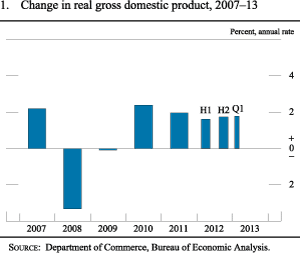
When the Federal Reserve publishes "Part 1: Recent Economic and Financial Developments" within its statutory Monetary Policy Report, market participants parse every inflection in macroeconomic tone. The empirical reality documented in recent analytical cycles marks a watershed transition: the total exhaustion of counter-cyclical fiscal tailwinds and the emergence of a restrictive monetary-fiscal regime.
For consecutive quarters, the narrative underpinning resilient macroeconomic headline data was anchored in lingering pandemic-era fiscal stimulus, anomalous consumer balance sheets, and historically depressed corporate borrowing costs locked in during prior quantitative easing regimes. However, the Federal Reserve’s clinical assessment confirms that federal fiscal policy actions have ceased to provide positive incremental impulse to real output growth, flattening to a statistically neutral contribution.
The implications of this shift are profound for enterprise operators and institutional allocators. When the federal government's net fiscal contribution to GDP moves to zero, top-line corporate growth decoupled from state transfer payments must rely on core productivity, private fixed investment, and unassisted consumer expenditure. In an environment characterized by elevated benchmark rates, this transition exposes fundamental vulnerabilities across capital structures, corporate margins, and cross-asset valuation multiples.
Deconstructing the Fiscal Drag and Output Trajectory
The mechanics of the federal fiscal footprint are governed by direct federal consumption, gross investment, and indirect transfer mechanisms. While federal purchases experienced modest nominal growth—driven by non-defense discretionary allocations and legacy statutory outlays—the aggregate macroeconomic impulse has effectively neutralized.
Legislative measures enacted in previous cycles, including the Infrastructure Investment and Jobs Act (IIJA), the CHIPS and Science Act, and the Inflation Reduction Act (IRA), were initially forecast by market consensus to provide sustained, unyielding tailwinds to aggregate demand. Federal Reserve analysis, however, reveals a stark structural dichotomy: while these statutes unlocked localized, multi-year subsidies for targeted semiconductor facilities and green energy installations, their net contribution to broad-based real GDP growth in the near term has been largely offset by the sunsetting of universal pandemic-era liquidity transfers, escalating entitlement obligations, and sharply higher net interest expenses on the national debt.
Net interest costs paid by the federal government have escalated at an unprecedented pace, functioning not as productive aggregate demand stimulus, but as a transfer payment disproportionately absorbed by institutional debt holders, sovereign wealth funds, and domestic financial intermediaries. Rather than circulating through high-velocity commercial channels to bolster broad consumption, these capital flows are sequestered within institutional liquidity portfolios, muting the real-economy fiscal multiplier.
Financial Conditions, Credit Intermediation, and Corporate Stress
Against this neutral fiscal backdrop, the Federal Reserve's sustained policy rate architecture has materially tightened broad financial conditions. Commercial bank lending standards have undergone persistent, across-the-board hardening, as documented in the Federal Reserve's Senior Loan Officer Opinion Survey (SLOOS). The confluence of heightened funding costs, deposit flight toward higher-yielding money market instruments, and unrealized losses on held-to-maturity (HTM) securities portfolios has induced structural conservatism within bank balance sheets.
Small and mid-sized enterprises (SMEs)—the primary engines of domestic employment—are bearing the brunt of this credit contraction. Unlike mega-cap multinationals that locked in ultra-low fixed-rate benchmark debt through 2030 and beyond, mid-market corporate borrowers operate largely in the syndicated loan and private credit spheres, where floating-rate benchmark debt predominates. As Secured Overnight Financing Rate (SOFR) yields escalated alongside federal funds target revisions, interest coverage ratios deteriorated rapidly.
Furthermore, commercial real estate (CRE) exposures—particularly non-trophy office and speculative multi-family assets—loom as an acute transmission channel of financial fragility. Regional depository institutions, which hold an outsized share of commercial real estate loans, are actively executing defensive asset-liability matching strategies, curtailing commercial lending capacity, and aggressively demanding equity recapitalizations from sponsors facing debt maturities.
Empirical Cross-Asset and Macroeconomic Metrics
The statistical trajectory documented across the Federal Reserve's monitoring cycle highlights the cross-currents shaping sovereign, corporate, and private markets:
| Macroeconomic & Financial Indicator | Historical Stimulus Baseline | Neutralized Policy Regime | Net Variance / Structural Impact |
|---|---|---|---|
| Federal Fiscal Impulse (Contribution to GDP) | +4.2% to +5.8% (Peak Surge) | -0.1% to +0.2% (Neutral) | Contraction of synthetic macro top-line support |
| Effective Federal Funds Rate (EFFR) | 0.08% (Zero-Bound) | 5.33% (Restrictive Plateau) | +525 bps structural cost-of-capital increase |
| U.S. 10-Year Treasury Benchmark Yield | 0.65% – 1.45% | 4.20% – 4.70% | Severe discount rate reset across all risk assets |
| Non-Financial Corp. Debt Service Ratio (%) | 13.8% (Depressed) | 16.4% (Elevated) | Sharp reduction in free cash flow available for CapEx |
| High-Yield Credit Spreads (Option-Adjusted) | 320 bps (Compressed) | 380 – 460 bps (Widening Risk) | Bifurcation between Tier-1 and junk-rated paper |
| Bank Credit Growth (Commercial & Industrial) | +9.4% Annualized | -1.2% to +0.8% (Stagnant) | Severe private credit rationing by regional lenders |
Industry & Market Implications: The Emergence of Capital Discipline
The cessation of state-sponsored economic momentum triggers a stark reallocation of enterprise capital across corporate America, dividing industries into distinct cohorts of structural resilience and acute financial vulnerability.
The Disadvantaged: Highly Leveraged Private Equity and Floating-Rate Borrowers
Sponsor-backed private equity portfolio companies acquired between 2019 and 2021 at peak valuation multiples (often exceeding 14x to 18x EBITDA) now face acute systemic stress. Many of these transactions were structured with 60% to 70% floating-rate debt structures unhedged against rapid interest rate increases. With debt service costs more than doubling, institutional sponsors are increasingly compelled to inject rescue equity, execute distressed debt exchanges, or hand the keys of underperforming assets back to private credit lenders.
The Disadvantaged: Regional Commercial Banking and CRE Syndicators
Depository institutions with elevated commercial real estate concentrations and heavy reliance on uninsured deposits remain vulnerable to margin compression. The spread between deposit funding costs and legacy asset yields continues to constrain net interest margins (NIM), inhibiting their ability to underwrite new enterprise originations and forcing greater regulatory scrutiny under Basel III endgame revisions.
The Strategic Winners: Mega-Cap Fortress Balance Sheets
Conversely, mega-cap balance sheets across technology, aerospace, and advanced manufacturing operate in a distinct tier. Dominant technology enterprises possess tens of billions in short-term cash reserves, allowing them to capture risk-free yields above 5% on liquid treasuries while funding mission-critical enterprise AI, cloud compute infrastructure, and automated microservices directly from operational cash flow. These balance sheets enjoy structural insulation from broader credit contraction.
The Strategic Winners: Specialized Private Credit and Liquidity Providers
As commercial banks retreat from leveraged middle-market lending, alternative asset managers and direct-lending platforms are stepping in to fill the credit vacuum. These non-bank financial institutions are securing senior-secured, asset-backed loan covenants at yields ranging between 10% and 12%, effectively demanding favorable enterprise ROI, robust debt-service covenants, and extensive equity cushions as a condition of capital provision.
Frequently Asked Questions (People Also Ask)
What does a "neutral fiscal policy" mean for US economic growth?
A neutral fiscal policy implies that the combined impact of federal tax revenues, discretionary and non-discretionary spending, and sovereign transfer payments is neither accelerating nor decelerating real Gross Domestic Product (GDP). In this state, public sector outlays no longer inject excess purchasing power into the private economy, requiring economic growth to rely entirely on private-sector capital expenditure, personal consumption, real wage expansion, and commercial credit creation.
How does the Federal Reserve’s macroeconomic assessment affect corporate valuation multiples?
When the Federal Reserve documents neutral fiscal impulse alongside restrictive monetary policy, the risk-free rate of return (represented by short-term Treasuries) remains elevated. In discounted cash flow (DCF) valuation models, a higher discount rate mathematically suppresses the net present value of future corporate earnings. Consequently, valuation multiples—such as Price-to-Earnings (P/E) and Enterprise Value-to-EBITDA (EV/EBITDA)—contract across equity markets, punishing speculative, long-duration equities that lack current free cash flow generation.
Why did major pieces of federal legislation not produce a larger fiscal tailwind in 2023?
While historic statutes like the IIJA, CHIPS Act, and IRA authorized hundreds of billions of dollars, their statutory design spreads disbursements across a multi-year horizon (often 5 to 10 years). Concurrently, previous emergency fiscal programs established during the pandemic lapsed entirely. The gradual distribution of structural infrastructure spending was insufficient to outpace the natural drag produced by higher tax receipts and the termination of universal consumer stimulus payments, netting out to a neutral economic impulse.
How are enterprise executives adjusting capital allocation in response to tighter credit conditions?
Corporate management teams are prioritizing balance sheet liquidity preservation, proactive debt refinancing, and disciplined operational efficiency. Discretionary, debt-funded mergers and acquisitions (M&A) have slowed in favor of strategic asset divestitures. Furthermore, enterprise CapEx is increasingly concentrated on technological efficiency—such as enterprise automation, predictive supply-chain software, and cloud architecture modernization—designed to reduce fixed operational overhead and defend net margins against persistent labor cost pressures.
Future Outlook: Strategic Milestones and the Looming Maturity Wall
Looking ahead, the stability of the global macroeconomic framework hinges on the delicate synchronization between monetary calibration and private enterprise resilience. Institutional decision-makers must monitor several mission-critical indicators over the medium term:
- The Corporate Refinancing Maturity Wall (2024–2026): Hundreds of billions of dollars in corporate debt issued during the pandemic at coupon rates below 3.5% must be rolled over at prevailing market rates. If benchmark yields remain elevated, non-financial corporate interest burdens will surge, accelerating default rates and forcing aggressive cost-cutting measures across mid-market employers.
- Treasury Issuance Dynamics and Quantitative Tightening: With persistent annual federal budget deficits requiring elevated auction sizes for long-dated Treasuries, the ongoing reduction of the Federal Reserve’s balance sheet threatens to test the absorptive capacity of institutional primary dealers, increasing the risk of bond-market volatility and sovereign liquidity dislocations.
- Credit Spread Divergence and Private Credit Disclosures: As floating-rate debt structures mature, the opacity of private credit valuations will face unprecedented scrutiny. Any sharp decompression in credit spreads or spike in payment-in-kind (PIK) loan modifications will signal systemic distress across mid-market enterprise assets.
As the Federal Reserve’s economic assessment unequivocally demonstrates, the era of effortless expansion fueled by fiscal largesse has concluded. Navigating this economic terrain demands structural capital allocation discipline, rigorous risk mitigation, and uncompromised balance sheet conservatism.