Executive Takeaways
- The Indexing Shift: Google web crawlers are gaining unprecedented pathways to index public Discord server archives, user profile metadata, and historical chat logs, turning previously walled gardens into searchable public data.
- Privacy & Regulatory Friction: This integration triggers immediate compliance vulnerabilities under strict international frameworks, including GDPR and CCPA, forcing enterprises and privacy-conscious users to re-evaluate cloud compute architecture and data retention.
- Immediate Risk Mitigation: Users and community administrators must actively navigate platform settings to decouple their digital identities and server contributions from public search engine scrapers.
- Market & Valuation Impact: As social communication platforms monetize infrastructure and pivot toward open web discoverability, user churn and capital allocation strategies will face severe valuation tests.
For nearly a decade, Discord has operated as the digital town square for the modern internet. From decentralized crypto treasuries and elite engineering syndicates to niche gaming clans and political grassroots movements, millions have treated the platform as an encrypted, semi-private enclave. That illusion of insulated digital sovereignty is now colliding with the relentless mechanics of global web indexing. Recent updates indicate that user profiles, server messages, and community archives are increasingly vulnerable to surfacing directly on Google Search. For corporate legal teams, compliance officers, and privacy advocates, this development represents a seismic shift in risk mitigation and data governance.
The transition from closed community loops to open web search visibility is not merely a technical update; it is a structural evolution in how conversational data is monetized, cataloged, and exposed. As tech giants navigate capital allocation pressures and search engines demand higher-density information retrieval indexes, the boundaries separating private chatrooms from public web domains are dissolving. Understanding the mechanics of this shift requires a rigorous examination of cloud infrastructure scalability, platform policy pivots, and the immediate steps required to safeguard personal digital footprints.
The Anatomy of the Indexing Shift: How Private Chats Meet Public Search
Test Our Free AI & Tech Utilities Suite
Calculate LLM API token costs, analyze article dwell-time, or simulate tech DCA returns.
To comprehend how Discord content transitions onto Google Search, one must analyze the architecture of public servers versus private direct messages. Historically, search engine crawlers like Googlebot were restricted by authentication walls, requiring active user credentials to bypass entry gates. However, the explosive proliferation of public-facing Discord communities—many of which leverage web-based landing pages, public invite links, and web-hosted chat transcripts—has created vast expanses of unauthenticated, indexable data.
When server administrators configure their channels as public-facing hubs, the conversational logs generated within those environments functionally mirror traditional forum boards or public message boards like Reddit. Google’s continuous algorithmic enhancements are designed to ingest unstructured natural language data to satisfy long-tail search queries. Consequently, casual banter, technical troubleshooting, proprietary code snippets, and deeply personal user profile disclosures shared within these public server ecosystems are being vacuumed into the world's largest search index.
From an infrastructure scalability perspective, indexing conversational text represents a low-cost, high-yield expansion of search utility. Yet, for the average user who joined a public server under the assumption that their chat history remained confined to that specific digital ecosystem, the realization that their remarks are searchable by employers, academic institutions, and malicious actors alike is alarming. This mismatch between user mental models and platform data architecture has ignited a fierce debate over regulatory compliance and digital consent.
Regulatory Compliance and Enterprise Risk Mitigation
The convergence of conversational platforms and search engine visibility introduces profound legal liabilities. Enterprise organizations increasingly utilize Discord for collaborative workflows, developer communities, and customer support channels. When employees or contractors discuss product roadmaps, security vulnerabilities, or sensitive financial metrics in public-facing servers, the subsequent indexing of these logs by Google creates catastrophic enterprise risks.
Under the General Data Protection Regulation (GDPR) and the California Consumer Privacy Act (CCPA), individuals maintain an enforceable "right to be forgotten." When third-party search engines cache and index chat messages and user profile details without explicit, granular consent, platform operators and server administrators expose themselves to severe regulatory penalties. Legal experts warn that corporations failing to audit their public community presences on Discord could face governance audits, shareholder derivative suits, and reputational damage that directly impacts valuation multiples.
Furthermore, risk mitigation strategies must now extend beyond perimeter cybersecurity to encompass data provenance and search engine optimization (SEO) defense. Companies can no longer treat chat platforms as ephemeral communications; they must be managed with the same rigorous compliance frameworks applied to public SEC filings or press releases.
Verified Data & Metrics Breakdown
The scale of this digital indexing phenomenon can be quantified through key platform metrics, regulatory benchmarks, and search behavior shifts outlined below:
| Metric / Parameter | Pre-Integration Era | Current Indexing Environment | Strategic Implications |
|---|---|---|---|
| Search Engine Visibility | Restricted to authenticated domains & walled gardens | Direct indexing of public channels & profiles via web crawlers | Loss of conversational privacy on public servers |
| Regulatory Exposure (GDPR/CCPA) | Low risk for peer-to-peer messaging spaces | High risk due to cached public profiles and chat logs | Mandatory compliance audits and opt-out enforcement |
| User Churn Risk | Minimal friction regarding message permanence | Elevated concern among privacy-first user cohorts | Potential migration to decentralized, end-to-end encrypted apps |
| Enterprise Data Governance | Informal community management policies | Strict legal review of public server architectures | Integration of automated data scrubbing and archiving tools |
Actionable Playbook: How to Opt Out and Protect Your Digital Footprint
For users determined to prevent their personal Discord data, message histories, and profile metadata from appearing on Google Search, proactive intervention is mandatory. Because platform default settings frequently prioritize discoverability and growth over absolute privacy, users must manually navigate their account and server configurations.
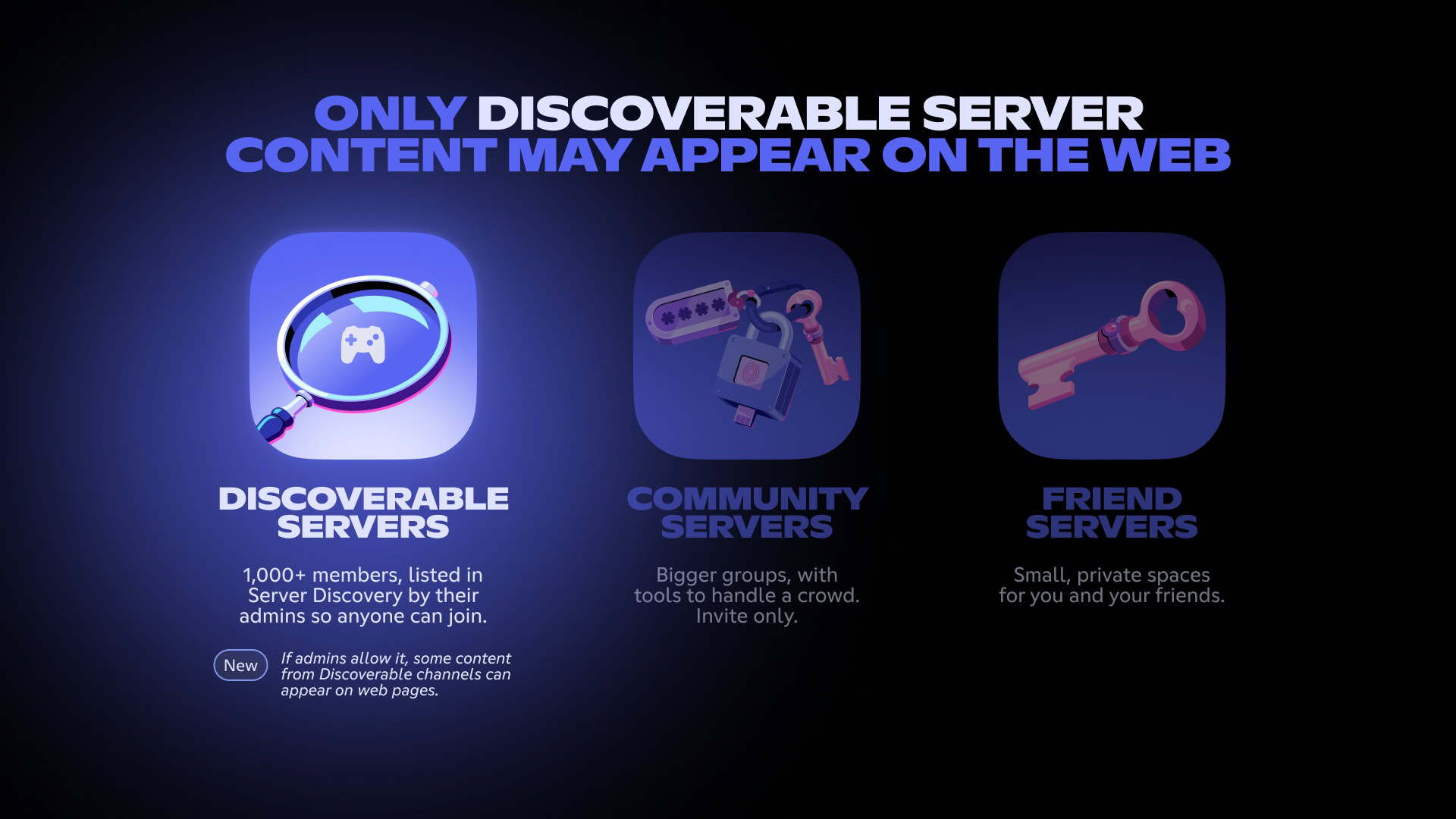
- Audit Server Memberships and Public Status: Review every Discord server you belong to. Determine whether these communities are listed publicly in server discovery directories. If a server is public, any message you post in non-restricted channels can potentially be scraped by web indexers.
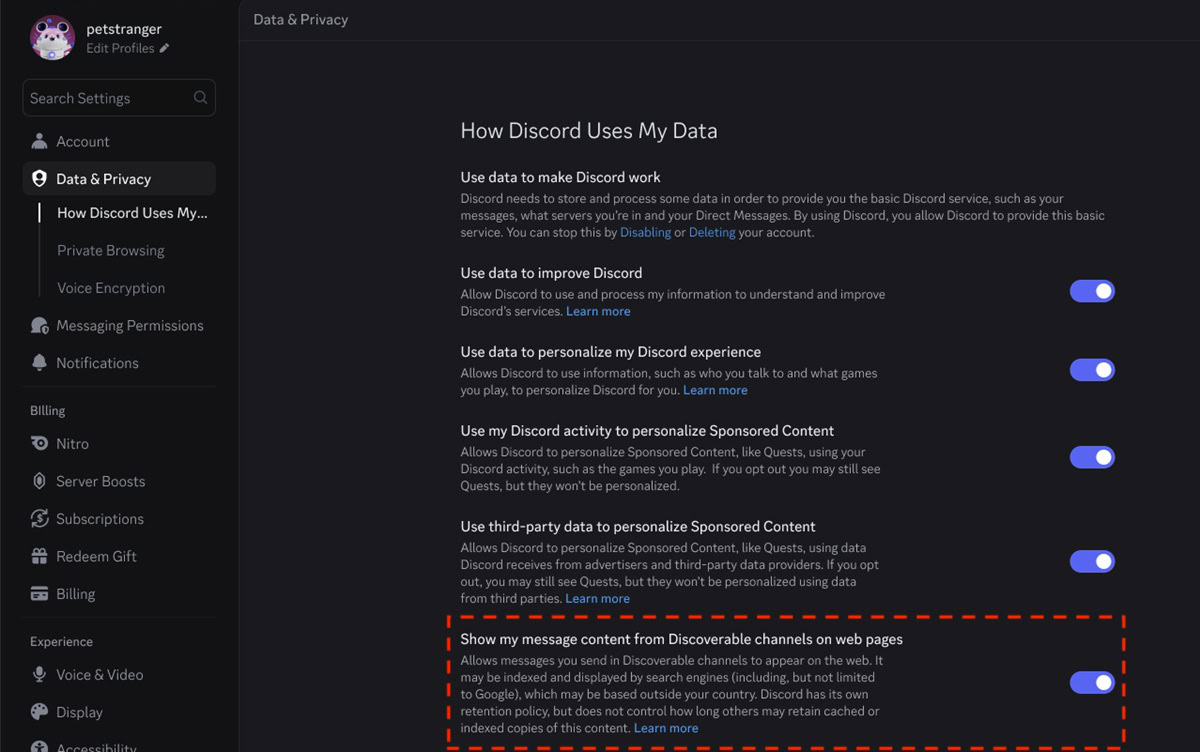
- Adjust User Profile and Activity Settings: Navigate to your Discord User Settings, select "Privacy & Safety," and carefully toggle off data-sharing options that permit third-party visibility or allow the platform to utilize your activity metrics for broader platform discoverability.
- Utilize Direct Messages and Private Servers for Sensitive Comms: While Direct Messages (DMs) and closed, invite-only servers with restricted permissions offer significantly higher insulation from public web crawlers, always exercise caution regarding what data you transmit across digital networks.
- Execute Data Erasure Requests: If you identify historical messages or profile details already cached on search engines, leverage Google’s removal tools alongside direct appeals to server administrators to purge archived chat logs.
Frequently Asked Questions (People Also Ask)
Can Google index my private Discord direct messages and locked servers?
No. Google web crawlers cannot bypass authentication walls or cryptographic access controls. Private direct messages, group chats, and servers restricted strictly to approved members with invite-only access remain shielded from standard public search engine indexing.
Which specific Discord data elements are most vulnerable to being indexed?
The primary targets for web crawlers are public-facing server channels, community announcements, user profile biographies, linked social media handles, and public message boards hosted within communities that permit web viewing without requiring active login credentials.
How can server administrators prevent their community archives from appearing on Google?
Administrators can restrict channel permissions to prevent unauthorized viewing, disable public server discovery listings, implement strict role-based access controls, and utilize automated bot tools designed to scrub or restrict historical chat logs from external web scrapers.
Does opting out of data sharing completely erase my historical footprint from the web?
Opting out stops future indexing and reduces visibility moving forward, but cached copies already captured by search engines may persist temporarily. Users must often submit direct removal requests to search engine operators to purge previously cached web pages and historical snapshots.
Future Outlook: Market Implications and the Next Wave of Privacy Governance
As digital platforms balance commercial imperatives with user privacy demands, the tension between open web discoverability and encrypted communication will define the next era of technology markets. For investors, the ability of communication platforms to retain user trust while unlocking enterprise monetization will directly dictate valuation multiples and market liquidity.
In the near term, we anticipate a sharp acceleration in regulatory scrutiny from global watchdogs, compelling tech firms to build automated privacy-by-design architectures. Users and enterprises alike must abandon the naive assumption of digital anonymity, adopting a zero-trust posture toward online communications. The message is clear: in an era where data is aggressively scraped and indexed, protecting your digital sovereignty requires constant vigilance, precise configuration management, and a comprehensive understanding of how modern web search operates.