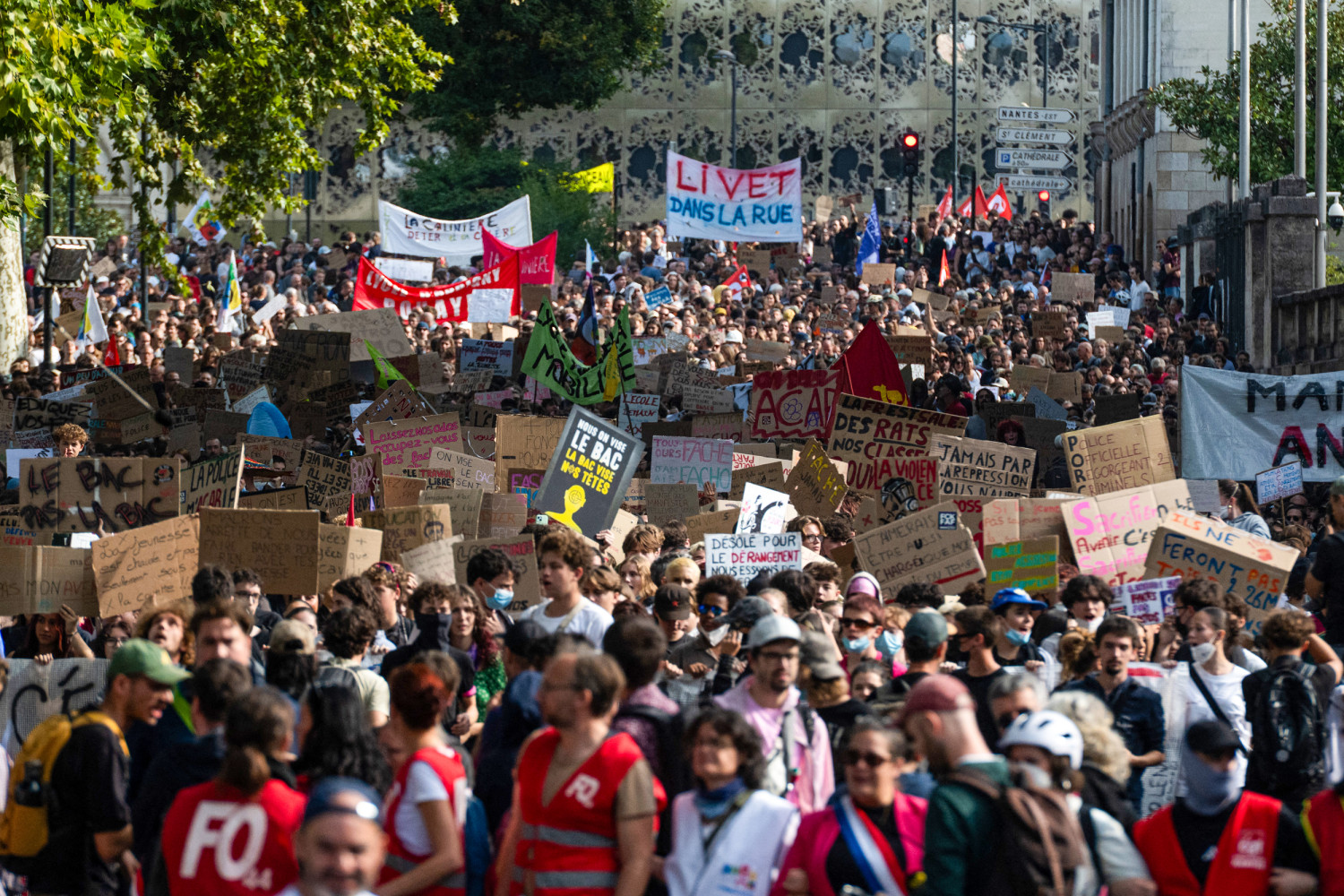
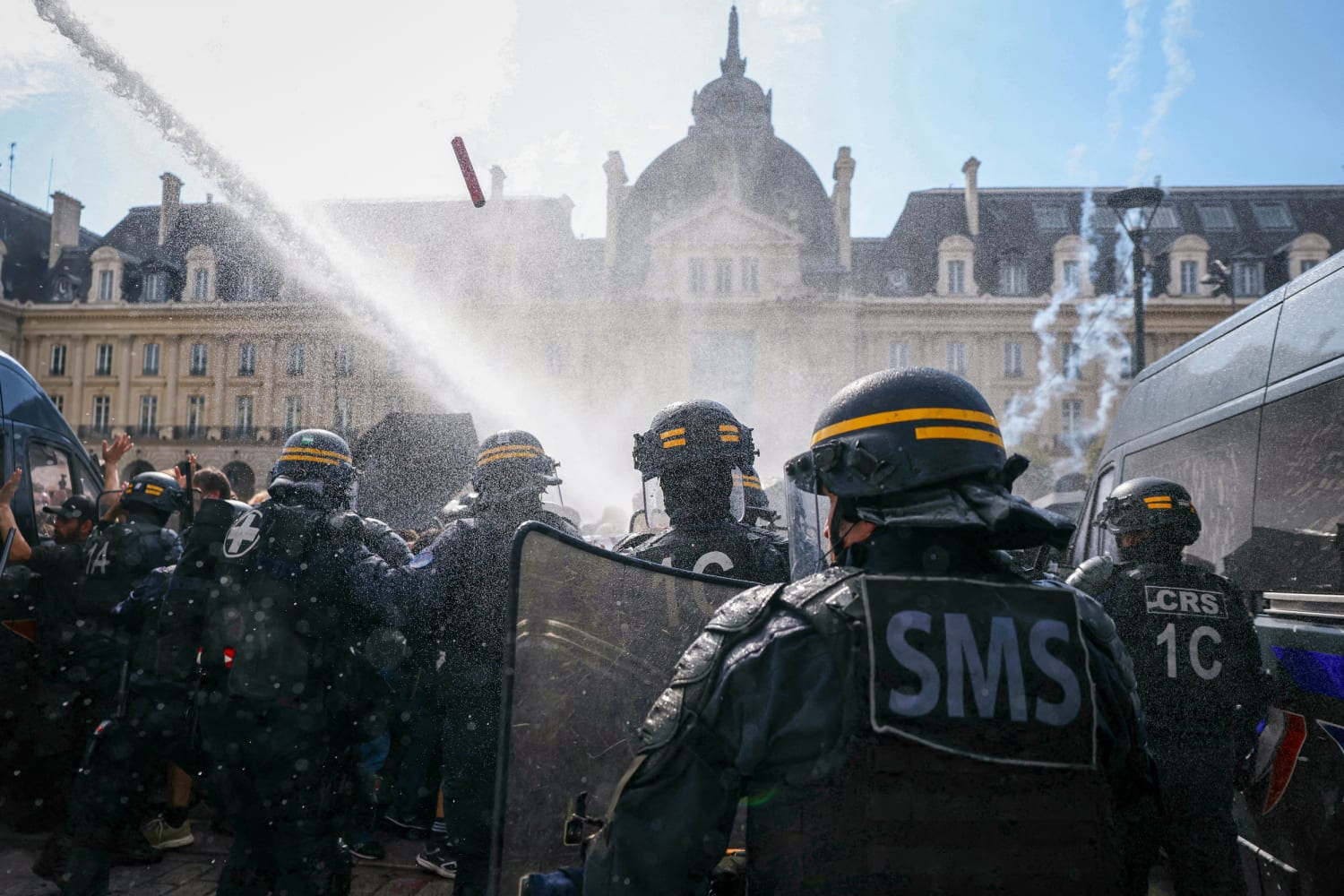
PARIS — The French government ordered the emergency closure of nearly 900 schools across the country on Thursday as sweeping education reforms triggered an unprecedented wave of student-led protests, transforming major metropolitan avenues into battlegrounds of tear gas, barricades, and flying debris.
The nationwide unrest, driven by fierce opposition to proposed curriculum overhauls, budget cuts, and standardized testing mandates, has paralyzed France’s educational infrastructure. Interior Ministry officials confirmed that riot police deployed tear gas and stun grenades in Paris, Marseille, and Lyon after protests hijacked by radical splinter groups spiraled out of control, resulting in dozens of arrests and mounting property damage.
For President Emmanuel Macron’s administration, the escalating crisis represents a severe political test. Coming on the heels of protracted labor disputes and retirement reform battles, the paralysis of nearly 900 secondary schools highlights deep-seated public anxiety over the future of the French public service model and state investment in youth development.
At the Epicenter: How the Crisis Unfolded
The unrest began earlier in the week as a coordinated walkout by high school syndicates and teachers' unions protesting structural spending adjustments. However, what started as peaceful demonstrations quickly escalated by mid-week. Blockades made of overturned industrial bins, burning tires, and wooden pallets materialized outside hundreds of campuses.
In central Paris, plumes of black smoke rose near historic academic institutions as clashes erupted between security forces and masked agitators. Authorities reported that at least 45 individuals were detained in the capital alone, while emergency medical services treated dozens for minor injuries, smoke inhalation, and contusions.
- Scale of Disruption: Approximately 887 high schools and middle schools faced total or partial closures, affecting hundreds of thousands of students.
- Government Response: The Ministry of National Education activated crisis management protocols, urging calm while refusing to immediately retract the contested policy proposals.
- Union Stance: Major education unions have threatened an indefinite general strike if law enforcement continues what they term "disproportionate tactics" against minors.
- Economic Impact: Public transit disruptions tied to protest marches have severely impacted morning commutes across major French urban centers.
The Core Grievances: Why Students and Teachers are Revolting
At the heart of the standoff is the Ministry of Education's controversial plan to restructure high school tracking systems and implement stricter performance benchmarks. Critics argue the reforms will widen educational inequality, starve underfunded suburban banlieue schools of vital resources, and introduce a corporate-style accountability matrix antithetical to the Republican tradition of French public education.
Furthermore, inflation-weary teachers have seized upon the movement to demand higher baseline salaries and a reversal of hiring freezes that have left classrooms dangerously overcrowded. "We are watching the systematic dismantling of the equal-opportunity engine of the Republic," said Jean-François Martin, a representative for the Snes-FSU teachers' union. "The government is governing from a glass tower, completely disconnected from the realities on the ground."
Market and Political Fallout
The unrest has immediately reverberated through the political halls of Paris, offering fresh ammunition to opposition leaders on both the left and the right. Lawmakers are demanding an emergency parliamentary debate to address the handling of the crisis and the broader trajectory of public spending.
Economists note that while the immediate financial impact of school closures is localized, prolonged social unrest risks denting consumer confidence and international perception of French economic stability just as the Eurozone navigates a delicate growth environment.
| Indicator | Current Status | Impact Level |
|---|---|---|
| Schools Closed | ~890 nationwide | Critical |
| Security Deployment | Enhanced riot police presence | High |
| Union Action | Indefinite strike warnings | Severe |
| Public Transit | Rerouted / Delays in Paris & Lyon | Moderate |
What Lies Ahead: A Fragile Standstill
As evening approached, regional prefectures urged parents to keep children home where possible, while emergency distance-learning modules were hastily scrambled by local educational authorities. However, digital infrastructure faced connectivity bottlenecks as millions attempted to log on simultaneously.
Prime Minister Gabriel Attal is slated to address the nation later this week, balancing a hardline stance against property destruction with potential concessions on resource allocation. Yet, with student unions vowing to escalate demonstrations until the controversial reforms are entirely scrapped, France faces a tense weekend with little sign of an immediate de-escalation.
Frequently Asked Questions
Why are French students and teachers protesting?
The protests were triggered by proposed educational reforms involving curriculum changes, standardized testing, and budget allocations that critics argue will reduce equity and overcrowd classrooms. Teachers are also demanding higher wages to combat inflation.
How many schools have been closed?
The French Ministry of National Education confirmed that nearly 900 secondary schools (approximately 887 institutions) were forced to close partially or entirely due to student blockades, safety concerns, and violent clashes.