Executive Takeaways
- Unprecedented CapEx Expansion: Alphabet has dramatically revised its 2026 capital expenditure forecast upward, targeting an eye-watering $205 billion to fuel aggressive AI infrastructure development.
- Wall Street Anxiety: The staggering outlays have triggered intense debates among institutional investors regarding short-term enterprise ROI, margin compression, and extended valuation multiples.
- Compute Architecture Overhaul: The funds are heavily concentrated on next-generation TPU clusters, advanced data center cooling systems, and specialized cloud compute architecture designed to outpace hyperscale rivals Microsoft and Amazon.
- Strategic Risk Mitigation: Despite the immediate balance sheet strain, Google's executive leadership views these expenditures as existential table stakes to secure long-term dominance in generative AI and autonomous software ecosystems.
SAN FRANCISCO — In an era defined by high-stakes corporate maneuvering, Alphabet Inc. has once again upended the technology sector’s financial calculus. According to emerging disclosures and financial modeling updates, Google has escalated its capital allocation strategy to a previously unimaginable threshold, raising its 2026 capital expenditure forecast to a staggering ceiling of $205 billion. This aggressive financial posture—far eclipsing consensus Wall Street projections—signals that the race for artificial intelligence supremacy has officially entered a hyper-capital-intensive phase where traditional fiscal prudence is taking a back seat to raw infrastructural dominance.
For months, financial markets have grappled with the mounting costs of the generative AI boom. Hyperscalers have poured hundreds of billions of dollars into specialized silicon, massive data center footprints, and power grid access. Yet, Google’s latest upward revision shatters existing benchmarks, forcing institutional investors, portfolio managers, and equity analysts to recalibrate their financial models. The fundamental question gripping global financial capitals is no longer whether artificial intelligence will transform the enterprise economy, but whether the astronomical price tag required to build this infrastructure can ever be justified by proportional revenue generation.
The Catalyst Behind the $205 Billion Figure
Test Our Free AI & Tech Utilities Suite
Calculate LLM API token costs, analyze article dwell-time, or simulate tech DCA returns.
The decision to ramp up capital expenditures to $205 billion did not happen in a vacuum. Throughout early 2026, exponential growth in enterprise demand for foundational model training, multimodal inference workloads, and real-time AI integration pushed existing cloud compute architecture to its absolute limits. Google Cloud, under the stewardship of specialized engineering teams, realized that maintaining its competitive moat against Microsoft-backed OpenAI and Amazon Web Services (AWS) required a generational leap in hardware deployment.
At the heart of this spending blitz is the rapid procurement and deployment of proprietary Tensor Processing Units (TPUs), alongside massive allocations of advanced Nvidia hardware. Furthermore, data center modernization has become a formidable cost driver. Modern AI clusters demand unprecedented electrical capacity, driving Google into multi-billion-dollar energy procurement agreements, including pioneering investments in nuclear and renewable micro-grids to power facilities in rural and suburban hubs.
This capital allocation strategy represents a profound structural shift. Historically, technology giants scaled their infrastructure incrementally in direct response to verified user demand and cloud consumption trends. Today, Google is practicing "anticipatory scaling"—building out vast pools of compute capacity years in advance, operating on the firm conviction that supply-constrained infrastructure will dictate the winners and losers of the next digital decade.
Verified Data and Metrics Breakdown
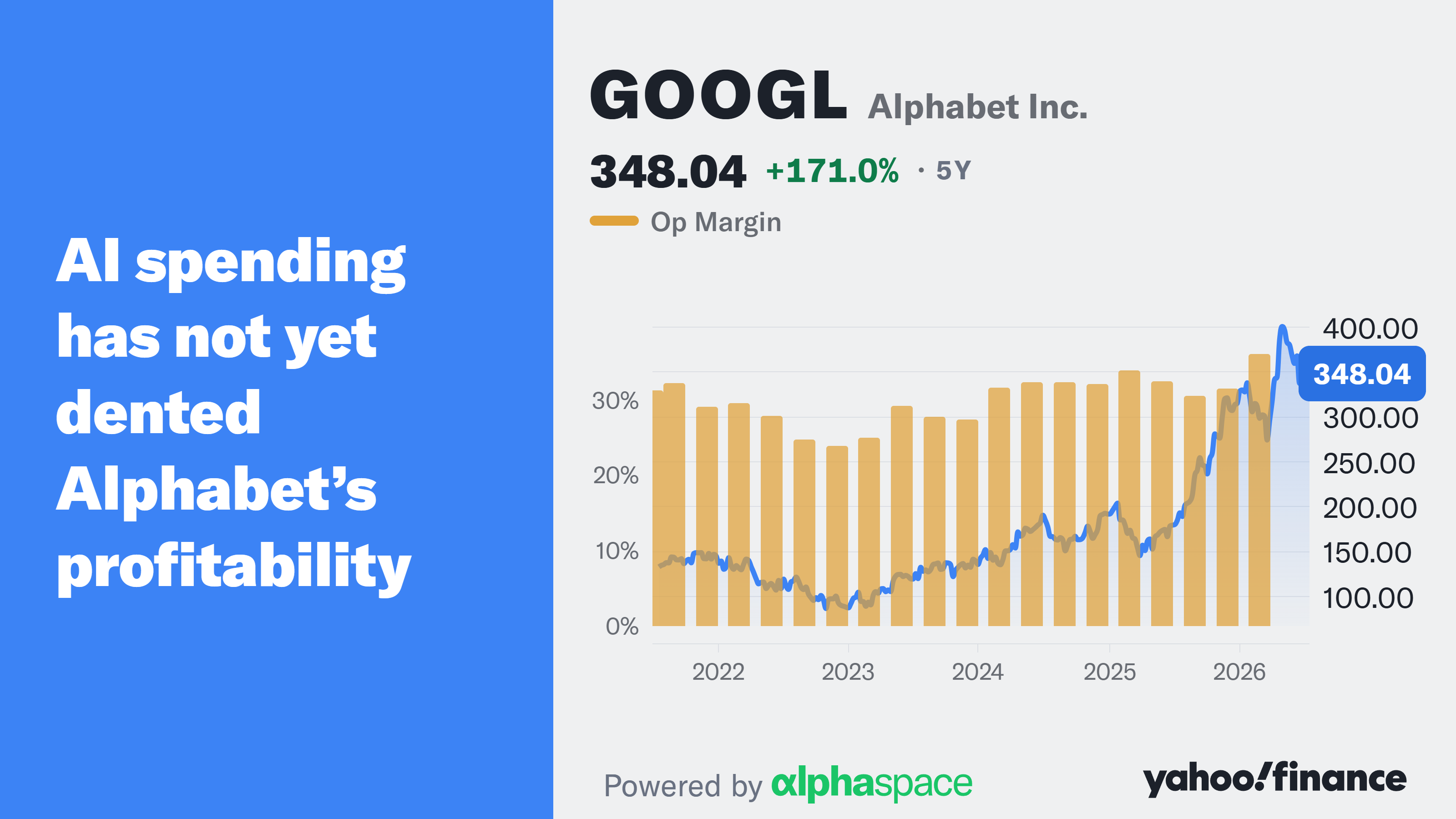
To understand the sheer magnitude of Google’s fiscal acceleration, one must examine the trajectory of its infrastructure spending relative to historical norms and competitive benchmarks. The following data breakdown illustrates the financial pressure points currently reshaping the sector:
| Metric / Indicator | Previous Projections (2025–2026) | Revised Guidance / Actuals | Strategic Impact |
|---|---|---|---|
| 2026 Capital Expenditure Cap | $140B – $160B | Up to $205 Billion | Massive upward revision, triggering equity volatility and margin scrutiny. |
| Primary Cost Driver | Standard Server Refresh | AI Data Centers & Silicon Acquisition | Shifts balance sheet focus heavily toward hardware and power infrastructure. |
| Energy Infrastructure Outlays | Moderate Grid Contracts | Direct Nuclear / Renewable PPA Deals | Mitigates power grid bottlenecks; ensures uninterrupted training uptime. |
| Enterprise Monetization Horizon | 12 – 18 Months | Extended to 24 – 36 Months | Lengthens the amortization curve, testing short-term investor patience. |
Industry and Market Implications
The ripple effects of Google’s $205 billion expenditure forecast extend far beyond Mountain View, fundamentally altering the competitive dynamics of the global technology ecosystem.
1. Wall Street Reaction and Valuation Multiples
Equity markets have responded to the news with a mixture of awe and apprehension. While top-line revenue growth across Google Cloud and search-adjacent AI monetization initiatives remains robust, the sheer weight of these capital outlays places immediate downward pressure on free cash flow metrics. Short-term valuation multiples have compressed as analysts recalculate depreciation schedules and potential margin dilution. Institutional shareholders are increasingly demanding granular transparency regarding how these massive infrastructure investments translate into sustainable enterprise software revenue.
2. The Hyperscale Arms Race
Google’s aggressive stance raises the stakes for its primary rivals. Microsoft, Amazon, and Meta Platforms are now forced to evaluate whether they must match these astronomical expenditure levels to avoid falling behind in raw compute capacity. This dynamic threatens to spark a capital arms race reminiscent of the telecom infrastructure buildouts of the late 1990s—though with the crucial distinction that enterprise software demand for AI is backed by immediate, tangible corporate adoption.
3. Supply Chain and Silicon Economics
The primary beneficiaries of this capital surge are semiconductor fabricators, networking equipment providers, and specialized power management firms. Companies supplying advanced cooling solutions, high-bandwidth memory (HBM), and optical networking components are experiencing unprecedented demand. However, this concentration of capital also creates supply chain vulnerabilities, where any disruption in advanced chip fabrication can stall multi-billion-dollar deployment timelines.
Frequently Asked Questions (People Also Ask)
Why is Google raising its capital expenditure forecast to $205 billion for 2026?
Google is dramatically increasing its capital expenditure to secure long-term leadership in generative AI. The funds are earmarked for building massive next-generation data centers, acquiring advanced proprietary silicon (TPUs) and third-party accelerators, and securing dedicated green and nuclear energy sources to power high-density compute clusters.
How are investors reacting to Google’s high AI spending?
Institutional investors and Wall Street analysts have expressed mixed reactions. While the investments underscore Google's unwavering commitment to technological dominance, the massive cash outlays raise concerns over short-term margin compression, free cash flow reduction, and extended enterprise ROI timelines.
What role does energy infrastructure play in Google's capital allocation?
Power availability has emerged as the single biggest bottleneck in AI scaling. A significant portion of Google's capital expenditures is directed toward securing reliable, continuous power through direct Power Purchase Agreements (PPAs) with nuclear, solar, and wind energy providers to ensure data centers can operate at peak capacity without straining local electrical grids.
How does Google’s spending compare to other hyperscalers like Microsoft and Amazon?
While all major hyperscalers have aggressively increased their infrastructure budgets, Google’s revised $205 billion ceiling places it at the absolute vanguard of AI capital deployment. This aggressive posture reflects an intentional strategy to out-build competitors and capture dominant market share in cloud-based AI services.
Future Outlook: What to Watch in the Next 12 Months
As the industry navigates this uncharted financial territory, several critical milestones will dictate whether Google’s monumental gamble pays off. First, equity analysts will closely scrutinize upcoming quarterly earnings reports for concrete evidence of accelerating Google Cloud revenue growth directly tied to proprietary AI workloads. Second, regulatory compliance and antitrust scrutiny regarding energy grid utilization and technology consolidation will remain central risk factors.
Ultimately, Google’s $205 billion pivot is a definitive bet on the future of human-computer interaction. By absorbing immense financial risk today, executive leadership is positioning the conglomerate to dictate the terms of the digital economy for decades to come. Whether Wall Street ultimately rewards this audacity or penalizes its near-term balance sheet costs will serve as the defining financial narrative of the mid-2020s technology landscape.