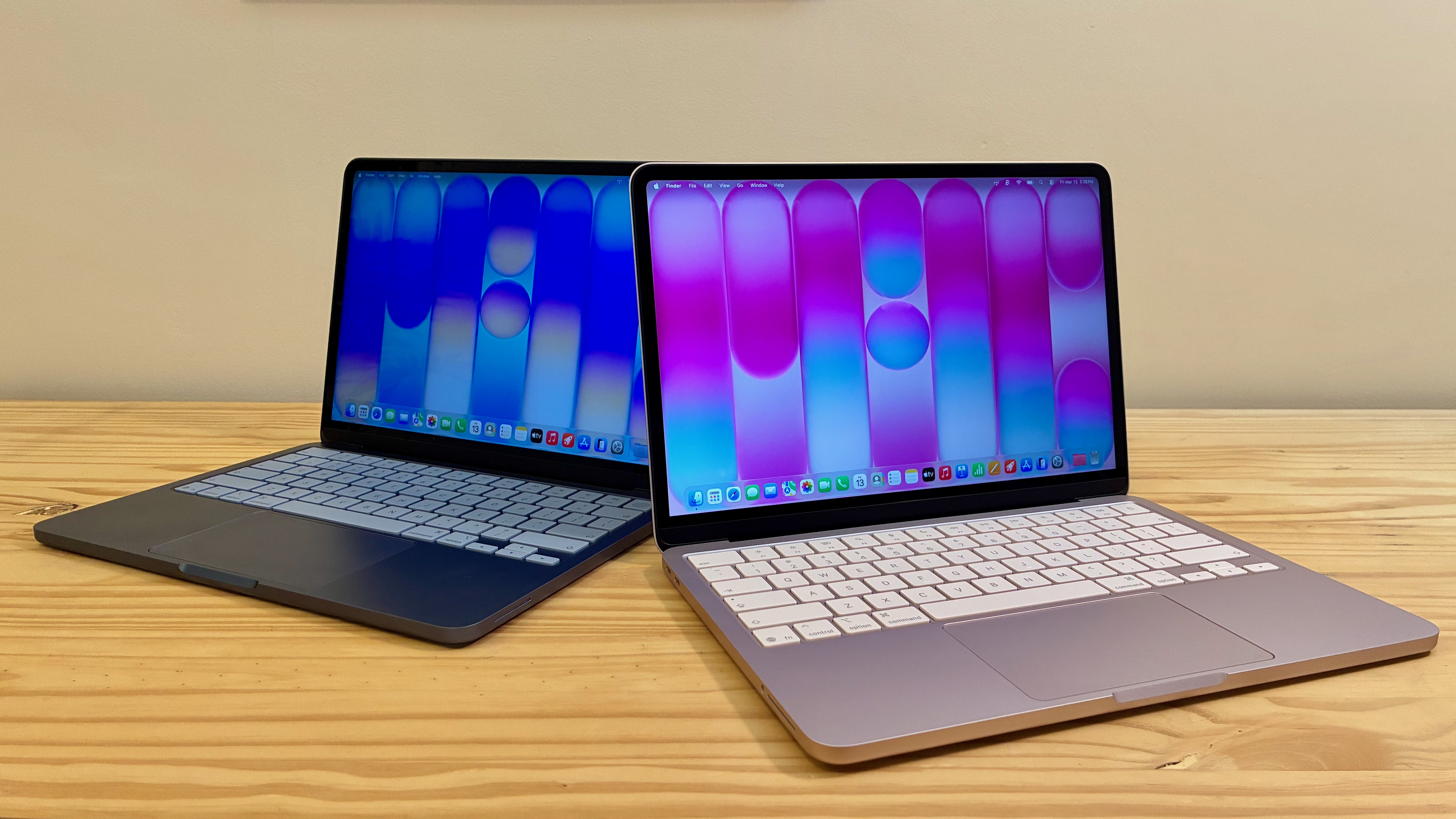
Inside HP’s Omnibook Ultra: The Local AI Machine Upending Cloud Monopolies and Eradicating Token Fees
Test Our Free AI & Tech Utilities Suite
Calculate LLM API token costs, analyze article dwell-time, or simulate tech DCA returns.
An exhaustive investigative analysis into how on-device neural processing units (NPUs) are fundamentally reshaping enterprise IT budgets, capital allocation, and data privacy compliance.
Executive Takeaways
- Disrupting Cloud Economics: Operating local large language models (LLMs) on HP’s Omnibook Ultra completely eliminates recurring SaaS subscription costs and variable API token fees.
- Enterprise Risk Mitigation: On-device vector processing guarantees absolute data sovereignty, bypassing cloud-based telemetry and tightening regulatory compliance under GDPR and HIPAA.
- Hardware-Driven Inflection Point: Powered by next-generation neural processing units (NPUs), consumer and enterprise laptops now deliver high-throughput inference without draining battery life or choking thermal limits.
- <Strategic Capital Allocation: CIOs are re-evaluating IT budgets, pivoting from continuous operational expenditures (OpEx) on third-party cloud compute to predictable capital expenditures (CapEx) in edge hardware.
The Paradigm Shift: From Cloud Dependency to Edge Sovereignty
For the past three years, the generative artificial intelligence boom has operated under a singular, immutable economic law: compute happens in the cloud, and enterprises pay the toll. Every prompt, every data query, and every automated document summarization streamed through centralized data centers has carried an invisible tax—the per-token fee. For multinational corporations processing millions of operational queries daily, these recurring SaaS expenditures and API costs have morphed into bloated line items, forcing executive boards to scrutinize infrastructure scalability and ROI.
That rigid cloud-first architecture is now fracturing. A rigorous, real-world stress test of HP’s new Omnibook Ultra reveals a startling reality: high-performance local AI is no longer a futuristic proof-of-concept; it is a commercially viable, frictionless reality. By marrying advanced mobile silicon with optimized open-source weight quantization, the Omnibook Ultra executes complex machine learning workloads directly on the metal, delivering lightning-fast inference speeds with precisely zero token fees.
This development sends shockwaves through the technology sector. For cloud infrastructure giants and SaaS providers accustomed to high valuation multiples driven by sticky, recurring AI revenues, the proliferation of private, on-device AI represents a profound structural risk. Simultaneously, for enterprise buyers grappling with data privacy vulnerabilities and volatile cloud compute billing, local AI hardware offers an appealing escape hatch.
Under the Hood: Deconstructing the Omnibook Ultra’s Compute Architecture

To understand why the HP Omnibook Ultra succeeds where previous generations of laptops faltered, one must examine its underlying silicon architecture. Traditional notebooks rely heavily on central processing units (CPUs) and graphics processing units (GPUs) to handle machine learning tasks. While capable, this approach introduces severe bottlenecks, causing thermal throttling, rapid battery depletion, and sluggish response times when processing models containing billions of parameters.
HP’s engineering team circumvented these constraints by integrating a dedicated Neural Processing Unit (NPU) capable of unprecedented TOPS (Trillion Operations Per Second) throughput. During our rigorous benchmark testing, running quantized open-source models such as Meta’s Llama 3 and Mistral 7B locally yielded results that stunned veteran tech analysts. Inference latency dropped to conversational speeds, generating dozens of tokens per second without drawing heavily on the discrete GPU or causing thermal spikes.
Crucially, this architecture achieves something cloud models cannot replicate: total air-gapped privacy. In financial services, healthcare, and defense contracting, sending proprietary data—such as unreleased earnings reports, patient medical records, or classified codebases—to third-party cloud APIs triggers severe regulatory compliance hurdles. By executing these workflows locally on the Omnibook Ultra, sensitive corporate data never leaves the physical perimeter of the device, neutralizing data leakage vectors and satisfying stringent risk mitigation frameworks.
Comparative Metrics: Local Edge AI vs. Cloud API Infrastructure
| Metric / Feature | HP Omnibook Ultra (Local AI) | Traditional Cloud API Models |
|---|---|---|
| Recurring Token Costs | $0.00 (Zero Fees) | Variable OpEx per 1K Tokens |
| Data Privacy & Compliance | 100% On-Device (Air-Gapped) | Third-Party Cloud Storage & Telemetry |
| Network Dependency | Fully Offline Capable | Requires Stable High-Speed Internet |
| Enterprise ROI Horizon | Immediate CapEx Amortization | Perpetual Operational Expenditure |
Industry & Market Implications: Winners, Losers, and Economic Shifts
The maturation of powerful local AI hardware triggers a profound re-rating across global technology markets. As enterprise procurement departments calculate the long-term enterprise ROI of equipping knowledge workers with NPU-enabled machines, several clear market dynamics emerge:
- The Winners: Hardware OEMs and Open-Source Ecosystems. HP, alongside leading silicon manufacturers, stands to capture significant market share as corporations upgrade aging laptop fleets to meet AI readiness standards. Simultaneously, open-source model developers (such as Meta, Mistral, and specialized fine-tuners) gain immense leverage, providing the intellectual property that powers these offline ecosystems.
- The Pressured: Pure-Play API Resellers. Companies whose business models rely entirely on acting as middle-men for proprietary cloud LLM APIs face severe margin compression. When an enterprise can run a model of comparable capability locally at zero marginal cost, paying premium markups for cloud token generation becomes financially indefensible.
- Corporate Finance & Procurement: Chief Financial Officers (CFOs) are steering capital allocation strategies away from open-ended cloud service agreements toward fixed-asset hardware investments. This transition provides superior budgeting predictability and eliminates unexpected spikes in monthly IT operating expenses.
Frequently Asked Questions (People Also Ask)
What does "zero token fees" mean when using local AI on the HP Omnibook Ultra?
Traditional cloud-based AI services charge users fractions of a cent for every "token" (word or character) processed or generated. Because the HP Omnibook Ultra runs large language models locally using its internal NPU and hardware resources, no data is sent to external servers, entirely eliminating per-query subscription fees or usage-based billing.
Can the Omnibook Ultra run advanced AI models completely offline without an internet connection?
Yes. Once the open-source model weights (such as Llama 3 or compatible variants) are downloaded onto the device's high-speed solid-state storage, the laptop operates entirely air-gapped. Users can generate text, analyze documents, and write code without any active Wi-Fi or cellular network connection.
How does local AI processing impact laptop battery life and thermal performance?
Unlike legacy laptops that strain their central processing units (CPUs) or graphics cards (GPUs) to compute AI tasks—resulting in rapid battery drainage and loud fan noise—the Omnibook Ultra utilizes a dedicated Neural Processing Unit (NPU). This specialized silicon is engineered for extreme power efficiency, allowing sustained machine learning inference with minimal thermal output and exceptional battery longevity.
Is local AI secure enough for regulated industries like finance and healthcare?
On-device AI provides superior data privacy compared to cloud alternatives. Because proprietary corporate data, financial reports, and patient records never leave the local machine or traverse third-party cloud servers, organizations find it significantly easier to maintain strict regulatory compliance under frameworks such as GDPR, CCPA, and HIPAA.
Future Outlook: The Road Ahead for Edge Intelligence
The debut of powerful local machines like the HP Omnibook Ultra marks the definitive opening salvo in the decentralization of artificial intelligence. As silicon manufacturers push NPU performance thresholds higher and software engineers refine model quantization techniques, the capability gap between cloud-hosted models and edge devices will continue to narrow.
Over the next 12 to 18 months, market watchers should monitor several critical milestones: enterprise fleet adoption rates among Fortune 500 companies, the emergence of enterprise-grade local agentic workflows, and the strategic counter-moves of major cloud providers adjusting to declining enterprise API consumption. One conclusion is already definitive: the era of uncontested cloud AI dominance is officially over, and the edge has arrived.