Executive Takeaways
- The 2027 Roadmap: Apple is aggressively accelerating development on a tabletop robotic actuator device priced around $1,000, strategically targeting the smart-home automation and ambient computing sectors.
- Ecosystem Integration: The hardware bridges FaceTime communication with decentralized IoT home control, leveraging proprietary on-device neural processing units (NPUs) to maintain strict data privacy paradigms.
- Capital Allocation Shift: Following the wind-down of Project Titan (the autonomous electric vehicle initiative), this project represents a critical pivot in Cupertino's R&D expenditure and infrastructure scalability.
- Valuation Multiples & Market Impact: Wall Street analysts view the initiative as a high-stakes test of Apple’s ability to defend hardware margins and justify future valuation multiples amid slowing iPhone upgrade cycles.
CUPERTINO, SAN FRANCISCO, & NEW YORK — In the high-stakes corridors of Silicon Valley, strategic pivots are rarely subtle. Following the multi-billion-dollar post-mortem of its decade-long autonomous vehicle endeavor, Apple Inc. is quietly reallocating its engineering vanguard toward a new frontier of consumer hardware. According to supply chain intelligence and leaked internal roadmap documents, Apple is slated to debut a groundbreaking, stationary home robotics device by 2027, carrying an estimated retail price point of approximately $1,000.
This calculated maneuver is far more than a routine product refresh; it is a foundational test of enterprise infrastructure scalability, machine learning integration, and capital allocation. As saturation grips the global smartphone market, Apple’s C-suite is under mounting pressure from institutional investors to unlock new high-margin revenue streams. By merging advanced robotics actuators, spatial audio, and decentralized IoT management into a single domestic interface, Cupertino aims to capture the next paradigm of ambient computing—turning living rooms into intelligent nodes of its proprietary ecosystem.
The Catalytic Pivot: From Autonomous Asphalt to the Living Room
Test Our Free AI & Tech Utilities Suite
Calculate LLM API token costs, analyze article dwell-time, or simulate tech DCA returns.
To understand the strategic genesis of Apple’s 2027 home robot, financial analysts must examine the wreckage and inherited intellectual property of Project Titan. For nearly ten years, Apple poured tens of billions of dollars into autonomous vehicle research, attempting to build a fully driverless electric vehicle from the chassis up. When the board pulled the plug on the initiative, it left behind a vast talent pool of computer vision engineers, roboticists, and hardware architects specialized in spatial mapping and real-time sensor fusion.
Rather than dissolving these teams, executive leadership executed a rapid risk-mitigation strategy, redeploying top-tier talent toward domestic robotics. The forthcoming device—internally designated with code-names pointing toward a motorized, iPad-like display mounted on a robotic arm—represents the commercialization of this salvaged technology. Instead of navigating unpredictable highway traffic, the device's navigation stack is optimized for indoor spatial awareness, obstacle avoidance, and dynamic user tracking.
From a financial perspective, this pivot dramatically lowers risk mitigation thresholds. Building a car exposed Apple to extreme supply chain liabilities, automotive regulatory compliance hurdles, and razor-thin manufacturing margins. Conversely, a $1,000 tabletop robotic assistant leverages existing iOS silicon supply chains, leverages mature software frameworks like HomeKit and Swift, and aligns cleanly with the company's premium hardware pricing strategy.
Hardware Architecture, Capabilities, and the Economics of $1,000
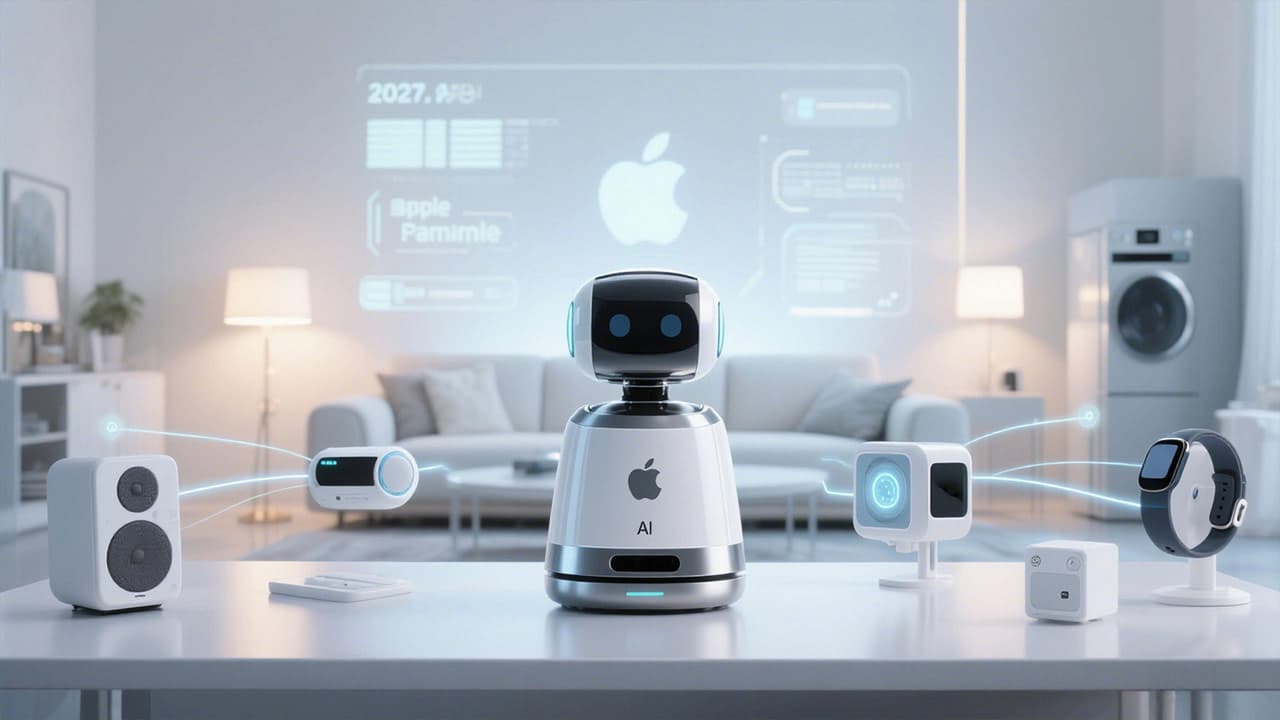
Industry insiders report that the device’s core mechanical differentiator is a lightweight, motorized actuator capable of tilting and 360-degree rotation. This physical mobility is designed to serve two primary functions: keeping the user dynamically framed during high-definition FaceTime communications, and physically orienting toward household sensors when triggered by voice commands or contextual routines.
However, engineering a consumer robot at a $1,000 price point introduces severe margin pressures. Apple must balance premium build materials, custom silicon, high-precision servo motors, and advanced microphone arrays while protecting its benchmark gross margins, which traditionally hover near the 45% threshold. To achieve enterprise ROI on the manufacturing side, Apple is expected to lean heavily on its established Asian manufacturing partners, leveraging long-term procurement contracts to drive down unit costs.
Furthermore, the device will serve as a physical anchor for Apple Intelligence. While cloud compute architecture will handle heavy computational loads, the robot's local processing will rely on advanced on-device neural engines. This guarantees low-latency responsiveness for ambient tasks—such as switching on smart lights, adjusting climate control thermostats, and monitoring home security feeds—without compromising user privacy through excessive cloud data transmission.
Verified Data & Metrics Breakdown
The following comparative matrix outlines key strategic, financial, and technical parameters surrounding Apple's upcoming hardware introduction versus historical precedents and competing ecosystem plays:
| Metric / Parameter | Apple Home Robot (2027 Projected) | Historical Analog (Project Titan / EV) | Competitor Benchmark (Amazon Astro / Echo) |
|---|---|---|---|
| Estimated Retail Price | ~$1,000 USD | $85,000+ (Targeted) | $450 – $1,600 USD |
| Primary Core Function | FaceTime, IoT Control, Spatial Tracking | Full Autonomous Highway Navigation | Home Security Patrol & Video Calls |
| Compute Architecture | On-Device NPU + Hybrid Cloud AI | Proprietary Drive Systems / Custom SoC | Cloud-Dependent Neural Processing |
| Regulatory Exposure | Standard Consumer Electronics Compliance | Extreme (NHTSA, Crash Testing, Liability) | Standard Consumer Electronics Compliance |
Industry & Market Implications: Who Wins, Who Loses
The introduction of a $1,000 Apple home robotic device carries profound ripple effects across the consumer technology landscape, altering competitive dynamics and forcing rivals to reassess their own hardware roadmaps.
The Winners
- Apple Shareholders & Premium Suppliers: If the device successfully captures the affluent consumer segment, it opens a brand-new hardware category capable of driving hardware upgrade cycles and sustaining robust valuation multiples. Precision component manufacturers specializing in miniature actuators and advanced microphone arrays stand to secure lucrative long-term supply contracts.
- Smart Home Ecosystem Partners: Manufacturers of Matter-compatible smart lighting, automated blinds, and security hardware will benefit immensely from an elevated, centralized control hub deeply integrated into the iOS ecosystem.
The Losers
- Legacy Smart Display Competitors: Amazon and Alphabet (Google) have largely struggled to monetize consumer robotics and high-end smart displays profitably. An aggressive Apple entry with superior build quality and airtight data privacy positioning threatens to commoditize lower-tier assistant devices.
- Makers of standalone security cameras and static intercom systems may also witness margin contraction as consumers consolidate their domestic hardware spending into multi-functional robotic hubs.
Frequently Asked Questions (People Also Ask)
What is the primary purpose of Apple’s rumored 2027 home robot?
The device is designed to act as a centralized domestic hub combining automated FaceTime communication, advanced spatial audio, and decentralized IoT control (such as managing smart lights, thermostats, and security systems) via a motorized, tabletop robotic interface.
Why is Apple pricing the device around $1,000?
The $1,000 price point reflects Apple's premium hardware positioning, balancing the high manufacturing costs of motorized mechanical actuators, custom silicon neural processors, and high-resolution displays while maintaining corporate gross margin targets.
How does this project relate to Apple’s canceled electric car (Project Titan)?
The home robot initiative directly absorbs engineering talent, computer vision algorithms, and real-time sensor-fusion technology originally developed for Project Titan, pivoting those assets from outdoor vehicular autonomy to indoor spatial mapping and robotics.
When will the device officially hit the market?
Current supply chain intelligence and internal roadmap disclosures point toward a commercial launch window in 2027, subject to hardware refinement, software scalability, and market testing milestones.
Future Outlook and Strategic Milestones to Watch
As the technology sector looks ahead to 2027, institutional investors and market analysts will closely monitor several key catalysts to gauge the viability of Apple’s robotics strategy. First, watch for patent filings and supply chain capital expenditure reports indicating early-stage tooling and component fabrication. Second, evaluate the evolution of Apple Intelligence and its ability to handle complex, multi-step domestic automation routines locally without privacy compromises.
Ultimately, Apple’s $1,000 home robot is a defining gamble for the post-iPhone era. If successful, it establishes a sticky, indispensable pillar of ambient domestic infrastructure that locks consumers deeper into the ecosystem for decades. If it falters, it will serve as a costly lesson in consumer appetite for domestic robotics. For now, Wall Street is watching closely as Cupertino prepares to take its boldest hardware leap in a decade.