Executive Takeaways
- Automated Scanning for Public Assets: Starting in iOS 27.3, Apple deploys automated inspection pipelines across all publicly accessible
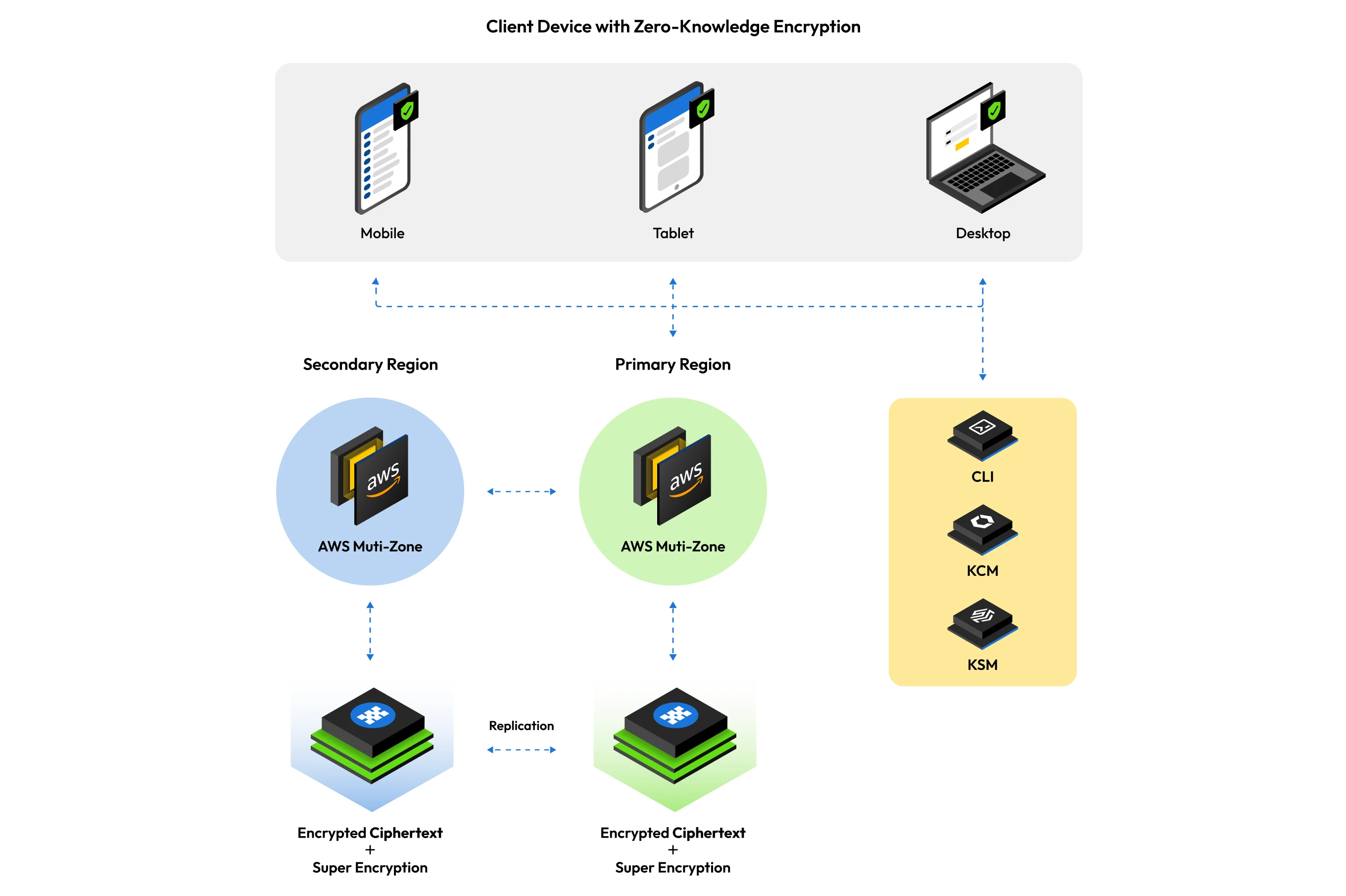
icloud.com/sharelinks to screen for Child Sexual Abuse Material (CSAM), severe malware payloads, and illicit content prior to distribution. - The Privacy Boundary Line: Apple explicitly delineates between private, end-to-end encrypted (E2EE) storage—protected under Advanced Data Protection—and publicly indexed distribution links, maintaining zero-knowledge architecture for private vaults while applying strict gateway content moderation for public endpoints.
- Regulatory Compliance Driver: The infrastructure pivot responds directly to enforcement escalation under the European Union’s Digital Services Act (DSA), the UK Online Safety Act, and expanding federal mandates in the United States governing public platform hosting liabilities.
- Enterprise & Capital Allocation Impacts: Cloud compute overhead for server-side and edge hash-matching is projected to subtly alter operational expenditure (OpEx) margins within Apple’s $85+ billion Services division while forcing corporate IT departments to re-evaluate iCloud for external document collaboration.
In what represents one of the most structural shifts to its cloud architecture in a decade, Apple Inc. is deploying an automated content-inspection pipeline for all publicly shared iCloud links beginning with iOS 27.3. The move, verified through developer beta telemetry and internal documentation, marks a decisive boundary line in Apple’s long-standing privacy narrative: while end-to-end encrypted user vaults remain pristine and inaccessible, any data exposed via a public URL will now undergo rigorous automated hash matching and heuristic analysis before payload delivery.
For years, Cupertino positioned its cloud platform as an uncompromising fortress of digital secrecy, occasionally putting the executive team at odds with international law enforcement and regulatory bodies. However, as public file-sharing links hosted on icloud.com increasingly functioned as unmoderated distribution vectors for malicious payloads and illegal media, the legal safe-harbor protections preserving Apple’s platform status began to fray. With iOS 27.3, Apple is signaling that public transit points on its infrastructure are no longer exempt from edge-level oversight.
The Technical Catalyst: How the iOS 27.3 Public Link Inspector Works
Test Our Free AI & Tech Utilities Suite
Calculate LLM API token costs, analyze article dwell-time, or simulate tech DCA returns.
To understand the mechanics of iOS 27.3, enterprise security architects must differentiate between private cloud storage and public distribution points. When a user generates an iCloud shared link, the platform converts a localized object into an accessible resource hosted at a public-facing domain. Under the updated architecture, generating or accessing a public share token triggers an automated, dual-layer inspection pipeline.
The system operates through a combined client-side pre-flight check and a server-side gateway inspection:
- Client-Side Perceptual Hash Generation: Prior to publishing a public link, the iOS 27.3 Neural Engine compiles cryptographically secure perceptual hashes of targeted image, video, and executable binaries. These hashes are cross-referenced locally against a database of known illicit material signatures compiled by official international safety clearhouses.
- Server-Side Gateway Verification: If a link is generated or accessed via the web interface, Apple’s edge servers inspect the unencrypted stream at the point of egress. Files exhibiting structural anomalies consistent with zero-day exploit payloads, known ransomware binaries, or flagged illegal media hashes are automatically quarantined, revoking the public share token instantly.
- Metadata Telemetry Logging: While the underlying content of private vaults remains opaque under Advanced Data Protection (ADP), public link metadata—including publisher IP address, public link access frequency, and hash verification logs—is temporarily retained for risk mitigation and threat analysis.
Crucially, Apple engineers stress that this mechanism does not unlock private iCloud backups, shared family albums restricted to authorized Apple accounts, or individual end-to-end encrypted drive directories. The inspection layer is strictly bound to assets where the cryptographic key has been intentionally attached to a public URL vector.
The Regulatory Pressure Cooker: Why Cupertino Pivoted

The deployment of iOS 27.3’s scanning protocol comes after sustained legal and legislative pressure across major global markets. Regulatory authorities in Europe and North America have systematically closed the legal loopholes that previously shielded cloud hosting providers from content liability.
In the European Union, the full enforcement of the Digital Services Act (DSA) mandates that Very Large Online Platforms (VLOPs) and intermediary hosting services maintain proactive detection mechanisms for illegal content distributed via public channels. Failure to comply exposes platform operators to administrative fines of up to 6% of global annual turnover. For Apple, whose Services segment alone rivals Fortune 50 companies in revenue, non-compliance carried prohibitive financial and regulatory risks.
Simultaneously, the UK’s Ofcom, enforcing the Online Safety Act, signaled that cloud links functioning as public download vectors would be held to the same legal standard as open social media channels. In the United States, federal legislative drafts aiming to eliminate Section 230 safe-harbor immunity for unmoderated public file distributions pushed Apple’s legal and engineering leadership to institute uniform infrastructure controls ahead of mandatory statutory compliance dates.
Financial & Infrastructure Overhead: Services Division Impact
From an enterprise finance perspective, implementing continuous automated scanning across billions of daily public file transactions introduces non-trivial operational expenses. The compute capacity required to execute high-throughput perceptual hashing and machine-learning payload analysis at edge data centers shifts the cost architecture of Apple's cloud operations.
Industry analysts project that while the capital expenditure (CapEx) for local Neural Engine utilization is largely absorbed by the client device, server-side dynamic analysis for web-accessed links will add millions in recurring cloud compute overhead. However, from a corporate risk mitigation perspective, the proactive move avoids potentially catastrophic litigation, compliance fines, and brand equity damage.
| Architectural Tier | Encryption Status | iOS 27.3 Inspection Protocol | Targeted Risk Vectors |
|---|---|---|---|
| Private iCloud Vaults | End-to-End Encrypted (ADP) | No Scanning (Zero-Knowledge) | N/A (User Managed Keys) |
| Authenticated User Sharing | Encrypted in Transit & Rest | Access-Control Gated | Account Compromise, Abuse |
Public icloud.com/share Links |
Public Key Attached to Link | Mandatory Pre-Flight & Server Hash Scan | CSAM, Malware, Copyright Infringement |
| Enterprise Managed Apple IDs | Policy Dependent | MDM Override / Mandatory Scanning | Data Exfiltration, IP Leakage |
Industry & Market Implications: Enterprise SaaS Realignment
The systemic shift in iOS 27.3 destabilizes competitive dynamics across the cloud storage and enterprise productivity sectors. Dedicated enterprise file-synchronization platforms—including Microsoft OneDrive, Google Drive, Dropbox, and Box—have operated server-side content inspection pipelines on shared links for over a decade. Apple’s historical reluctance to implement similar controls made iCloud a structural outlier in enterprise procurement settings.
With this deployment, Apple aligns its operational posture with corporate IT security expectations, potentially unlocking broader enterprise adoption for Apple Business Essentials. Chief Information Security Officers (CISOs) who previously barred employees from utilizing iCloud public link sharing due to compliance ambiguities now gain a standardized data-loss prevention (DLP) baseline.
Conversely, the decision has reignited fierce resistance among privacy advocates and civil liberty organizations. Groups such as the Electronic Frontier Foundation (EFF) argue that establishing client-side or gateway inspection pipelines for shared links creates a technical precedent—a "slippery slope" that authoritarian regimes could exploit by legally demanding the inclusion of political keywords, banned literature, or state-sanctioned perceptual hashes into Apple’s scanning engine.
Frequently Asked Questions (People Also Ask)
Does iOS 27.3 scan my private, unshared iCloud Photos and document backups?
No. Apple’s scanning architecture in iOS 27.3 is explicitly confined to assets associated with publicly generated share links (`icloud.com/share`). Private files, standard iCloud backups, and media stored within your personal vault remain protected by end-to-end encryption under Advanced Data Protection, where cryptographic keys are inaccessible to Apple servers.
How does public link scanning impact sensitive enterprise files or trade secrets shared via iCloud?
The scanning engine relies primarily on cryptographic perceptual hash matching for known illegal media and heuristic binary profiling for executable malware payloads. Proprietary corporate documents, financial models, and confidential media do not match these signatures and will pass through unhindered. However, corporate legal teams should note that public link metadata is logged during inspection.
Can users opt out of automated public link inspection in iOS 27.3 settings?
No. Public link content checking is a mandatory server-side and system-level security gateway protocol. If a user does not wish to have a file processed by the inspection pipeline, the asset must be shared through authenticated user-to-user permissions (restricting access to specific Apple accounts) rather than published via a public URL.
What happens if a shared public link triggers a false-positive detection?
If a file is flagged by the inspection pipeline, the public link is automatically disabled, and the user receives an alert via System Settings. Apple has built an administrative appeal workflow within iOS 27.3, allowing account holders to submit flagged assets for manual security review by Apple compliance personnel to restore sharing privileges.
Future Outlook: The Road Ahead for Apple’s Cloud Infrastructure
As iOS 27.3 moves from developer beta cycles toward full public release, wall street analysts and cloud infrastructure architects will be closely watching three key metrics: network latency impacts on public link resolution, user dispute volumes regarding false-positive blocks, and regulatory responses in jurisdictionally complex markets such as China and India.
Apple’s calculated gamble in iOS 27.3 demonstrates a mature enterprise realization: absolute infrastructure privacy cannot exist at the expense of public regulatory exposure. By ring-fencing public distribution mechanisms while preserving the sanctity of private encrypted storage, Cupertino attempts to establish a new golden mean in consumer tech—one that satisfies global regulators, protects platform trust, and maintains the financial velocity of its high-margin Services empire.