Executive Takeaways
- Strategic Pivot: Anthropic and Microsoft are actively negotiating a major AI chip infrastructure agreement, building upon a landmark $5 billion investment framework that signals a shifting tectonic plate in Big Tech alliances.
- Compute Bottleneck Mitigation: As frontier model training and inference costs skyrocket, access to scarce enterprise-grade silicon (such as NVIDIA GPUs and specialized accelerators) has become the defining constraint for artificial intelligence hegemony.
- Ecosystem Realignment: The talks test the regulatory boundaries of cloud interoperability, vendor lock-in, and antitrust scrutiny, forcing hyperscalers and foundation model laboratories into unprecedented, multi-party co-dependencies.
- Capital Expenditure Supercycle: The ongoing negotiations highlight the staggering capital allocation required to scale next-generation multimodal architectures, directly impacting corporate ROI metrics and institutional investor sentiment.
NEW YORK — The artificial intelligence landscape is undergoing a profound structural realignment. Following a monumental $5 billion investment wave that reshaped capital allocation strategies across Silicon Valley and Wall Street, foundational model pioneer Anthropic and cloud titan Microsoft are engaged in high-stakes negotiations regarding a major AI chip infrastructure deal, according to industry sources and reports first detailed by CNBC.
This evolving pact transcends a conventional vendor-client transaction. It represents a critical maneuver in an ongoing, high-capital war for hardware supremacy. As enterprise demand for generative AI capabilities surges, the bottleneck has definitively shifted from algorithmic innovation to physical infrastructure. Silicon availability—specifically high-performance accelerators capable of supporting trillion-parameter frontier models—now dictates corporate survival, valuation multiples, and market liquidity across the technology sector.
The Catalytic $5 Billion Foundation: Anatomy of a Capital Shift
To understand the gravity of the current chip negotiations, one must examine the baseline financial architecture established by recent capital injections. The initial $5 billion infusion into Anthropic created a complex web of financial and operational dependencies. Venture capitalists, institutional asset managers, and sovereign wealth funds have poured unprecedented sums into generative AI laboratories, anticipating exponential enterprise adoption and massive downstream cloud revenue.
However, venture capital and private equity funding alone cannot solve the physical constraints of AI scaling. Cash must be converted into compute capacity. Anthropic, creator of the Claude family of frontier models, faces the eternal challenge shared by OpenAI, Google DeepMind, and other independent laboratories: securing sufficient data center capacity and specialized silicon to train and deploy next-generation models without ceding total control of its infrastructure to a single hyperscale partner.
Enter Microsoft. Already tethered to OpenAI in a multi-billion-dollar partnership that has drawn intense regulatory scrutiny from the Federal Trade Commission (FTC), the European Commission, and the UK Competition and Markets Authority (CMA), Microsoft possesses unmatched cloud infrastructure architecture. By engaging Anthropic in dedicated chip supply and infrastructure discussions, Microsoft is executing a sophisticated risk mitigation and market diversification strategy. Simultaneously, Anthropic gains vital infrastructure scalability, reducing its singular reliance on AWS (Amazon Web Services) and Google Cloud, its primary early-stage backers.
Cloud Compute Architecture and the Silicon Scarcity Matrix

At the heart of the Anthropic-Microsoft discussions lies the brutal economics of cloud compute architecture. Training frontier large language models (LLMs) requires clusters containing tens of thousands of advanced GPUs operating in low-latency harmony. The capital expenditure (CapEx) required to build, cool, and power these data centers runs into the tens of billions of dollars per cluster.
| Metric / Dimension | Current Industry Baseline (2026) | Anthropic - Microsoft Deal Implications |
|---|---|---|
| Primary Capital Influx | $5 Billion Total Funding Benchmark | Catalyzes large-scale physical hardware deployment |
| Infrastructure Dependency | Primarily AWS & Google Cloud Platform | Diversification into Microsoft Azure ecosystem |
| Core Bottleneck | Advanced AI Accelerators & Power Allocation | Direct access to enterprise-grade silicon allocation |
| Regulatory Exposure | High scrutiny on Big Tech cloud concentration | Potential antitrust reviews regarding cross-pollination |
For Microsoft, leveraging its proprietary cloud infrastructure and robust supply chain relationships with top-tier semiconductor manufacturers allows it to monetize excess capacity or strategically allocate hardware to high-growth AI developers. For Anthropic, securing guaranteed silicon allocation prevents operational gridlock. As enterprise clients demand rigorous uptime, low inference latency, and data sovereignty compliance, having redundant cloud pathways is no longer optional—it is a baseline requirement for enterprise sales.
Industry & Market Implications: Who Wins, Who Loses
The financial markets are watching these negotiations with intense scrutiny, as the outcome carries significant ripples across the technology sector:
- The Hyperscale Balance of Power: While Amazon and Google remain foundational backers of Anthropic, Microsoft’s potential entry into the mix blurs traditional partner boundaries. It signals that foundational AI laboratories will not be captured exclusively by a single cloud provider, fostering a more multipolar cloud ecosystem.
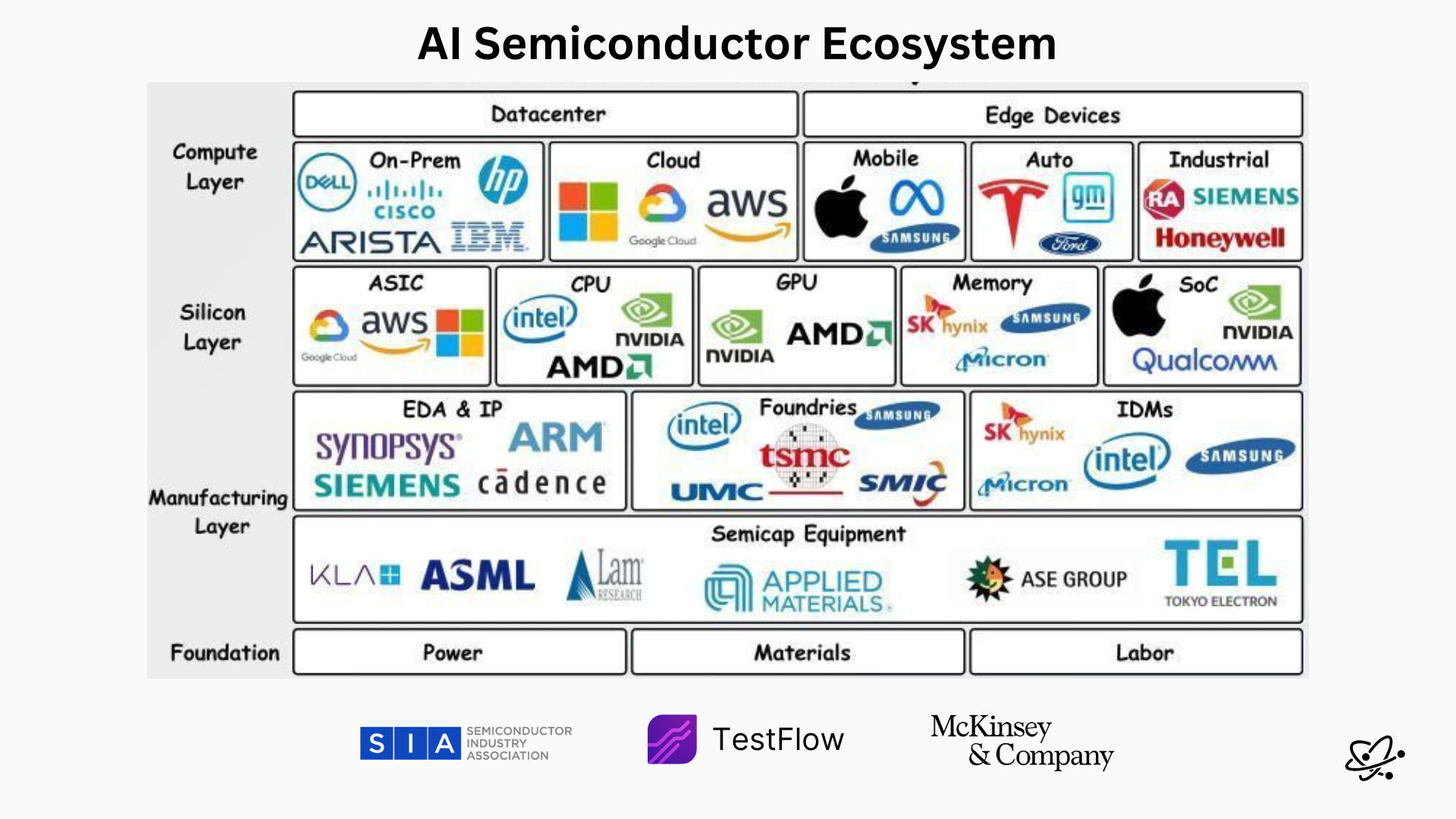
- Semiconductor Manufacturers: Companies designing and fabricating high-performance AI chips remain the ultimate beneficiaries. Regardless of which cloud giant or model developer triumphs, sustained demand for advanced silicon ensures robust revenue growth and high operating margins for top-tier chipmakers.
- Enterprise Buyers: Corporate buyers seeking enterprise AI integration stand to benefit from increased competition among cloud providers. Interoperability and multi-cloud deployment strategies will likely become easier to implement, mitigating vendor lock-in risks.
- Regulatory Watchdogs: Antitrust regulators in Washington, Brussels, and London will undoubtedly scrutinize the arrangement. Regulators are already investigating potential anticompetitive behaviors in AI partnerships, and a deepening financial and operational tie between Microsoft and another leading AI lab will face rigorous legal examination.
Frequently Asked Questions (People Also Ask)
What is the primary objective of the talks between Anthropic and Microsoft?
The discussions center on securing AI chip infrastructure and compute capacity following a $5 billion investment framework. Anthropic seeks expanded hardware access to train and deploy its Claude frontier models, while Microsoft aims to solidify its position as a dominant enterprise cloud and infrastructure provider for leading artificial intelligence developers.
How does this deal impact Anthropic's existing relationships with Amazon and Google?
Anthropic has historically relied heavily on Amazon Web Services (AWS) and Google Cloud for both capital investment and cloud infrastructure. While those primary partnerships remain intact, a potential agreement with Microsoft indicates a deliberate multi-cloud diversification strategy designed to mitigate supply chain bottlenecks and secure redundant enterprise compute capacity.
Why are AI chips becoming such a critical point of negotiation for tech giants?
Advanced AI accelerators (such as specialized GPUs and custom ASICs) are in severe global demand due to the massive computational requirements of training and running modern generative AI models. Because physical supply and data center power availability are constrained, securing silicon allocation directly determines a company's ability to innovate, scale, and capture enterprise market share.
Will this proposed arrangement face regulatory hurdles?
Given the intense global scrutiny facing Big Tech partnerships—particularly Microsoft's existing alliance with OpenAI—any substantial infrastructure or chip deal involving Anthropic and Microsoft will likely attract close review from antitrust regulators examining market concentration, cloud interoperability, and potential exclusionary practices.
Future Outlook: Milestones and Strategic Horizon
As negotiations between Anthropic and Microsoft progress, industry analysts and institutional investors will monitor several key milestones over the coming quarters. First, the formalization of any definitive infrastructure or chip supply agreement will set a new precedent for how independent AI laboratories negotiate compute resources with multiple hyperscalers.
Second, regulatory posture will dictate the operational scope of these partnerships. If antitrust authorities signal aggressive intervention, tech giants may need to structure their investments more conservatively, focusing strictly on open-standard cloud interoperability rather than exclusive hardware provisioning.
Ultimately, the Anthropic-Microsoft dialogue underscores a fundamental economic truth of the artificial intelligence era: code is abundant, but compute is currency. As the industry advances deeper into the multi-trillion-dollar AI supercycle, the entities that control the silicon pipelines will command the future of enterprise technology.