Executive Takeaways:
- The Bedrock Margin Advantage: Proprietary data from SemiAnalysis’s Tokenomics 2.0 model reveals that Amazon Web Services (AWS) is capturing structural margin expansion by pairing exclusive distribution rights for Anthropic's Claude models with its managed Amazon Bedrock service.
- Superior Deal Architecture: Unlike standard cloud reselling agreements, Amazon’s multi-layered partnership terms, infrastructure co-investment, and custom silicon integration (Trainium and Inferentia) insulate AWS from runaway third-party inference costs.
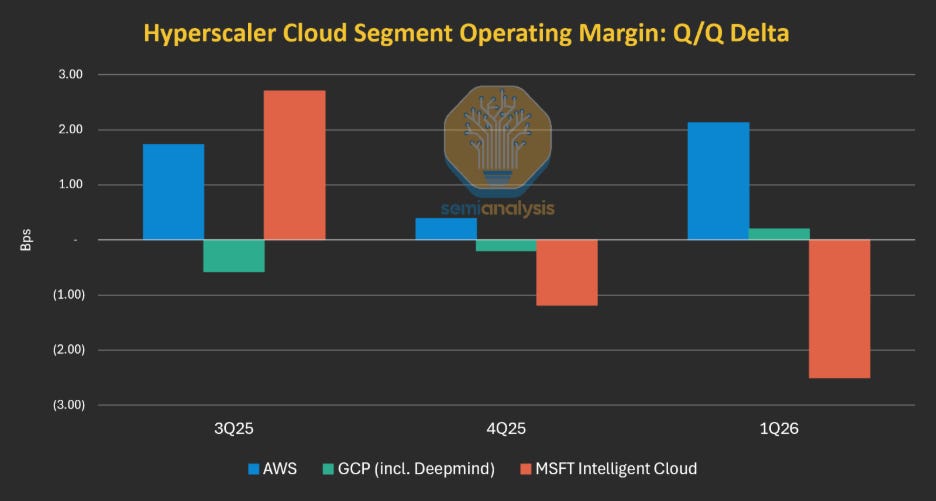
- Mismatched Cloud Economics: While AWS monetizes high-throughput enterprise adoption with efficient cloud compute architecture, peer hyperscalers struggle with dilutive capital allocation and margin compression amid soaring AI infrastructure scalability costs.
- Enterprise ROI Acceleration: Corporations standardizing on Bedrock are achieving faster risk mitigation and lower total cost of ownership (TCO), driving sustained market liquidity and higher valuation multiples for Amazon.
SEATTLE & NEW YORK — In the high-stakes chess match of hyperscale artificial intelligence, the conventional narrative has long focused on who can burn the most capital the fastest. Wall Street has spent the better part of three years tracking GPU clusters, power purchase agreements, and astronomical capital expenditures with white-knuckled apprehension. Yet, beneath the headline-grabbing numbers lies a far more nuanced story of engineering execution, contract structuring, and sophisticated cloud compute architecture.
According to ground-breaking findings from the newly released Tokenomics 2.0 model by independent research firm SemiAnalysis, Amazon Web Services (AWS) has quietly solved the profitability puzzle that continues to bedevil its nearest competitors. By synthesizing a potent commercial matrix of Anthropic’s flagship Claude models, proprietary silicon, and the Amazon Bedrock orchestration layer, AWS is executing a masterclass in margin expansion. While Microsoft Azure and Google Cloud navigate complex, margin-dilutive partner dynamics, AWS is pulling away by turning generative AI from a cost center into a compounding profit engine.
The Genesis of Tokenomics 2.0: Deconstructing the Bedrock Advantage
Test Our Free AI & Tech Utilities Suite
Calculate LLM API token costs, analyze article dwell-time, or simulate tech DCA returns.
To understand why AWS margins are defying the industry-wide trend of compression, one must examine the fundamental mechanics of modern cloud economics. When generative AI first burst into the enterprise mainstream, hyperscalers rushed to provision compute capacity, often locking themselves into rigid third-party software licensing agreements that squeezed operational margins.
SemiAnalysis’s Tokenomics 2.0 model tracks the lifecycle of a single AI token—from raw silicon execution to enterprise API monetization. The analysis demonstrates that Amazon’s strategic investment in Anthropic was not merely a defensive maneuver to secure a premier foundation model provider, but an aggressive stroke of financial engineering. By integrating Anthropic’s models directly into Amazon Bedrock, AWS created a high-margin ecosystem where enterprises can fine-tune, deploy, and scale AI workloads without friction.
"The latter is what boosts margins and makes selling Claude on Bedrock a highly attractive business to AWS," notes the proprietary research framework. By controlling the orchestration layer through Bedrock, AWS avoids the margin leakage typically associated with third-party software reselling. Instead, Amazon captures revenue across the entire stack: underlying infrastructure, proprietary custom silicon (AWS Trainium and Inferentia), managed database access via Amazon Aurora and OpenSearch, and the token-based consumption fee for Claude.
Infrastructure Scalability and Custom Silicon Synergy
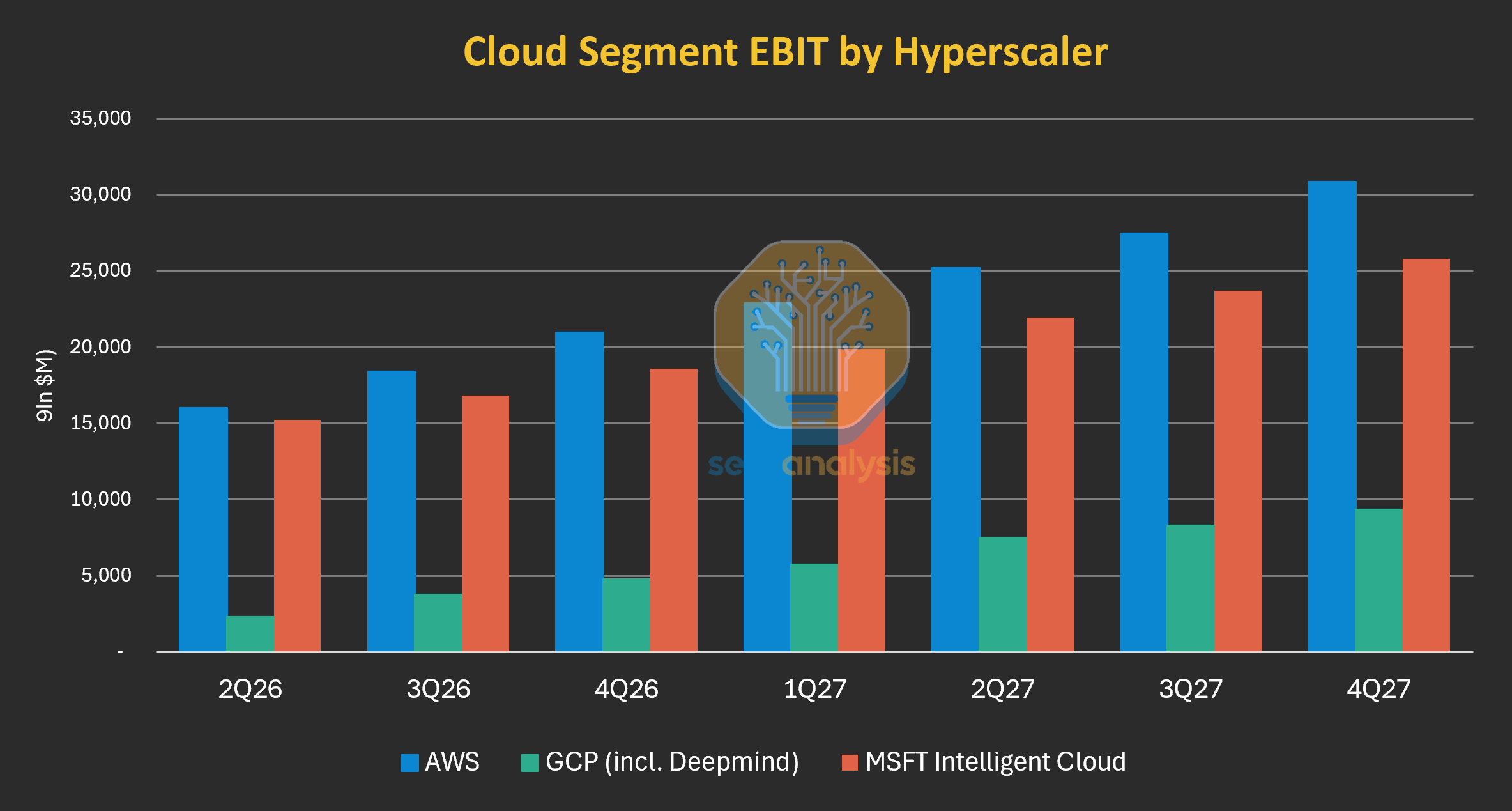
A critical driver behind the divergence in peer margins is the underlying hardware stack. While competitors rely almost exclusively on high-cost, supply-constrained merchant GPUs, AWS has methodically diversified its hardware portfolio. The deployment of AWS Trainium chips for model training and Inferentia for inference tasks has fundamentally altered the capital expenditure equation.
Enterprise clients leveraging Anthropic’s Claude on Bedrock increasingly benefit from these hardware optimizations. Because Amazon co-designed its custom silicon alongside its cloud infrastructure, the latency, power consumption, and cost-per-token metrics scale far more favorably than standard GPU-only architectures. This technical efficiency directly protects operating margins even as enterprise query volumes surge into the trillions.
Furthermore, AWS has excelled in regulatory compliance and enterprise risk mitigation. For Fortune 500 corporations, financial institutions, and healthcare providers, deploying AI requires uncompromising data privacy. Bedrock’s architecture ensures that customer data used for Retrieval-Augmented Generation (RAG) or fine-tuning never trains the foundational models. This ironclad security posture has accelerated enterprise ROI, convincing risk-averse CIOs to commit to multi-year, multi-million-dollar AWS contracts.
Comparative Market Analysis: How AWS Outpaces the Field
The economic divergence between AWS and its peers becomes starkly evident when examining structural metrics across the Big Three cloud providers. The following data breakdown illustrates the compounding advantages AWS currently holds in the generative AI race.
| Metric / Dimension | AWS (Amazon Bedrock + Anthropic) | Peer Hyperscalers (Azure / Google Cloud) |
|---|---|---|
| Primary Model Partnership | Anthropic (Exclusive deep integration) | OpenAI / Multi-vendor open source |
| Hardware Strategy | Balanced GPU + Proprietary Trainium/Inferentia | Heavy reliance on merchant GPU clusters |
| Margin Trajectory | Expanding via managed orchestration layer | Compressed due to high third-party compute costs |
| Enterprise TCO Profile | Optimized via native database and security tie-ins | Variable, often requiring custom integration layers |
| Capital Allocation Efficiency | High ROI on infrastructure co-investments | Elevated capex spend relative to near-term monetization |
Industry & Market Implications: Winners, Losers, and Economic Realignment
The operational success of the AWS-Anthropic alliance carries profound ramifications for the broader technology and financial sectors. On Wall Street, portfolio managers are re-evaluating valuation multiples for mega-cap tech stocks based on capital allocation discipline. Companies that can demonstrate a clear path from AI infrastructure investment to high-margin software and service delivery are commanding premium valuations.
- The Winners: AWS and its primary enterprise clients. Amazon has cemented its reputation as a disciplined allocator of capital, proving that hyperscale infrastructure can successfully monetize advanced LLMs without destroying operating margins. Enterprise software vendors building natively on Bedrock also benefit from robust security and scalable inference performance.
- The Losers: Traditional IT outsourcers and secondary cloud providers lacking proprietary foundation model partnerships. Furthermore, hyperscalers tied to single-supplier ecosystems with high revenue-share obligations face ongoing margin headwinds as price competition for enterprise AI intensifies.
- Broader Economic Impact: The efficiency gains highlighted by SemiAnalysis suggest that the broader software industry is entering a phase of margin rationalization. As token costs decline and orchestration layers mature, artificial intelligence is transitioning from an experimental line item to an optimized, high-yield operational utility.
Frequently Asked Questions (People Also Ask)
How does Amazon Bedrock protect AWS profit margins compared to traditional cloud reselling?
Traditional cloud reselling often traps hyperscalers in low-margin pass-through agreements where third-party software costs consume the vast majority of revenue. Amazon Bedrock alters this dynamic by operating as a managed service layer. AWS monetizes the entire underlying technology stack—including custom silicon (Trainium/Inferentia), storage, data security, and vector databases—turning Anthropic's Claude into a powerful catalyst for broader, high-margin cloud consumption.
What role do AWS Trainium and Inferentia play in the Tokenomics 2.0 findings?
SemiAnalysis's Tokenomics 2.0 model underscores that hardware diversification is essential for margin preservation. By deploying custom-built Trainium and Inferentia chips alongside traditional GPUs, AWS significantly lowers the total cost of inference and training. This hardware efficiency protects operating margins even as enterprise token consumption scales exponentially.
Why are enterprise customers choosing Claude on Bedrock over competing AI platforms?
Enterprise adoption is heavily dictated by security, data privacy, and regulatory compliance. Amazon Bedrock guarantees that customer proprietary data is not used to train underlying foundation models. Combined with seamless integration into existing AWS security and database infrastructure, this architecture delivers a superior total cost of ownership (TCO) and faster risk mitigation.
How are peer hyperscalers lagging behind AWS in generative AI profitability?
Rival cloud providers often face margin compression due to rigid partner revenue-sharing structures and heavier reliance on expensive, supply-constrained merchant GPUs. Without an equivalent end-to-end orchestration layer and proprietary silicon strategy, their capital allocation efficiency trails the benchmark set by AWS and Anthropic.
Future Outlook: Strategic Milestones to Watch
As the generative AI market matures past its initial hype cycle, the focus of institutional investors will shift relentlessly toward unit economics and cash flow conversion. The success of the AWS-Anthropic partnership establishes a new benchmark for cloud monetization, but maintaining this lead will require continuous execution.
Key milestones to monitor over the next four quarters include the commercial rollout of next-generation AWS Trainium chips, the expansion of advanced multi-modal agentic workflows within Bedrock, and potential regulatory scrutiny regarding AI platform exclusivity agreements. For now, however, Amazon has seized the tactical initiative, demonstrating that disciplined financial engineering and deep technological integration remain the ultimate competitive moats in enterprise cloud computing.