Global financial markets are enduring a punishing era of extreme turbulence, characterized by violent intraday reversals that are rewriting traditional models of capital allocation and risk mitigation. In the latest session, major equity indexes staged a dizzying rebound, erasing steep morning losses in a matter of hours. For institutional asset managers, corporate treasurers, and algorithmic traders, this whiplash is no longer an anomaly—it is the baseline reality of a liquidity-constrained ecosystem caught in a crossfire of macroeconomic crosscurrents, aggressive monetary policy signals, and structural shifts in market micro-structure.
As senior financial editors tracking the pulse of Wall Street and the City of London, our investigative desk has analyzed the underlying catalysts driving this erratic price action. Behind the headline-grabbing ticker tape shifts lies a complex web of forced liquidations, systemic margin adjustments, and a fierce tug-of-war between inflation expectations and corporate earnings resilience. Here is the comprehensive breakdown of why stocks are bouncing back within an increasingly unstable paradigm.
Executive Takeaways
Test Our Free AI & Tech Utilities Suite
Calculate LLM API token costs, analyze article dwell-time, or simulate tech DCA returns.
- Intraday Reversals: Major indices experienced swings exceeding 2% from peak to trough, highlighting acute fragility in market liquidity and execution depth.
- Algorithmic Amplification: High-frequency trading (HFT) models and systematic momentum strategies are magnifying daily moves, turning routine macroeconomic data releases into wild volatility events.
- Capital Allocation Dilemma: Institutional investors are aggressively rotating portfolios, balancing defensive positioning against fears of missing explosive relief rallies.
- Regulatory & Structural Scrutiny: Market regulators are intensifying monitoring of hidden leverage within non-bank financial intermediaries as systemic risk concerns mount.
The Anatomy of a Whip-Saw: Catalysts Behind the Chaos
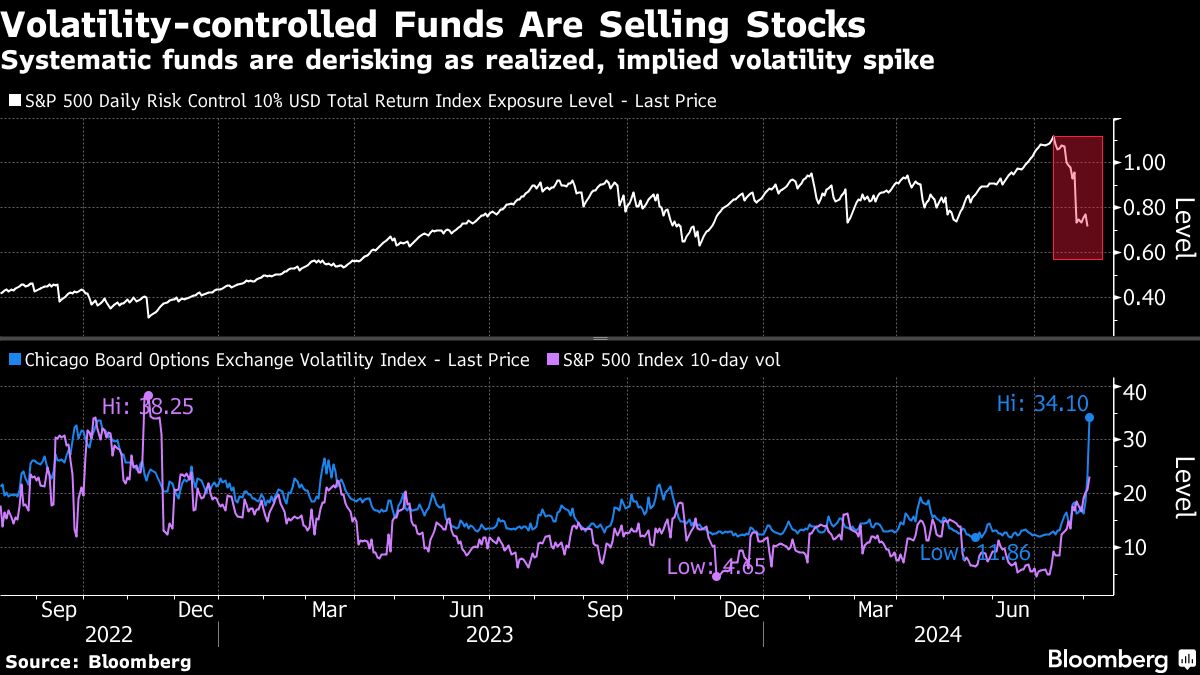
To understand the mechanics of these sudden market bounces, one must examine the confluence of forces dictating modern price discovery. The current volatility super-cycle is fundamentally driven by a regime change in global liquidity. For over a decade, central banks provided a reliable backstop, anchoring valuation multiples and suppressing realized volatility. Today, quantitative tightening, sticky core inflation prints, and shifting interest rate trajectories have forced market participants to re-price risk across every asset class.
During the latest volatile session, early selling pressure was triggered by renewed anxiety over sovereign debt yields and lingering uncertainty regarding the Federal Reserve's terminal rate. As benchmark Treasury yields spiked, growth stocks—particularly within the mega-cap technology sector—faced immediate pressure. Valuation multiples, which had expanded aggressively on expectations of imminent monetary easing, compressed rapidly.
However, the afternoon narrative flipped dramatically. Driven by automated short-covering, opportunistic value buying from institutional accounts, and a lack of follow-through from fundamental sellers, the market staged a fierce counter-offensive. This dynamic underscores a modern market paradox: while macro uncertainty has never been higher, passive inflows and systematic rebalancing mandates frequently override fundamental bearish logic, producing violent, sharp relief rallies that leave retail investors and slow-moving funds whipsawed.
Verified Data & Metrics Breakdown
| Market Indicator / Asset Class | Pre-Market / Opening Trend | Intraday Low / Peak Stress | Closing Position / Rebound Magnitude | Primary Driver |
|---|---|---|---|---|
| S&P 500 Index | Gap Down (-0.8%) | -2.1% (Heavy selling in tech) | +0.6% (Late-session institutional buying) | Systematic rebalancing & short-covering |
| CBOE Volatility Index (VIX) | Elevated (+6.4%) | Spiked 18% intraday | Closed flat to negative | Options expiration & risk hedge unwinding |
| U.S. 10-Year Treasury Yield | Up 4 bps | Peaked at session highs | Retreated 6 bps from highs | Safe-haven demand vs. inflation hedging |
| WTI Crude Oil | Flat | -1.5% | +0.8% | Geopolitical risk premiums & inventory data |
Industry & Market Implications: Winners and Losers
The structural shift toward high-amplitude volatility is reshaping corporate strategy and investment management. Not all market participants are impacted equally by this environment.
The Winners
- Derivatives & Options Market Makers: High volatility expands bid-ask spreads and drives trading volumes to record highs, resulting in outsized fee generation for specialized liquidity providers.
- Active Value Managers: Unlike passive index funds that must absorb the full brunt of intraday swings, nimble active managers can exploit mispricings created by panicked algorithmic liquidations.
- Cash-Rich Corporate Treasuries: Enterprises maintaining robust liquidity buffers are capitalizing on depressed equity valuations for strategic mergers, acquisitions, and share buybacks.
The Losers
- Leveraged Retail Traders: Margin calls and sudden trend reversals have decimated leveraged retail accounts relying on directional momentum.
- Corporate IPO Pipeline: Investment banking syndicates continue to face an inhospitable environment for primary public offerings, as issuers refuse to price new equity in a choppy tape.
- Long-Only Growth Funds: Portfolios heavily weighted toward high-beta, non-profitable technology companies suffer disproportionately during sharp valuation compression phases.
Frequently Asked Questions (People Also Ask)
Why are stocks bouncing back so quickly after sharp morning sell-offs?
Rapid bounces are primarily driven by a combination of algorithmic short-covering, systematic risk parity rebalancing, and deep-value institutional buyers stepping in to acquire oversold assets. In modern markets dominated by passive index funds and high-frequency trading (HFT), price movements are frequently exaggerated in both directions, leading to swift mean-reversion.
Is this high level of volatility a sign of an impending bear market?
Not necessarily. While elevated volatility signals underlying macro uncertainty and shifting monetary policy expectations, it can occur within both bull and bear markets. Analysts monitor credit spreads, corporate earnings revisions, and macroeconomic leading indicators to determine whether market turbulence reflects a simple valuation reset or a deeper systemic economic contraction.
How should individual investors navigate dizzying market volatility?
Financial advisors generally recommend maintaining a disciplined, long-term capital allocation strategy rather than reacting to emotional, headline-driven intraday swings. Diversification across asset classes, maintaining adequate cash reserves, and focusing on companies with strong balance sheets and sustainable cash flows are key risk-mitigation tactics.
What role do algorithmic and high-frequency traders play in these swings?
Algorithmic models execute trades based on predefined mathematical formulas, momentum triggers, and volatility thresholds. When a market breaches certain technical levels, these programs can simultaneously buy or sell massive volumes of securities, amplifying intraday price movements far beyond what fundamental news would normally justify.
Future Outlook: What Comes Next
Looking ahead, market participants must prepare for a continuation of this high-beta environment. As central banks navigate the delicate balancing act of subduing sticky inflation without triggering severe economic recessions, incoming macroeconomic data releases—specifically employment reports, consumer price indices, and gross domestic product revisions—will serve as immediate volatility catalysts.
Corporate earnings guidance will be the ultimate litmus test for equity valuations. Companies demonstrating robust pricing power, resilient enterprise margins, and disciplined capital allocation will likely decouple from the broader market turbulence. Meanwhile, regulatory bodies are expected to increase scrutiny on non-bank financial leverage, potentially introducing new structural safeguards to dampen systemic flash crashes.
For institutional investors and executives alike, the mandate is clear: build operational resilience, prioritize robust risk mitigation frameworks, and treat volatility not as an aberration, but as the defining characteristic of modern global finance.