WASHINGTON — The orbital life of one of NASA’s most prolific astronomical workhorses has come to an unceremonious and fiery end. NASA confirmed today that the Neil Gehrels Swift Observatory—universally known as the Swift space telescope—has disintegrated upon re-entering Earth's atmosphere over the southern Pacific Ocean. The catastrophic re-entry follows a dramatic, weeks-long engineering crisis wherein mission controllers executed a high-stakes, last-ditch rescue protocol that ultimately failed to overcome critical momentum loss, power degradation, and an irreversible gyroscope failure.
Launched in November 2004 with a primary two-year mission profile to study gamma-ray bursts (GRBs), Swift far outlived its original capital expenditure expectations, functioning as a vital pillar of multi-messenger astrophysics for over two decades. However, the telescope's sudden demise underscores the escalating vulnerabilities of aging space infrastructure in low-Earth orbit (LEO). As commercial space traffic densifies and orbital decay models face unprecedented pressures from solar cycle anomalies, the Swift tragedy serves as a stark case study in risk mitigation, end-of-life asset management, and the stark physical limits of robotic orbital rescue operations.
Executive Takeaways
- Uncontrolled Re-Entry: The Swift space telescope re-entered Earth’s atmosphere after a terminal orbital decay, with remaining non-combustible components safely splashing down in a remote sector of the southern Pacific Ocean.
- Failed Autonomous Intervention: NASA engineers spent 14 days attempting a high-risk software patch and attitude control override to stabilize the platform after a triple-redundant gyroscope failure, but declining battery reserves thwarted the intervention.
- Broad Scientific Fallout: The loss of Swift leaves a permanent void in real-time gamma-ray burst detection, immediately impacting global astronomical networks that relied on its rapid-slewing capabilities for transient space phenomena.
- Infrastructure & Economic Realities: The event highlights critical capital allocation questions surrounding orbital debris mitigation, pushing space agencies and institutional investors to reassess the valuation multiples and insurance risk parameters of legacy LEO assets.
Anatomy of a Failure: From Orbital Pioneer to Terminal Decay
Test Our Free AI & Tech Utilities Suite
Calculate LLM API token costs, analyze article dwell-time, or simulate tech DCA returns.
Designed as a multi-wavelength observatory optimized to catch the fleeting signatures of gamma-ray bursts—the most energetic explosions in the universe—Swift was built for speed and agility. Its defining engineering achievement was its ability to autonomously swivel its instruments toward a GRB target within seconds of detection, feeding real-time coordinates to ground-based telescopes and orbiting laboratories like the Hubble and James Webb Space Telescopes.
Yet, like much of NASA’s legacy fleet, Swift’s architecture was designed during an era when space debris management and end-of-life de-orbit planning were secondary considerations to primary science yield. Operating at an altitude of approximately 600 kilometers, the spacecraft relied on a trio of reaction wheels and gyroscopes to maintain pointing stability. Over the past twenty-four months, however, cumulative radiation damage in the harsh LEO radiation belts began to compromise the hardware.
The cascade began in earnest late last month when a primary momentum wheel seized, followed shortly by a secondary attitude-control sensor fault. Deprived of stable orientation, Swift tumbled out of alignment, preventing its solar panels from maintaining optimal sun-tracking geometry. Within hours, power generation plummeted below critical operational thresholds, plunging the spacecraft into a protective safe mode from which it would never recover.
The Desperate Rescue Attempt: Inside Mission Control
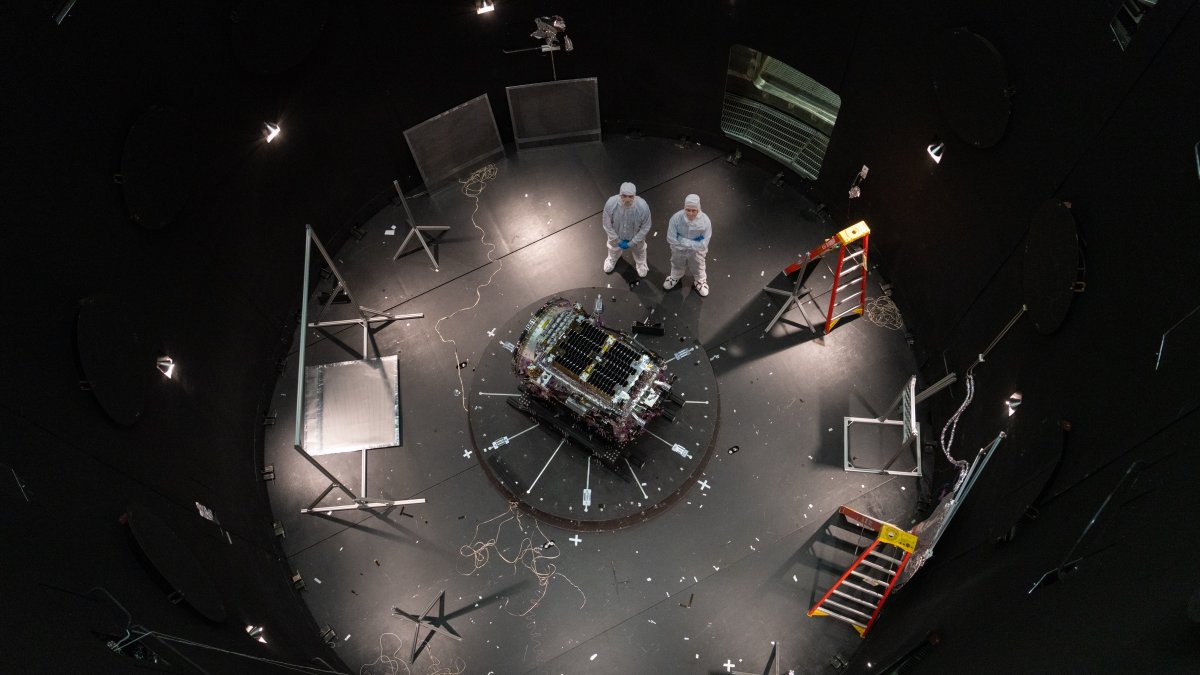
As telemetry indicated rapid orbital decay, NASA's Goddard Space Flight Center initiated an emergency tiger team to evaluate potential rescue operations. Operating under strict risk-mitigation frameworks, the engineering team attempted to upload a heavily modified software patch designed to bypass the failing hardware loops and utilize residual thruster gas to stabilize the vehicle's spin.
The intervention strategy bore similarities to high-stakes enterprise cloud architecture disaster recovery: attempting to patch a legacy, decentralized system remotely while critical infrastructure nodes were going offline. For nearly two weeks, engineers worked around the clock, successfully re-establishing intermittent communication links and executing micro-burns to elevate the perigee.
Ultimately, the rescue effort was defeated by simple thermodynamics and resource exhaustion. Without functioning solar arrays, the onboard lithium-ion batteries drained faster than ground stations could upload commands. On the fourteenth day of the crisis, telemetry flatlined as the spacecraft entered the dense upper layers of the atmosphere, initiating thermal ablation and final structural break-up.
Verified Data & Mission Metrics Breakdown
| Metric / Specification | Original Mission Parameters | Final Operational Status (At Re-Entry) |
|---|---|---|
| Launch Date | November 20, 2004 | Retired / De-orbited |
| Initial Design Lifespan | 2 Years (Nominal) | 20 Years, 3 Months (Actual) |
| Operating Altitude | ~600 km Low-Earth Orbit | Decayed to <150 km prior to burn-up |
| Primary Instrument | Burst Alert Telescope (BAT) | Permanently powered down |
| Total Gamma-Ray Bursts Detected | N/A | Over 1,600 unique events |
Industry & Market Implications: Risk, Regulation, and Valuation
While the astronomical community mourns the loss of scientific data, the incident carries profound implications for the commercial aerospace sector, satellite operators, and institutional risk underwriters. As low-Earth orbit becomes increasingly congested, regulatory compliance regarding end-of-life disposal is shifting from voluntary guidelines to strict legal mandates enforced by regulatory bodies such as the Federal Communications Commission (FCC) and the Federal Aviation Administration (FAA).
For aerospace manufacturers and commercial constellation operators—such as those deploying broadband mega-constellations—the Swift incident highlights the absolute necessity of robust, built-in active de-orbit systems, such as drag sails or dedicated propulsion modules. Enterprise ROI models in the space sector are increasingly contingent upon predictable asset lifecycles and proactive risk mitigation. When legacy platforms fail without controlled de-orbit capabilities, the resulting market liquidity hits and insurance valuation multiples affect the entire aerospace financing ecosystem.
Furthermore, satellite insurance underwriters are expected to re-evaluate risk pricing models for aging orbital infrastructure. The inability to execute a remote software rescue on a platform lacking modern hardware redundancies will likely drive up premium rates for upcoming science and commercial missions operating in high-radiation LEO corridors.
Frequently Asked Questions (People Also Ask)
1. Did any debris from the Swift space telescope survive re-entry and pose a danger to populated areas?
No. NASA's orbital debris tracking systems and trajectory calculations confirmed that the spacecraft disintegrated during atmospheric entry. Any heat-resistant titanium or structural components that survived the intense thermal ablation safely splashed down in a pre-calculated, uninhabited sector of the southern Pacific Ocean, far from major shipping lanes or landmasses.
2. Why couldn't NASA successfully rescue or service the Swift telescope using robotic or crewed missions?
Unlike the Hubble Space Telescope, which was placed in an orbit accessible by the Space Shuttle and designed for modular component swaps, Swift was launched on a Delta II rocket into an orbit that no current crewed spacecraft can reach. Furthermore, the cost of mounting a dedicated robotic servicing mission for an asset well past its original design life could not be justified under federal capital allocation priorities.
3. What scientific capabilities are lost now that Swift is gone?
Swift’s primary loss is its unmatched capability for immediate, wide-field gamma-ray burst detection and rapid automated slewing. While other space observatories like NASA’s Fermi Gamma-ray Space Telescope remain operational, Swift’s unique multi-wavelength instrument suite (comprising the Burst Alert Telescope, X-ray Telescope, and Ultraviolet/Optical Telescope) provided an irreplaceable bridge between high-energy astrophysics and rapid follow-up observations.
4. How does Swift's demise impact future NASA missions and space debris regulations?
The incident reinforces the urgency behind strict modern orbital debris mitigation protocols. NASA and international space agencies are utilizing the Swift data to refine atmospheric entry models and enforce stricter requirements for autonomous end-of-life de-orbit systems on all future public and private spacecraft entering low-Earth orbit.
Future Outlook: Filling the Void in Transient Astronomy
The premature end of the Swift mission leaves a tangible capability gap in time-domain astronomy, a rapidly expanding field focused on capturing transient, highly energetic cosmic events. Astrophysical researchers are now lobbying agency leadership to accelerate the deployment of next-generation wide-field detectors and automated space surveillance architectures.
In the near term, institutional focus will shift toward integrating existing ground-based Cherenkov telescopes and upcoming optical survey networks—such as the Vera C. Rubin Observatory—to pick up the transient detection slack left by Swift's departure. Simultaneously, aerospace engineers are reviewing the lessons learned from Swift’s failed autonomous rescue, applying advanced machine learning algorithms and modular cloud-compute architectures to future satellite command systems to ensure greater resilience against unexpected hardware failures.
As humanity pushes deeper into an era of commercialized space industrialization, the fiery descent of the Swift space telescope stands as a monument to twenty years of unprecedented scientific discovery—and a sobering reminder of the unforgiving physical laws that govern human infrastructure at the edge of the cosmos.