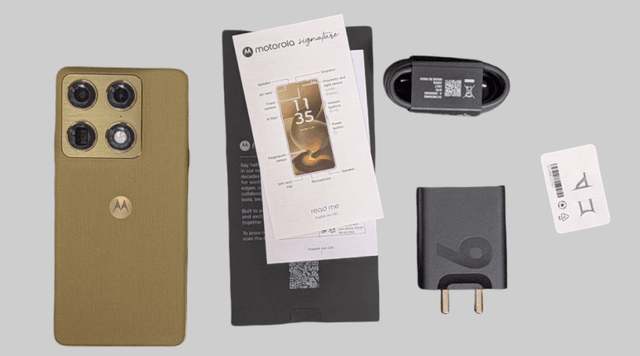
Executive Takeaways
- Uncompromising Flagship Positioning: Motorola’s new Signature 27 shatters its historical mid-range and foldable-exclusive pricing boundaries, launching globally at a steep $1,599 price point.
- Targeting Enterprise and Power Users: The device packs cutting-edge silicon, advanced camera arrays, and enterprise-grade security architecture designed to challenge Apple and Samsung’s valuation multiples in the executive segment.
- Capital Allocation and Risk Mitigation: Parent company Lenovo is executing a calculated pivot toward high-margin hardware to protect margins against tightening global consumer spending and supply chain volatility.
- Bruising Competition Ahead: Entering the $1,500+ tier forces Motorola into direct combat with entrenched market leaders who command massive enterprise IT deployment contracts and deeply entrenched consumer ecosystems.
For over a decade, Motorola—under the stewardship of parent conglomerate Lenovo—has carved out a highly profitable, volume-driven niche in the global mobile market. The brand successfully dominated the budget, mid-range, and foldable lifestyle segments with the Razr lineup. However, in an aggressive strategic pivot that has sent ripples through the telecommunications sector, the company has officially pulled back the curtain on the Motorola Signature 27. Priced at an uncompromising $1,599, this release marks a definitive return to true flagship territory, challenging the hegemony of Apple's iPhone Pro Max and Samsung's Ultra series.
This deep-dive investigative report examines the catalytic events leading to this launch, the underlying capital allocation strategies driving Lenovo's ambitions, and what this high-stakes device means for enterprise mobility, profit margins, and global market liquidity.
The Genesis of the Signature 27: A Calculated Strategic Pivot
Test Our Free AI & Tech Utilities Suite
Calculate LLM API token costs, analyze article dwell-time, or simulate tech DCA returns.
The decision to build a device bearing the "Signature" moniker was not born in a vacuum. Over the past twenty-four quarters, the premium smartphone segment ($1,000 and above) has proven to be the most resilient category in consumer electronics. While lower-tier shipments have experienced cyclical contractions due to inflationary pressures and lengthening consumer upgrade cycles, elite-tier devices have seen stable demand. Consumers and enterprise buyers alike view top-tier smartphones as essential productivity infrastructure rather than discretionary luxury goods.
Lenovo’s executive leadership recognized a structural opening. Despite strong global brand recognition, Motorola had lacked a traditional slate flagship capable of competing on pure technical specifications—optics, compute power, and enterprise-grade security—without leaning solely on foldable novelty. The Motorola Signature 27 is engineered to plug this exact revenue leak, offering institutional investors and market analysts proof that Motorola can capture higher average selling prices (ASPs) and improve its overall gross margin profile.
From a product development standpoint, the Signature 27 represents a massive capital expenditure. Sourcing bleeding-edge silicon, custom sensor arrays, and advanced thermal management architectures requires deep-pocketed R&D investment. By positioning the device at $1,599, Motorola is signaling to the market that it is no longer willing to cede the most lucrative demographic of corporate executives, tech enthusiasts, and mobile content creators to Cupertino and Seoul.
Hardware Architecture, Enterprise ROI, and Technical Specifications
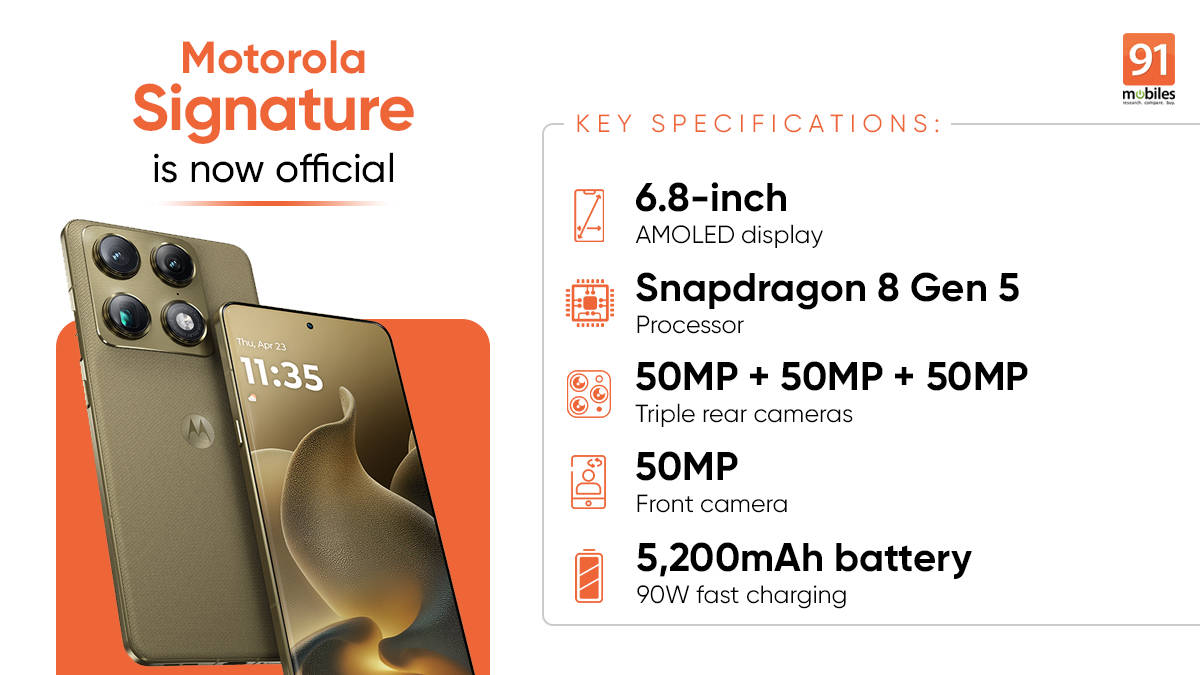
To justify a $1,599 price tag in a mature market, a device cannot simply rely on incremental upgrades. It must deliver an unassailable value proposition. The Motorola Signature 27 achieves this by integrating top-tier processing capabilities designed to handle demanding cloud compute workloads, on-device generative AI models, and heavy enterprise application suites.
Under the hood, the device is powered by the latest generation Snapdragon flagship platform, coupled with generous LPDDRX RAM and UFS storage tiers. This hardware configuration ensures optimal cloud-to-device infrastructure scalability, enabling financial analysts, field engineers, and enterprise users to run complex data visualizations and secure virtual private networks (VPNs) without latency.
Furthermore, Motorola has fortified the device’s software layer with a proprietary hardware-backed security root of trust. For Chief Information Security Officers (CISOs), this level of regulatory compliance and data isolation is paramount. As remote and hybrid work models become permanent fixtures of the global economy, enterprise IT departments demand mobile hardware that meets stringent risk mitigation standards.
| Metric / Feature | Motorola Signature 27 | Industry Benchmark (Ultra Tier) |
|---|---|---|
| Launch Price (MSRP) | $1,599 USD | $1,199 – $1,599 USD |
| Processor Architecture | Next-Gen Snapdragon 8 Series | Custom Silicon / Snapdragon |
| Enterprise Security | ThinkShield Mobile + Hardware Root | Knox / Secure Enclave |
| Target Audience | Enterprise Executives & Power Users | General Consumer & Prosumer |
| Primary Value Driver | Uncompromised Specs & Margin Expansion | Ecosystem Lock-in & Brand Loyalty |
Industry & Market Implications: Who Wins, Who Loses?
The launch of the Motorola Signature 27 introduces fascinating dynamics across the global technology landscape. Analyzing the ecosystem through the lens of market liquidity, corporate competition, and consumer behavior reveals clear winners and losers.
The Winners
- Lenovo Shareholders & Margin Strategy: By successfully establishing an ultra-premium tier, Lenovo can lift its average selling prices, directly improving divisional operating margins and bolstering overall valuation multiples.
- Enterprise IT Buyers: Procurement officers gain a viable third alternative to Apple and Samsung, introducing healthy pricing competition and leverage in enterprise negotiations.
- Component Suppliers: High-end sensor, display, and silicon manufacturers benefit from Lenovo's aggressive push into bleeding-edge specifications.
The Losers
- Mid-Tier Competitors: Brands occupying the $800 to $1,200 bracket face intensified pressure as consumers weigh their options against a true flagship carrying the storied Motorola heritage.
- Entrenched Duopoly Complacency: Apple and Samsung can no longer treat the ultra-premium slate market as an uncontested playground; they must now counter Motorola's aggressive enterprise security and pricing value proposition.
Frequently Asked Questions (People Also Ask)
What justifies the $1,599 price tag on the Motorola Signature 27?
The $1,599 pricing reflects Motorola's entry into the uncompromised ultra-premium tier. The cost is driven by cutting-edge mobile silicon, advanced multi-lens optical systems, premium materials, and robust enterprise-grade security architecture designed to compete directly with the highest-end offerings from Apple and Samsung.
How does the Signature 27 cater to enterprise buyers?
Motorola has integrated advanced security frameworks, including hardware-backed root of trust capabilities and enterprise management integrations. This ensures that Chief Information Security Officers (CISOs) can securely deploy the device across corporate networks while maintaining strict regulatory compliance and data privacy standards.
Will the Motorola Signature 27 be available globally through carrier networks?
Yes, Lenovo is rolling out the device through major global tier-1 carrier partnerships and unlocked direct channels. This multichannel distribution strategy is vital for securing enterprise fleet contracts and ensuring robust market liquidity from day one.
How does this launch impact Lenovo’s financial outlook?
By capturing higher average selling prices (ASPs), the Signature 27 is engineered to expand gross margins within Lenovo’s mobile business group. This strategic capital allocation reduces reliance on low-margin volume models and enhances overall corporate profitability.
Future Outlook and Key Milestones to Watch
As the Motorola Signature 27 officially goes official, industry observers and financial analysts will closely monitor several key performance indicators over the next two to four quarters. First, initial shipment volumes and regional uptake will reveal whether brand loyalty in Western markets is strong enough to support a $1,599 Motorola device.
Second, adoption rates among enterprise fleet buyers will serve as the true litmus test for the device's long-term viability. If corporate IT departments embrace the hardware, Motorola could secure a lucrative, recurring revenue stream that insulates it from consumer market volatility.
Ultimately, the Motorola Signature 27 is much more than a new smartphone release—it is a bold statement of intent. Lenovo has signaled that it is done playing safely in the margins. Whether this high-stakes gamble redefines the ultra-premium landscape or serves as a cautionary tale of pricing overreach will be determined by how aggressively enterprise buyers and discerning consumers respond to the call.