By The Investigative Desk | Published by Special Arrangement with Global Financial Wires
Trending Analysis: Aerospace Infrastructure, Energy Markets, and Orbital Capital Allocation
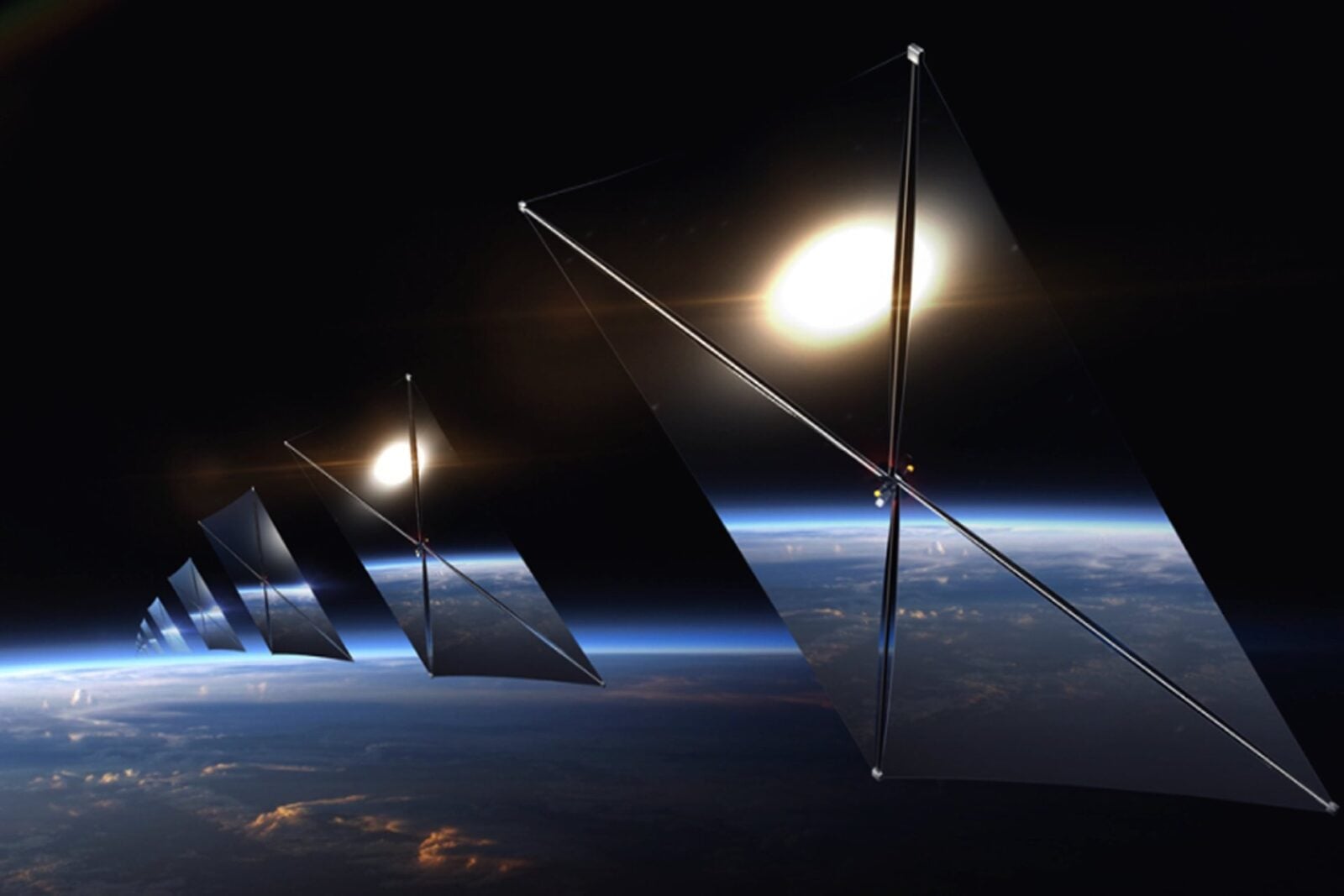
For decades, the monetization of low-Earth orbit (LEO) has followed a predictable, carbon-bound logic: communication constellations, Earth-observation satellites, and microgravity manufacturing. But as venture capital deployment shifts toward hard-tech moonshots, a new class of aerospace architects is looking past mere data transmission to rewrite the foundational physics of planetary energy access. A heavily funded, stealth-to-mainstream startup is aggressively advancing plans to deploy a constellation of 50,000 ultra-lightweight reflectors into orbit. Their stated objective: redirecting solar radiation onto terrestrial photovoltaic farms long after dusk, effectively abolishing the nighttime economic penalty for global solar infrastructure.
While dismissed by legacy energy analysts as science fiction, institutional capital allocators, aerospace prime contractors, and regulatory compliance agencies are treating the initiative with deadly seriousness. Backed by multi-million-dollar seed rounds and supported by advances in deployable origami-like polymer membranes, the venture is forcing a radical recalculation of energy market liquidity, grid stability, and orbital traffic management. This investigative report breaks down the technological architecture, the capital allocation mechanics, the regulatory minefields, and the sweeping geopolitical implications of an enterprise attempting to commercialize the night.
Executive Takeaways
Test Our Free AI & Tech Utilities Suite
Calculate LLM API token costs, analyze article dwell-time, or simulate tech DCA returns.
- The Constellation Scale: The startup's blueprint calls for a network of 50,000 reflective satellites operating in low-Earth orbit at altitudes between 500 and 1,000 kilometers, forming a continuous virtual solar array.
- Solving the Intermittency Problem: By beaming concentrated sunlight onto utility-scale solar farms during dark hours, the project aims to drastically reduce utility battery storage requirements and maximize enterprise ROI for renewable energy developers.
- Capital and Valuation Pressures: Early-stage fundraising has accelerated rapidly, drawing scrutiny over valuation multiples, infrastructure scalability, and the staggering upfront capital expenditure required for orbital deployment at scale.
- Escalating Regulatory and Environmental Friction: The plan faces unprecedented pushback from international astronomical unions, environmental defense groups, and defense agencies concerned about night-sky pollution, orbital congestion, and dual-use space capabilities.
The Catalytic Shift: Rewriting the Economics of Renewable Energy
To understand the strategic imperative driving this orbital endeavor, one must examine the core economic bottleneck facing the global energy transition: intermittency. Solar photovoltaic (PV) generation is characterized by a stark operational cliff. As dusk falls, power generation drops to zero precisely when urban energy demand curves often experience evening peaks driven by residential heating, EV charging, and commercial lighting.
Current infrastructure mitigates this through massive capital expenditure on battery energy storage systems (BESS)—lithium-ion, flow, and emerging solid-state arrays that carry steep degradation costs, supply chain vulnerabilities, and finite discharge cycles. The startup's proposed space-based mirror constellation bypasses this storage dependency through orbital arbitrage. By maintaining a continuous angle of incidence relative to the sun and targeted terrestrial ground stations, the orbital reflectors create artificial, localized twilight or dawn conditions over commercial solar installations.
From an enterprise finance perspective, the potential valuation implications are staggering. If utility-scale solar farms can generate electricity for 18 to 20 hours a day instead of 6 to 8, the capacity factor of existing land assets triples. This compresses payback periods, mitigates the need for billions of dollars in localized grid battery infrastructure, and fundamentally alters the marginal cost of power generation during peak evening hours.
Technological Architecture: Engineering the Orbital Mirror
Executing a deployment of 50,000 mirrors requires a paradigm shift in spacecraft manufacturing. Traditional satellite buses—heavy, rigid, and aluminum-intensive—are economically unviable for this scale. Instead, the startup's engineering roadmap relies on ultra-thin, radiation-resistant metallized polymer films—specifically, aluminized Mylar or advanced polyimide substrates measuring mere microns in thickness.
These membranes are folded into compact cubes during launch and deploy autonomously upon reaching orbit, utilizing shape-memory alloy actuators and tensioning rings to maintain a hyper-flat reflective surface. Pointing accuracy represents the chief technical hurdle. At an altitude of 700 kilometers, a microscopic angular deviation of a fraction of a degree will cause the reflected beam of sunlight to miss its terrestrial target zone by miles, rendering the kilowatt-hour delivery useless.
To achieve this, each reflector is equipped with autonomous reaction wheels, star trackers, and high-efficiency ion thrusters for station-keeping. The cloud compute architecture managing the constellation must process real-time orbital mechanics, atmospheric refraction models, and sun-Earth-satellite geometry at millisecond latencies, ensuring that light is beamed precisely onto pre-contracted utility grids without creating stray thermal anomalies over populated urban sectors.
Verified Data & Metrics Breakdown
The following comparative matrix outlines the technical parameters, operational targets, and financial scaling metrics associated with the proposed orbital mirror initiative versus traditional energy storage methodologies.
| Metric / Parameter | Orbital Mirror Constellation | Conventional Lithium-Ion BESS |
|---|---|---|
| Primary Function | Real-time continuous solar generation extension | Deferred energy discharge / peak shaving |
| Target Constellation Size | 50,000 independent reflective units | N/A (Terrestrial infrastructure) |
| Orbital Altitude | 500 km – 1,000 km (Low-Earth Orbit) | Terrestrial surface deployment |
| Capital Intensity (CapEx) | Extremely high upfront launch & manufacturing cost | High incremental cost per megawatt-hour scaled |
| Asset Lifespan | 5–7 years per unit (atmospheric drag/degradation) | 10–15 years (subject to thermal degradation) |
| Regulatory Oversight | FCC, FAA, UN Office for Outer Space Affairs | Local environmental, zoning, and fire safety codes |
Industry & Market Implications: Winners, Losers, and Systemic Risk
The realization of a 50,000-mirror constellation will trigger profound structural shifts across multiple global sectors. Identifying where capital will flow—and where it will be eviscerated—is critical for institutional portfolio managers.
The Winners
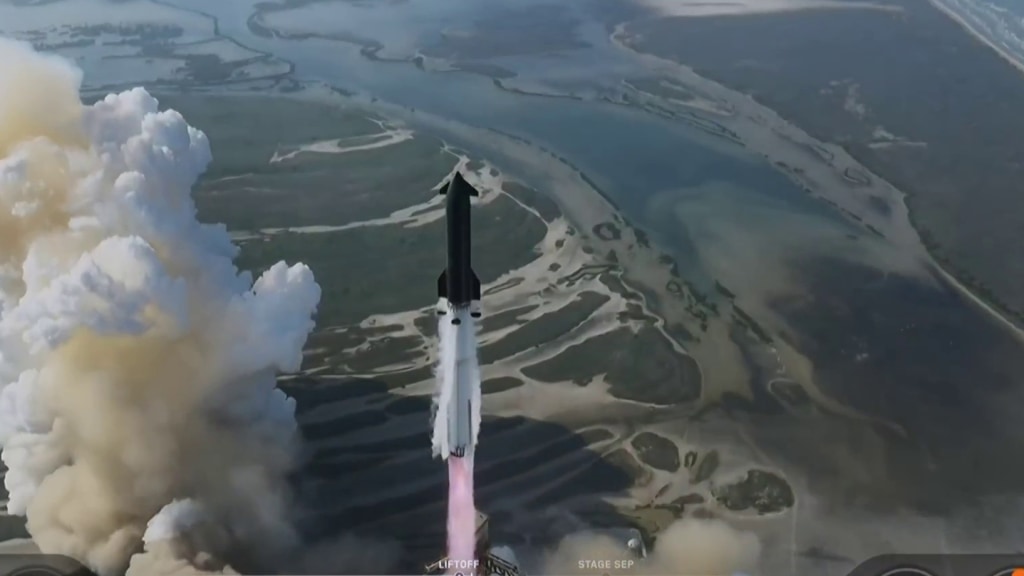
Commercial Launch Providers: Delivering 50,000 spacecraft—even if manufactured in micro-units weighing under 50 kilograms each—requires an unprecedented cadence of rocket launches, securing multi-billion-dollar recurring revenues for heavy-lift aerospace operators.
Utility-Scale Solar Developers: Companies that own vast tracts of desert PV installations will see their asset utilization metrics surge, commanding premium power purchase agreements (PPAs) for nocturnal baseload generation.
Advanced Materials & Photonics Firms: Suppliers of radiation-hardened polymers, reflective coatings, and precision attitude-control actuators will experience exponential order-book growth.
The Losers
Battery Storage Manufacturers: If space-based solar reflection successfully displaces the need for massive evening-load BESS infrastructure, valuation multiples for pure-play lithium-ion battery producers could face severe downward pressure.
Fossil-Fuel Peaker Plants: Natural gas peaker plants, which currently ramp up to meet evening demand spikes, would face insurmountable price competition from continuous solar generation.
Astronomical Observatories & Dark Sky Advocates: Professional and amateur astronomy will face catastrophic light pollution as tens of thousands of reflective surfaces streak across twilight skies, obscuring deep-space imaging capabilities.
Frequently Asked Questions (People Also Ask)
1. How do the space mirrors avoid burning or overheating terrestrial targets?
The system utilizes defocusing optics and dynamic beam-shaping algorithms. Rather than focusing sunlight into a high-intensity, laser-like destructive beam, the mirrors spread the reflected light across wide geographic footprints—typically matching the acreage of existing utility-scale solar farms. This increases illumination by a controlled factor (e.g., equivalent to extended twilight), preventing thermal shock or ecological damage.
2. Won't 50,000 new satellites worsen the orbital debris crisis?
Orbital congestion is a primary risk factor. To mitigate regulatory pushback and collision hazards, these spacecraft are engineered for ultra-low mass and are placed in orbits where natural atmospheric drag will cause them to safely deorbit and burn up within 5 to 7 years should station-keeping propulsion fail. Furthermore, active collision-avoidance systems integrated with space-situational-awareness (SSA) databases are mandatory for operation.
3. What are the regulatory hurdles for beaming sunlight across international borders?
The legal framework governing space-based energy redirection is largely unchartered. While the Outer Space Treaty of 1967 prohibits national appropriation of space, it does not explicitly address commercial light redirection. The startup must navigate complex multi-jurisdictional approvals involving the Federal Communications Commission (FCC), the Federal Aviation Administration (FAA), the International Telecommunication Union (ITU), and diplomatic clearances regarding light pollution sovereignty over non-consenting nations.
4. How is the venture funded, and what is the timeline to commercial viability?
The enterprise is currently navigating its Series B funding round, having secured strategic backing from prominent venture capital funds specializing in deep tech, aerospace, and energy transition assets. Initial pathfinder missions consisting of demonstrator units are scheduled for launch within the next 24 to 36 months, with commercial scaling of the full constellation targeted for the late 2030s.
Future Outlook: Milestones and Market Realities
As this venture transitions from theoretical physics to hardware-in-the-loop testing, the coming decade will serve as a profound stress test for both commercial aerospace and global energy markets. The immediate milestones to monitor include the successful regulatory filing approval for pathfinder orbital tests, the durability of ultra-thin reflective membranes under prolonged cosmic radiation and micrometeoroid bombardment, and the willingness of major utility conglomerates to sign long-term off-take agreements for space-delivered photons.
Critics remain skeptical, pointing to historical over-promises in space-based solar power dating back to the 1970s. However, proponents argue that collapsing launch costs driven by reusable rocket architectures have fundamentally altered the macroeconomic equation. Whether this startup succeeds in putting 50,000 mirrors in the sky or stumbles against the unforgiving physics of the thermosphere, the initiative has already permanently altered the conversation surrounding energy infrastructure, proving that the future of terrestrial power may ultimately be decided 700 kilometers above the Earth.