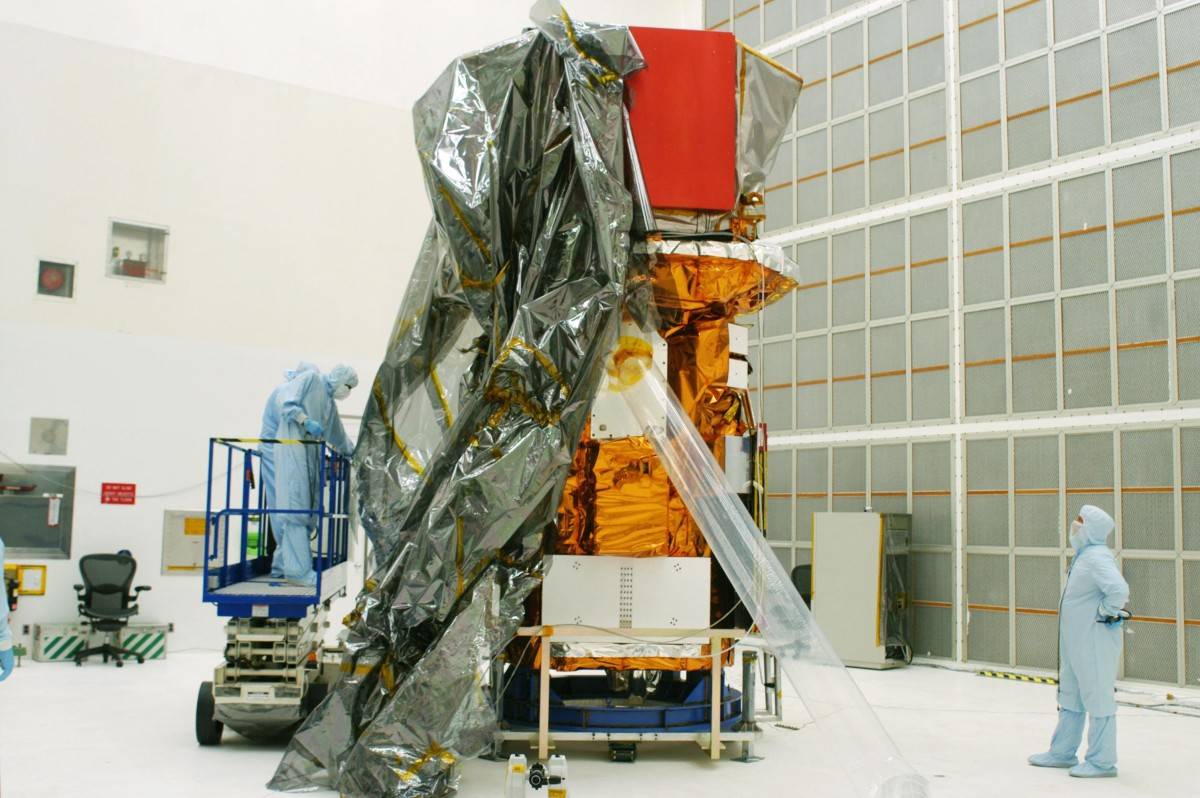
WASHINGTON — The fiery, uncontrolled atmospheric reentry of NASA’s Neil Gehrels Swift Observatory over the Southern Pacific Ocean marks the definitive end of an era for high-energy astrophysics. The multi-wavelength space telescope, which spent nearly two decades revolutionizing our understanding of gamma-ray bursts, black hole physics, and cosmic transient phenomena, burned up after a desperate, multi-week ground intervention failed to stabilize its decaying orbit.
For aerospace engineers, institutional stakeholders, and the broader scientific community, the loss of Swift is more than the passing of a veteran instrument; it is a stark wake-up call regarding orbital real estate management, capital allocation for aging space assets, and the escalating risks of orbital debris. As regulatory compliance tightens and satellite constellations crowd low-Earth orbit (LEO), the Swift disaster provides a masterclass in risk mitigation, infrastructure scalability limits, and the high-stakes reality of end-of-life management for billion-dollar public-sector technology.
Executive Takeaways
- Uncontrolled Reentry: NASA’s Neil Gehrels Swift Observatory officially reentered Earth's atmosphere, concluding a 19-year mission following the catastrophic failure of its backup momentum wheels.
- Failed Intervention: A last-ditch software patch and remote rescue attempt engineered by NASA Goddard and Penn State operators failed to regain attitude control, rendering safe, targeted de-orbiting impossible.
- Economic & Scientific Void: The premature loss leaves a critical gap in multi-messenger astronomy, creating immediate operational shocks for academic institutions and private aerospace contractors dependent on Swift’s rapid-response telemetry.
- Regulatory Pressures: The incident amplifies scrutiny on federal space asset management, prompting renewed calls from regulatory bodies for mandatory propulsion reserves and automated passivation capabilities on all LEO hardware.
The Anatomy of a Catastrophe: From Pioneering Science to Orbital Decay
Test Our Free AI & Tech Utilities Suite
Calculate LLM API token costs, analyze article dwell-time, or simulate tech DCA returns.
Launched in November 2004, the Swift observatory was designed as a rapid-response powerhouse. Its primary directive was to detect, locate, and rapidly study gamma-ray bursts (GRBs)—the most energetic electromagnetic events in the universe, believed to signal the birth of stellar-mass black holes or the merger of neutron stars. Over its remarkable operational lifespan, Swift redefined astrophysics, outliving its baseline two-year mission blueprint by more than 16 years.
However, aging space assets face unrelenting mechanical and environmental pressures. Operating in low-Earth orbit exposes satellites to thermal cycling, solar radiation pressure, and residual atmospheric drag. Swift relied heavily on a constellation of reaction wheels to maintain precise pointing without depleting its limited onboard hydrazine fuel supply. When these mechanical components began to fail sequentially, the spacecraft’s structural integrity and orientation capabilities were severely compromised.
The cascading crisis began in earnest when multiple gyroscopes malfunctioned, forcing operators to transition the spacecraft into safe modes with increasing frequency. While NASA engineers managed to stretch the observatory's functional life through innovative software workarounds—demonstrating remarkable ingenuity and preserving capital efficiency—the fundamental laws of orbital mechanics eventually caught up.
The Last-Ditch Rescue Attempt: Engineering Under Extreme Constraints

As Swift’s altitude plummeted below critical thresholds in late 2023 and early 2024, a specialized task force comprising engineers from NASA’s Goddard Space Flight Center, Penn State University, and aerospace contractor Northrop Grumman initiated a high-risk recovery protocol. The objective: execute an unprecedented remote firmware patch designed to repurpose surviving thrusters and stabilize the spacecraft into a higher, stable parking orbit.
Behind closed doors, the stakes were immense. The rescue attempt was viewed not merely as a scientific salvage operation, but as a test case for extending the enterprise ROI of legacy government hardware. In an era where federal budgets face intense legislative scrutiny, salvaging a proven platform is vastly more cost-effective than building, testing, and launching a replacement.
However, the intervention encountered insurmountable technical hurdles. Cloud compute architecture models running real-time telemetry simulations predicted a narrow window for success. Ultimately, the degraded state of Swift’s power distribution units and depleted attitude control systems precluded a successful execution. The firmware patch triggered an unrecoverable system lockout, leaving the spacecraft tumbling uncontrolled as atmospheric drag dragged it inexorably downward.
Verified Data and Metrics Breakdown
| Metric / Specification | Original Mission Parameters | Final Status (Reentry) |
|---|---|---|
| Launch Date | November 20, 2004 | Mission Terminated |
| Initial Orbital Altitude | 585 kilometers (Circular) | Decayed to 0 km (Reentered) |
| Primary Instruments | BAT, XRT, UVOT | Destroyed in Atmosphere |
| Total Operational Lifespan | 2 Years (Design Life) | 19 Years, 4 Months |
| Reentry Location | N/A | Southern Pacific Ocean (Uncontrolled) |
Industry & Market Implications: Who Wins, Who Loses
The demise of Swift sends immediate ripple effects across the aerospace, defense, and scientific instrumentation sectors. As market liquidity for public research grants tightens, academic institutions that relied on Swift’s rapid-alert data stream now face a painful transition period.
The Losers: Academic research centers specializing in time-domain astronomy face an immediate data void. Without Swift’s rapid slew capabilities, researchers studying gravitational wave counterparts face significant delays in localizing transient sources. Furthermore, prime aerospace contractors who specialized in servicing and retrofitting legacy LEO platforms must recalibrate their valuation multiples as agencies shift funding away from rescue missions toward replacement constellations.
The Winners: Private-sector commercial space situational awareness (SSA) firms and next-generation LEO constellation operators stand to gain. The high-profile nature of Swift’s uncontrolled reentry underscores the urgent need for advanced orbital tracking, active debris removal (ADR) technologies, and robust collision avoidance protocols. Venture capital and institutional funding are expected to pivot aggressively toward firms offering autonomous de-orbit systems and proprietary space traffic management software.
Frequently Asked Questions (People Also Ask)
1. Did any debris from the Swift space telescope survive reentry and hit populated areas?
No. According to NASA’s orbital debris tracking assessments and joint monitoring with the U.S. Space Force, the vast majority of the 1,500-kilogram spacecraft burned up intensely during atmospheric friction. Any surviving titanium or heavy alloy fragments safely impacted remote regions of the Southern Pacific Ocean, well away from any shipping lanes or landmasses.
2. Why couldn’t NASA successfully execute the remote rescue software patch?
While the algorithmic adjustments were theoretically sound, the physical hardware had degraded past the point of operational recovery. Severe power bus fluctuations and completely seized mechanical reaction wheels meant that even when the software issued corrective commands, the physical actuators were physically incapable of responding.
3. How does Swift’s loss impact current astrophysical research, particularly gravitational wave astronomy?
Swift was a critical node in multi-messenger astronomy. When LIGO or other detectors spotted gravitational waves, Swift was often the first instrument to swivel and capture the optical or X-ray afterglow. Its absence creates a significant capability gap until successor missions—such as upcoming commercial or international transient-hunter satellites—are fully deployed and operational.
4. Are there stricter regulatory compliance standards emerging for older satellites to prevent similar uncontrolled reentries?
Yes. Regulatory bodies, including the Federal Communications Commission (FCC) and international space agencies, are rapidly tightening LEO guidelines. Newer mandates increasingly require spacecraft to carry dedicated, redundant propulsion reserves for controlled de-orbiting and to adhere to strict 5-year post-mission disposal timelines.
Future Outlook: Strategic Takeaways for the Orbital Economy
The fiery end of the Neil Gehrels Swift Observatory serves as a definitive case study for the modern space economy. As low-Earth orbit becomes increasingly congested and commercialized, the margin for error in asset management has vanished. For institutional investors, government agencies, and aerospace executives, the lesson is clear: long-term asset viability requires proactive risk mitigation, rigorous capital allocation for end-of-life disposal, and uncompromising regulatory compliance.
As the scientific community mourns the loss of one of history’s most productive astronomical observatories, the engineering sector must look forward. The transition toward automated, highly resilient, and self-cleaning orbital infrastructure is no longer a futuristic luxury—it is an absolute prerequisite for safeguarding the future of commercial and scientific operations in space.