As the United States hurtles toward high-stakes midterm elections, an economic paradox is playing out at neighborhood service stations across the country. Crude oil benchmarks have experienced sharp volatility, yet retail gasoline prices are seeing a pronounced downward trajectory. For American voters balancing household balance sheets against stubborn core inflation, this relief at the pump represents the ultimate consumer-facing metric. Economists, political strategists, and institutional investors are watching closely as energy costs intersect with consumer sentiment, altering capital allocation decisions, corporate valuation multiples, and the political survival of incumbents.
In this comprehensive investigative report, we examine the macroeconomic mechanics driving the current dip in petrol prices, the interplay between strategic petroleum reserves, geopolitical supply chains, and the immediate implications for capital markets and the electoral map.
Executive Takeaways
Test Our Free AI & Tech Utilities Suite
Calculate LLM API token costs, analyze article dwell-time, or simulate tech DCA returns.
- Consumer Sentiment Alignment: Retail gasoline prices exhibit a near-perfect correlation with voter perception of economic stewardship, making price dips a critical variable for incumbent political survival ahead of the midterms.
- Supply-Side Interventions: The downward pressure on pump prices is a direct result of aggressive strategic inventory management, shifting refinery margins, and a recalibration of global crude supply chains.
- Market & Capital Allocation Impact: Energy sector equities face mixed valuation multiples as lower retail prices temporarily appease consumers while challenging near-term cash flow generation for independent exploration and production firms.
- Regulatory & Compliance Watchpoints: Legislative scrutiny over price elasticity, anti-gouging proposals, and environmental compliance continues to shape downstream petroleum operations and infrastructure scalability.
The Macroeconomic Engine: Decoding the Fall in Retail Fuel Costs
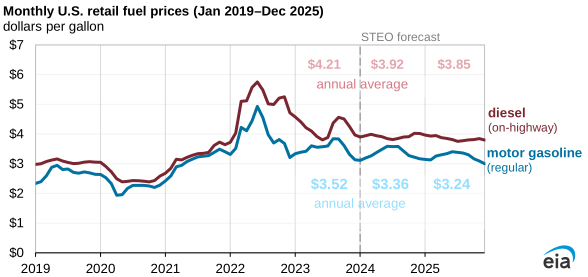
To understand why American drivers are paying less to fill their tanks, one must look past the local franchise sign and analyze a complex web of global supply, domestic refining capacity, and monetary policy. Over the preceding months, Brent and West Texas Intermediate (WTI) crude benchmarks have wrestled with opposing forces: fears of a global recession dampening industrial demand versus persistent structural underinvestment in fossil fuel infrastructure.
However, the divergence between crude oil futures and retail gasoline prices has widened. Refiners have successfully transitioned from summer-blend to cheaper winter-blend formulations, expanding operating margins and alleviating processing bottlenecks that plagued the market earlier in the year. Furthermore, coordinated releases from global strategic reserves, paired with fluctuating export volumes to Europe and Asia, have temporarily flooded domestic distribution channels with compliant product.
For enterprise logistics, trucking fleets, and consumer goods distributors, this localized fuel deflation provides a welcome buffer against broader supply chain friction. Operating margins that were compressed by high transportation overhead are seeing a modest recovery, boosting short-term enterprise ROI for logistics-heavy portfolios.
The Political Economy of the Fuel Gauge
Few economic indicators possess the psychological weight of the retail gasoline price. Unlike inflation figures released monthly by the Bureau of Labor Statistics or complex metrics regarding gross domestic product growth, the price of regular unleaded is boldly advertised on towering electronic monoliths at every major intersection. It is an inescapable, high-frequency data point consumed daily by millions of voting commuters.
Historical data underscores this phenomenon: consumer confidence indices routinely track within a statistically significant band of retail fuel price movements. As prices decline, negative sentiment softens, providing a crucial tailwind for incumbent lawmakers seeking to defend their legislative records. Political action committees and campaign strategists on both sides of the aisle have adjusted their micro-targeting algorithms accordingly, deploying real-time digital advertising campaigns that frame pump prices either as a vindication of current administration policies or as a temporary, politically motivated illusion masking long-term structural vulnerabilities.
Corporate treasuries and institutional asset managers are factoring this sentiment shift into their risk mitigation strategies. A favorable election outcome that preserves legislative gridlock or delivers a predictable policy environment reduces regulatory uncertainty, thereby supporting broader market liquidity and equity valuations.
Verified Data & Metrics Breakdown
The following table outlines the key macroeconomic indicators, historical price comparisons, and market metrics defining the current energy landscape ahead of the midterms:
| Metric / Indicator | Current Average | Prior Year Period | Market Implication |
|---|---|---|---|
| US National Average Retail Gasoline | $3.48 / gallon | $3.85 / gallon | Direct relief for disposable household income and consumer discretionary spending. |
| WTI Crude Benchmark | $81.50 / barrel | $89.20 / barrel | Reflects balanced global demand forecasts and tempered geopolitical risk premiums. |
| US Strategic Petroleum Reserve (SPR) Inventory | ~350M barrels | ~400M barrels | Signifies aggressive historical inventory drawdowns requiring eventual replenishment. |
| Refinery Utilization Rate | 91.4% | 88.9% | Demonstrates optimized domestic processing capacity ahead of seasonal shifts. |
Industry & Market Implications: Winners and Losers
The structural dynamics causing petrol prices to dip create clear bifurcations across industrial sectors. Understanding these ripples is essential for institutional investors and corporate executives executing long-term capital allocation plans.
The Winners
- Consumer Discretionary & Retail: With lower costs at the pump, middle- and lower-income households retain more disposable income, translating to stronger foot traffic and e-commerce conversion rates for major retailers.
- Ancillary Logistics & Freight: Trucking firms, delivery networks, and airlines experience compressed variable costs, protecting operating margins against broader wage inflation pressures.
- Incumbent Political Establishments: Easing cost-of-living anxieties serves as a powerful shield for candidates defending congressional majorities, blunting opposition messaging centered on runaway inflation.
The Losers
- Independent Upstream Producers: Independent exploration and production (E&P) companies face compressed cash flows when commodity prices soften, potentially delaying capital expenditures on new drilling rigs and infrastructure scalability.
- Alternative Energy Developers: When fossil fuels become temporarily more affordable, the economic urgency for consumers to adopt electric vehicles (EVs) or alternative residential heating solutions experiences a brief deceleration in adoption velocity.
Frequently Asked Questions (People Also Ask)
Why are retail gasoline prices dropping while crude oil remains relatively high?
Retail gasoline prices are influenced by more than just raw crude costs. The transition from expensive summer-blend fuel formulations to cheaper winter-blend specifications, combined with high domestic refinery utilization rates and expanded product inventories, has allowed pump prices to fall even when crude oil benchmarks experience temporary support.
How much do gas prices historically impact midterm election outcomes?
Gas prices serve as a high-visibility proxy for overall economic health in the minds of voters. While elections are multi-causal, prolonged spikes in fuel costs consistently correlate with voter dissatisfaction and lower approval ratings for the party holding the executive branch, making price dips a vital stabilization tool for incumbents.
Will these lower gas prices persist long-term, or is this a temporary phenomenon?
Market analysts view the current dip as a combination of seasonal factors (such as the winter fuel transition) and tactical supply interventions. Long-term pricing will depend heavily on global geopolitical stability, OPEC+ production quotas, and the speed at which the US Department of Energy decides to begin refilling the depleted Strategic Petroleum Reserve.
How does the drawdown of the Strategic Petroleum Reserve affect future market stability?
The Strategic Petroleum Reserve (SPR) was designed to mitigate severe supply emergencies. Repeated drawdowns have brought reserve inventories to multi-decade lows. While effective at dampening short-term retail prices, this policy leaves domestic markets with a reduced cushion against unexpected geopolitical supply shocks, shifting the burden of future stabilization back to private sector production and refining capacity.
Future Outlook & Strategic Milestones
As the midterm ballots are cast and tallied, the temporary reprieve at the service station will transition into a new phase of economic reality. The primary variable to watch in the immediate post-election window is the federal government's strategy regarding SPR replenishment. If the Department of Energy enters the market to buy back crude to refill reserves, it will create a permanent pricing floor that could push retail gasoline costs back upward.
Furthermore, capital allocation within the energy sector will pivot toward balancing shareholder returns—such as dividends and share buybacks—with necessary investments in long-term production capacity and regulatory compliance. Enterprise risk management frameworks must account for ongoing volatility in global supply chains, green energy transition mandates, and shifting legislative priorities.
For institutional investors and corporate leaders, maintaining agility, monitoring real-time inventory data, and decoupling long-term enterprise strategy from short-term electoral cycles will remain the definitive keys to navigating the complex intersection of energy markets and American politics.