Executive Takeaways:
- Monetary Stance Realigned: The Reserve Bank of India’s Monetary Policy Committee (MPC) unanimously voted to keep the repo rate unchanged at 5.25%, signaling a measured approach toward domestic liquidity and risk mitigation.
- Equity Market Rally: Buoyed by a constructive growth upgrade and a softer inflation outlook, the benchmark Sensex climbed significantly, while the Nifty 50 comfortably breached the psychological 24,600 threshold.
- Capital Allocation Shifts: Institutional investors are recalibrating asset allocation strategies, rotating capital into interest-sensitive sectors like banking, real estate, and infrastructure.
- Macroeconomic Resilience: Despite global supply chain friction and persistent geopolitical headwinds, India’s domestic consumption engine and capital expenditure cycle continue to anchor corporate valuation multiples.
MUMBAI — In a decisive monetary policy announcement that reverberated across South Asian trading desks and international emerging-market portfolios, the Reserve Bank of India (RBI) elected to hold the benchmark repo rate steady at 5.25% on August 5, 2026. The status-quo decision, paired with an upward revision in the nation's macroeconomic growth projections and a distinctly softer domestic inflation trajectory, served as an immediate catalyst for institutional risk-on sentiment. By the closing bell, the BSE Sensex had registered robust gains, while the NSE Nifty 50 decisively reclaimed and closed above the 24,600 mark, defying lingering global macroeconomic jitters.
The policy stance adopted by RBI Governor and the members of the Monetary Policy Committee (MPC) underscores a nuanced balancing act. As central banks across developed economies navigate choppy waters regarding terminal interest rate pathways, the Indian monetary authority has opted for deliberate stability. For corporate treasuries, asset managers, and retail investors alike, this decision provides vital policy predictability, allowing firms to optimize capital allocation, streamline debt-servicing frameworks, and accelerate long-term capital expenditure initiatives.
The Catalytic Pivot: Dissecting the August 5 Monetary Policy Statement
Test Our Free AI & Tech Utilities Suite
Calculate LLM API token costs, analyze article dwell-time, or simulate tech DCA returns.
Market participants had spent the preceding weeks bracing for potential hawkish surprises amid volatile commodity pricing and fluctuating foreign portfolio investment (FPI) flows. However, the MPC’s resolution to maintain the repo rate at 5.25% signaled that domestic price pressures are remaining safely within the central bank's tolerance band. More importantly, the central bank’s upward revision of real GDP growth forecasts injected fresh institutional confidence into the macroeconomic narrative.
Inflation, which has historically acted as the primary bogeyman for emerging market equities, showed signs of durable moderation. A combination of stable domestic agricultural output, rationalized supply chains, and prudent administrative measures by fiscal authorities has successfully anchored consumer price index (CPI) expectations. This favorable inflation outlook afforded the RBI the luxury of patience, averting any premature tightening that could have stifled the nascent credit expansion cycle.
For chief financial officers and corporate strategists, this environment minimizes the cost of capital volatility. Enterprise risk mitigation strategies can now pivot from defensive liquidity hoarding toward aggressive market capture, particularly in technology-enabled sectors, industrial automation, and green energy infrastructure.
Market Mechanics: How Sensex and Nifty Crossed Critical Thresholds
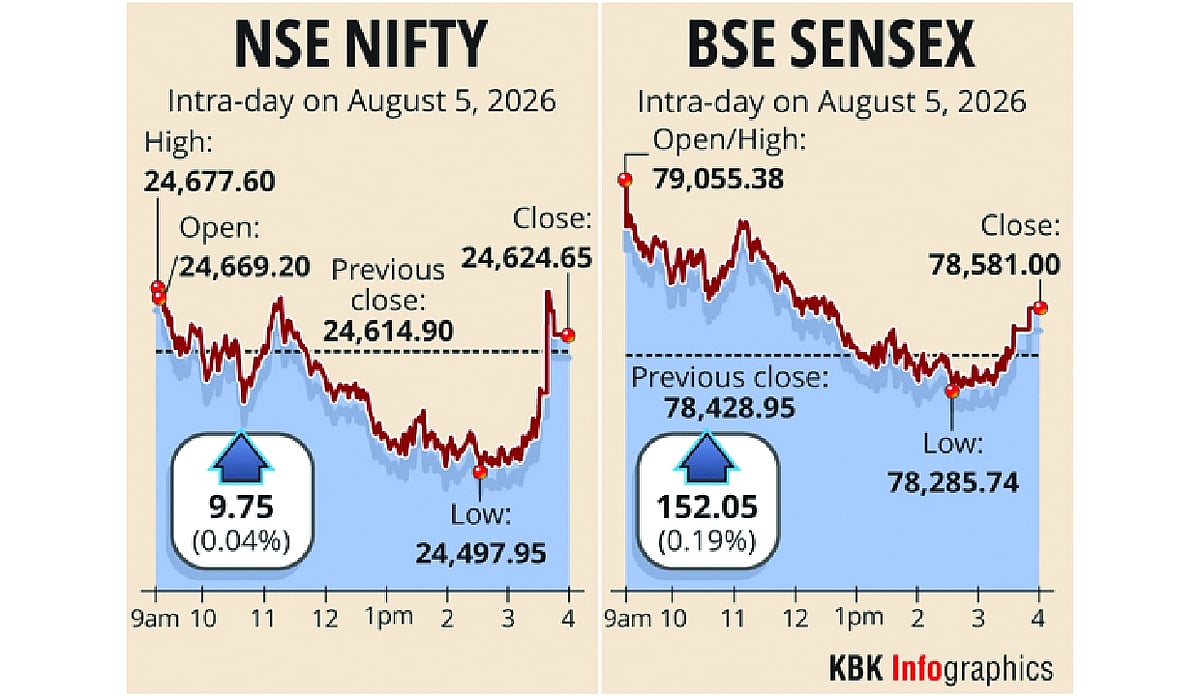
The immediate reaction across Indian bourses was swift and decisive. As the policy details hit wire terminals at 10:00 AM IST, algorithmic trading systems and human portfolio managers alike re-evaluated equity valuation multiples. Banking and financial services stocks—traditionally the most sensitive to interest rate decisions—led the charge. Net interest margins (NIMs) are expected to remain stable, alleviating pressures on lending institutions and encouraging a healthier credit-deposit ratio.
Simultaneously, interest-sensitive sectors such as real estate, automotive, and consumer durables experienced a surge in buying volume. Lower borrowing costs, coupled with consumer confidence indexes hovering near multi-year highs, point toward robust festive season demand. The Nifty 50's triumphant breach of the 24,600 resistance level was underscored by strong market breadth, with advancing issues outnumbering decliners by a comfortable margin across both large-cap and mid-cap segments.
| Economic / Market Indicator | Pre-Policy Status | Post-Policy Status (Aug 5, 2026) | Strategic Implication |
|---|---|---|---|
| RBI Repo Rate | 5.25% | 5.25% (Unchanged) | Stable borrowing costs; predictable debt servicing. |
| Nifty 50 Index Close | Consolidating ~24,350 | Closed above 24,600 | Breakout momentum; bullish technical continuation. |
| Inflation Trajectory | Moderating / Elevated Risks | Softer Outlook | Alleviates margin compression for manufacturing. |
| GDP Growth Projection | Robust baseline | Upgraded / Upward Revision | Supports higher corporate earnings estimates. |
Industry & Market Implications: Winners, Losers, and Capital Flows
Every macroeconomic inflection point creates distinct structural winners and losers. The RBI’s decision to maintain the 5.25% repo rate alongside an upbeat growth assessment has immediate ramifications for institutional capital flows:
- Banking and Financial Institutions (Net Winners): With the rate pause, banks avoid the immediate asset-liability mismatch pressures that accompany rate hikes. Credit growth is projected to remain healthy across retail and corporate segments, supporting robust return on equity (ROE) metrics.
- Real Estate and Infrastructure Developers (Major Beneficiaries): Sustained borrowing rates combined with rising urbanization metrics act as a powerful tailwind for real estate developers. Commercial office leasing and residential absorption rates are expected to maintain their upward trajectory.
- Export-Oriented Tech and Pharma (Neutral to Positive): While primarily dependent on global macroeconomic conditions (particularly US and European enterprise IT spending), domestic stability provides a strong operational baseline for technology firms executing complex digital transformation and cloud infrastructure contracts.
- Muted Sectors: Certain capital-intensive manufacturing segments reliant on imported raw materials may experience localized margin pressure if global commodity indices rebound, though the softer domestic inflation outlook largely mitigates this risk.
Frequently Asked Questions (People Also Ask)
Why did the RBI keep the repo rate unchanged at 5.25%?
The RBI’s Monetary Policy Committee opted to maintain the repo rate at 5.25% to support ongoing domestic economic momentum while maintaining strict vigilance over inflation. With CPI inflation exhibiting a softer trajectory and growth indicators outperforming global averages, the central bank prioritized policy stability over aggressive intervention.
How did the stock market respond to the August 5 policy announcement?
Indian equity benchmarks rallied sharply following the policy announcement. The BSE Sensex posted substantial gains, while the NSE Nifty 50 successfully broke past the 24,600 threshold, driven by heavy institutional buying in banking, financial services, and interest-sensitive sectors.
What does the growth upgrade mean for corporate earnings?
An upward revision in India's macroeconomic growth forecast signals robust domestic consumption and expanding industrial output. For publicly listed corporations, this translates directly to stronger revenue visibility, improved operating leverage, and justified upward revisions in forward valuation multiples.
How does a stable repo rate impact retail borrowers and corporate debt?
A stable repo rate ensures that lending rates charged by commercial banks remain predictable. Existing retail borrowers (home, auto, and personal loans) will not face immediate EMI hikes, while corporate treasuries can execute long-term capital expenditure and debt refinancing without fearing near-term monetary tightening.
Future Outlook: Strategic Milestones and What to Watch Next
As the financial markets digest the August 5 policy milestone, institutional focus now shifts toward the upcoming quarter's corporate earnings reports and high-frequency macroeconomic data prints. Key metrics to monitor include GST collections, credit-deposit growth ratios, and rural wage growth indices, which will collectively determine whether the domestic consumption engine can sustain its current velocity.
Globally, foreign institutional investors (FIIs) will be closely analyzing the interest rate trajectories of Western central banks. Any divergence between the RBI’s accommodative-to-neutral posture and global monetary tightening could influence currency dynamics and foreign portfolio flows. However, India's robust domestic liquidity ecosystem—anchored by aggressive domestic institutional investor (DII) inflows and systematic investment plan (SIP) participation—provides a powerful structural cushion against external shocks.
Ultimately, the August 5 policy outcome reinforces India’s position as a primary bright spot in the global economic landscape. For enterprise leaders and capital allocators, the directive is clear: maintain strategic focus on infrastructure scalability, operational efficiency, and disciplined capital deployment as the market charts its course beyond the 24,600 Nifty milestone.