How India’s Digital Public Infrastructure Export Strategy is Rewriting the Global Fintech Playbook
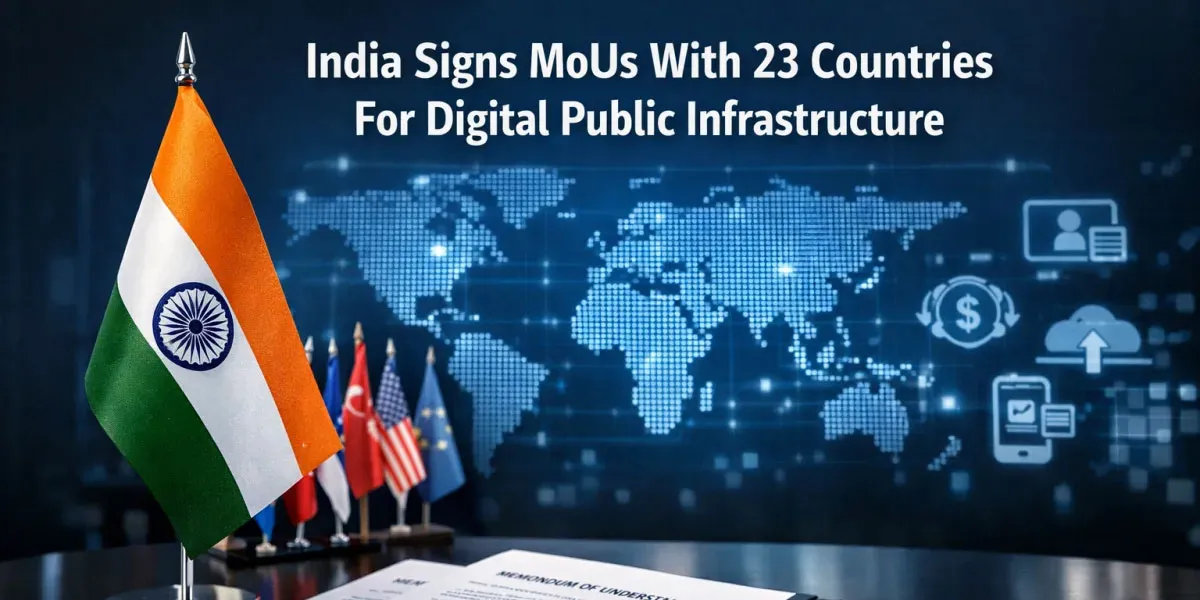
In a geopolitical chess match dominated historically by proprietary Western card networks and expensive cross-border wire rails, New Delhi has executed a quiet yet sweeping technological coup. According to primary disclosures from Elets eGov, the Government of India has formally secured Memorandums of Understanding (MoUs) and strategic implementation agreements with 23 sovereign nations to export its indigenous Digital Public Infrastructure (DPI) framework, known broadly as the India Stack. Concurrently, the Unified Payments Interface (UPI)—India’s crown-jewel real-time retail payment system—has gone live in over eight international jurisdictions, fundamentally altering the economics of cross-border remittances, foreign exchange, and sovereign financial sovereignty.
For institutional investors, enterprise technologists, and global macroeconomic strategists, this is not merely a story of software deployment; it is a profound capital allocation shift. By positioning open-source, interoperable public digital rails as an alternative to extractive commercial monopolies, India is scaling a digital export model that bypasses traditional venture-capital-backed payment silos. As enterprise ROI considerations pivot toward infrastructure scalability and regulatory compliance, foreign governments are discovering that adopting the India Stack eliminates years of costly software R&D while driving immediate financial inclusion and market liquidity.
Executive Takeaways
- Global Scale: India has successfully signed bilateral MoUs and technical cooperation frameworks with 23 countries to implement indigenous Digital Public Infrastructure (DPI) models.
- Active Deployment: UPI is now fully operational across more than eight foreign nations, enabling instant, low-cost cross-border retail payments without the friction of legacy correspondent banking networks.
- Enterprise & Economic Impact: The export strategy drastically reduces transaction friction, optimizes capital allocation for developing nations, and establishes a new benchmark for sovereign cloud compute architecture and data governance.
- Strategic Shift: Developing nations are increasingly rejecting proprietary Western payment infrastructure in favor of open-source DPI, mitigating transaction costs and enhancing domestic monetary velocity.
The Genesis of India Stack: From Domestic Inclusion to Sovereign Export
To understand the magnitude of the 23-nation agreement, one must evaluate the macroeconomic engineering behind the India Stack. Conceived over a decade ago under the Aadhaar digital identity initiative, the architecture evolved to encompass three foundational layers: identity (Aadhaar), payments (UPI, Aadhaar Enabled Payment System), and data sharing (Account Aggregator framework). Built on open application programming interfaces (APIs), the system was originally designed to solve structural financial exclusion in a nation of 1.4 billion people.
By the mid-2020s, the domestic valuation multiples of Indian fintech enterprises and the sheer volume of transactions—processing billions of real-time payments monthly—proved that the underlying cloud compute architecture was capable of unprecedented infrastructure scalability. When developing nations in Africa, Southeast Asia, Central Asia, and Latin America began seeking resilient digital frameworks, India offered a turnkey solution.
Unlike proprietary software licenses that lock emerging economies into perpetual vendor debt, the India Stack is offered as a public digital good. Through structured government-to-government (G2G) MoUs and technical assistance pacts, India provides the foundational blueprints, cybersecurity protocols, and governance frameworks. This approach addresses critical risk mitigation strategies for partner countries, ensuring national data sovereignty while plugging them directly into modern digital economies.
UPI Goes Global: Disrupter of the Multi-Trillion-Dollar Remittance Industry
The operational expansion of UPI beyond Indian borders represents a direct challenge to the legacy SWIFT network, Visa, and Mastercard duopolies. Traditionally, international remittances have been plagued by exorbitant foreign exchange markups, opaque intermediary fees, and multi-day settlement windows. By linking UPI directly with foreign instant payment systems—such as Singapore’s PayNow and various national QR frameworks in the United Arab Emirates, France, Mauritius, Sri Lanka, and beyond—India has engineered instant peer-to-peer (P2P) and peer-to-merchant (P2M) rails.
The macroeconomic implications for capital liquidity are profound. Lowering the cost of cross-border capital flows directly impacts migrant workers, small-and-medium enterprises (SMEs), and international trade corridors. For multinational corporations operating in these regions, integration with UPI-enabled rails promises lower processing costs and instantaneous liquidity realization, fundamentally compressing working capital cycles.
| Metric / Dimension | Domestic India Stack Baseline | Global DPI Export Framework (23 Nations) | Strategic Impact |
|---|---|---|---|
| Core Technology Focus | Aadhaar, UPI, DigiLocker, Account Aggregator | Modular DPI, Digital ID, Instant Payment Rails | Standardized sovereign digital transformation |
| Active UPI International Markets | Domestic dominance (Billions of monthly txns) | Live in 8+ nations (expanding across 23 MoU signatories) | Bypasses legacy correspondent banking friction |
| Primary Target Beneficiaries | Unbanked citizens, domestic merchants, fintechs | Sovereign governments, central banks, regional SMEs | Enhances market liquidity and financial inclusion |
| Underpinning Architecture | Federated APIs, high-throughput cloud compute | Open-source, adaptable national digital infrastructure | Guarantees data sovereignty and cost-efficiency |
Industry & Market Implications: Winners, Losers, and Capital Reallocation
The mass adoption of India’s DPI framework triggers a seismic shift across the global financial services landscape. Institutional analysts are closely monitoring how this trend affects enterprise valuations and competitive positioning worldwide.
- The Winners: Emerging market economies, local fintech innovators, and agile technology providers. Sovereign nations that adopt India's DPI leapfrog decades of legacy banking infrastructure, reducing capital expenditure on digital transformation. Furthermore, Indian cloud service providers, system integrators, and cybersecurity firms stand to secure lucrative implementation and maintenance contracts.
- The Losers: Legacy multinational payment processors and traditional correspondent banking institutions. As bilateral, direct-settlement payment corridors proliferate between nations adopting UPI-type architectures, the volume of high-fee international wire transfers and credit card cross-border interchange fees faces structural compression.
- Macroeconomic Liquidity: With frictionless payments comes higher economic velocity. Small businesses in developing economies gain immediate access to digital credit scoring models backed by transactional data, unlocking previously sidelined credit markets and driving sustainable GDP growth.
Frequently Asked Questions (People Also Ask)
What is India’s Digital Public Infrastructure (DPI) export strategy?
India’s DPI export strategy involves signing bilateral Memorandums of Understanding (MoUs) and technical cooperation agreements with foreign governments—currently numbering 23 nations—to share the architectural blueprints of the "India Stack." This includes foundational digital identity systems, real-time payment frameworks like UPI, and secure data-sharing protocols, allowing partner nations to build their own sovereign digital public goods without relying on proprietary Western software vendors.
In how many countries is UPI currently live?
As of early 2026, the Unified Payments Interface (UPI) has gone live in over eight international jurisdictions, including key financial and tourism hubs across Asia, the Middle East, and Europe. Ongoing negotiations and technical integrations with the broader group of 23 MoU-signing nations are expected to scale this footprint significantly over the next 24 to 36 months.
How does the export of India Stack impact traditional credit card networks and SWIFT?
By establishing direct, instant, interoperable retail payment links between nations, UPI and sovereign DPI frameworks bypass traditional legacy rails like SWIFT and high-fee international card networks. This disintermediation reduces transaction costs, accelerates settlement times to mere seconds, and threatens the cross-border revenue models of legacy payment monopolies.
Are partner countries required to use Indian software vendors, or is the system open-source?
The India Stack is built on open-source principles and modular API standards. Partner countries retain total control over their data governance, regulatory compliance, and domestic implementation. While Indian firms provide initial technical consultancy and architecture deployment support, the underlying model is designed to ensure absolute sovereign autonomy for the adopting nation.
Future Outlook: Key Milestones and Sovereign Tech Diplomacy
As the geopolitical landscape shifts from physical trade corridors to digital connectivity, India’s DPI diplomacy has established a new paradigm for international tech cooperation. The next critical phase for institutional observers will involve tracking the speed of deployment across the remaining MoU signatories and assessing the interoperability of UPI with emerging Central Bank Digital Currencies (CBDCs).
For global investors, the convergence of sovereign digital infrastructure and real-time payment rails signals a permanent evolution in international finance. Nations that successfully integrate into this expanding network will experience lower transaction friction, enhanced financial inclusion, and superior macroeconomic resilience. India’s strategic export playbook has firmly transitioned from a domestic economic experiment into a dominant global standard.