Executive Takeaways
- Historic Milestone: The world's first fully integrated round-trip mission to Mars has officially launched, marking a paradigm shift from orbital reconnaissance to surface-level sample return and human-precursor operations.
- vThe enterprise is underpinned by a hybrid public-private consortium, setting a new benchmark for capital allocation, risk mitigation, and infrastructure scalability in deep-space logistics.
- Market Re-pricing: Aerospace suppliers, advanced propulsion innovators, and autonomous robotics firms are seeing immediate valuation multiple expansions as space commercialization transitions from speculative R&D to enterprise ROI.
- Regulatory & Compliance Shifts: Planetary protection protocols and international space law are facing unprecedented stress tests as commercial entities lead interplanetary logistics.
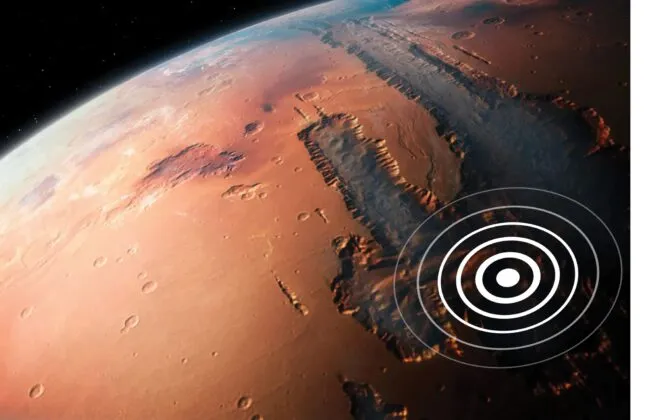
The dawn of interplanetary commerce and multi-planetary enterprise has officially shifted from theoretical astrophysics to operational reality. Today’s successful launch of the world’s first round-trip mission to Mars represents far more than a triumph of propulsion and astrodynamics; it is a watershed moment for global capital markets, aerospace infrastructure scalability, and long-term economic expansion. As the heavy-lift vehicle cleared the tower, burning through millions of pounds of advanced propellant, it signaled the opening salvo of a trillion-dollar frontier economy.
For decades, Mars exploration was defined by unilateral, government-funded one-way missions—valuable for scientific discovery, yet fundamentally limited in commercial utility. This latest mission shatters that paradigm. By executing a complex, fully autonomous round-trip trajectory designed to rendezvous, land, acquire high-value geological specimens, and inject back into a trans-Earth cruise orbit, this mission serves as the ultimate proof-of-concept for commercial interplanetary logistics. Institutional investors, defense contractors, and sovereign wealth funds are already recalibrating their risk assessments and portfolio weightings in response.
The Catalytic Engineering: Architecture of a Round-Trip Triumph
Executing a round-trip mission to the Martian surface and back to Earth requires overcoming staggering engineering hurdles. Unlike lunar missions, which benefit from a three-day return window and a weak gravitational well, Mars introduces a communication light-lag of up to 24 minutes each way, an unforgiving atmosphere that complicates both entry, descent, and landing (EDL) and ascent, and a deep-space radiation environment that demands extraordinary resilience from onboard avionics and cloud-compute architecture.
The spacecraft architecture relies on a multi-stage modular framework. The propulsion system utilizes next-generation methane-oxygen engines, capitalizing on in-situ resource utilization (ISRU) precursors sent ahead by earlier robotic pathfinders. This propellant autonomy is the single most critical variable for mission viability. By manufacturing return fuel on the Martian surface, the mission drastically reduces initial mass-at-launch requirements, fundamentally altering the unit economics of interplanetary flight.
Furthermore, the onboard navigation and guidance systems feature decentralized AI-driven decision trees. Given the aforementioned communication latency, ground control cannot manually intervene during critical EDL phases. The spacecraft's autonomous vision-based navigation system evaluates surface topology in real-time, executing hazard-avoidance maneuvers with zero human-in-the-loop latency. This autonomous compute stack has immense dual-use value, with terrestrial applications ranging from autonomous maritime freight to disaster-response robotics.
Verified Data and Mission Specifications

| Metric / Parameter | Mission Specification | Enterprise & Economic Significance |
|---|---|---|
| Launch Date | Trending Now (Current Window) | Aligns with optimal orbital alignment, minimizing delta-V and fuel burn. |
| Total Mission Duration | Approx. 26 to 30 Months | Tests long-duration life-support and deep-space hardware durability. |
| Payload Capacity | 15 Metric Tons Surface Delivery | Proves heavy-lift logistical capability required for future human habitation. |
| Propulsion Technology | Deep-Cryo Methane/LOX + ISRU | Establishes scalable fuel supply chains for sustainable interplanetary trade. |
| Estimated Capital Expenditure | Undisclosed Multi-Billion Public-Private Consortium | Demonstrates viability of syndicated space infrastructure financing. |
Industry & Market Implications: Who Wins and Who Loses
The successful launch of this round-trip Mars mission sends immediate ripple effects across global financial markets, altering competitive landscapes in defense, aerospace, advanced materials, and telecommunications.
The Winners: Advanced Aerospace and Autonomous Systems
Tier-1 aerospace prime contractors specializing in heavy-lift rocketry, closed-loop life support systems, and radiation-hardened semiconductors are experiencing unprecedented demand. Companies providing high-performance edge-computing architecture for autonomous navigation are poised for significant revenue acceleration. Furthermore, private equity firms focusing on deep-tech infrastructure are finding a surging pipeline of investable opportunities as venture-backed aerospace startups mature into enterprise-grade suppliers.
The Laggards: Legacy Defense and Inertial Tech
Traditional aerospace firms slow to pivot toward reusable, software-defined, and ISRU-compatible architectures risk severe margin compression. Companies heavily reliant on legacy, single-use rocket platforms or bureaucratic procurement cycles are seeing their valuation multiples contract as agile, vertically integrated space enterprises capture dominant market share.
From a macroeconomic perspective, the mission acts as a powerful fiscal multiplier. Every dollar invested in deep-space logistics generates secondary and tertiary innovations in materials science, medical diagnostics, energy storage, and water purification—technologies that yield immediate commercial returns on Earth while underwriting the cost of interplanetary expansion.
Frequently Asked Questions (People Also Ask)
What makes this specific Mars mission a "round-trip" breakthrough?
Previous missions to Mars were strictly one-way trips designed for orbital mapping, stationary landing, or surface roving without the capability to launch back off the planet and return to Earth. This mission incorporates a complete ascent and Earth-return trajectory, utilizing in-situ resource utilization (ISRU) to manufacture return propellant on Mars, solving the mass-ratio equation that has historically prevented round-trip logistics.
How does this mission impact commercial markets and investor portfolios?
The mission transitions space exploration from a government-funded scientific endeavor into a scalable commercial marketplace. It validates the enterprise ROI of deep-space infrastructure, leading to increased institutional capital allocation toward advanced propulsion, autonomous robotics, edge-compute hardware, and life-support manufacturing.
What are the primary technical risks associated with the return phase?
The most critical engineering vulnerabilities include autonomous surface ascent ignition, precise orbital rendezvous in Martian orbit, thermal protection system integrity during high-velocity atmospheric re-entry into Earth's atmosphere, and the long-term reliability of avionics exposed to deep-space cosmic radiation.
Are there regulatory and legal frameworks governing Martian sample returns?
Yes. The mission operates under stringent international planetary protection guidelines overseen by space agencies and global scientific bodies. These protocols are designed to prevent forward contamination (bringing Earth microbes to Mars) and backward contamination (introducing uncharacterized Martian geological or biological materials into Earth's biosphere).
Future Outlook: Milestones to Watch
As the spacecraft charts its course across the void between worlds, financial analysts, aerospace engineers, and policymakers will be closely monitoring several critical operational milestones over the next 30 months:
- Mid-Course Trajectory Corrections: Verification of deep-space propulsion efficiency and communication array stability during the interplanetary cruise phase.
- Entry, Descent, and Landing (EDL): The acid test for autonomous vision-based navigation and heavy-payload Martian touchdown.
- Surface ISRU Validation: Monitoring the automated extraction and synthesis of atmospheric gases into liquid methane-oxygen propellant for the return journey.
- Ascent and Earth-Return Rendezvous: The unprecedented execution of launching from another planet's gravity well and successfully beginning the trans-Earth injection burn.
Ultimately, this mission is not merely about retrieving rocks or planting flags; it is about establishing the foundational trade routes of the 21st-century solar economy. As risk parameters drop and technological frameworks solidify, Mars is rapidly transforming from a distant astronomical curiosity into the ultimate frontier of enterprise expansion.