Executive Takeaways
- Unprecedented Duration: Four analog astronauts successfully completed a grueling 378-day isolation cycle inside NASA's Mars Dune Alpha habitat at the Johnson Space Center.
- Commercial Capital Alignment: The mission serves as a critical stress test for life-support infrastructure scalability, directly informing private-sector aerospace risk mitigation and long-term capital allocation strategies.
- Human Performance Analytics: Data gathered on cognitive degradation, interpersonal friction, and circadian disruption will dictate future valuation multiples and compliance frameworks for commercial space habitation ventures.
- Infrastructure Scalability: Findings from closed-loop resource recycling provide invaluable telemetry for enterprise cloud compute architectures deployed in remote, autonomous environments.
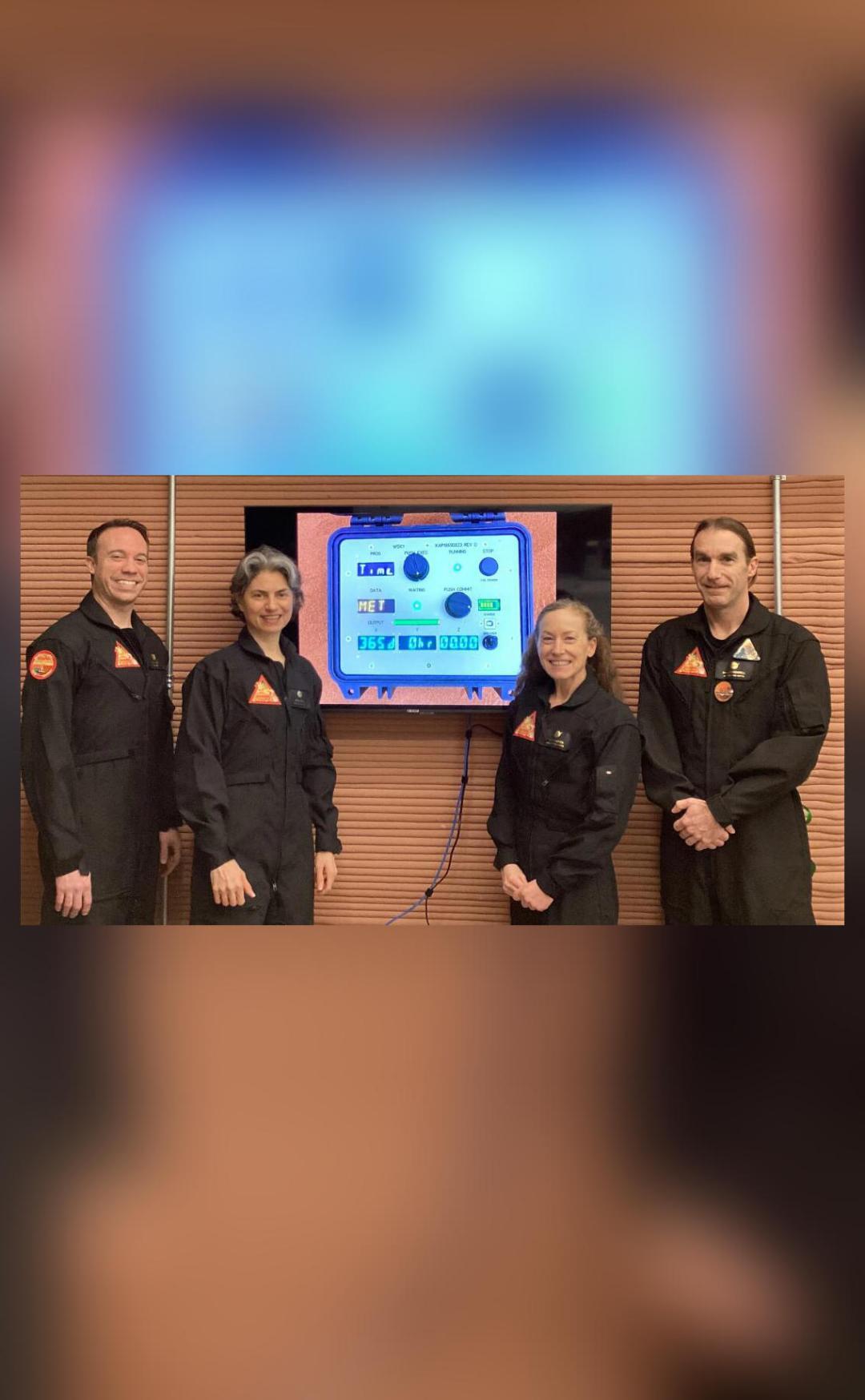
HOUSTON — After spending more than a year sealed off from the rest of humanity, a four-person crew stepped out of a 3D-printed habitat at NASA’s Johnson Space Center on Saturday, marking the culmination of a 378-day psychological and physiological odyssey. The mission, designated Crew Health and Performance Exploration Analog (CHAPEA) Mission 1, represents the longest continuous simulated Martian surface stay ever conducted by the United States space agency. As private aerospace titans and sovereign wealth funds accelerate capital allocation toward extraterrestrial infrastructure, the data harvested from this sterile 1,700-square-foot enclosure carries immediate implications for commercial valuation models, risk mitigation protocols, and the ultimate realization of a multi-planetary economy.
The four analog astronauts—commander Kelly Haston, medical officer Nathan Jones, science officer Anca Selariu, and flight engineer Ross Brockwell—entered the habitat on June 25, 2023. For over a year, they lived under conditions meticulously engineered to replicate the hostile realities of the Red Planet. This included simulated communication delays of up to 22 minutes each way with "Mission Control," rigid nutritional rationing consisting primarily of space-grade shelf-stable provisions, simulated extravehicular activities (EVAs) on an indoor Martian sandbox dubbed "Mars Dune Alpha," and the constant, low-grade mechanical hum of closed-loop life support systems.
The Catalytic Need for High-Fidelity Analog Isolation
Test Our Free AI & Tech Utilities Suite
Calculate LLM API token costs, analyze article dwell-time, or simulate tech DCA returns.
As aerospace entities pivot from orbital tourism to deep-space resource extraction and planetary colonization, human capital emerges as the primary point of failure. The economic calculus of a crewed Mars mission is staggering; a single catastrophic psychological breakdown or mechanical failure of life-support infrastructure could instantly write off billions in invested capital. Consequently, NASA’s CHAPEA program functions not merely as a scientific endeavor, but as an essential risk-mitigation engine for the burgeoning space economy.
Investors tracking enterprise ROI in the aerospace sector must evaluate how effectively habitats like Mars Dune Alpha can predict operational friction. Throughout the 378-day deployment, researchers closely monitored behavioral health and performance metrics. Sleep quality, cognitive acuity, team cohesion, and immunological responses were tracked continuously using wearable biometrics and mandatory psychological reporting. The objective: establish baseline data capable of informing regulatory compliance standards and operational guidelines for commercial space stations and eventual lunar-surface outposts.
Furthermore, the logistical constraints of the habitat mirror the infrastructure scalability challenges faced by terrestrial enterprises operating in disconnected, edge-computing environments. Managing water recycling rates, atmospheric scrubber efficiency, and localized power generation with zero margin for error provides a blueprint for resource optimization that transcends astronautics.
Inside Mars Dune Alpha: Engineering a Closed-Loop Micro-Economy

Constructed using ICON’s proprietary 3D-printing technology, Mars Dune Alpha was engineered to withstand the psychological strains of extreme confinement while testing novel survival technologies. Every drop of water was filtered and recycled; every calorie consumed was accounted for within a strict budgetary framework; and every kilowatt of power generated via simulated solar arrays was subject to strict load-balancing protocols.
For the crew, the psychological toll of isolation was compounded by the relentless demands of simulated scientific labor. Their daily schedules integrated geological sampling, maintenance of hydroponic crop production systems, and routine habitat upkeep. The communication lag proved to be one of the most psychologically taxing variables. Unlike International Space Station astronauts, who maintain real-time audio and video connectivity with families and ground control, the CHAPEA crew experienced the profound isolation of true deep-space transit, where requesting support for a failing technical system requires a 44-round-trip minute delay before troubleshooting instructions can be received.
This forced autonomy is precisely what corporate strategists and defense analysts are paying to understand. In remote mining operations, deep-sea exploration, and autonomous enterprise deployment, the ability of small teams to execute complex diagnostic and repair operations without centralized oversight is paramount. The CHAPEA dataset offers unprecedented visibility into human resilience under these exact parameters.
Verified Data & Metrics Breakdown
| Metric / Parameter | CHAPEA Mission 1 Specifications | Industry / Operational Significance |
|---|---|---|
| Mission Duration | 378 Days (June 2023 – July 2024) | Establishes long-duration baseline for crew psychological durability. |
| Habitat Footprint | 1,700 Square Feet (3D-Printed by ICON) | Proves scalability of additive manufacturing for off-world construction. |
| Communication Latency | Up to 22 minutes each way (44 min round trip) | Validates autonomous decision-making protocols and edge-computing models. |
| Crew Complement | 4 Analog Astronauts (2 scientists, 1 engineer, 1 medical officer) | Optimized multi-disciplinary team structure for high-stress environments. |
| Resource Reclamation | Closed-loop water and atmospheric recycling | Direct application to green tech, ESG infrastructure, and extreme survival gear. |
Industry & Market Implications: Who Wins, Who Loses
The successful conclusion of CHAPEA Mission 1 reverberates across multiple market sectors, fundamentally altering the risk profile of commercial space investment.
- Commercial Aerospace & Habitat Developers: Companies specializing in modular space stations, inflatable habitats, and additive manufacturing (such as Axiom Space, Sierra Space, and ICON) stand as immediate beneficiaries. Validated human data de-risks their pitch decks to venture capital firms and institutional lenders.
- Biometric & Behavioral Health Tech: Firms providing continuous health-monitoring wearables, AI-driven psychological sentiment analysis software, and telemedicine platforms gain a marquee validation case study, accelerating enterprise adoption in high-stress terrestrial industries like defense, mining, and maritime logistics.
- Traditional Aerospace Contractors: Legacy primes that fail to integrate closed-loop life support innovations and autonomous diagnostic frameworks risk margin compression as nimble, software-first space startups capture lucrative government and commercial contracts.
- Insurance & Risk Underwriting: Specialty insurers evaluating liability models for commercial space tourism and industrial extraction now possess empirical telemetry to price policies with greater actuarial precision, potentially lowering cost-of-capital hurdles for early-stage operators.
Frequently Asked Questions (People Also Ask)
What was the primary objective of NASA’s CHAPEA Mission 1?
The primary objective was to evaluate human physiological and psychological responses to long-duration, resource-constrained isolation in an environment simulating the Martian surface. The data collected will help NASA and commercial partners prepare for real crewed missions to Mars by identifying potential failure points in team dynamics, health, and habitat technology.
How did the crew experience the simulated Martian communication delay?
Throughout the 378-day mission, all communications between Mars Dune Alpha and Mission Control were artificially delayed by up to 22 minutes in each direction. This forced the crew to operate with complete autonomy, solving technical malfunctions and executing daily operational plans without real-time intervention from Earth.
What technologies were tested inside Mars Dune Alpha?
The habitat featured cutting-edge life support and resource-monitoring systems, crop production technologies for supplemental nutrition, and was constructed using advanced 3D-printing techniques developed by ICON. These systems were tested for reliability, energy efficiency, and ease of maintenance under closed-loop conditions.
What are the next steps for the CHAPEA program?
NASA has already selected the crew for CHAPEA Mission 2, which is scheduled to enter the Mars Dune Alpha habitat in 2025. Each subsequent mission will continue to test variations in operational stressors, nutritional adjustments, and habitat configurations to refine mission architectures ahead of actual interplanetary flight.
Future Outlook: Capital Milestones and the Road to Mars
As Haston, Jones, Selariu, and Brockwell undergo extensive medical debriefings and psychological reintegration over the coming months, NASA’s Human Research Program will begin synthesizing the petabytes of telemetry generated during their 378-day confinement. These findings will directly shape the design specifications for NASA’s Artemis lunar basecamp, serving as a critical stepping stone toward eventual crewed expeditions to the Martian surface in the late 2030s or early 2040s.
For financial markets, the closure of CHAPEA Mission 1 signals that the technological and human architecture required for deep-space expansion is transitioning from theoretical physics into empirical reality. As valuation multiples adjust to reflect these de-risked milestones, institutional capital allocation into commercial space infrastructure is projected to accelerate, cementing the space economy as a cornerstone of 21st-century enterprise growth.