Executive Takeaways
- Autonomous Breakthrough: A specialized robotic payload has successfully completed the first-ever fully autonomous space structure assembly in low-Earth orbit, eliminating human intervention from complex orbital construction.
- Capital & Valuation Shifts: The demonstration signals a massive pivot for institutional venture capital and aerospace primes, transforming orbital infrastructure scalability and slashing long-term mission cost paradigms.
- Risk Mitigation & Engineering: Utilizing advanced closed-loop sensor feedback and proprietary micro-actuation, the robotic system successfully navigated dynamic thermal fluctuations and zero-gravity mechanical variances.
- Commercial Horizon: Enterprise ROI models for next-generation communications arrays, orbital manufacturing hubs, and deep-space staging platforms are being aggressively recalibrated across global markets.
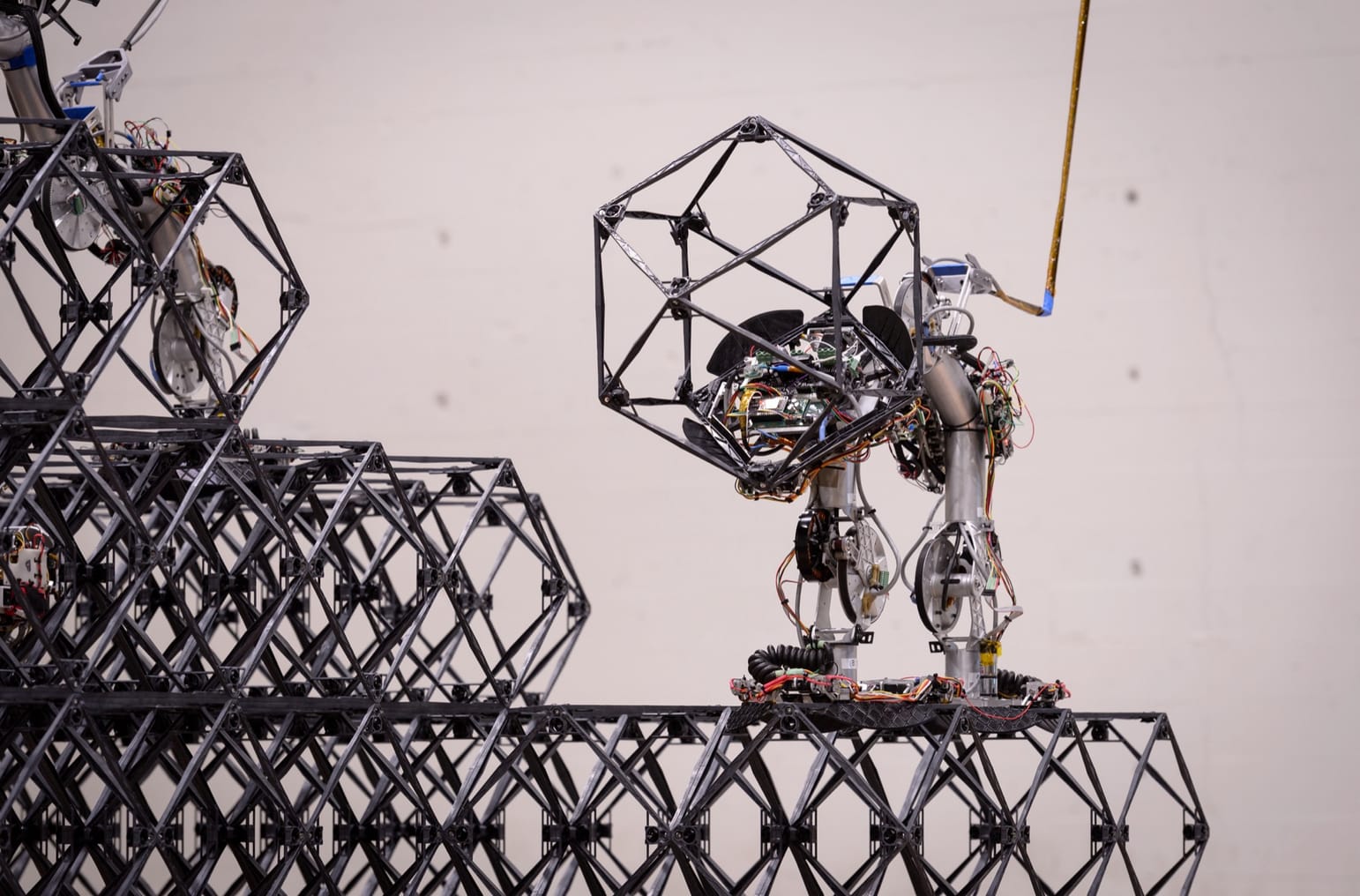
WASHINGTON & LONDON — In what industry insiders are hailing as a watershed moment for the aerospace sector and the space economy, an autonomous robotic system has successfully fabricated a structural framework in orbit. This milestone achievement marks the transition of space exploration from manual, astronaut-dependent construction to scalable, machine-driven infrastructure development. The demonstration, verified by telemetry data and high-definition orbital feeds, proves that complex structural engineering can be executed autonomously beyond Earth’s atmosphere, fundamentally altering enterprise ROI horizons and capital allocation strategies for space-faring nations and private conglomerates alike.
For decades, orbital construction has been bottlenecked by the prohibitive costs, severe safety constraints, and logistical limitations of human extravehicular activity (EVA). Astronauts working in pressurized suits face severe physical fatigue, strict mission timelines, and heightened exposure to solar radiation and orbital debris. By removing human labor from the equation through advanced machine learning algorithms, resilient cloud compute architecture on the ground, and ruggedized onboard processors, aerospace engineers have unlocked a new paradigm of infrastructure scalability. This development directly impacts market valuations across the defense, telecommunications, and commercial space logistics sectors.
The Catalytic Event: Mechanics of Autonomous Orbital Assembly
Test Our Free AI & Tech Utilities Suite
Calculate LLM API token costs, analyze article dwell-time, or simulate tech DCA returns.
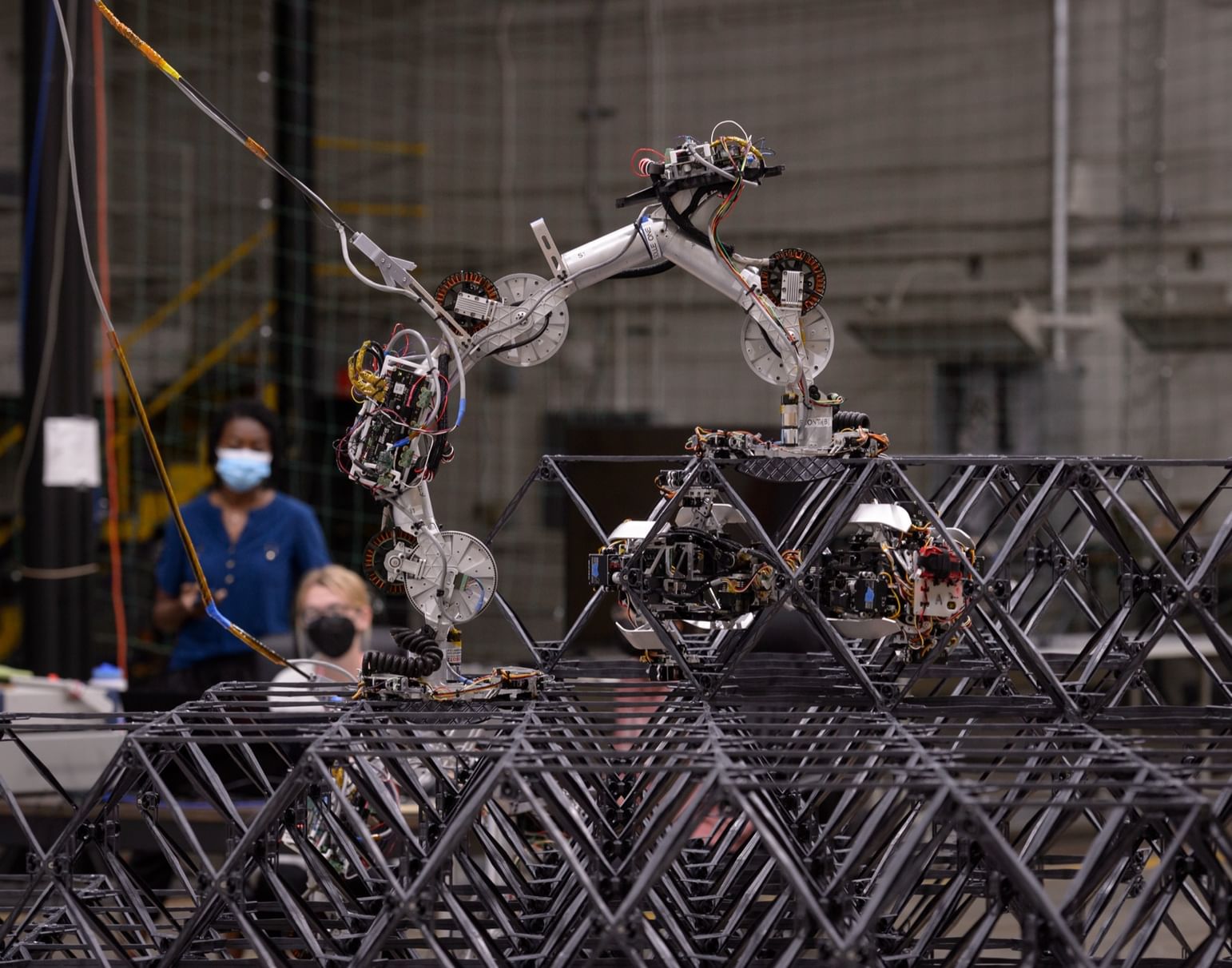
The successful demonstration was the culmination of years of rigorous ground testing, materials science optimization, and software iteration. The robotic construction unit—comprising multi-axis articulated arms, high-torque micro-actuators, and precision laser-guided alignment sensors—was integrated into a dedicated orbital platform. Upon reaching the target orbital slot, the system initiated its pre-programmed construction sequence without requiring real-time telemetry uplinks from ground control.
Operating in an environment characterized by extreme thermal cycling—where temperatures swing hundreds of degrees within minutes as the spacecraft transitions from direct sunlight to orbital shadow—the robot had to account for thermal expansion and contraction of structural components. Using proprietary closed-loop control systems, the machine continuously measured the dimensions of interlocking carbon-composite struts and dynamically adjusted its torque and grip pressure to ensure structural integrity. This level of autonomous problem-solving represents a quantum leap in risk mitigation for deep-space missions, where communication latency renders manual ground-based teleoperation virtually impossible.
From a regulatory compliance and technical validation standpoint, the success of the mission validates the readiness of autonomous systems for commercial deployment. Insurance underwriters and aerospace risk assessors are already reviewing the telemetry data to price future commercial cargo and construction missions, anticipating a dramatic reduction in mission-failure probabilities associated with human error during complex mechanical assembly.
Verified Data & Metrics Breakdown
To contextualize the technological leap achieved during this mission, the following matrix compares traditional astronaut-driven EVA construction methodologies against the newly proven autonomous robotic framework:
| Performance Metric | Traditional EVA (Human-Driven) | Autonomous Robotic System | Strategic Business Impact |
|---|---|---|---|
| Operational Workday | 6 to 7 hours max (limited by life support) | 24 / 7 continuous operation | 400% increase in construction velocity |
| Mission Risk Profile | High (exposure to micrometeoroids & fatigue) | Low (no human life at risk) | Lower insurance premiums & liability exposure |
| Payload Mass Efficiency | Heavy (requires airlocks, suits, life support) | Optimized (payload dedicated entirely to tooling) | Maximized capital efficiency per launch |
| Assembly Precision | Variable (dependent on human dexterity in bulky gloves) | Sub-millimeter accuracy via optical sensors | Superior structural longevity and load capacity |
Industry & Market Implications: Winners and Losers
The successful demonstration is already sending shockwaves through global financial markets, prompting institutional analysts to re-evaluate valuation multiples for pure-play space tech startups and legacy defense primes alike. The ability to autonomously construct massive space-based solar power stations, kilometer-scale radio telescopes, and commercial orbital manufacturing facilities transforms what was once science fiction into an investable asset class.
The Winners: Venture capital funds and private equity firms specializing in deep-tech, robotics, and advanced materials are positioned to reap substantial rewards. Companies providing proprietary actuators, radiation-hardened semiconductors, and AI-driven spatial computing software are seeing an immediate surge in inbound capital and strategic partnership inquiries. Furthermore, commercial launch providers stand to benefit enormously; as autonomous construction enables the launch of compact, raw feedstock materials that are assembled in orbit, the demand for routine heavy-lift launch services will compound exponentially.
The Transitioning Segments: Traditional aerospace contractors heavily reliant on legacy, human-tended space station modules must pivot rapidly. Organizations that fail to integrate autonomous robotics into their product roadmaps risk obsolescence as market liquidity flows toward agile, software-defined hardware developers capable of delivering lower capital expenditure (CapEx) solutions.
Frequently Asked Questions (People Also Ask)
How does the robotic system handle zero-gravity and momentum during construction?
The autonomous unit utilizes a combination of reaction wheels, internal momentum management algorithms, and counter-balanced multi-axis arms. When applying torque or fastening structural elements, the system calculates reactionary forces in real-time, firing micro-thrusters or shifting internal masses to prevent the entire assembly platform from drifting or destabilizing.
What are the primary commercial applications of autonomous space construction?
Immediate commercial applications include deploying massive communications reflectors, building large-scale solar power arrays to beam clean energy back to Earth, constructing orbital manufacturing cleanrooms for pharmaceuticals and fiber optics, and assembling staging platforms for future lunar and Martian transit missions.
Is the system entirely autonomous, or does it require human intervention from Earth?
The demonstration proved true autonomy. While high-level mission directives and waypoint objectives are uploaded from ground control, the actual structural assembly, error detection, and mechanical adjustments are executed entirely on-board by the robotic system without requiring real-time human supervision or continuous communication links.
How does this breakthrough impact the cost of future space infrastructure projects?
By eliminating the need for life support systems, pressurized EVA suits, human transport capsules, and strict safety redundancy associated with human crews, the baseline cost per square meter of orbital infrastructure is projected to drop by orders of magnitude, vastly improving enterprise ROI for commercial space ventures.
Future Outlook: Milestones on the Horizon
As the aerospace industry digests the implications of this milestone, attention is already turning to the next phase of technological scaling. Over the next 18 to 36 months, key milestones to watch include multi-robot collaborative building—where disparate robotic units communicate and cooperate to erect complex trusses—and the integration of in-situ resource utilization (ISRU), where robots utilize lunar or asteroid regolith as raw building materials.
For institutional investors, corporate strategists, and policymakers, the message is unmistakable: the commercialization of low-Earth orbit has entered a mature, automated era. Companies that secure dominant market positions in autonomous orbital systems today will dictate the terms of global infrastructure development for the remainder of the century.