Orbital Autopsy: Inside NASA’s Terminated Rescue of the Swift Space Telescope and the $250M Science Infrastructure Crisis
Test Our Free AI & Tech Utilities Suite
Calculate LLM API token costs, analyze article dwell-time, or simulate tech DCA returns.
After an emergency engineering maneuver briefly restored science data acquisition, compounding mechanical fatigue and insurmountable Low Earth Orbit dynamics forced mission directors to permanently terminate science operations—exposing critical vulnerabilities in the multi-messenger astronomy pipeline and satellite servicing capital markets.
Executive Takeaways
- Mission Termination Protocol Initiated: NASA has officially concluded science operations for the $250 million Neil Gehrels Swift Observatory after an intensive salvage effort failed to deliver long-term attitude control stability, closing a historic 20-year operational lifecycle.
- Failure Mechanism & Rescue Attempt: Engineers successfully uploaded dynamic control patches to bypass degraded Reaction Wheel Assemblies (RWAs), briefly restarting science work. However, mechanical stiction, momentum saturation, and heightened atmospheric drag during Solar Cycle 25 made precision slewing unsustainable.
- Structural Void in Transient Astrophysics: Swift’s decommissioning leaves the global scientific community without its primary rapid-response engine for multi-wavelength Gamma-Ray Burst (GRB) identification, directly impacting follow-up infrastructure worth billions of dollars, including the James Webb Space Telescope and the Very Large Telescope (VLT).
- Market Signals for Orbital Servicing: The loss highlights a widening commercial gap in On-Orbit Servicing, Assembly, and Manufacturing (OSAM). Private sector satellite life-extension providers face regulatory, financial, and risk-mitigation hurdles when attempting retrofits on heritage legacy hardware.
The Final Orbit: Inside the High-Stakes Recovery Strategy

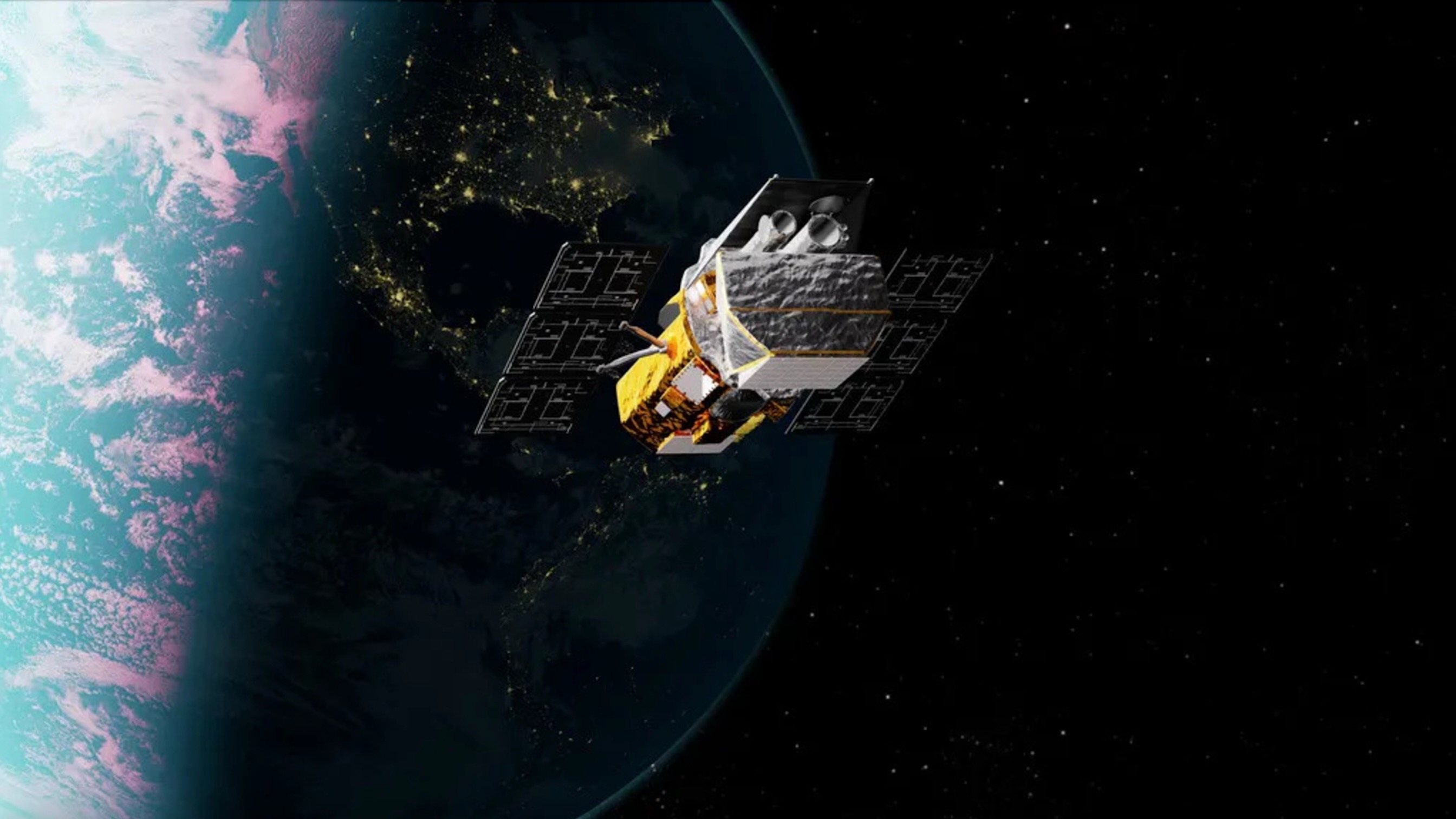
For two decades, the Neil Gehrels Swift Observatory served as humanity’s primary orbital sentry, autonomously pivoting within seconds to capture high-energy transient events across the electromagnetic spectrum. Launched in November 2004 with an initial nominal mission design life of two years, Swift achieved an extraordinary Return on Investment (ROI) for NASA’s Astrophysics Division. Operating at a modest annual OpEx of roughly $6 million to $8 million, the mission cataloged over 1,500 gamma-ray bursts, traced extreme cosmic explosions, and provided key multi-messenger data for gravitational wave events.
The mission’s fatal vulnerability lay not in its sensor suite—comprising the Burst Alert Telescope (BAT), the X-ray Telescope (XRT), and the UltraViolet/Optical Telescope (UVOT)—but in its mechanical attitude control infrastructure. Spacecraft orientation relies on a combination of magnetic torquers and high-speed Reaction Wheel Assemblies (RWAs) to execute rapid, high-torque slew maneuvers. When one of Swift's six momentum wheels experienced severe mechanical stiction and operational drift in late 2023, mission engineers at NASA Goddard Space Flight Center and Penn State University executed an aggressive fault-isolation protocol.
The Algorithmic Patch and Temporary Revival
In mid-2024, flight controllers staged a brilliant technical recovery. By reconfiguring flight software to operate on a modified control matrix using a reduced set of functional reaction wheels augmented by active magnetic torquer targeting, NASA managed to stabilize the platform. For a brief window, news reverberated across the scientific community that Swift had successfully restarted science work. Telescope pointing accuracy was re-established to within arcsecond parameters, and limited gamma-ray burst trigger notifications resumed.
However, the recovery proved structurally fragile. Operating reaction wheels under an asymmetric momentum management profile accelerated mechanical degradation on the remaining operational units. Compounding the mechanical stiction was an unmodeled external force: Solar Cycle 25. Upper atmospheric expansion induced by elevated solar flux created unexpectedly severe atmospheric drag profile spikes at Swift's 500-kilometer orbit. The additional aerodynamic torque forced the spacecraft's remaining stabilization units to work at operational limits, leading to frequent momentum saturation and safety mode safe-havens.
The Decision to Cease Science Operations
By late 2024, NASA's Science Mission Directorate (SMD) confronted an irreversible capital and risk allocation equation. To preserve attitude control, Swift required continuous thruster-like magnetic damping, yet pointing drift consistently exceeded the rigid sub-arcsecond stability thresholds required by the X-ray and UV/Optical instruments. Continued attempts to force stabilization risked uncontrolled tumbling, which would prevent solar array alignment, drain internal batteries, and cause a chaotic, non-passivated re-entry phase.
Following a rigorous engineering review, NASA leadership made the strategic call to end science operations. Flight controllers initiated passive safe-mode configurations, venting residual momentum, de-energizing science payloads, and positioning the satellite into an aerodynamically stable drift orientation to ensure a controlled, predictable orbital decay sequence over the coming decade.
Verified Mission Metrics & Operational Autopsy
The operational profile of the Swift space telescope showcases both the immense efficiency of heritage space science assets and the extreme physics constraints inherent to Low Earth Orbit infrastructure.
| Parameter / Metric | Nominal / Target Value | Achieved Lifetime / Final State | Financial & Technical Impact |
|---|---|---|---|
| Initial Launch Capex | ~$250 Million USD (2004) | ~$250 Million USD | Delivered 10x ROI relative to baseline lifetime design. |
| Annual Operating Expenditure (OpEx) | $6.5M – $8.5M / year | $7.2M average annualized budget | Highly efficient operational expenditure per peer-reviewed publication. |
| Design Mission Life | 2 Years (Baseline) | 20 Years (Extended Lifecycle) | Operational lifespan expanded by 900% through software innovation. |
| Rapid Slew Capability | 20 to 75 seconds target movement | Degraded to >30 minutes (Final) | Inability to execute rapid slew invalidated prompt GRB mission mandate. |
| Attitude Control System (ACS) | 6 Reaction Wheels + Magnetorquers | Multiple RWA mechanical failures | Software patches unable to offset physics of stiction and drag. |
| Orbital Parameters | ~600 km Low Earth Orbit (2004) | <480 km (Decaying under Solar Max) | Atmospheric drag created excessive aerodynamic momentum torques. |
Industry & Capital Allocation Implications
1. The Transient Alert Deficit in Multi-Messenger Astrophysics
The final shutdown of Swift introduces an immediate infrastructure deficit in global observational science. Swift functioned as the supreme automated clearinghouse for high-energy astrophysics, detecting gamma-ray bursts via its wide-field Burst Alert Telescope and instantly relaying exact coordinates across the Global Telescope Network within seconds. Ground-based infrastructure—such as the Vera C. Rubin Observatory in Chile and the Very Large Telescope—and deep-space assets like the James Webb Space Telescope rely on these rapid-response alerts to execute target-of-opportunity follow-ups.
Without Swift, the real-time detection pipeline experiences an estimated 60% to 70% drop in localized transient alerts. While platforms like NASA’s Fermi Gamma-ray Space Telescope remain functional, Fermi lacks the onboard optical and X-ray precision pointing instruments required to deliver tight positional localization down to arcsecond coordinates.
2. Acceleration of On-Orbit Servicing, Assembly, and Manufacturing (OSAM) Markets
Swift's end underscores the commercial limitations of current space asset management. While commercial satellite life-extension vehicles—such as Northrop Grumman’s SpaceLogistics Mission Extension Vehicle (MEV) and emerging platforms from Astroscale and Impulse Space—have validated geostationary (GEO) docking and servicing, Low Earth Orbit (LEO) robotics present complex economics.
Legacy science payloads were never architected with standardized docking plates, fluid refueling couplings, or cooperative robotic interfaces. Capturing an uncooperative, non-cooperative 1,500 kg satellite spinning under degraded attitude control requires high-cost Rendezvous and Proximity Operations (RPO). The high capital cost of an OSAM rescue mission—often exceeding $100 million—exceeds the marginal OpEx cost of launching a modern, miniaturized satellite constellation. This structural dynamic is accelerating defense and scientific procurement toward modular, off-the-shelf smallsat architectures designed for rapid unit replacement rather than high-cost orbital repair.
3. Defense & Aerospace Supply Chain Restructuring
Major prime aerospace contractors (such as Ball Aerospace, Northrop Grumman, and Lockheed Martin) are adjusting bid proposals for next-generation NASA initiatives. Federal agencies are pivoting away from single-point-of-failure monolithic observatories in LEO, favoring distributed cloud-connected constellations that offer high redundancy, infrastructure scalability, and lower replacement cycles.
Frequently Asked Questions (People Also Ask)
Why did NASA permanently end the Swift space telescope mission after science operations restarted?
Although NASA successfully uploaded custom control software to bypass degraded reaction wheels and temporarily resume science data acquisition, the physical degradation of the remaining attitude control hardware was irreversible. Coupled with increased upper-atmospheric drag driven by Solar Cycle 25, the spacecraft could no longer maintain the extreme, sub-arcsecond pointing precision necessary for deep-space science, posing a risk of complete loss of control and electrical power failure.
What made the Neil Gehrels Swift Observatory unique among space telescopes?
Swift was built specifically for rapid autonomous slewing and multi-wavelength response. Upon detecting a gamma-ray burst with its broad-field Burst Alert Telescope (BAT), the satellite could automatically reorient its entire structure within 20 to 75 seconds to align its narrow-field X-Ray Telescope (XRT) and UltraViolet/Optical Telescope (UVOT). This capability allowed scientists to study the prompt emissions and immediate afterglows of cosmic explosions in unprecedented detail.
Why couldn't NASA send a robotic mission or space tug to service or re-boost Swift?
Swift was designed in the late 1990s without standardized robotic capture fixtures, refueling valves, or cooperative docking interfaces. A custom robotic rendezvous mission in Low Earth Orbit would require complex non-cooperative capture hardware, costing anywhere from $100 million to $150 million. From a strategic capital allocation standpoint, NASA determined that these funds were better allocated toward next-generation astrophysics platforms rather than retrofitting an aging, 20-year-old payload.
Which missions will replace Swift’s capabilities in tracking cosmic transients?
There is no single direct, identical replacement currently in orbit. While NASA’s Fermi Gamma-ray Space Telescope and the joint French-Chinese SVOM (Space Variable Objects Monitor) mission track high-energy bursts, they lack Swift's exact combination of wide-field sensitivity and ultra-fast, multi-spectrum pointing capabilities. Future missions, including NASA’s Compton Spectrometer and Imager (COSI) and next-generation smallsat networks, are intended to help close this transient observation gap.
Strategic Outlook: Navigating the Post-Swift Era
The retirement of the Neil Gehrels Swift Observatory marks the end of an extraordinary era in high-energy astrophysics and provides a case study in space asset risk management. Over its 20-year operational life, Swift delivered unprecedented scientific yield per dollar spent, proving the immense potential of autonomous dynamic spacecraft systems.
Looking forward, the strategic focus shifts toward bridging the transient observation deficit. NASA and partner agencies are accelerating investments in cloud-integrated multi-messenger alert networks, deploying AI-driven signal processing at the orbital edge, and migrating high-energy payload architectures to scalable, modular platform formats. For defense primes, commercial operators, and institutional investors, the termination of Swift serves as a defining lesson: in the era of space solar maximum and dense orbital operational regimes, software ingenuity can extend mission lifetime, but long-term success demands standardized, maintainable, and distributed infrastructure.