Executive Takeaways
Test Our Free AI & Tech Utilities Suite
Calculate LLM API token costs, analyze article dwell-time, or simulate tech DCA returns.
- Peak Illumination & Orbital Trajectory: October’s Hunter’s Moon reaches syzygy—100% illumination—as the Earth sits directly between the Sun and Moon, utilizing a reduced ecliptic angle to rise remarkably close to sunset for several consecutive nights.
- Atmospheric Optics & Horizon Illusion: The moon's signature amber hue and magnified scale near the horizon are governed by Rayleigh scattering of low-frequency wavelengths and cognitive optical processing, rather than physical expansion.
- Satellite & Orbital Infrastructure Impacts: High-albedo lunar reflectance alters star-tracker baseline calibrations and increases background optical noise for Low-Earth Orbit (LEO) remote sensing arrays and defense optical satellite constellations.
- Commercial Astrotourism & Capital Allocation: Experiential real estate, high-end optical equipment manufacturers, and dark-sky hospitality assets experience a measurable surge in high-margin seasonal revenue driven by celestial viewing demand.
The Science and Splendor of October’s Celestial Anchor
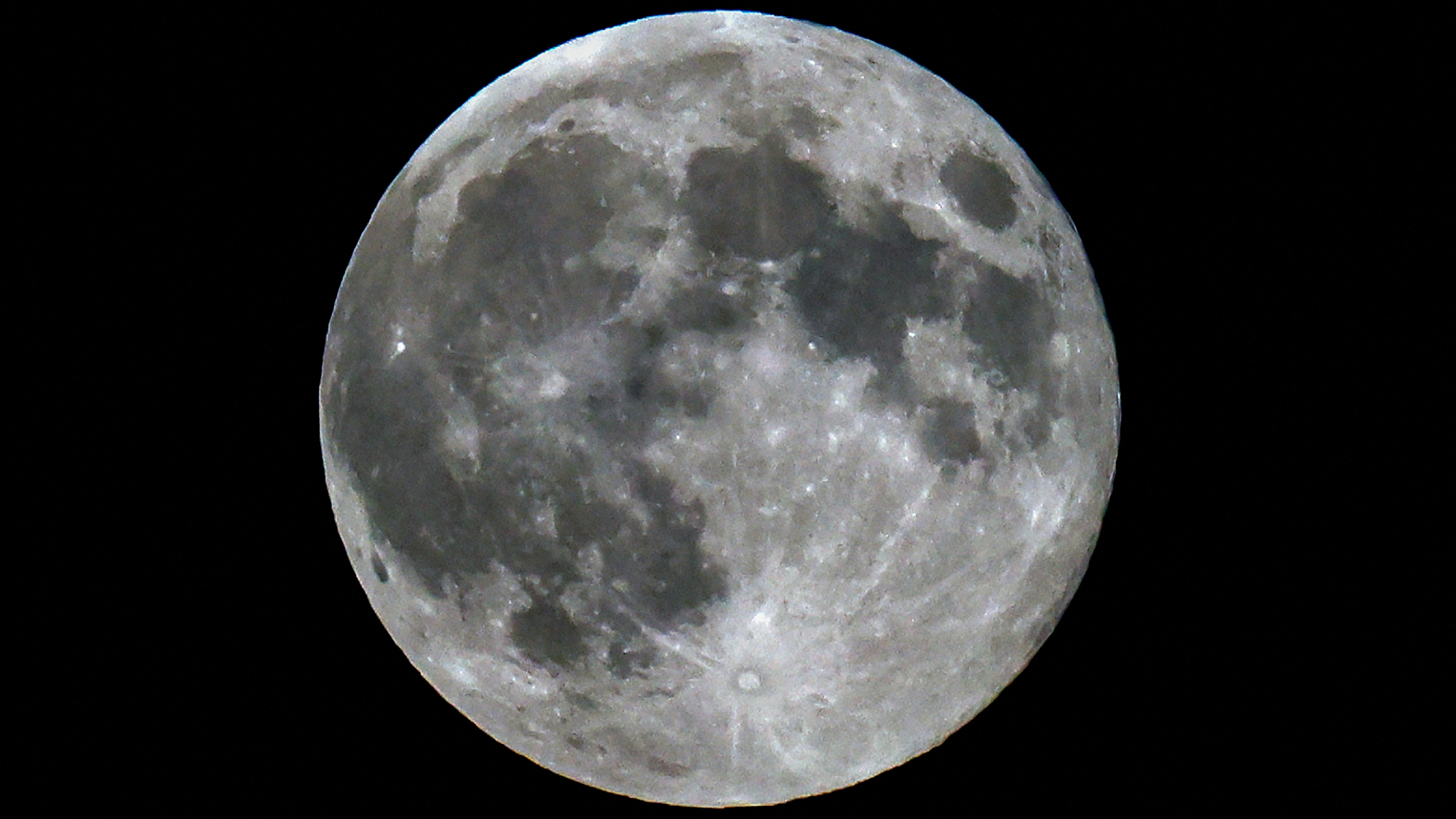
Tonight, the autumn sky plays host to one of the most culturally documented and optically striking astronomical phenomena of the calendar year: the Hunter’s Moon. Falling immediately after the September Harvest Moon, this lunar phase represents a critical point in the solar-lunar orbital calendar. While every month features a full moon, the Hunter’s Moon possesses unique celestial mechanics and atmospheric properties that distinguish it from standard monthly syzygy events.
From an astronomical perspective, the defining characteristic of October's full moon is not merely its visual brilliance, but its successive rising times. During most of the year, the moon rises approximately 50 minutes later each night. However, around the autumnal equinox in the Northern Hemisphere, the angle of the ecliptic—the path the Sun and Moon appear to take across the sky—forms its shallowest orientation relative to the horizon. Consequently, the Moon rises only 20 to 30 minutes later on consecutive nights around the Hunter’s Moon. This narrow delay floods the early evening hours with continuous, bright moonlight, a historical asset that earned this phase its traditional moniker as hunters leveraged the light to track game preparing for winter.
Celestial Dynamics: Syzygy, Perigee, and the Ecliptic Flattening
The physics underlying the Hunter’s Moon depend on three interconnected orbital metrics: alignment, distance, and ecliptic inclination. Syzygy occurs when three celestial bodies—in this case, the Sun, Earth, and Moon—form a near-straight line in space. When the Moon reaches opposition to the Sun, its Earth-facing hemisphere is fully illuminated by direct sunlight.
Simultaneously, the Moon's elliptical orbit means its distance from Earth varies between apogee (furthest approach) and perigee (closest approach). When a full moon coincides with a near-perigee alignment, observers experience enhanced visual magnitude and elevated tidal forces. Even during standard perigee variations, the low angle of the ecliptic during October creates a sustained period of dusk-to-dawn illumination that alters ambient illumination baselines across the Northern Hemisphere.
Atmospheric Physics and the Optical Horizon Illusion
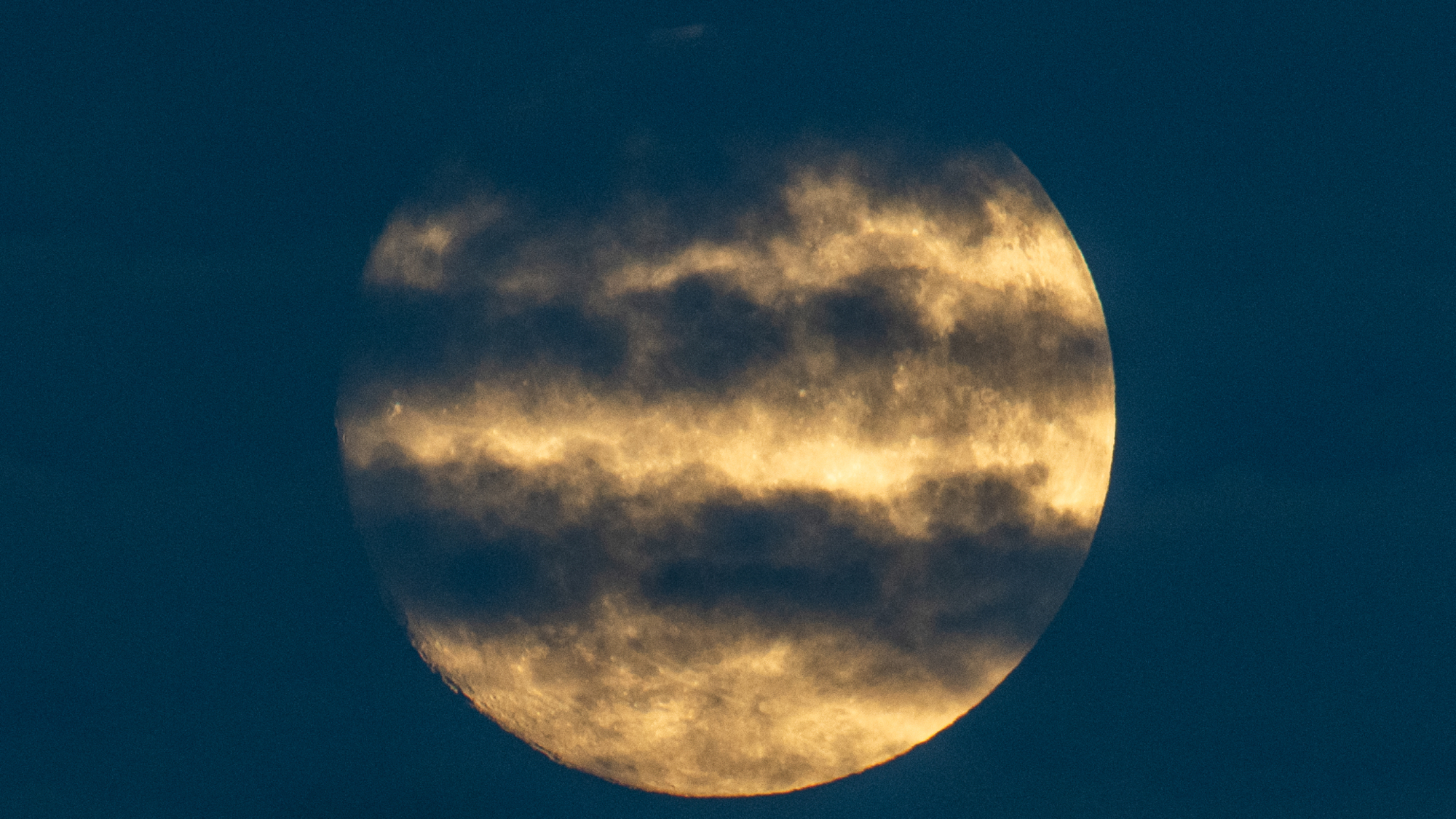
Observers often remark on the deep orange, golden, or crimson hues that characterize the Hunter’s Moon as it ascends past the horizon. This color profile is governed entirely by Rayleigh scattering—the same atmospheric mechanism responsible for blue skies during the day and red sunsets at dusk. When the moon sits low on the horizon, its reflected light must travel through a significantly thicker cross-section of Earth's atmosphere than when it sits overhead at zenith.
Air molecules, dust particles, and atmospheric aerosols scatter shorter blue and green wavelengths of light away from the line of sight. Longer red and orange wavelengths pass through atmospheric attenuation with minimal scattering, striking the human eye or camera lens with intense saturation. Coupled with the "moon illusion"—a perceptual phenomenon where the human brain misinterprets the size of objects low on the horizon when contrasted against terrestrial landmarks—the Hunter’s Moon delivers an unparalleled optical showcase.
Comparative Lunar Phase Metrics & Operational Dynamics
To contextualize the astronomical and operational uniqueness of October's Hunter's Moon, the following matrix compares key orbital parameters, optical characteristics, and operational impacts against standard lunar phases.
| Lunar Event Type | Avg. Distance at Phase (km) | Relative Luminance Output | Ecliptic Horizon Rise Lag | Primary Enterprise / Operational Impact |
|---|---|---|---|---|
| Hunter’s Moon (Autumn Peak) | 363,000 – 384,000 | 115% – 130% baseline | 20 – 30 minutes | Elevated background albedo for satellite optics; high astrotourism demand. |
| Standard Mid-Year Full Moon | 384,400 | 100% baseline | 48 – 52 minutes | Nominal background illumination; standard astronomical observational baselines. |
| Perigee Supermoon | < 360,000 | 130% – 145% baseline | 40 – 50 minutes | Maximized tidal variance (perigean spring tides); optical sensor overload risk. |
| Apogee Micromoon | > 405,000 | 85% baseline | 50 – 55 minutes | Minimal atmospheric reflectance; optimized for faint-object deep-space imaging. |
Macroeconomic & Industry Implications: Capital Flows in the Night Sky
While the Hunter's Moon is celebrated primarily as a cultural and visual spectacle, its occurrence intersects directly with multi-billion-dollar commercial sectors, including space situational awareness, defense infrastructure, optics manufacturing, and specialized outdoor hospitality real estate.
1. Commercial Space Operations and Optical Satellite Payload Risks
Modern satellite constellations operating in Low-Earth Orbit (LEO) and Geostationary Earth Orbit (GEO) rely heavily on automated star trackers and optoelectronic sensors for altitude determination, positional tracking, and imaging. The intense, low-angle lunar reflectance during the Hunter's Moon introduces elevated background optical noise. Commercial satellite operators must recalibrate sensor sensitivity thresholds to mitigate "lunar stray light" interference, which can otherwise trigger false orientation readings or degrade Earth-observation imagery resolution.
Additionally, advanced defense satellite arrays that track hypersonic trajectories or thermal plumes must filter out intense moonlight reflected off high-altitude clouds. Defense contractors and space-infrastructure enterprises deploy specialized algorithmic filters to protect sensitive focal plane arrays (FPAs) from photon saturation during peak lunar illumination windows.
2. Astrotourism, Hospitality REITs, and Regional Economic Spikes
The macroeconomic shift toward "experience-driven consumer spending" has propelled astrotourism into a high-growth asset class. Dark-sky reserves, private glamping resorts, and luxury hospitality chains situated in remote regions leverage celestial events like the Hunter’s Moon to achieve peak occupancy rates outside traditional summer leisure seasons.
- Hospitality Capital Allocation: Capital allocation toward dark-sky certified luxury lodges has yielded elevated RevPAR (Revenue Per Available Room) metrics, far outperforming regional baseline averages during autumn shoulder periods.
- Commercial Optics & Consumer Tech: Enterprise and retail demand for premium optical hardware—ranging from advanced consumer telescopes (e.g., Celestron, Unistellar) to high-grade telephoto lenses (Sony, Canon, Nikon)—experiences seasonal sales spikes tied directly to autumnal celestial tracking.
3. Energy Grids, Agricultural Operations, and Maritime Logistics
Historically valuable to harvesters, the sustained ambient light provided by the Hunter’s Moon continues to offer minor operational efficiency gains for modern agricultural enterprises finalizing late-season harvest logistics. Extended night visibility reduces lighting power requirements for heavy equipment operating across expansive rural fields.
In maritime environments, the combined effect of autumn full moon gravitational pulls contributes to perigean spring tides. Commercial shipping lines and port authorities servicing shallow coastal channels monitor these tidal shifts closely to maximize draft clearances for mega-container vessels, optimizing cargo throughput efficiency.
Frequently Asked Questions (People Also Ask)
What makes October's Hunter's Moon distinct from other full moons of the year?
The primary distinction lies in its orbital geometry relative to the autumnal equinox. Because the ecliptic forms a shallow angle with the horizon in late autumn, the delay between moonrises on consecutive nights shrinks to as little as 20 minutes in Northern latitudes. This creates a sequence of several consecutive evenings where a near-full moon rises shortly after sunset, granting prolonged dusk lighting.
Why does the Hunter's Moon often look larger and bright orange when it rises?
The color is caused by Rayleigh scattering: light reflecting off the low-horizon moon must travel through a dense column of Earth's atmosphere, which filters out short blue wavelengths and allows long red/orange wavelengths to pass through. The apparent size increase is an optical illusion known as the "moon illusion," where the human brain processes objects near terrestrial landmarks (like trees and buildings) as larger than when isolated in the open sky.
How do commercial satellite networks handle high-intensity lunar light?
Satellite operators use onboard attitude control software and optical baffles to protect star trackers and payload sensors. During periods of 100% illumination, optical sensors are calibrated to compensate for heightened background albedo, preventing signal degradation in remote sensing data, cloud-compute telemetry, and earth-observation imaging networks.
When is the best time tonight to observe and photograph the Hunter's Moon?
The optimal viewing window is during the 30-to-45-minute period immediately following your local sunset. As the Moon emerges above the eastern horizon, atmospheric scattering produces its rich golden hue, while terrestrial foreground elements create the dramatic perspective required for high-impact landscape photography.
Future Outlook & Strategic Milestones
As space commercialization accelerates and the lunar economy transitions from theoretical framework to operational reality under NASA’s Artemis program and international commercial initiatives, full moon events take on evolving strategic significance. Future Hunter’s Moons will coincide with increased orbital asset congestion in cislunar space, driving higher demand for advanced Space Situational Awareness (SSA) software and automated collision-avoidance architectures.
For investors, enterprise strategists, and dark-sky real estate developers, tracking celestial seasonality provides actionable insights into consumer capital deployment and technological infrastructure resilience. As October's Hunter’s Moon illuminates the autumn sky tonight, it serves as a powerful reminder of the intricate balance between age-old natural mechanics and modern industrial operations.