Executive Takeaways
- Unprecedented Distance: The spacecraft has crossed an operational threshold, pushing the limits of the Deep Space Network (DSN) as signal latency approaches nearly a full light-day.
- Infrastructure Bottlenecks: Ground-station capacity, capital allocation for deep-space infrastructure, and legacy radioisotope thermoelectric generator (RTG) degradation present acute risk mitigation challenges for aerospace agencies.
- Data telemetry has degraded due to extreme power attenuation, forcing mission controllers to weigh high-risk architectural recalibrations against complete data loss.
- The event underscores broader strategic imperatives in deep-space asset management, risk governance, and the long-term viability of interstellar exploration infrastructure.
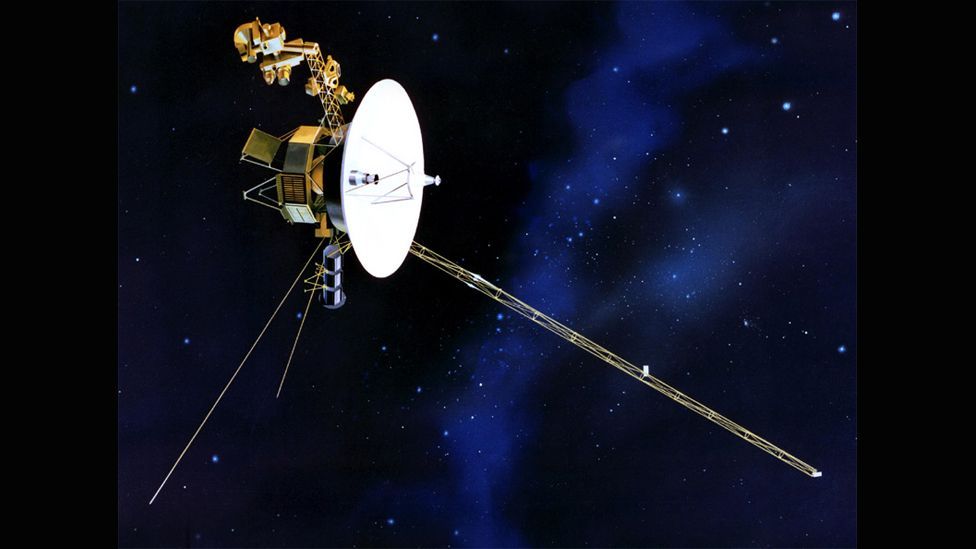
For nearly half a century, humanity’s most distant ambassador has punched through the heliopause, traversing the uncharted abyss of interstellar space. Today, that historic mission faces its most critical juncture. Telemetry confirms that communication links with the spacecraft have severely degraded, placing the probe on the precipice of permanent silence as it operates nearly one light-day away from Earth. This landmark operational crisis not only threatens to sever our longest-running connection to the interstellar medium but also exposes the fragile state of deep-space communications architecture and the stark realities of asset longevity in extreme environments.
As mission controllers at the Jet Propulsion Laboratory (JPL) work frantically to re-establish a stable carrier wave, the incident has sent ripples through the global aerospace community. For institutional stakeholders, private space conglomerates, and defense-adjacent contractors, the silent probe serves as an urgent case study in infrastructure scalability, long-term capital allocation, and the unforeseen variables of deep-space risk management.
The Anatomy of Silence: Technical Breakdown of the Signal Loss
Test Our Free AI & Tech Utilities Suite
Calculate LLM API token costs, analyze article dwell-time, or simulate tech DCA returns.
To understand the magnitude of the current crisis, one must first comprehend the sheer scale of the void. Operating at a distance approaching 24 light-hours—roughly 15 billion miles from Earth—the spacecraft exists at the absolute outer perimeter of humanity's technological footprint. At this distance, a single radio command sent from a NASA Deep Space Network antenna takes nearly a full day to reach the probe, and another full day for the acknowledgment ping to return. A round-trip transaction requires approximately 48 hours, rendering real-time troubleshooting utterly impossible.
The immediate catalyst for the communication blackout stems from a compounding series of systemic constraints:
- Power Depletion: The spacecraft’s primary power source—Plutonium-238-powered radioisotope thermoelectric generators (RTGs)—has experienced continuous decay over decades, reducing available wattage to critical thresholds. Subsystems are systematically being powered down to preserve core functionality.
- Antenna Misalignment: Due to a subtle attitude control anomaly, the spacecraft's high-gain antenna has drifted mere fractions of a degree off its precise trajectory toward Earth. At a distance of 15 billion miles, an angular deviation of fractions of a degree translates to a total loss of signal capture at ground stations.
- Bandwidth and Atmospheric Noise: The faint X-band signals struggling to punch through the heliosphere are increasingly obscured by cosmic background radiation and terrestrial atmospheric interference, forcing ground receivers to operate at the absolute limits of signal-to-noise ratios.
Engineers are currently leveraging high-risk operational protocols, executing pre-programmed backup routines to command the probe to reset its orientation thrusters. However, with every passing hour, the risk of total thermal shutdown and permanent unresponsiveness escalates exponentially.
Verified Data and Mission Metrics

| Metric / Parameter | Historical Baseline | Current Operational Status |
|---|---|---|
| Distance from Earth | Launch baseline (0 miles) | ~15 Billion Miles (~161 AU) |
| One-Way Light Time | 0 seconds | Nearly 22 to 24 Hours |
| Available Power Output | 470 Watts (At Launch) | Sub-200 Watts (Critical Threshold) |
| Signal Strength at DSN | Robust / High SNR | Near-Noise Floor / Intermittent |
Industry & Market Implications: The Economics of Deep Space Infrastructure
While the mission is fundamentally scientific, the implications of this communication blackout ripple across the commercial aerospace, defense, and telecommunications sectors. As sovereign governments and private enterprises eye deep-space extraction, lunar infrastructure, and interplanetary logistics, the fragility of deep-space data pipelines presents a massive valuation risk.
Who Wins: Advanced ground-station network providers and optical communication (laser comms) developers stand to gain immense market capitalization. The limitations of legacy radio-frequency (RF) deep-space communication networks highlight an urgent corporate demand for next-generation optical data architecture. Companies specializing in high-gain transceivers, automated spacecraft autonomy, and fault-tolerant cloud compute architecture for edge devices are poised for aggressive venture capital deployment and lucrative defense contracting.
Who Loses: Legacy aerospace contractors relying on rigid, outdated public-sector procurement models face severe reputational and financial scrutiny. The inability to maintain long-duration assets without catastrophic single-point-of-failure vulnerabilities dampens investor enthusiasm for unassisted deep-space probes. Furthermore, research institutions heavily reliant on continuous interstellar data streams face immediate project devaluation and budgetary reallocation.
From a macroeconomic perspective, the incident underscores the necessity of robust risk mitigation and redundancy in multi-billion-dollar enterprise projects. Capital allocation strategies in the space economy are rapidly shifting away from purely exploratory hardware toward resilient, autonomous infrastructure that can self-heal when human intervention is physically impossible due to light-speed latency barriers.
Frequently Asked Questions (People Also Ask)
Why is it so difficult to maintain contact with a spacecraft nearly a light-day away?
The primary barrier is signal attenuation and inverse-square law physics. Radio waves spread out as they travel through the vacuum of space, meaning the signal strength drops exponentially with distance. At 15 billion miles, the signal reaching Earth is a fraction of a billionth of a watt, requiring massive ground antennas like those in NASA's Deep Space Network just to detect the faint whisper of data.
Can artificial intelligence or autonomous systems prevent these communication dropouts?
Yes. Modern deep-space architecture is shifting rapidly toward advanced onboard edge-computing and AI-driven autonomy. Because light-hour latency makes real-time human intervention impossible, next-generation probes are engineered to independently diagnose attitude drifts, reroute power management, and execute self-correcting maneuvers without waiting for ground-station approval.
What happens if the spacecraft cannot re-establish contact?
If engineers are unable to correct the antenna orientation or bypass power bottlenecks, the probe will continue its silent trajectory into the interstellar medium indefinitely. While data collection and transmission will cease, the spacecraft will remain an enduring physical artifact of human ingenuity, coasting through the galaxy for billions of years.
Future Outlook: Strategic Milestones to Watch
Over the next 72 to 96 hours, mission control will execute a series of calculated high-frequency carrier sweeps using the Madrid, Goldstone, and Canberra Deep Space Network complexes. Success hinges entirely on whether the spacecraft's automated fault-protection software successfully triggers a backup orientation protocol.
For enterprise leaders, institutional investors, and policy architects, the lessons learned from this silent voyager will dictate the blueprint for future interstellar and deep-space ventures. As commercial enterprises push past Mars and into the outer solar system, the demand for hyper-resilient communication infrastructure, automated asset management, and stringent risk compliance will define the winners of the next multi-trillion-dollar aerospace frontier.