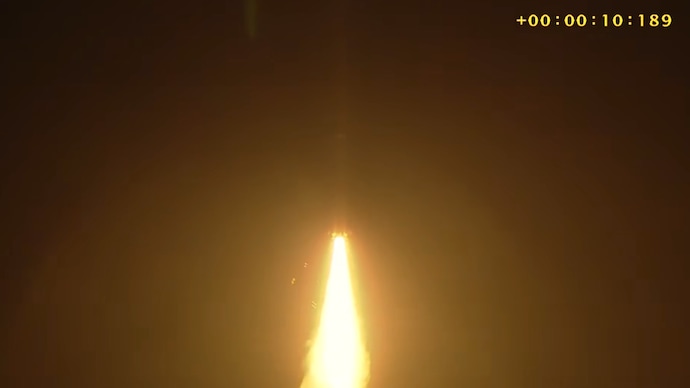
'Smart Boy' GSLV Delivers: India Secures High-Tech Space Eyes with GISAT-1 Launch
NEW DELHI & BENGALURU — In a flawless display of heavy-lift engineering, the Indian Space Research Organisation (ISRO) successfully launched the Geosynchronous Satellite Launch Vehicle (GSLV-F17), placing the advanced GISAT-1 Earth observation satellite precisely into its designated orbit. Affectionately dubbed the "smart boy" of India’s rocket fleet by mission scientists, the reliable launch vehicle lived up to its reputation, fortifying the nation's real-time surveillance, border security, and disaster management capabilities.
The successful mission marks a monumental leap forward for India’s space program, transitioning the nation from periodic imaging to continuous, round-the-clock monitoring of the subcontinent and surrounding strategic waters. As geopolitical tensions rise and climate-induced weather anomalies become increasingly erratic, GISAT-1 provides the ultimate vantage point.
The Mission Profile: A Textbook Ascent
Liftoff occurred precisely on schedule from the Second Launch Pad at the Satish Dhawan Space Centre (SDSC) in Sriharikota, Andhra Pradesh. The GSLV-F17—marking the 19th flight of India’s premier Geosynchronous Satellite Launch Vehicle—executed a complex, multi-stage atmospheric ascent before deploying the payload into a Geosynchronous Transfer Orbit (GTO).
Mission control at the Satish Dhawan Space Centre erupted in applause as telemetry data confirmed the successful separation of GISAT-1. ISRO Chairman Dr. S. Somanath lauded the engineering team, noting that the "smart boy" label given to the GSLV was well-earned following meticulous corrective measures implemented after earlier mission nuances.
- Vehicle Designation: GSLV-F17 (19th flight of the GSLV program)
- Payload: GISAT-1 (Geostationary Imaging Satellite-1)
- Launch Site: Second Launch Pad, Sriharikota, Andhra Pradesh
- Target Orbit: Geosynchronous Transfer Orbit (GTO) progressing to Geostationary Orbit
Strategic and Economic Significance: Why GISAT-1 Matters
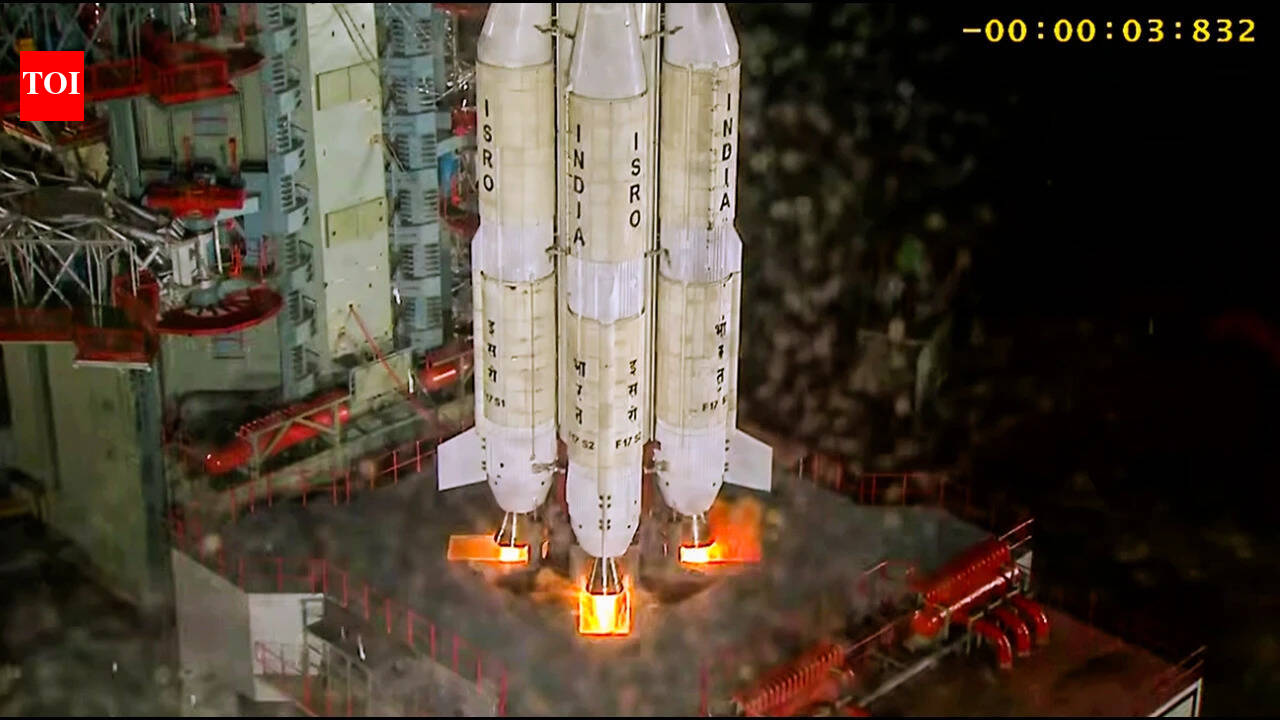
Unlike standard Low Earth Orbit (LEO) satellites that provide fleeting snapshots as they orbit the globe, GISAT-1 operates from a Geostationary orbit, matching the Earth's rotational speed. This unique positioning allows the satellite to hover perpetually over the Indian subcontinent, offering a continuous, unblinking feed of high-resolution imagery.
For economic planners, agricultural ministries, and disaster management authorities, this is a game-changer. Key impact areas include:
- Real-Time Border Surveillance: Enhanced capacity for defense forces to monitor movements along land and maritime borders with unprecedented clarity.
- Disaster Warning & Mitigation: Immediate tracking of fast-developing weather phenomena such as cyclones, flash floods, and cloudbursts, enabling proactive evacuations.
- Agricultural Intelligence: Continuous monitoring of crop health, soil moisture levels, and water resource distribution to optimize national yield forecasts.
- Infrastructure Monitoring: Unprecedented tracking of large-scale urbanization, environmental shifts, and industrial development across the region.
Mission Specifications At-a-Glance
| Parameter | Mission Detail |
|---|---|
| Launch Vehicle | GSLV-F17 (Indigenous Cryogenic Upper Stage) |
| Payload Weight | Approx. 2,268 kg |
| Orbit Type | Geostationary Earth Orbit (GEO) |
| Primary Application | High-resolution Earth Imaging & Real-time Monitoring |
| Operational Lifespan | Estimated 7 to 10 years |
Overcoming Technical Hurdles
The path to the GSLV-F17 success story required rigorous engineering validation. Following previous complexities associated with cryogenic engine performance in earlier GSLV iterations, ISRO's propulsion laboratories instituted exhaustive thermal and structural stress tests. The Indigenous Cryogenic Upper Stage (CUS) performed flawlessly during this flight, validating India’s self-reliance in complex, sub-zero rocket propulsion technologies.
Defense analysts and space economists have noted that mastering the GSLV architecture not only secures India's domestic payload requirements but also positions ISRO as a highly competitive, cost-effective provider in the global commercial heavy-launch market.
Future Outlook and Commercial Horizons
With GISAT-1 now successfully parked in orbit, ISRO is shifting its focus toward upcoming ambitious agendas, including interplanetary missions, further human spaceflight preparations under the Gaganyaan program, and the expansion of India's commercial Earth observation constellation.
As private sector participation in India's space economy accelerates through IN-SPACe, the data generated by assets like GISAT-1 will increasingly fuel downstream tech startups, geospatial analytics firms, and agricultural fintech platforms, driving commercial value alongside national security.
Frequently Asked Questions
What makes GISAT-1 different from previous Indian observation satellites?
Unlike most remote-sensing satellites that operate in Low Earth Orbit (LEO) and only pass over a specific region periodically, GISAT-1 is positioned in a Geostationary Orbit. This allows it to maintain a constant line-of-sight over the Indian landmass, providing real-time, continuous imaging rather than periodic snapshots.
Why is the GSLV rocket referred to as the "smart boy"?
Scientists at ISRO affectionately bestowed the moniker upon the GSLV-F17 vehicle due to its sophisticated onboard guidance systems, advanced cryogenic stage, and its critical role in lifting heavier, mission-critical geostationary payloads successfully into complex orbits.