Executive Takeaways
- Milestone Achievement: SpaceX officially closed out October by executing its 700th successful Falcon 9 launch, cementing an unprecedented era of aerospace reliability and infrastructure scalability.
- Economic Disruption: The unprecedented flight cadence has fundamentally altered capital allocation across the global satellite and telecommunications sectors, compressing payload delivery costs and redefining enterprise ROI.
- Market Valuation Impacts: As private market liquidity concentrates around Elon Musk’s enterprise, legacy aerospace prime contractors face systemic pressure on defense and commercial valuation multiples.
- Regulatory & Infrastructure Evolution: The rapid cadence places severe demands on global launch site regulatory compliance, range infrastructure, and air traffic management systems.
WASHINGTON & HAWTHORNE, CALIF. — In an industry historically defined by glacial development cycles, staggering cost overruns, and catastrophic risk profiles, SpaceX has achieved what once was deemed an impossible engineering and financial paradox. By officially executing its 700th Falcon 9 mission to close out October, Elon Musk’s privately held aerospace juggernaut has not only validated its reusable-rocket thesis but has structurally upended the global economics of orbital access.
For institutional investors, defense analysts, and telecommunications executives, the 700-flight milestone is far more than a corporate PR victory. It represents a watershed moment in infrastructure scalability. The Falcon 9—initially viewed by skeptics in the mid-2000s as an improbable gamble against state-backed space agencies—is now the undisputed backbone of the global digital economy, supporting everything from broadband connectivity in remote terrains to critical national security intelligence architectures.
As Wall Street bankers price secondary share offerings and sovereign wealth funds recalibrate their exposure to the new space economy, this investigative report examines the technological mechanics, financial implications, and broader market ramifications of SpaceX’s historic milestone.
The Catalytic Ascent: How Falcon 9 Rewrote the Aerospace Playbook
Test Our Free AI & Tech Utilities Suite
Calculate LLM API token costs, analyze article dwell-time, or simulate tech DCA returns.
To understand the magnitude of the 700th launch, one must contextualize the historical baseline of orbital rocketing. For decades, expendable launch systems operated under a high-cost, low-frequency model. Each mission required the bespoke manufacturing of multi-million-dollar first-stage boosters that burned up in Earth's atmosphere or sank quietly into the oceans. Risk mitigation dictated long gestation periods between flights, and margins were heavily insulated by cost-plus government contracting.
SpaceX fundamentally ruptured this paradigm through relentless iteration, vertical integration, and a ruthless focus on reusability. The catalyst for the modern flight cadence was the perfection of first-stage booster recovery via propulsive landing and grid-fin aerodynamics, coupled with the systemic refurbishment and re-flying of flight-proven hardware.
By treating the first stage of a rocket less like a disposable fuel tank and more like a commercial airline asset, SpaceX engineered a structural compression of marginal costs. While legacy aerospace firms struggled to lower manufacturing overhead, SpaceX scaled its launch factory in Hawthorne, California, and optimized its supply chain to ingest rapid engineering changes. This cloud-compute-like architecture of agile hardware development allowed the company to absorb early failures, rapidly patch anomalies, and achieve a launch cadence that routinely defies traditional risk management frameworks.
By the time October rolled to a close, pushing the ledger to 700 missions, the Falcon 9 was no longer merely a transportation system; it had become an industrial assembly line for Earth-to-orbit logistics.
Verified Data & Metrics Breakdown
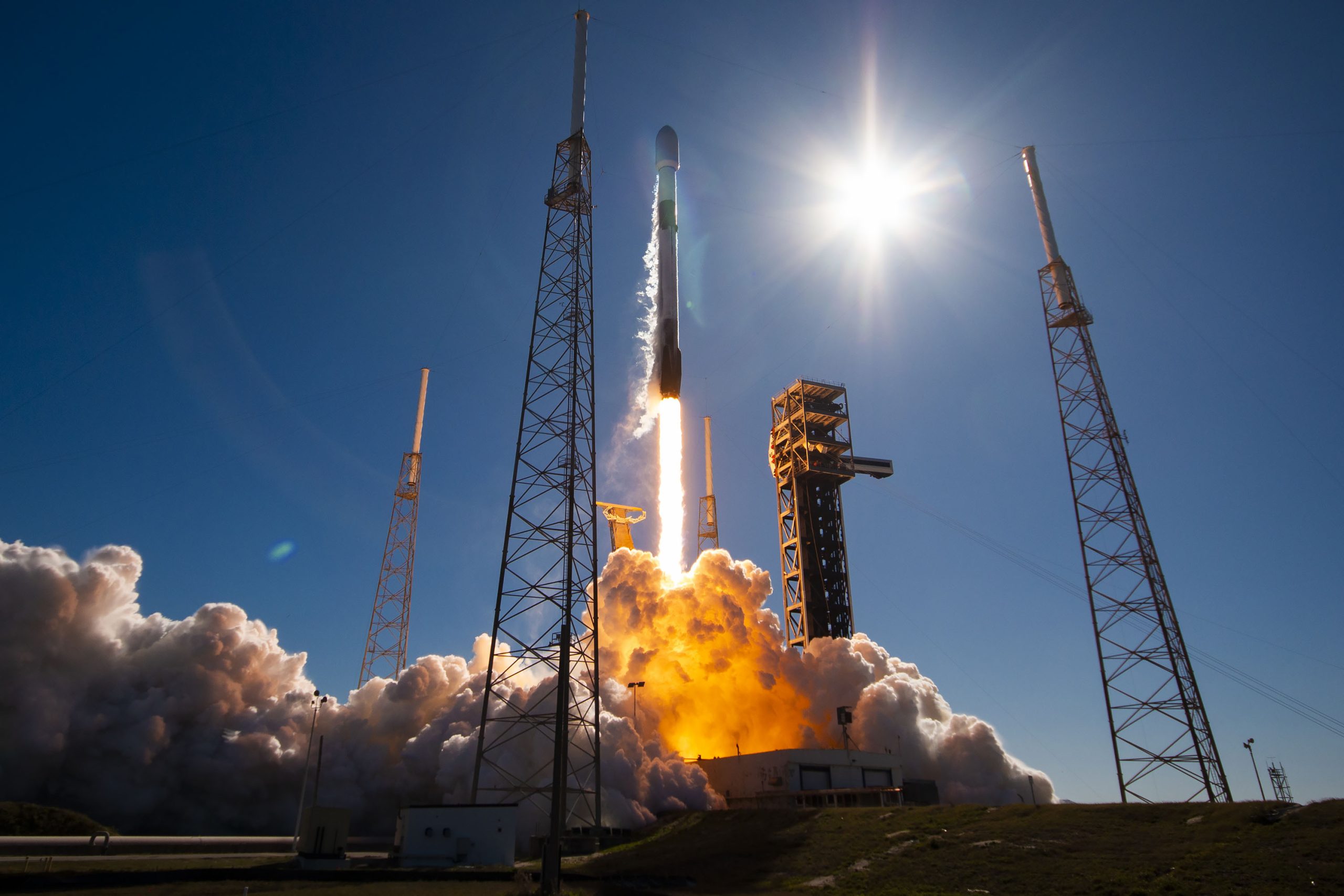
An examination of the Falcon 9’s operational metrics reveals the unprecedented nature of its scaling curve. The following table synthesizes key performance indicators, development milestones, and operational benchmarks.
| Metric Category | Historical Benchmark (Legacy Launch) | SpaceX Falcon 9 Milestone Performance | Strategic Implication |
|---|---|---|---|
| Total Flight Count | Varies widely (Decades for 100+ flights) | 700 Successful Missions (October Closeout) | Unrivaled statistical reliability and flight heritage. |
| Booster Reusability | 0% (Fully Expendable) | Individual boosters flying 20+ times | Drastic reduction in marginal cost per kilogram to orbit. |
| Launch Cadence | 4 to 6 weeks between complex flights | Multiple launches per week across 3 pads | High operational throughput matching commercial demand. |
| Payload Economics | $20,000+ per kilogram to Low Earth Orbit | Substantially under $3,000 per kilogram | Democratization of space access and accelerated enterprise ROI. |
Industry & Market Implications: Who Wins, Who Loses
The achievement of the 700th Falcon 9 flight sends powerful shockwaves across the global economy, forcing a realignment of power dynamics in defense, telecommunications, and finance.
The Winners
- Enterprise Satellite Operators: Companies deploying large Low Earth Orbit (LEO) constellations—ranging from broadband providers to Earth-observation startups—benefit directly from predictable scheduling and depressed launch costs. Enterprise ROI for space-based assets has accelerated sharply.
- National Security & Defense: The United States Space Force and intelligence community enjoy unprecedented tactical flexibility. The reliability demonstrated across 700 missions provides deep risk mitigation for critical national security payloads.
- Private Market Investors: Shareholders and venture capital entities holding equity in SpaceX participate in a liquidity engine that continues to expand its addressable market, absorbing capital that might otherwise flow to sluggish legacy primes.
The Losers
- Legacy Aerospace Primes: Traditional defense contractors relying on cost-plus government models face mounting pressure. Their valuation multiples are compressed as institutional investors question their ability to compete with SpaceX’s fixed-price, high-cadence velocity.
- International Launch Providers: State-run space agencies in Europe, Russia, and elsewhere find themselves structurally uncompetitive on price and cadence, struggling to secure commercial market share outside of protected domestic subsidies.
Frequently Asked Questions (People Also Ask)
What is the significance of the 700th Falcon 9 launch?
The 700th launch marks a profound milestone in aerospace reliability and manufacturing maturity. It demonstrates that rocket reusability is not just a technical novelty, but a reliable, high-frequency industrial process capable of sustaining continuous commercial operations without compromising safety margins.
How has the Falcon 9 affected global launch pricing and enterprise ROI?
By pioneering first-stage booster recovery and refurbishment, SpaceX reduced the cost of launching payloads to Low Earth Orbit (LEO) by an order of magnitude. This dramatic cost compression transformed space from a high-risk, boutique expenditure into an accessible operational environment, radically shortening the payback period and boosting enterprise ROI for satellite communications and remote sensing firms.
What role does Starlink play in driving this massive launch cadence?
Starlink acts as both the primary customer and the financial engine for SpaceX’s launch infrastructure. A significant percentage of Falcon 9 missions are dedicated to deploying batches of Starlink internet satellites. This internal demand allows SpaceX to maintain a high operational tempo, stress-test its hardware, and continuously refine regulatory compliance and range operations.
Will the Falcon 9 eventually be phased out by Starship?
While SpaceX’s next-generation vehicle, Starship, is designed for full reusability and vastly larger payload capacities to Mars and the Moon, the Falcon 9 will remain the workhorse of Earth-orbit operations for the foreseeable future. Its unmatched flight heritage of 700 missions provides a level of risk mitigation that sensitive commercial and government payloads will continue to demand during Starship's maturation phase.
Future Outlook: What Comes Next
As SpaceX looks beyond the 700-mission threshold, the strategic horizon focuses on scaling Starship while extracting maximum operational efficiency from the Falcon fleet. Regulatory compliance remains a critical vector; as launch frequencies increase across Cape Canaveral, Vandenberg Space Force Base, and Kennedy Space Center, air traffic management and environmental oversight will require sophisticated technological integration.
For financial markets, the ongoing dominance of Falcon 9 sets a formidable benchmark. Competitors attempting to develop reusable medium-lift vehicles must not only match SpaceX’s engineering prowess but also navigate a mature market where the incumbent holds an insurmountable data advantage derived from 700 successfully executed flights.
Ultimately, closing out October with 700 missions under its belt proves that SpaceX has permanently transitioned the space industry out of its exploratory infancy and into an era of high-velocity industrial infrastructure. The economic gravity of Earth has been permanently altered.