Executive Takeaways
- The Catalyst: Alphabet’s recent earnings report revealed a top-line revenue miss that immediately reignited Wall Street anxiety over ballooning artificial intelligence capital expenditures (capex).
- Market Impact: Major U.S. stock indices closed lower as institutional investors rotated out of high-multiple growth equities, questioning the immediate enterprise ROI of multi-billion-dollar data center builds.
- Infrastructure Realities: Tech giants are facing unprecedented pressure to prove that massive investments in cloud compute architecture and specialized silicon translate into sustainable, high-margin revenue growth.
- Valuation Multiples: Portfolio managers are recalibrating risk parameters, demanding clearer capital allocation strategies and tangible risk mitigation frameworks across the entire technology sector.
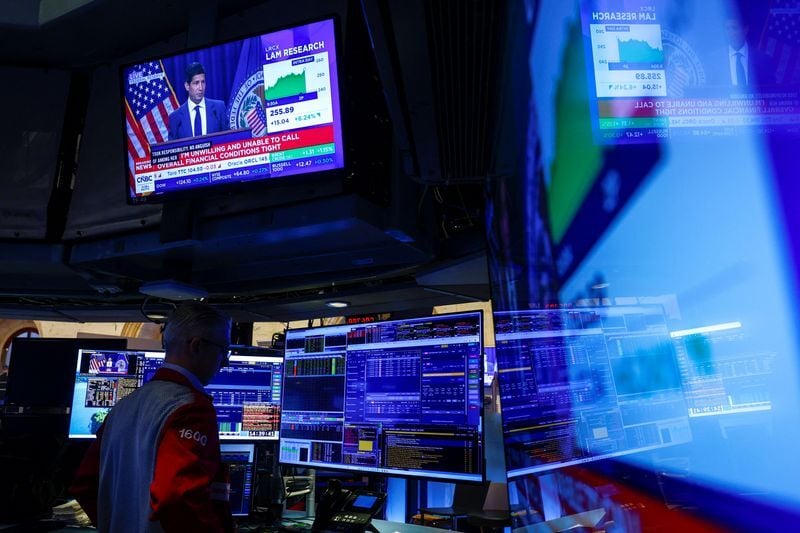
Wall Street closed lower in a volatile trading session as a significant revenue miss by Alphabet Inc. sent shockwaves through the financial markets, reviving deep-seated anxieties over runaway artificial intelligence capital expenditures. The sell-off, which disproportionately impacted mega-cap technology equities, underscored a growing institutional weariness: investors are no longer willing to write blank checks for futuristic infrastructure without seeing immediate, demonstrable monetization of enterprise AI products.
For months, the narrative driving global equity markets has been dominated by the generative AI gold rush. Hyperscalers—including Alphabet, Microsoft, Amazon, and Meta Platforms—have committed unprecedented sums to secure scarce advanced semiconductors, expand cloud compute architecture, and construct next-generation data centers. However, Alphabet's latest quarterly print forced a sharp valuation reset. As traders digested the figures, the underlying question shifted from speculative potential to cold, hard balance sheet realities: when will these astronomical cash outlays generate a proportional return on invested capital?
The Anatomy of a Miss: How Alphabet Rattled the Street
Test Our Free AI & Tech Utilities Suite
Calculate LLM API token costs, analyze article dwell-time, or simulate tech DCA returns.
The catalyst for the broader market pullback materialized when Alphabet reported earnings that failed to meet consensus Wall Street estimates on key revenue metrics, even as its cloud division showed growth. While digital advertising revenue faced persistent macroeconomic headwinds and intensifying competitive pressures from alternative platforms, the real point of contention for institutional analysts was the staggering trajectory of the company's capital expenditures.
Alphabet management reiterated its commitment to aggressive infrastructure investments, pointing to the long-term imperative of maintaining leadership in foundational models, machine learning algorithms, and integrated search experiences. Yet, portfolio managers and quantitative funds interpreted the guidance through a more skeptical lens. The disconnect between soaring capex and incremental top-line acceleration triggered an immediate repricing of valuation multiples across the technology sector.
Market liquidity tightened as automated risk-mitigation protocols kicked in, resulting in broad-based selling pressure. Wall Street’s primary concern is not whether artificial intelligence will reshape global commerce—few doubt its transformative capacity—but rather the efficiency of capital allocation during the build-out phase. When enterprise ROI lags behind infrastructure scalability, margin compression becomes an immediate threat to shareholder value.
Data & Metrics Breakdown
| Metric / Indicator | Pre-Earnings Consensus | Reported Figure / Reality | Market & Financial Implication |
|---|---|---|---|
| Alphabet Quarterly Revenue | Slightly Higher Estimates | Top-Line Miss | Triggers broad tech sector equity sell-off |
| AI Capital Expenditures (Capex) | Elevated ($10B+ per quarter) | Meets or Exceeds Projections | Revives fears of margin compression and cash burn |
| Valuation Multiples (Big Tech) | Forward P/E at Premium | Downward Revision | Institutional rotation into defensive assets |
| Cloud Compute Demand | Robust Enterprise Adoption | Steady, but Sub-Hypergrowth | Raises questions on monetization timelines |
Industry & Market Implications
The macroeconomic ripples of Alphabet's earnings miss extend far beyond Mountain View, touching every corner of the global financial ecosystem. As institutional asset allocators re-examine their equity exposure, clear winners and losers are emerging across industries.
Who Wins
- Defensive and Value Sectors: Utilities, consumer staples, and healthcare companies absorbed significant inflows as institutional capital rotated away from high-beta tech equities in search of stable yields.
- Disciplined Capital Allocators: Technology firms that have demonstrated a balanced approach to AI integration—prioritizing operational efficiency and strict cost controls over unbridled expansion—are gaining favor among risk-conscious portfolio managers.
- Enterprise Software & Consulting: Firms that help traditional enterprises integrate off-the-shelf AI models without building expensive proprietary infrastructure are seeing heightened demand.
Who Loses
- Pure-Play Infrastructure Speculators: Semiconductor manufacturers, data center REITs, and specialized hardware suppliers that rely entirely on hyper-growth capex cycles face short-term volatility as clients audit their budgets.
- High-Multiple Growth Stocks: Companies trading at exorbitant forward price-to-earnings multiples based on distant future cash flows are experiencing severe valuation compression.
Frequently Asked Questions (People Also Ask)
Why did Alphabet’s revenue miss cause a broader Wall Street sell-off?
Alphabet is considered a bellwether for the entire technology sector and the broader digital economy. A revenue miss combined with soaring capital expenditures signaled to investors that the massive financial commitments made toward artificial intelligence may take much longer to generate profitable returns than previously anticipated, prompting a reassessment of tech valuations across the board.
What does "AI capex jitter" mean for institutional investors?
"AI capex jitters" refers to the anxiety among institutional investors regarding the enormous capital expenditures (capex) technology companies are spending on artificial intelligence infrastructure. Investors worry that spending tens of billions of dollars on data centers and advanced chips without an immediate, equivalent boost in revenue will compress profit margins and depress stock prices.
How are regulatory compliance and infrastructure costs impacting tech margins?
Beyond the cost of silicon and electrical power for data centers, hyperscalers face rising expenses related to global regulatory compliance, data privacy mandates, and intellectual property management. These compounding operational costs, paired with aggressive infrastructure investments, place a heavy burden on operating margins.
Will tech companies scale back their artificial intelligence investments following this market reaction?
While near-term market pressure is intense, major technology executives have signaled that artificial intelligence represents an existential shift rather than a cyclical trend. Rather than halting investments entirely, companies are more likely to scrutinize project efficiency, optimize cloud compute architecture, and demand stricter milestones for enterprise ROI.
Future Outlook: What Comes Next
As Wall Street digests the implications of Alphabet’s earnings report, the upcoming quarters will serve as a critical crucible for the technology sector. The era of unconditional financial backing for generative AI initiatives has officially given way to an era of rigorous performance accountability.
Key milestones to watch in the immediate future include upcoming earnings reports from fellow hyperscalers, macroeconomic data releases regarding enterprise IT spending budgets, and regulatory developments concerning AI data usage and market competition. Institutional investors will be closely monitoring whether tech giants can successfully optimize their capital allocation strategies, streamline infrastructure scalability, and prove that artificial intelligence is a powerful driver of net-new, high-margin revenue rather than merely an expensive corporate arms race.