Executive Takeaways
- Milestone Achievement: SpaceX officially closed out October by executing its 700th successful Falcon 9 launch, cementing the vehicle's status as the most prolific orbital-class rocket in human history.
- Economic Disruption: The unprecedented cadence of Falcon 9 missions has fundamentally altered commercial space economics, compressing capital allocation timelines and forcing legacy aerospace firms into aggressive risk mitigation and restructuring strategies.
- Infrastructure Scalability: Driven by reusable booster technology and aggressive turnaround times, Falcon 9 has unlocked massive enterprise ROI, enabling rapid deployment of the Starlink constellation and securing an unassailable moat in global launch market liquidity.
- Valuation Multiples: This operational milestone arrives as private market transactions value SpaceX north of $200 billion, underpinned by recurring revenue streams from both civil/national security contracts and commercial broadband services.
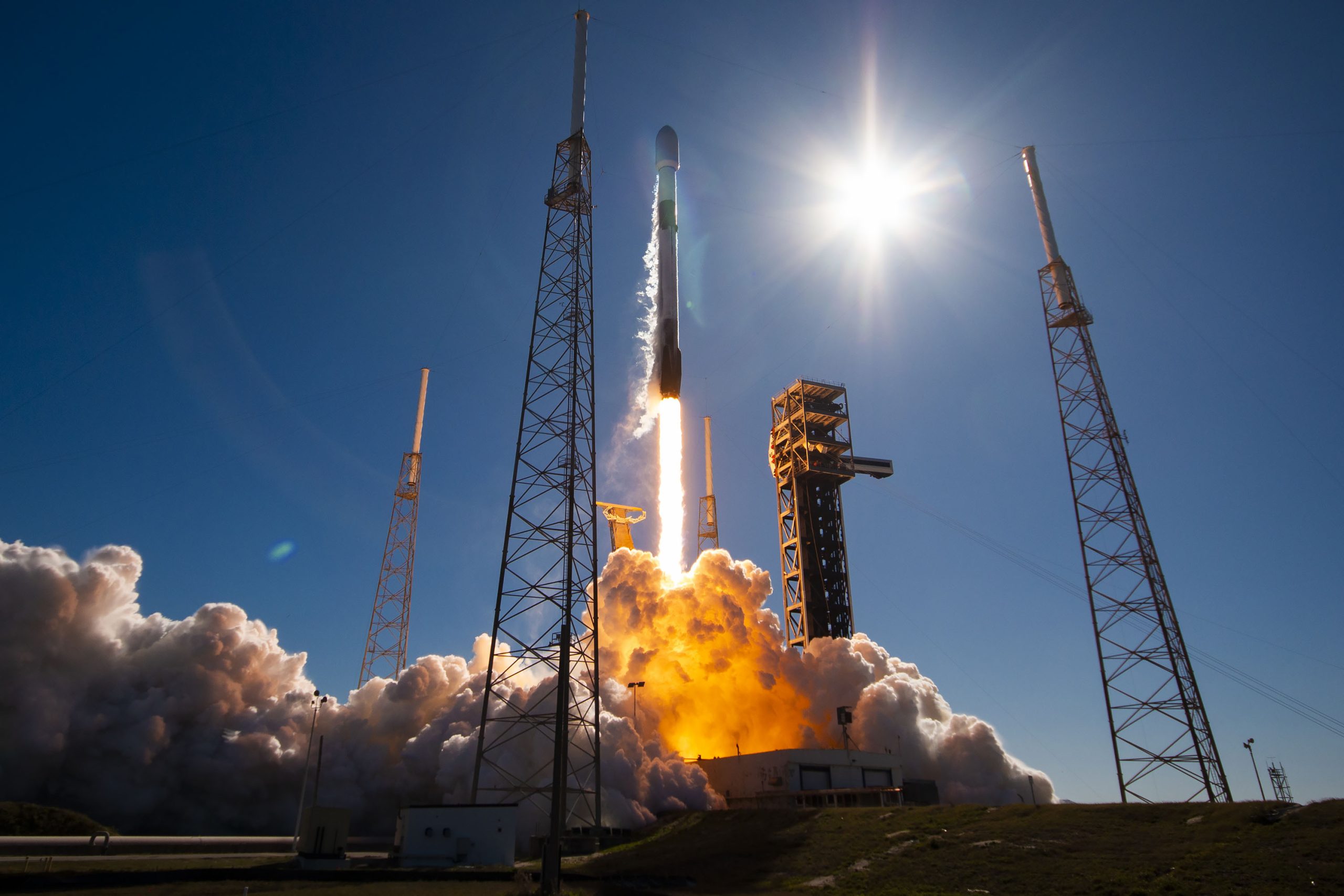
WASHINGTON & HAWTHORNE — In the high-stakes theater of global aerospace, milestones are frequently promised and rarely delivered on schedule. Yet, as the final hours of October ticked away, SpaceX quietly and efficiently achieved what was once deemed an engineering and financial impossibility. With the successful liftoff of yet another payload, the company's workhorse medium-lift vehicle crossed a staggering threshold: the 700th Falcon 9 launch to date.
For an industry historically plagued by ballooning budgets, glacial regulatory compliance timelines, and chronic launch delays, the 700th flight of the Falcon 9 represents more than just a technological triumph. It is a masterclass in infrastructure scalability, supply chain mastery, and ruthless operational efficiency. As institutional investors, defense strategists, and telecommunications executives evaluate the shifting tectonic plates of the global economy, SpaceX’s latest milestone forces a recalibration of what is achievable when agile enterprise architecture collides with high-frequency capital allocation.
The Anatomy of an Orbital Monopoly: Background and Catalytic Events
Test Our Free AI & Tech Utilities Suite
Calculate LLM API token costs, analyze article dwell-time, or simulate tech DCA returns.
To understand the gravity of the 700th launch, one must look backward to June 4, 2010, when a fledgling SpaceX launched the very first Falcon 9 v1.0 from Cape Canaveral Space Launch Complex 40. At the time, Wall Street skeptics and established aerospace incumbents viewed the venture as a speculative play fueled by venture capital and subsidized by early NASA Commercial Resupply Services (CRS) contracts. Traditional aerospace balance sheets were built on cost-plus contracting models—where prolonged development cycles and bloated budgets were incentivized rather than penalized.
SpaceX systematically dismantled that business model. By pioneering propulsive vertical landing and stage recovery, the company upended the foundational economics of rocketry. The marginal cost of manufacturing a brand-new first-stage booster was replaced by the vastly superior unit economics of booster reuse. This shift unlocked unprecedented market liquidity, enabling SpaceX to scale its flight cadence exponentially.
By the mid-2020s, the Falcon 9 was no longer merely a launch vehicle; it was the foundational cloud compute architecture of physical orbital infrastructure. The rocket became the primary deployment mechanism for Starlink, SpaceX’s vertically integrated low-Earth orbit (LEO) satellite internet constellation. This dual-engine business model—servicing high-margin external commercial and national security payloads while simultaneously launching its own revenue-generating assets—created a self-reinforcing flywheel. Each successful launch generated telemetry data that optimized turnaround times, which in turn drove down per-kilogram launch costs, widening the competitive moat against international rivals in Europe, Asia, and domestic competitors alike.
Verified Data and Metrics Breakdown
A quantitative examination of the Falcon 9 program reveals the sheer velocity at which SpaceX has scaled operations compared to historical and contemporary launch providers.
| Metric / Indicator | Falcon 9 Program (Cumulative) | Historical Average (Legacy Providers) |
|---|---|---|
| Total Orbital Launches | 700 (As of October close) | Varies (< 100 per legacy platform lifecycle) |
| First-Stage Booster Recovery Rate | > 90% across active fleet | 0% (Expendable architecture) |
| Record Single Booster Reuse | 20+ flights per single booster | N/A |
| Average Launch Cadence | Exceeding 3-4 days per mission (YTD) | Months to quarters between flights |
| Estimated Cost per Kilogram to LEO | ~$2,500 - $3,000 | ~$10,000 - $20,000+ |
Industry & Market Implications: Winners, Losers, and Economic Realignment
The achievement of 700 successful launches is not merely an engineering milestone; it is a profound market-shaping event that dictates winners and losers across global commerce, defense, and telecommunications.
The Winners
- Enterprise and Defense Customers: Commercial satellite operators, global shipping conglomerates, and the United States Department of Defense benefit from unprecedented launch availability and price stability. Programs that once faced multi-year backlogs can now secure orbital slots with predictable cadence.
- SpaceX Financial Stakeholders: Private equity investors, secondary market participants, and employee shareholders reap the rewards of exceptional valuation multiples. The recurring cash flows generated by the combined launch and broadband divisions insulate the company from traditional macroeconomic downturns.
- The Domestic Supply Chain: Specialized tier-1 and tier-2 manufacturers supplying advanced avionics, high-performance alloys, and specialized propulsion components enjoy consistent, high-volume order flow.
The Losers
- Legacy Aerospace Prime Contractors: Companies built around traditional cost-plus government procurement models face an existential threat. Their inability to match Falcon 9���s turnaround times or cost structures has resulted in severe market share erosion.
- International Launch Providers: State-sponsored and private launch agencies in Europe, Russia, and elsewhere find themselves structurally uncompetitive. Without a viable, flight-proven reusable medium-to-heavy lift architecture, these entities are increasingly relegated to niche, sovereign-mandated payloads.
Frequently Asked Questions (People Also Ask)
What makes the Falcon 9 rocket uniquely cost-effective compared to traditional rockets?
The primary driver of Falcon 9's cost-effectiveness is its pioneering partial reusability, specifically the recovery and refurbishment of the expensive first-stage booster and payload fairings. By landing boosters propulsively on droneships or land pads, SpaceX amortizes the manufacturing capital expenditure across dozens of flights, radically lowering the cost per kilogram to orbit compared to expendable legacy rockets.
How does the 700th launch impact SpaceX’s valuation and financial standing?
Achieving 700 successful flights serves as empirical proof of operational reliability and risk mitigation. For private equity and institutional investors, this reduces technological risk, directly supporting private market valuations exceeding $200 billion and reinforcing confidence in upcoming revenue streams, including potential public offerings or spinoffs.
What role does the Falcon 9 play in the deployment of Starlink?
Falcon 9 is the logistical backbone of the Starlink constellation. The overwhelming majority of operational Starlink satellites currently in orbit were deployed via Falcon 9 fairings. The high cadence of launches allows SpaceX to continuously replenish, densify, and upgrade its global broadband network with minimal capital friction.
How are competitors reacting to SpaceX’s dominance in the global launch market?
Global aerospace competitors and international space agencies are aggressively pivoting toward reusable rocket designs, such as vertical landing and mid-air helicopter recovery concepts. However, most competitors remain years behind SpaceX’s accumulated flight telemetry, regulatory navigation experience, and iterative engineering velocity.
Future Outlook: What Comes Next
As the champagne corks pop over the 700th Falcon 9 launch, executive leadership at Hawthorne is already looking past medium-lift economics toward the horizon of heavy-lift and interplanetary infrastructure. The strategic focus is shifting aggressively toward the maturation and operational scaling of Starship—the fully reusable, super-heavy transport system designed to supersede both Falcon 9 and Falcon Heavy.
Yet, analysts note that Falcon 9 will remain the cash cow and operational workhorse for the foreseeable future. The immediate milestones to watch over the next 12 to 24 months include:
- Cadence Acceleration: Pushing toward an unprecedented 150+ annual launches, further testing the regulatory limits of FAA airspace management and range operations at Cape Canaveral and Vandenberg.
- Booster Longevity Limits: Pushing individual first-stage boosters past 25 and eventually 30 flights, Stress-testing material fatigue limits and verifying long-term maintenance cost curves.
- National Security Integration: Fulfilling increasingly complex, highly classified payloads for the U.S. Space Force under rigorous national security space launch (NSSL) guidelines, maintaining a pristine mission success record.
Ultimately, the 700th Falcon 9 launch is not a destination, but a waypoint. It demonstrates that commercialized space infrastructure is no longer a speculative frontier, but a mature, highly liquid industrial sector capable of generating massive enterprise value and reshaping the geopolitical balance of power in Earth’s orbit.