Executive Takeaways
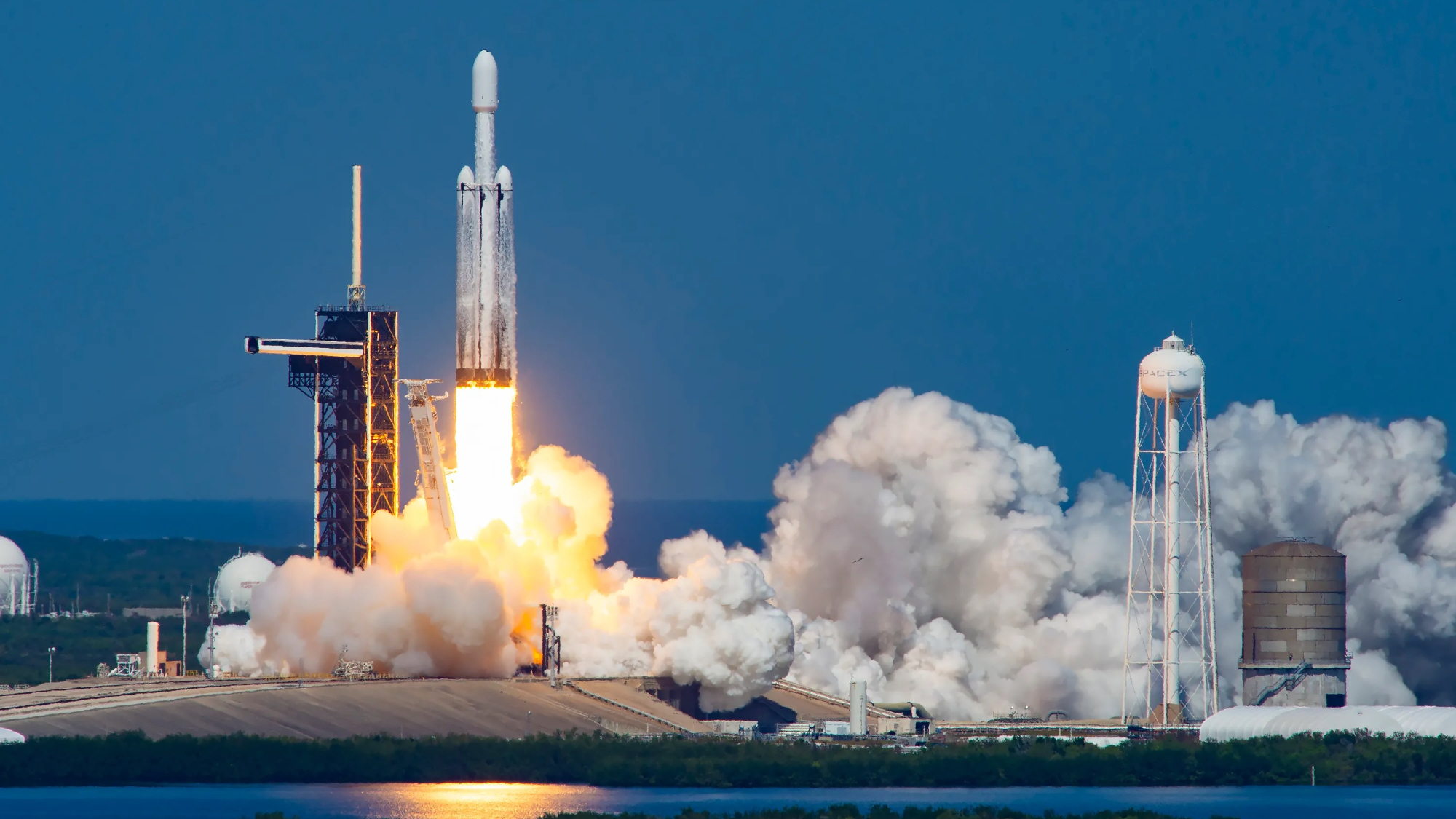
- Milestone Achievement: SpaceX closed out October by executing its landmark 700th Falcon 9 mission, cementing the launch vehicle as the most prolific orbital rocket in human history.
- Industrialized Cadence: The unprecedented launch velocity demonstrates unmatched infrastructure scalability, setting a operational benchmark that legacy aerospace and defense contractors struggle to replicate.
- Market Disruption: The relentless cadence drives aggressive capital allocation shifts across the telecommunications, defense, and global broadband sectors, fundamentally compressing launch cost-per-kilogram metrics.
- बाळाFinancial Valuation Impact: This operational milestone reinforces SpaceX’s private market valuation multiples, showcasing robust risk mitigation through hardware reusability and high-margin manifest execution.
WASHINGTON & HAWTHORNE — In the high-stakes theater of commercial aerospace, numbers rarely tell the full story of technological hegemony. Yet, as October drew to a close, SpaceX quietly yet decisively achieved a feat that once belonged to the realm of science fiction: the 700th successful liftoff of its workhorse Falcon 9 rocket. For an industry historically defined by astronomical cost overruns, sluggish regulatory compliance cycles, and crippling technological bottlenecks, reaching this septicentary milestone represents far more than a numerical triumph. It is a masterclass in modern engineering economics, supply chain mastery, and operational resilience.
As senior aerospace analysts and financial institutions parse the implications of this launch, the consensus on Wall Street is unequivocal. SpaceX has transitioned from a disruptive insurgent into an entrenched global utility, controlling the orbital turnpikes that modern enterprise, sovereign defense networks, and global communications infrastructure rely upon. This investigative report breaks down the mechanics of the 700th launch, the macro-economic forces accelerating SpaceX's cadence, and the structural pressures facing global competitors in an increasingly winner-take-all space economy.
The Genesis of a Workhorse: From First Flight to Industrialized Cadence
Test Our Free AI & Tech Utilities Suite
Calculate LLM API token costs, analyze article dwell-time, or simulate tech DCA returns.
To understand the magnitude of the 700th Falcon 9 mission, one must revisit the precarious landscape of June 2010, when the inaugural Falcon 9 v1.0 lifted off from Cape Canaveral Space Launch Complex 40 (SLC-40). Back then, venture capital and institutional investors viewed commercial spaceflight through a lens of extreme skepticism. Skeptics pointed to historical failure rates, massive capital requirements, and insurmountable technological barriers surrounding orbital-class rocket reusability.
Over the ensuing decade and a half, SpaceX systematically dismantled those orthodoxies. Through iterative design loops, aggressive risk mitigation strategies, and an unyielding focus on vertical integration, the company transformed rocket manufacturing from bespoke craftsmanship into high-throughput mass production. The iterative evolution from Falcon 9 v1.0 to the Block 5 iteration—designed explicitly for rapid, multiple reusability with minimal refurbishment—unlocked unprecedented enterprise ROI.
By perfecting first-stage booster recovery via autonomous drone ships and landing pads, SpaceX effectively rewrote the economics of the aerospace sector. While legacy providers operate on multi-year fabrication timelines for single-use hardware, SpaceX routinely flies individual boosters more than 20 to 25 times. This unprecedented asset utilization has compressed launch costs to levels that leave foreign state-sponsored agencies and private competitors scrambling to restructure their own long-term balance sheets and cloud compute-driven launch architectures.
Deconstructing the 700-Flight Milestone: Metrics That Matter

A rigorous examination of SpaceX's manifest reveals a meticulously engineered machine. The path from flight one to flight 700 was not linear; rather, it followed an exponential growth curve driven primarily by internal demand for Starlink deployment, alongside a dominant share of the global commercial and national security payload markets.
| Metric Category | Falcon 9 Historical Data | Industry Benchmark / Competitor Average |
|---|---|---|
| Total Successful Launches | 700+ (as of October close) | Varies (Legacy fleets typically under 150 total) |
| First-Stage Booster Reusability Record | Up to 25+ flights per single booster | Primarily single-use (Expended) |
| Average Turnaround Time (Same Pad) | Under 3 to 4 days | Months to quarters |
| Payload Mass to LEO (Optimized) | Up to 22,800 kg (Expendable) / ~17,400 kg (Reusable) | 5,000 kg to 15,000 kg class |
| Mission Reliability Rate | >99% consecutive success over last 300+ flights | 92% to 95% historical average |
Industry & Market Implications: Winners, Losers, and Macroeconomic Realignments
The closing of October with Falcon 9’s 700th flight sends shockwaves across global capital markets, forcing institutional investors and corporate boards to re-evaluate their strategic positioning in space-enabled infrastructure. The ramifications stretch across multiple tiers of the global economy:
- Commercial Telecommunications Giants: Legacy geostationary satellite operators face persistent margin compression. With SpaceX deploying low-Earth orbit (LEO) constellations at a blistering pace, traditional broadband providers are forced into expensive defensive partnerships or face terminal obsolescence.
- Defense & Intelligence Apparatus: The Department of Defense and National Reconnaissance Office (NRO) are increasingly reliant on SpaceX's rapid cadence for responsive national security payloads. Programs like the National Reconnaissance Office's proliferated architecture depend entirely on Falcon 9's unblemished reliability and surge capacity.
- Global Aerospace Competitors: European, Asian, and domestic aerospace contractors are caught in a severe strategic bind. Developing competitive reusable architectures requires massive upfront capital allocation and arduous regulatory compliance hurdles, all while SpaceX widens its technological moat.
- Venture Capital & Private Equity: Capital liquidity within the space-tech ecosystem has shifted decisively toward downstream applications—such as edge computing, in-space manufacturing, and orbital logistics—knowing that the fundamental transport layer (Falcon 9 and upcoming Starship) has been effectively commoditized.
Frequently Asked Questions (People Also Ask)
What makes the Falcon 9 rocket uniquely reusable compared to traditional rockets?
Unlike traditional rockets that discard their expensive first-stage boosters into the ocean after a single use, Falcon 9 utilizes a sophisticated retro-propulsion landing system, grid fins for atmospheric steering, and autonomous flight-software algorithms. These systems enable the booster to guide itself back through the atmosphere and land vertically on either a drone ship stationed at sea or a designated terrestrial landing pad. This hardware reusability drastically reduces manufacturing costs and enables high-cadence flight operations.
How does hitting 700 launches impact SpaceX’s valuation and market dominance?
Reaching 700 successful flights provides empirical validation of SpaceX’s operational model, significantly de-risking the enterprise for institutional investors, enterprise clients, and government regulators. This unmatched reliability directly translates to robust pricing power, expansive operating margins, and enhanced market liquidity, reinforcing private valuation multiples that dwarf traditional aerospace competitors.
What percentage of Falcon 9 missions are dedicated to Starlink versus external payloads?
While exact payload ratios fluctuate month by month based on manifest prioritization, a substantial majority of Falcon 9 flights in recent years have been dedicated to launching batches of Starlink internet satellites. However, the rocket maintains a robust commercial and government manifest, regularly deploying national security payloads, NASA crew and cargo missions to the International Space Station, and scientific payloads for international customers.
How does the Falcon 9 launch cadence influence global supply chains and regulatory compliance?
The relentless flight rate has forced regulatory bodies—such as the FAA and the Federal Communications Commission (FCC)—to adapt their environmental review and airspace management frameworks to accommodate weekly, and sometimes daily, launches. Furthermore, it has catalyzed domestic supply chains to streamline high-precision manufacturing, avionics production, and specialized materials sourcing to meet SpaceX’s stringent delivery schedules.
Future Outlook: Navigating the Horizon Toward Starship Integration
As SpaceX looks past the 700-launch milestone, the strategic horizon is defined by an ambitious transition. While the Falcon 9 remains the undisputed workhorse of commercial orbital delivery, the company is concurrently scaling its next-generation heavy-lift vehicle, Starship, designed for fully reusable interplanetary transport.
For financial markets, the core question is no longer whether SpaceX can achieve operational cadence, but rather how rapidly Starship will cannibalize Falcon 9's manifest as payload capacity scales by an order of magnitude. Industry analysts project that Falcon 9 will maintain its dominance for medium-lift commercial and government missions through the remainder of the decade, serving as the financial engine room funding deep-space exploration and lunar infrastructure development.
Ultimately, closing October with the 700th Falcon 9 flight serves as a stark reminder to global industry leaders: the modern space economy is no longer constrained by the laws of physics or the limits of technology, but by the speed at which legacy institutions can adapt to an entirely new paradigm of industrial velocity.