Executive Takeaways
- Unprecedented Scale: The FBI's formal attribution of the multi-billion-dollar Binance breach marks the single largest digital asset heist in financial history, surpassing all previous state-sponsored cyber operations.
- Geopolitical Shift: North Korea’s Lazarus Group and associated state actors are no longer just disruptive cybercriminals; they operate as a sophisticated financial warfare division funding the rogue regime's weapons programs.
- Infrastructure Vulnerabilities: The attack exposes critical gaps in enterprise risk mitigation, cross-chain bridge security, and compliance monitoring across centralized exchanges (CEX).
- Regulatory Fallout: Global financial watchdogs are accelerating enforcement frameworks, compelling digital asset platforms to overhaul capital allocation for security and infrastructure scalability.
The digital age has birthed a new frontier of asymmetric warfare, where sovereign states bypass traditional banking corridors to wage economic combat. In what federal law enforcement officials are calling a watershed moment for international security, the Federal Bureau of Investigation (FBI) has officially attributed the historic multi-billion-dollar breach of cryptocurrency exchange Binance to state-sponsored actors operating out of North Korea. This definitive attribution shatters any remaining illusions regarding the nature of modern cybercrime, framing digital asset heists not as isolated criminal exploits, but as state-directed capital acquisition campaigns designed to fund illicit weapons of mass destruction (WMD) programs in defiance of global sanctions.
For months, financial intelligence units, blockchain forensics outfits, and intelligence agencies across Washington, London, and Seoul have pieced together the digital breadcrumbs left across decentralized ledgers. The findings, now formalized by the FBI, paint a chilling picture of an advanced persistent threat (APT) apparatus that treats the global decentralized finance (DeFi) ecosystem as an open-air vault. As institutional capital allocation flows increasingly into digital assets, the implications of this breach extend far beyond a corporate balance sheet adjustment; they strike at the heart of global financial integrity, national security infrastructure, and the future of cross-border capital liquidity.
The Anatomy of an Unprecedented Digital Heist
Test Our Free AI & Tech Utilities Suite
Calculate LLM API token costs, analyze article dwell-time, or simulate tech DCA returns.
To understand the magnitude of the Binance breach, one must examine the staggering complexity of modern blockchain exploits. Unlike traditional bank robberies that rely on physical force or internal collusion, state-sponsored cyber operations against digital asset exchanges require years of reconnaissance, zero-day exploit development, and social engineering campaigns targeting key personnel.
According to confidential investigative briefings and blockchain intelligence reports, the threat actors—primarily elements linked to North Korea's Reconnaissance General Bureau (RGB), including the notorious Lazarus Group and APT38—infiltrated deep layers of the exchange’s cloud compute architecture. By exploiting vulnerabilities in cross-chain bridge protocols and leveraging sophisticated social engineering vectors against engineering staff, the attackers executed a meticulously timed extraction of assets.
The operation bypassed standard risk mitigation checkpoints through a multi-stage obfuscation process. Once the funds were siphoned from the primary hot wallets, the perpetrators deployed advanced coin-mixing services, privacy-enhancing protocols, and decentralized exchange (DEX) hopping to fragment the stolen capital. This rapid laundering cycle demonstrated an institutionalized understanding of market liquidity and blockchain surveillance tools, allowing the state-backed hackers to outpace automated compliance algorithms designed to flag suspicious transactions.
Financial analysts note that the valuation multiples of the stolen assets, when factoring in subsequent market volatility and token recovery efforts, represent a catastrophic liquidity event for the affected ecosystem. Yet, the true threat lies in the destination of these funds. Intelligence assessments confirm that a significant percentage of the proceeds from this and parallel operations are funneled directly into North Korea’s ballistic missile and nuclear proliferation budgets, effectively turning decentralized protocol vulnerabilities into geopolitical leverage.
Verified Data and Metrics Breakdown
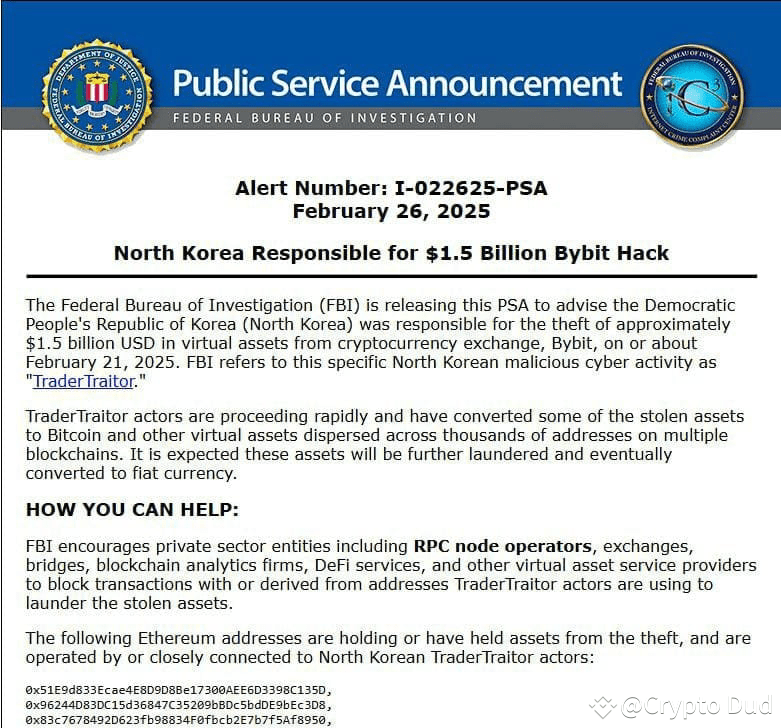
The following data matrix synthesizes key metrics, technical vectors, and institutional impacts associated with the landmark FBI attribution and the Binance security breach.
| Metric Category | Details & Specifications | Impact / Significance |
|---|---|---|
| Primary Attribution | North Korea (Lazarus Group / APT38 / RGB) | Confirms state-sponsored economic warfare against private tech infrastructure. |
| Estimated Scale | Multi-billion dollar cumulative digital asset extraction | Largest single digital asset heist in financial history. |
| Primary Vectors | Cross-chain bridge exploits, zero-day cloud vulnerabilities, advanced social engineering | Exposes critical weaknesses in centralized-decentralized hybrid infrastructures. |
| Capital Destination | North Korean WMD & Ballistic Missile Programs | Direct national security threat bypassing international banking sanctions. |
| Regulatory Response | Accelerated KYC/AML enforcement, mandatory cybersecurity audits | Drastic increase in compliance operational costs for crypto enterprises. |
Industry and Market Implications
The official FBI pronouncement serves as a tectonic shockwave across global financial markets, forcing institutional investors, venture capitalists, and exchange executives to re-evaluate their operational security assumptions. The fallout spans several critical sectors of the global economy:
- Venture Capital & Capital Allocation: Investors are drastically shifting their capital allocation strategies, moving away from high-yield, poorly audited DeFi protocols toward heavily fortified, institutional-grade custodians. Security infrastructure is no longer viewed as a secondary operational expense; it is the primary determinant of enterprise valuation.
- Regulatory Compliance & Sanctions Enforcement: Financial regulators in the United States, European Union, and Asia are drafting stringent new mandates. Compliance frameworks will soon require exchanges to implement real-time threat intelligence sharing, automated wallet blacklisting tied to state-sponsored entity lists, and rigorous third-party security audits.
- Cloud and Infrastructure Scalability: Technology vendors providing cloud compute architecture and validator nodes to digital asset platforms face heightened scrutiny. Securing distributed ledgers against nation-state actors requires an unprecedented elevation of encryption standards and zero-trust network architectures.
- Market Liquidity Dynamics: In the immediate aftermath of major state-sponsored heists, market liquidity often contracts as exchanges freeze compromised assets and traders pull capital to mitigate counterparty risk. This volatility reinforces the urgency for robust insurance pools and decentralized recovery mechanisms.
Frequently Asked Questions (People Also Ask)
How did the FBI officially link North Korea to the Binance hack?
The FBI established attribution through a combination of proprietary blockchain forensics, malware code analysis matching known Lazarus Group toolsets, Internet Protocol (IP) telemetry, and intelligence sharing with international partner agencies. The unique laundering patterns—specifically the rapid distribution of funds through specific mixing protocols—bore the exact digital signatures of previous state-sponsored cyber operations attributed to Pyongyang.
What makes North Korean cyber units unique compared to traditional criminal gangs?
Unlike financially motivated cybercriminal syndicates that seek quick ransom payouts or credit card data, North Korea’s state-sponsored hackers operate as an institutional branch of the military intelligence apparatus. Their primary objective is the systemic accumulation of hard currency to bypass global economic sanctions and directly finance the regime's nuclear and ballistic missile proliferation programs.
How are major cryptocurrency exchanges responding to this escalating threat?
Exchanges are aggressively upgrading their risk mitigation frameworks by integrating advanced artificial intelligence for anomaly detection, employing zero-trust cloud architectures, and partnering with specialized blockchain intelligence firms. Furthermore, platforms are collaborating more closely with global law enforcement to freeze stolen assets before they can be converted into fiat currency.
What are the broader economic consequences for global investors?
The primary consequence is a permanent elevation of operational compliance costs. As regulators demand stricter anti-money laundering (AML) controls and robust cybersecurity standards, smaller enterprises may face consolidation, while institutional investors will increasingly favor fully regulated, transparent trading venues, ultimately reshaping the market liquidity landscape.
Future Outlook and Strategic Milestones
As the geopolitical landscape becomes increasingly digitized, the intersection of state-sponsored cyber warfare and decentralized finance will remain a primary theater of conflict. The FBI's public attribution of the Binance hack is not a conclusion, but a clarion call for a unified global defense posture.
In the coming quarters, industry observers must monitor several critical milestones. First, watch for the implementation of international standards regarding cross-chain bridge security and mandatory disclosure protocols for major digital asset platforms. Second, anticipate intensified sanctions targeting third-party facilitators, OTC brokers, and crypto-mixing services that assist North Korean operatives in converting stolen digital assets into sovereign fiat currencies.
Ultimately, the long-term viability of the digital asset ecosystem depends on its ability to harden its infrastructure against nation-state adversaries. Corporations that fail to prioritize enterprise-grade security and compliance risk not only catastrophic financial loss, but also becoming unwitting financiers of geopolitical instability.