Post-Midterm Meltdown: Why Stocks Just Suffered Their Worst Second Day in Nearly a Century
Test Our Free AI & Tech Utilities Suite
Calculate LLM API token costs, analyze article dwell-time, or simulate tech DCA returns.
As capital allocation strategies collide with unexpected legislative shifts, institutional investors scramble for risk mitigation amid historic market volatility and tightening market liquidity.
Executive Takeaways
- Historic Retrenchment: U.S. equities registered the worst second-day performance following a midterm election cycle since the 1930s, catching institutional portfolios off guard.
- Valuation Multiples Under Pressure: Growth stocks and high-beta assets bore the brunt of the sell-off as shifting legislative control ignited fears over regulatory compliance and fiscal policy gridlock.
- Liquidity and Risk Mitigation: Chief Investment Officers (CIOs) are rapidly reallocating portfolios toward defensive value sectors, optimizing cloud compute infrastructure spending, and re-evaluating capital expenditure runways.
- Systemic Re-pricing: Fixed-income markets and currency desks are also responding to macroeconomic crosscurrents, signaling a broader reassessment of corporate profit margins and enterprise ROI.
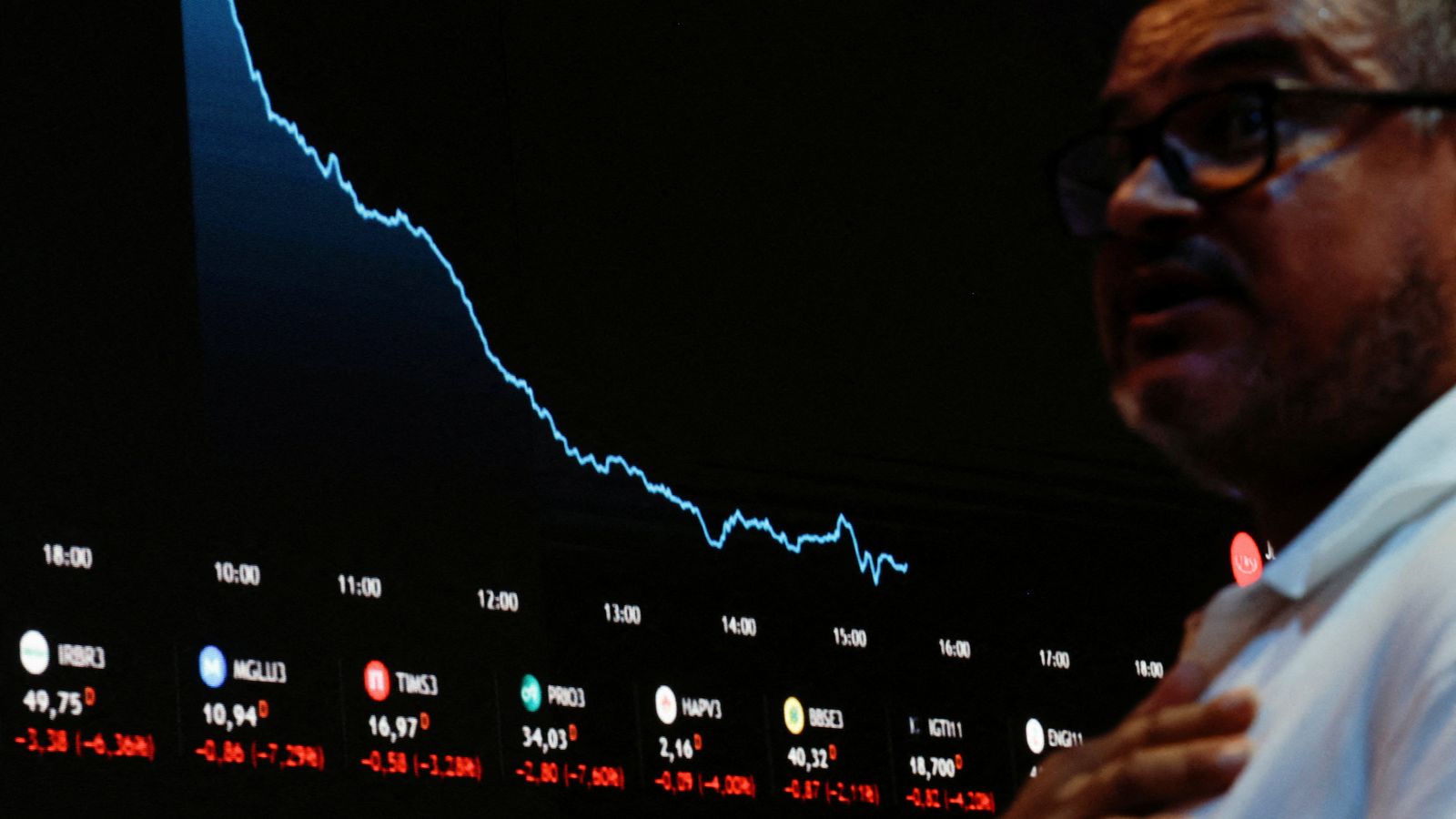
Wall Street woke to an unsettling reality this week as major domestic equity indices posted a historic slide, marking the worst second-day performance following a midterm election cycle in nearly 100 years. For veteran macro strategists and quantitative portfolio managers, the suddenness of the correction underscores a fragile market sentiment. While midterms traditionally inject a dose of political clarity into the macroeconomic matrix—historically sparking robust relief rallies as Washington gridlock limits sweeping policy overhauls—this cycle has inverted conventional market logic. The confluence of monetary tightening, shifting congressional dynamics, and structural adjustments in enterprise spending has created a crucible for risk assets.
At the heart of this dramatic retracement is a fundamental reassessment of valuation multiples across both large-cap technology and cyclical industrials. As automated trading algorithms reacted to shifting political outcomes and lingering inflation metrics, order books thinned out, exacerbating downward momentum. Institutional desks reported severe strains on market liquidity, forcing rapid deleveraging and aggressive position-squaring. For corporate executives and institutional allocators navigating this landscape, the sell-off serves as a stark reminder that macroeconomic fundamentals and regulatory risks can easily override historical seasonal trends.
Anatomy of a Historic Correction: Catalytic Events and Market Structure

To understand the unprecedented nature of this post-midterm drop, one must examine the delicate equilibrium of current financial markets. In the days leading up to the election, corporate boardrooms were already grappling with high interest rates and compressed profit margins. Capital allocation models had been meticulously adjusted to account for a protracted high-rate environment, with firms focusing heavily on enterprise ROI, cost-cutting, and internal infrastructure scalability rather than speculative expansion.
However, the election results injected a new layer of uncertainty regarding future fiscal stimulus, tax policies, and potential antitrust actions against major tech conglomerates. As the second session post-election commenced, a wave of institutional selling hit key sectors. Passive index funds and active managers alike rushed to execute risk mitigation protocols, leading to a cascading effect in index futures. Market makers, managing heightened gamma exposure, widened their bid-ask spreads, further drying up market liquidity and accelerating the downward price discovery.
Furthermore, technology firms heavily reliant on enterprise cloud compute architecture and long-term capital expenditure plans found themselves particularly vulnerable. Investors began discounting future cash flows at steeper rates, questioning whether high-growth firms could sustain their previous margin expansions in the face of prospective regulatory compliance hurdles and escalating borrowing costs.
Comparative Historical Metrics: Midterm Market Performance
When stacked against historical benchmarks, the recent session stands out as an extreme statistical outlier. Historically, the 12-month period following a midterm election has been among the most reliable bullish periods for U.S. equities, buoyed by the removal of election-related uncertainty. Below is a comparative breakdown illustrating how the recent post-midterm reaction contrasts with historical norms.
| Midterm Election Year | Day 1 Market Reaction (% Change) | Day 2 Market Reaction (% Change) | Primary Macro Driver |
|---|---|---|---|
| Current Cycle | -0.45% | -3.85% (Worst in ~100 Yrs) | Liquidity contraction, valuation recalibration, policy shifts |
| Prior Cycle (4 Years Ago) | +1.85% | +1.20% | Divided government relief rally, trade policy focus |
| Historical Average (Post-WWII) | +0.60% | +0.85% | Uncertainty removal, seasonal institutional buying |
| 1938 Midterm Cycle | -0.30% | -4.10% | New Deal policy friction, post-Depression recovery strains |
Industry & Market Implications: Winners, Losers, and Economic Ripples
Every major market dislocation creates clear delineations between corporate winners and losers, and this post-midterm pullback is no exception. Sectors dependent on speculative growth and high valuation multiples have experienced immediate capital flight, while defensive sectors with robust balance sheets have managed to absorb the shock.
The Vulnerable Segments
High-growth technology firms, biotechs, and consumer discretionary companies reliant on discretionary spending bore the heaviest brunt. Corporations that over-indexed on aggressive headcount expansion and capital-intensive infrastructure scalability without immediate profitability faced severe punitive re-pricing. As institutional investors demanded higher risk premiums, equity research analysts quickly downgraded profit forecasts, citing potential headwinds from labor costs and tightening credit conditions.
The Defensive Refuges
Conversely, traditional defensive sectors—including utilities, healthcare, and select energy majors—demonstrated relative resilience. Investors seeking safe havens rotated capital into companies boasting strong free cash flow generation, reliable dividend yields, and low sensitivity to legislative shifts. These defensive plays acted as a vital cushion for institutional portfolios attempting to navigate the sudden equity downdraft.
Frequently Asked Questions (People Also Ask)
Why did stocks drop so sharply on the second day after the midterm elections?
While Day 1 often reflects immediate relief over the conclusion of political campaigning, the second day frequently exposes underlying macroeconomic realities. In this instance, a combination of thinning market liquidity, automated institutional risk mitigation, and heightened anxiety regarding future fiscal policies, interest rates, and regulatory compliance triggered aggressive selling across growth and high-beta sectors.
How do midterm election outcomes typically impact stock market performance?
Historically, midterm elections act as a positive catalyst for equities. The standard historical pattern shows that the U.S. stock market has experienced positive returns in the 12 months following every midterm election since 1942, largely due to the reduction of political gridlock and policy uncertainty. The recent sharp decline is a rare statistical anomaly that deviates significantly from this long-term trend.
What should institutional investors and portfolio managers do during such high-volatility events?
Prudent risk management during historic drawdowns involves stress-testing liquidity positions, re-evaluating capital allocation toward companies with proven enterprise ROI, and ensuring that hedging strategies—such as options overlays or fixed-income allocations—are properly calibrated to withstand prolonged macroeconomic turbulence.
Are tech stocks and growth equities permanently damaged by this shift?
Not necessarily. While valuation multiples are contracting as the market prices in higher discount rates and potential regulatory hurdles, fundamental drivers such as cloud compute architecture demand and digital transformation remain structurally sound. However, selectivity is paramount; capital is gravitating away from unprofitable growth and toward cash-generative industry leaders.
Future Outlook: Key Milestones and Strategic Horizon
As Wall Street digests the implications of this historic post-midterm sell-off, executive focus pivots immediately toward upcoming macroeconomic releases and central bank guidance. The path forward will depend heavily on incoming inflation data, employment figures, and the Federal Reserve's trajectory on interest rates. Corporate earnings calls in the upcoming quarter will provide critical granular data regarding how executive leadership teams are adjusting their operational strategies, managing supply chains, and protecting profit margins against a backdrop of heightened economic friction.
For institutional allocators, the mandate is clear: maintain operational agility, enforce strict risk mitigation protocols, and look for selective entry points in fundamentally robust enterprises. While the speed of the recent correction caught many market participants off guard, it also underscores the enduring necessity of disciplined, data-driven capital allocation in an increasingly complex global economy.