For nearly six decades, the architecture of global retail payments operated under a lucrative, privately policed duopoly. Visa and Mastercard, backed by tier-one issuing and acquiring banks, extracted an asymmetric tax—ranging from 1.5% to 3.5% in merchant discount rates (MDR)—on every swipe, tap, and digital clearing event across the capitalist world. Today, that legacy rent-extraction model is facing structural obsolescence.
The catalytic instruments of this disruption are not Silicon Valley venture-backed consumer apps, nor are they decentralized cryptocurrencies. Instead, they are state-orchestrated public utilities: Brazil’s Pix and India’s Unified Payments Interface (UPI). Emerging as premier prototypes of Digital Public Infrastructure (DPI), these systems have decoupled retail settlement from private clearing networks, compressing clearing latency from days to milliseconds and collapsing transaction marginal costs to near-zero. As central bankers from Frankfurt to Washington evaluate systemic economic efficiency, the operational triumphs of Brasília and New Delhi offer an undeniable blueprint: high-speed payment rails are no longer proprietary corporate products; they are core sovereign infrastructure akin to highways, water systems, and the electric grid.
Executive Takeaways
- Structural Disintermediation of Private Schemes: Pix and UPI have effectively eliminated card-based interchange margins on sovereign soil, forcing global card conglomerates to pivot toward value-added fraud analytics, specialized credit services, and cross-border arbitrage.
- Divergent Architectural Methodologies: While Brazil utilized a top-down, central bank-owned and mandated infrastructure (Banco Central do Brasil), India executed a federated, public-private protocol managed by the National Payments Corporation of India (NPCI) powered by private-sector front-end orchestration.
- Hyper-Velocity Formalization of Shadow Liquidity: Both ecosystems generated unprecedented expansions in fiscal formalization, funneling hundreds of billions of dollars in off-the-books cash transactions into audited bank balances, radically expanding national tax receipts and consumer credit registries.
- The Cross-Border Settlement Threat: Multilateral linkages—typified by the Bank for International Settlements’ (BIS) Project Nexus and bilateral corridors connecting UPI and Pix to ASEAN and Gulf states—are preparing a structural challenge to legacy SWIFT-based cross-border remittance spreads.
The End of the Interchange Rent: Anatomy of an Infrastructure Shift
In legacy financial systems, capital allocation follows a heavily toll-gated route. When a consumer completes a purchase, a complex transaction chain—incorporating the point-of-sale (POS) terminal provider, acquiring bank, card network, issuing bank, and secondary clearinghouses—claims a non-trivial percentage of enterprise revenue. For small- and medium-sized enterprises (SMEs) running on compressed operating margins, interchange fees and terminal rental fees function as an aggressive regressive tax.
Between 2016 and 2020, central monetary authorities in India and Brazil identified this paradigm as a drag on national economic productivity. The strategic response was neither regulatory price-capping nor anti-trust litigation. Rather, it was infrastructural bypass. By engineering an unbundled layer of digital clearing, central authorities separated identity verification, transaction messaging, and interbank liquidity settlement into modular, API-driven protocols.
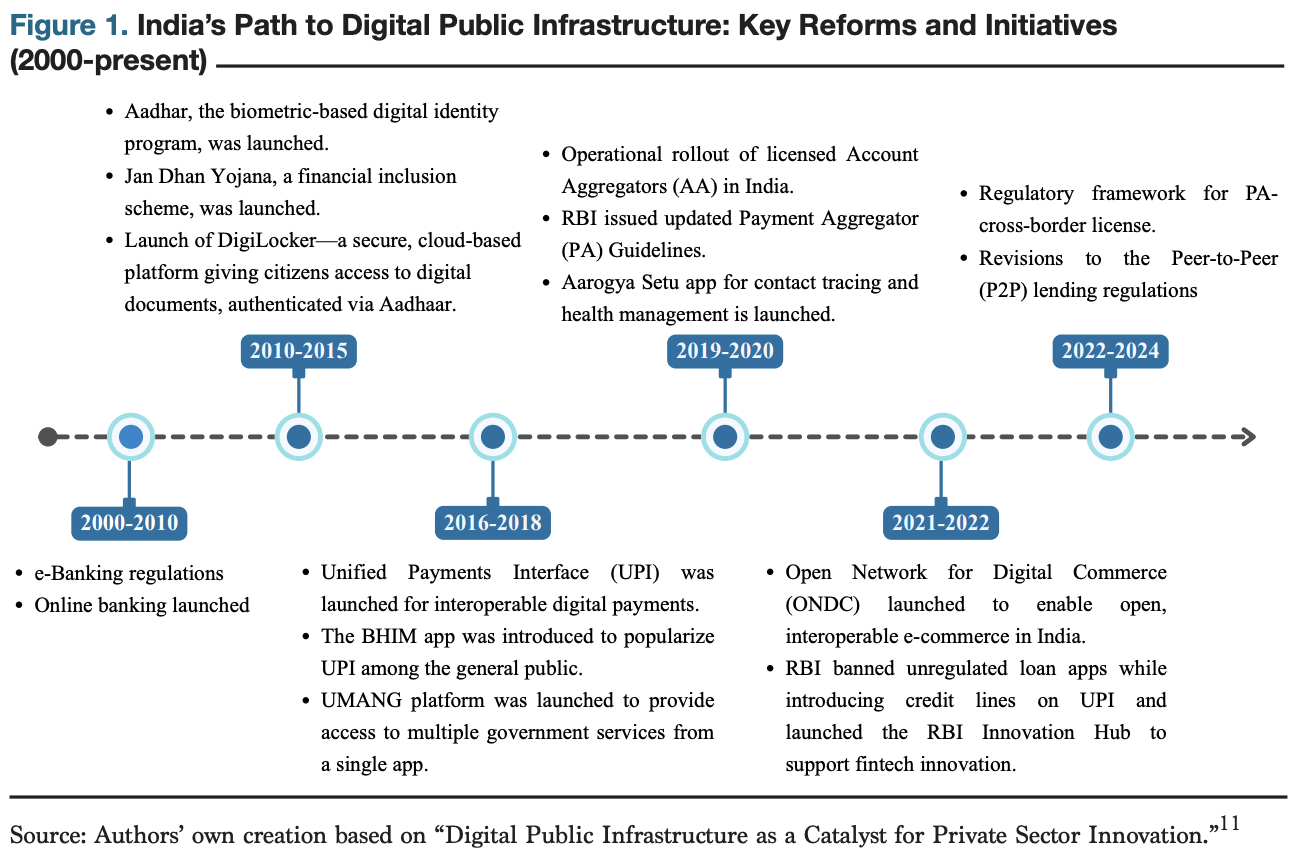
In India, the transition gained momentum through the NPCI’s architecture. UPI decoupled the account-holding institution from the customer interface. Using an abstracted identifier—a virtual payment address (VPA) tied to mobile numbers or national digital IDs—it routed liquidity through immediate payment rails via 24/7/365 settlement cycles. Brazil’s Banco Central do Brasil (BCB) implemented a more centralized mechanism via the System for Instant Payments (SPI), paired with the Directory of Transaction Account Identifiers (DICT), creating a unified, state-administered database that eradicated the data asymmetry previously monetized by private bank consortia.
Architectural Dichotomy: Regulatory Fiat vs. Federated Protocols
While frequently grouped together by institutional macro-economists, Pix and UPI represent fundamentally divergent models of governance, technological orchestration, and institutional enforcement.
1. Brazil’s Pix: The Power of Regulatory Compulsion
The operational velocity of Pix—which went live in November 2020—can be attributed directly to legal mandate. The BCB ruled that any financial institution holding more than 500,000 active customer accounts was legally required to integrate Pix, build out the requisite API orchestration layers, and present the payment rail to consumers free of charge. Crucially, the central bank maintained absolute ownership of the core ledger and clearing infrastructure (the SPI).
By retaining sovereign control over the rails, the BCB avoided the classic multi-sided platform dilemma: the chicken-and-egg hurdle of acquiring both merchants and consumers simultaneously. The regulator forced instant, ubiquitous consumer access from day one. In terms of monetization, the BCB established a minimal, cost-recovery clearing fee (fractions of a cent per transaction) alongside an exceptionally tight cap on P2M (peer-to-merchant) transactions, commonly clearing between 0.15% and 0.33%. This obliterated the economic logic of debit card acquiring networks virtually overnight.
2. India’s UPI: Federated Architecture and the Zero-MDR Conundrum
India’s path diverged structurally. The NPCI operated not as an arm of the central bank, but as an umbrella entity owned by a consortium of major commercial banks, backed strategically by the Reserve Bank of India (RBI). UPI was built as an open protocol, enabling non-bank Third-Party Application Providers (TPAPs)—principally Alphabet’s Google Pay, Walmart’s PhonePe, and domestic fintech Paytm—to build consumer-facing interfaces atop commercial bank ledger books.
The catalytic catalyst in India arrived when the Ministry of Finance mandated a strict "Zero-MDR" policy on UPI transactions. While this sparked hyper-adoption by eliminating all payment processing friction for tens of millions of street vendors and retail conglomerates alike, it dismantled the immediate unit economics of merchant acquiring. The Indian state was forced to step in, allocating sovereign budget subsidies to compensate processing banks for back-end enterprise server workloads and cloud infrastructure upkeep. UPI prioritized raw volume and absolute digital adoption over immediate private-market enterprise ROI.
Verified Data: Structural Comparison of Global Payment Paradigms
The architectural shift away from legacy private networks toward sovereign instant rails is starkly visible in the foundational operating metrics across jurisdictions:
| Operational Metric | Brazil (Pix) | India (UPI) | Legacy Card Schemes (Visa/Mastercard) |
|---|---|---|---|
| Governing Authority | Banco Central do Brasil (Sovereign/Direct) | National Payments Corp of India (Quasi-Public / RBI) | Publicly Listed Multinational Corporations |
| Core Clearance Latency | Sub-3 seconds (Real-time Gross Settlement) | Sub-2 seconds (IMPS-derived Real-Time) | T+1 to T+3 business days (Net Settlement) |
| Merchant Discount Rate (MDR) | Market-driven, capped: ~0.22% to 0.33% (P2M) | 0.00% (Subsidized by Union Budget) | 1.50% – 3.50% (Interchange + Scheme Fees) |
| Monthly Clearing Volume (Est. 2025/2026 Run Rate) | 5.5+ Billion Transactions | 16.5+ Billion Transactions | ~24 Billion Global Combined |
| Consumer Adoption Penetration | >85% of Adult Population | >55% of Total Population (>80% of Formal Banking Adults) | Saturated in G10; Stagnant in Global South |
| Cross-Border Interoperability Framework | Bilateral LatAm links; early stage BIS Nexus integration | Live with Singapore (PayNow), UAE, France; scaling via NIPL | Proprietary global cross-border networks via FX markup |
| Primary Revenue Model | Sovereign utility / Low-basis point clearing cost recovery | Zero-fee rail subsidized by state; ancillary data monetization | Interchange share, data licensing, currency conversion markups |
Industry & Market Implications: Capital Flight and Institutional Realignment
The exponential adoption curves of Pix and UPI have triggered profound second-order effects across commercial banking, private equity valuations, and enterprise capital allocation.
1. Margin Decompression for Global Card Networks
For Visa and Mastercard, the rapid growth of DPI represents an acute threat to debit transaction volumes in developing and middle-income nations. While high-end revolving credit cards—buttressed by rewards points, elite concierge services, and corporate travel allowances—retain an economic moat among affluent cohorts, everyday debit interchange has evaporated in these markets. In Brazil, Pix transacted volume surpassed credit card volume within 24 months of debut. The traditional card schemes are strategically shifting their monetization models: pivoting away from core domestic payment routing toward proprietary cybersecurity orchestration, advanced cross-border B2B clearing, and specialized tokenization services.
2. The Corporate Liquidity and Working Capital Revolution
For mid-market and enterprise corporations, DPI fundamentally changes treasury operations. Under legacy clearing regimes, a retailer doing $100 million in domestic sales faced significant settlement float delays (funds held for 48 to 72 hours) and non-negligible cost-of-capital requirements. With instant settlement rails, accounts receivable conversion is instantaneous. Enterprise cash flow moves with zero float, directly optimizing working capital facilities, reducing reliance on revolving credit lines, and elevating enterprise return on invested capital (ROIC).
3. Data Asymmetry, Underwriting, and the Shadow Economy
Historically, the vast majority of micro-merchants in emerging markets existed outside the formal credit perimeter due to an absence of audited financial statements. By transitioning micro-payments to DPI, every merchant generates an indelible, timestamped, programmatic audit trail of revenue. In India, this liquidity ledger is being integrated into the Account Aggregator framework and the Open Network for Digital Commerce (ONDC), enabling automated, cash-flow-based micro-lending. Traditional collateralized lending is giving way to real-time credit underwriting driven by payment velocity.
Frequently Asked Questions (People Also Ask)
How do UPI and Pix structurally differ from the US Federal Reserve's FedNow?
While the US Federal Reserve’s FedNow system provides the underlying rail for instant 24/7/365 gross settlement between participating depository institutions, it lacks the vertically integrated consumer and identity layer intrinsic to UPI and Pix. FedNow is solely an interbank settlement rail; it does not mandate a unified consumer interface, standard QR-code directory, or a universal virtual address protocol. Furthermore, FedNow participation remains voluntary for US commercial banks, creating a fragmented landscape where adoption depends on individual bank strategy, whereas Brazil made participation mandatory and India orchestrated private application integration via non-bank tech giants.
Why do commercial banks participate in DPI ecosystems if interchange margins are eliminated?
In mature DPI environments, commercial banks trade transactional interchange revenues for reduced operational friction, massive low-cost customer acquisition, and rich behavioral data. Physical cash handling, branch teller servicing, and paper-based infrastructure carry substantial overhead costs. By shifting customers to automated instant digital rails, operational expenditure plummets. Furthermore, banks leverage transaction account balances as a low-cost source of deposits, subsequently cross-selling high-margin financial products such as mortgages, auto loans, mutual funds, and commercial working capital facilities.
What are the primary systemic risks associated with sovereign digital public infrastructure?
The structural vulnerability of DPI lies in concentrated operational reliance on central clearing nodes and cloud compute infrastructure. A prolonged outage in NPCI’s core routing servers or BCB’s SPI brings nationwide retail commerce to an immediate standstill, as cash alternatives are progressively demonetized and de-adopted. Additionally, instant, irreversible push payments create severe vectors for social engineering fraud, account takeover, and "mule account" networks, shifting the risk burden from merchant chargebacks to non-reimbursable consumer fraud losses.
Can Pix and UPI be linked to bypass legacy SWIFT cross-border networks?
Yes. Both the Reserve Bank of India and Banco Central do Brasil are actively pursuing bilateral and multilateral linkages to bypass legacy correspondent banking networks. India has successfully linked UPI with Singapore’s PayNow, enabling instant peer-to-peer remittances at a fraction of traditional SWIFT costs. On a multilateral level, both nations are working with the Bank for International Settlements (BIS) under "Project Nexus"—a unified protocol designed to interconnect national instant payment systems globally, ultimately threatening the high FX spreads and correspondent fees that define modern international banking.
The 2026-2030 Strategic Horizon: Nexus, Credit Layering, and the Programmable Dollar
As the international financial system progresses toward 2030, the battle lines between private payment cartels and sovereign digital public infrastructure will be drawn around three transformative frontiers:
First is the integration of credit onto instant rails. NPCI has already operationalized "Credit Lines on UPI," permitting commercial banks to extend pre-approved overdraft and consumer credit facilities directly through the QR-code interface. In Brazil, the rollout of "Pix Automático" targets recurring billing, directly threatening the final defensible stronghold of card networks: subscription commerce and utility billings.
Second is the multilateral scaling of inter-rail clearing through the BIS Project Nexus framework. By standardizing API connections between national DPI systems, cross-border remittances—a market long characterized by predatory fees targeting migrant laborers—will see clearing costs plummet toward zero. A sovereign instant bypass of legacy Western clearinghouses will not only alter capital flow velocity across Asia, Africa, and Latin America, but will also introduce structural resilience against unilateral financial sanctions.
Finally, the DPI paradigm is accelerating the convergence between central bank payment networks and Central Bank Digital Currencies (CBDCs). While early retail CBDC rollouts have struggled with consumer value propositions, their underlying cryptographic infrastructure is being retrofitted to serve as high-tier institutional settlement assets backstopping DPI rails. Pix and UPI have decisively established that transaction execution belongs in the public domain. The private market must now abandon rent-seeking payment tollbooths and re-anchor its business models around complex underwriting, risk syndication, and value-additive enterprise services.