For decades, modern portfolio theory rested on the sacrosanct gospel of diversification. Yet, across global trading desks and wealth management corridors, that orthodoxy has been radically upended. The meteoric ascent of the "Magnificent Seven"—Nvidia, Microsoft, Apple, Alphabet, Amazon, Meta Platforms, and Tesla—has rewritten institutional risk models and triggered an unprecedented surge in specialized exchange-traded products designed specifically to harness, amplify, or hedge this hyper-concentrated cohort of market leadership.
As recent market intelligence from TradingView and proprietary metrics from the Zacks Thematic Investment suite demonstrate, sell-side broker consensus toward these mega-cap tech monopolists reached extraordinary zeniths—with historic consensus windows recording upwards of 80.95% "Strong Buy" and 9.52% "Buy" recommendations across composite brokerage tracking tools. However, behind these bullish headlines lies a sophisticated structural debate: Can investors maximize enterprise exposure to artificial intelligence, high-margin cloud compute architecture, and dominant software ecosystems via targeted ETFs without falling victim to structural liquidity traps, terminal valuation compressions, and index concentration risk?
Executive Takeaways
- Systemic Index Concentration: The Magnificent Seven now command over 30% of the S&P 500's total market capitalization and nearly 45% of the Nasdaq-100, prompting institutional asset allocators to reconsider whether broad-market index funds (like SPY or VOO) already represent de facto thematic tech funds.
- Sell-Side Consensus Clustering: Quantitative analysis via thematic broker rating aggregations shows an extraordinary clustering of institutional conviction, where historic peaks recorded 90.47% aggregate buy-side support (80.95% Strong Buy, 9.52% Buy), leaving narrow headroom for positive earnings revisions.
- Thematic Vehicle Differentiation: Direct basket vehicles such as the Roundhill Magnificent Seven ETF (MAGS) offer pure-play, equal-weighted or rules-based exposure, starkly contrasting with the cap-weighted beta of the Invesco QQQ Trust or synthetic ETN structures.
- Capital Expenditure vs. Enterprise ROI: The multi-hundred-billion-dollar hyperscaler CapEx cycle into advanced semiconductor nodes and datacenters is driving valuation multiple scrutiny, forcing thematic ETF allocators to balance forward enterprise cash flows against tightening discount rates.
The Anatomy of Mega-Cap Dominance: From FANG to the $15 Trillion Bastion
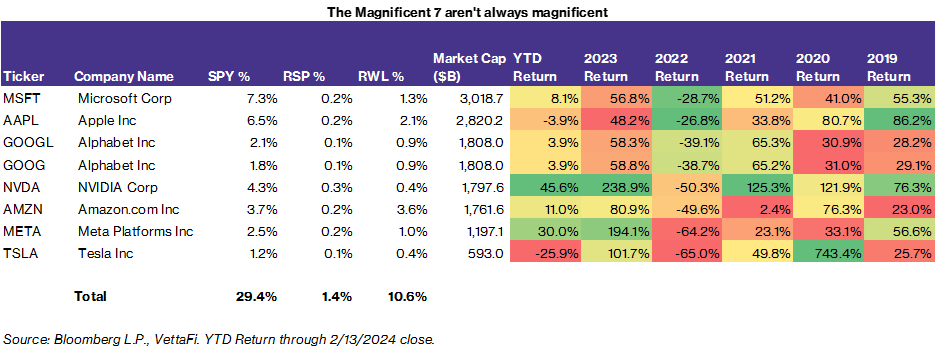
The transition from the legacy "FANG" basket (Facebook, Amazon, Netflix, Google) to the contemporary Magnificent Seven reflects an existential evolutionary shift in enterprise value creation. These seven entities do not merely operate consumer-facing digital platforms; they control the core infrastructure of global enterprise commerce. From specialized cloud compute architecture (Amazon Web Services, Microsoft Azure, Google Cloud Platform) to semiconductor compute sovereignty (Nvidia) and locked consumer-to-enterprise ecosystems (Apple, Meta, Tesla), their combined enterprise value surpassed $15 trillion during early 2024–2025 trading cycles.
Historically, thematic ETFs focused on speculative emerging industries—such as early-stage genomics, clean technology, or direct-to-consumer software-as-a-service (SaaS)—often suffered catastrophic drawdowns during interest-rate tightening cycles due to negative free cash flows and elongated durations. The Magnificent Seven disrupted this historical precedent. Their operational profiles combine growth equities' aggressive upside with the fortress balance sheets traditionally reserved for defensive blue-chip aristocrats. With net cash reserves totaling hundreds of billions and massive free-cash-flow conversion ratios, these corporations successfully absorbed high-cost-of-capital environments while simultaneously funding historic R&D expenditure cycles.
Consequently, asset management firms recognized that retail wealth and institutional capital allocation models were no longer satisfied with broad, diluted equity benchmarks. Investors demanded pinpoint exposure to the apex drivers of the global equity risk premium, birthing a specialized cohort of Magnificent Seven-focused ETF instruments.
Deconstructing the Brokerage Sentiment Matrix
According to underlying broker rating analytics—such as the granular tracking tools deployed across TradingView and Zacks Thematic modules—equity research desks have maintained an aggressive overweight stance on the cohort. When historical data sets indicated a distribution of 80.95% Strong Buy and 9.52% Buy recommendations, the remaining hold and sell distributions sat below 10% collectively. This level of institutional unanimity represents a double-edged sword for asset allocators.
From an equity underwriting standpoint, such uniform buy-side and sell-side alignment reflects undeniable fundamental advantages: structural competitive moats, pricing power sufficient to combat sticky supply-chain inflation, and undisputed dominance in monetizing generative AI infrastructure. However, from a contrarian capital allocation and quantitative risk management perspective, extreme consensus density raises the specter of asymmetric downside risk. When a thematic basket achieves near-unanimous "Strong Buy" ratings, multiple expansion becomes increasingly constrained. Any structural deceleration in enterprise cloud migration, regulatory intervention by antitrust enforcers, or supply-side bottlenecks in high-bandwidth memory (HBM) packaging can trigger outsized portfolio contractions.
Structural Typologies of Magnificent Seven ETF Instruments
Navigating the terrain of Magnificent Seven ETF investing requires a granular understanding of fund mechanics, portfolio weighting methodologies, and legal operational structures under the Investment Company Act of 1940. Broadly, the ecosystem bifurcates into four structural categories:
1. Pure-Play Direct Thematic ETFs (e.g., Roundhill MAGS)
Dedicated instruments like the Roundhill Magnificent Seven ETF (MAGS) represent the purest expression of the trade. Rather than blending dozens of ancillary tech names, these funds isolate the target seven securities, rebalancing periodically on an equal-weighted basis. This equal-weight structure provides deliberate alpha decoupling: it systematically trims the best-performing megacap while reallocating capital to the laggard, dampening single-stock idiosyncratic shocks (such as sudden shifts in Tesla's automotive gross margins or Apple's hardware replacement cycles in Asian markets).
2. Flagship Cap-Weighted Mega-Tech Vehicles (e.g., QQQ, QQQM, XLK)
The Invesco QQQ Trust, tracking the Nasdaq-100, serves as the liquid standard for tech-dominant allocation. While technically a broader index, its market-cap weighting mechanism concentrates over 40% of its total portfolio assets within the Magnificent Seven. Sector-specific vehicles, such as the Technology Select Sector SPDR Fund (XLK), exhibit even more intense, mathematically eccentric reweighting effects due to regulated investment company (RIC) diversification requirements—sometimes creating dramatic divergence between Microsoft, Apple, and Nvidia allocations depending on quarter-end capitalization rankings.
3. Leveraged and Inverse Tactical Products
For hedge funds and active macro traders, issuers like Direxion and GraniteShares offer geared derivatives-based vehicles that provide daily 1.5x, 2x, or -1x exposure to specific constituents or tailored megacap baskets. These funds do not serve as buy-and-hold long-term compounders due to the mathematical drag of daily volatility compounding ("volatility decay"), but rather function as enterprise portfolio hedging mechanisms or high-conviction liquidity overlays around major earnings announcements.
4. Custom Thematic and Megatrend ETFs
A wider perimeter of thematic funds incorporates the Magnificent Seven as anchor holdings (constituting 30% to 50% of portfolio weights) while distributing remaining capital across secondary suppliers, semiconductor equipment fabricators (e.g., ASML, TSMC), and enterprise cybersecurity titans. These funds target macro themes—such as the Global Artificial Intelligence and Robotics ecosystem—using the Magnificent Seven as core liquidity and cash-flow ballasts.
Institutional Comparison: Core Vehicles for Megacap Exposure
The following matrix delineates the core operational, financial, and structural differences across prominent vehicles utilized by institutional desks to capture Magnificent Seven beta and alpha.
| Vehicle Name & Ticker | Primary Structure / Strategy | Expense Ratio | Mag 7 Exposure (%) | Weighting Methodology | Liquidity & Options Breadth |
|---|---|---|---|---|---|
| Roundhill Magnificent Seven ETF (MAGS) | Pure-Play Thematic ETF | 0.29% | ~100.0% | Quarterly Equal-Weighted | Rapidly Growing; Institutional Spread Tightening |
| Invesco QQQ Trust (QQQ) | Broad Modified Market Cap (Nasdaq-100) | 0.20% | ~40.0% - 44.0% | Market Cap (Modified RIC rules) | Deepest Global Liquidity; Hyper-Liquid Derivatives |
| Invesco S&P 500 Equal Weight Tech (RSPT) | Sector Equal-Weight | 0.40% | ~15.0% - 18.0% | Strict Equal-Weighting across S&P Tech | Moderate; Narrow Institutional Rebalancing Volume |
| Technology Select Sector SPDR (XLK) | GICS Sector Cap-Weighted | 0.09% | ~35.0% - 42.0%* | Capped Market Capitalization | Extremely High; Tight Spreads, Deep Clearing Options |
| MicroSectors FANG+ ETN (FNGS) | Exchange-Traded Note (10 Holdings) | 0.58% | ~70.0% | Quarterly Equal-Weighted | Moderate; Carries Unsecured Credit Risk of Issuer |
*Note: XLK excludes Alphabet, Amazon, and Meta Platforms due to GICS classification under Communication Services and Consumer Discretionary sectors, creating idiosyncratic concentration across Apple, Microsoft, and Nvidia.
Macroeconomic & Industry Implications: Capital Allocation Realities
Deploying capital into Magnificent Seven ETFs requires scrutinizing three macro variables: enterprise CapEx realization, market liquidity plumbing, and regulatory intervention.
The Hyperscaler CapEx Paradox
During the current capital deployment cycle, Alphabet, Microsoft, Meta, and Amazon have guided aggregate capital expenditures toward historical peaks, with quarterly outlays repeatedly surpassing consensus expectations. The vast majority of this liquidity is funneled directly into Nvidia-powered compute clusters, optical networking gear, and advanced cooling infrastructure. While this circular capital flow directly inflates the earnings performance of semiconductor components in the basket, institutional allocators face an unresolved question: What is the medium-term return on invested capital (ROIC) for enterprise software customers?
If enterprise end-users do not realize measurable productivity gains or software-driven cost reductions within 18 to 24 months, generative AI pricing tiers risk downward margin revisions. A Magnificent Seven ETF concentrates exposure directly at the focal point of this capital expenditure cycle, exposing allocators to rapid compression of forward Price-to-Earnings (P/E) and EV/EBITDA multiples if monetizable enterprise demand falters.
Market Liquidity and Systematic Reflexivity
The ubiquity of Mag Seven ETF products has introduced unprecedented structural reflexivity into global market microstructures. Quantitative desks, passive 401(k) inflows, and volatility-controlled funds systematically deploy billions of dollars into market-cap-weighted structures each month. Because these inflows disproportionately chase the largest capitalization components, market liquidity becomes stratified.
This dynamic creates what legendary market structure theorists describe as liquidity illusion: the illusion of robust, broad-market liquidity when, in reality, bid-ask spread depth is hyper-concentrated in fewer than ten ticker symbols. In market dislocations, systematic rebalancing out of non-diversified thematic funds can trigger sharp liquidity dry-ups, magnifying downward cascades across the wider financial system.
Winners and Losers in the Thematic Megacap Regimes
The aggressive adoption of Magnificent Seven ETF vehicles redistributes financial leverage and economic capital across the investment management landscape:
- Winners: Tier-1 Thematic ETF Issuers and Liquid Market Makers: Product architects collecting recurring management fees while market-making desks harvest bid-ask arbitrage spreads across fragmented single-stock, leveraged, and basket vehicles.
- Winners: Hyperscaler Capital Allocators: Megacap corporate treasuries benefit from suppressed costs of equity capital, allowing them to fund generational infrastructure builds, secure proprietary compute nodes, and absorb top engineering talent without diluting shareholder equity.
- Losers: Traditional Active Long-Only Managers: Constrained by 1940 Act mutual fund diversification rules (which generally restrict open-end mutual funds from holding more than 25% of assets in positions exceeding 5% each), active managers must chronically underweight the Magnificent Seven. In momentum-driven bull cycles, this constraint almost guarantees institutional benchmark underperformance.
- Losers: Small-and-Mid-Cap Enterprise Ecosystems (Russell 2000): As passive and thematic capital pours into dominant megacaps, lower-tier public companies face an equity-capital vacuum. Companies operating in the $2 billion to $10 billion market-cap range face elevated borrowing costs, reduced equity valuations, and persistent liquidity discounts.
Frequently Asked Questions (People Also Ask)
What is the primary difference between investing in a Magnificent Seven ETF versus the S&P 500 or Nasdaq-100?
The fundamental distinction lies in concentration, diversification risk, and weighting mechanics. Broad-market indexes like the S&P 500 (via SPY) and Nasdaq-100 (via QQQ) are market-cap weighted benchmarks containing 500 and 100 constituent companies, respectively. While these indexes currently exhibit high megacap tech concentration, they still provide exposure to industrials, healthcare, consumer staples, and financials. A dedicated Magnificent Seven ETF (such as MAGS) allocates capital exclusively to the target seven stocks (often on an equal-weighted basis), eliminating broader economic diversification and converting market beta into an idiosyncratic bet on mega-cap enterprise tech dominance.
Are Magnificent Seven ETFs considered safe for long-term retirement portfolios?
While the underlying companies boast pristine balance sheets, significant cash reserves, and robust competitive advantages, a concentrated Magnificent Seven ETF carries high portfolio risk. Holding an equity vehicle with only seven constituents eliminates idiosyncratic risk protection: if one or two companies encounter severe regulatory, antitrust, or execution hurdles, the entire fund experiences pronounced performance drag. Wealth management standards generally advise using pure-play Magnificent Seven ETFs as dynamic satellite allocations (e.g., 5% to 15% of an equity sleeve) rather than core, baseline retirement holdings.
How do regulatory classification and antitrust scrutiny impact Magnificent Seven ETFs?
Antitrust litigation is the most material exogenous regulatory risk confronting these instruments. The Department of Justice (DOJ), Federal Trade Commission (FTC), and European Commission (via the Digital Markets Act) have active investigations or litigations against several constituents within the cohort regarding search monopolies, app store commissions, cloud bundling, and data sovereignty. Adverse legal rulings that mandate operational breakups, restrict proprietary hardware-software bundling, or mandate open access to proprietary algorithms could compress operating margins, trigger non-tax-advantaged corporate spinoffs, and force rebalances within dedicated ETF portfolios.
Why do some technology sector ETFs (like XLK) exclude certain Magnificent Seven stocks?
This exclusion stems from the Global Industry Classification Standard (GICS) system. In the GICS architecture, companies are categorized based on their principal business activities. Under these standards, Apple and Microsoft are classified as "Information Technology"; however, Alphabet and Meta Platforms are designated as "Communication Services," while Amazon and Tesla are categorized as "Consumer Discretionary." Consequently, sector-specific tech ETFs like XLK cannot hold Alphabet, Meta, Amazon, or Tesla, making dedicated thematic baskets the only vehicle to own all seven without holding non-tech equities.
Future Outlook & Key Milestones to Watch (Next 12–24 Months)
As the thematic ETF ecosystem matures, the runway for Magnificent Seven products will be dictated by three decisive institutional milestones:
- The Enterprise AI Monetization Inflection: Wall Street will no longer reward generative AI narrative momentum alone. Over the next fiscal cycles, markets will demand direct, verifiable evidence that enterprise customers are driving net-new software revenue, operational efficiencies, and expanding margins from their multi-billion-dollar compute investments. If earnings beats fail to match aggressive forward multiples, valuation compression will accelerate.
- Equal-Weight vs. Market-Cap Disconnection: Institutional allocators should closely track the performance ratio between the S&P 500 Equal Weight Index (RSP) and the cap-weighted S&P 500 (SPY). A widening divergence indicates that thematic momentum is solely driven by mega-cap pass-through liquidity, whereas an upward reversal in equal-weighted breadth signals healthy economic participation across non-tech sectors.
- Global Antitrust and Disintegration Scenarios: The regulatory clock is ticking across Western jurisdictions. Final court adjudications regarding monopolistic distribution agreements or forced unbundling of enterprise cloud suites could reshape operating margins. Should breakups or structural remedies materialize, thematic ETF issuers will be forced to adjust their prospectuses, determining whether spinoff corporate entities remain within the core investment mandate or are liquidated on the open market.
Ultimately, Magnificent Seven ETFs represent the zenith of concentrated modern thematic investing: an institutional financial vehicle delivering frictionless access to the most powerful corporate balance sheets ever assembled, balanced against unprecedented levels of market consensus and systemic concentration risk.