NEW YORK & SAN FRANCISCO — April 30, 2026 (TradingView Wire) — Any lingering skepticism that Silicon Valley’s artificial intelligence buildout would succumb to a cyclical pause was comprehensively dismantled on Wall Street after the closing bell yesterday. On April 29, the market’s primary hyperscale quartet—Microsoft, Alphabet, Meta Platforms, and Amazon—delivered their Q1 2026 financial scorecards. Rather than signaling capital expenditure discipline or a deceleration toward "capex digestion," the collective balance sheets revealed an aggressive acceleration in capital allocation toward advanced cloud compute architecture, custom silicon, and enterprise-grade infrastructure scalability.
The consolidated message across all four earnings calls was singular and unwavering: the enterprise risk of under-investing in AI compute dwarfs the financial risk of over-building. With combined annualized capital expenditure now tracking above $245 billion for fiscal 2026, the artificial intelligence frenzy has decisively shifted from experimental research and training clusters to monetizable inference workloads, sovereign model deployments, and autonomous agentic workflows. For institutional allocators and retail investors alike, the focal point is no longer merely whether Big Tech can sustain these spending levels, but rather which tier-two and downstream beneficiaries will capture the greatest share of free cash flow from this historic reallocation of corporate capital.
Executive Takeaways
- Unprecedented Capital Allocation: Microsoft, Alphabet, Meta, and Amazon collectively upgraded 2026 CapEx guidance by an aggregate 18.4% quarter-over-quarter, committing an estimated $248 billion to infrastructure, hardware procurement, and power generation.
- The Shift from Training to Inference: Q1 2026 metrics demonstrate that over 62% of deployed compute capacity is now driving inference and autonomous agentic workflows, moving the ecosystem past exploratory experimentation toward measurable enterprise ROI.
- Critical Infrastructure Bottlenecks: Advanced high-bandwidth memory (HBM4), optical interconnects, and megawatt-scale power generation have eclipsed pure accelerator availability as the primary operational constraints, driving extreme pricing power to specialized upstream suppliers.
- Widening Valuation Divergence: While hyperscaler valuation multiples face scrutiny over margin compression and aggressive depreciation schedules, peripheral hardware, thermal management, and power generation providers are experiencing unprecedented multiple expansion backed by non-cancelable order backlogs extending well into 2028.
The Anatomy of Big Tech’s Aggressive Spending Stance

Entering the April 2026 earnings cycle, institutional sentiment had grown cautious. Multi-quarter debates centered on whether enterprise software spending was yielding sufficient revenue conversion to validate Big Tech���s relentless infrastructure outlay. Those doubts were met with decisive operational figures. Cloud segment revenues across Microsoft Azure, Google Cloud Platform (GCP), and Amazon Web Services (AWS) accelerated in tandem, posting composite year-over-year growth of 27.6%, driven directly by generative workloads and agentic software layers integrated into Fortune 500 workflows.
Chief executive officers directly addressed Wall Street's capital efficiency questions. Satya Nadella outlined that Microsoft’s commercial bookings acceleration was constrained not by client demand, but strictly by datacenter energized capacity. Alphabet chief Sundar Pichai revealed that proprietary Tensor Processing Units (TPUs) alongside commercial GPU fleets were operating at near-100% capacity utilization rates, while Meta’s Mark Zuckerberg confirmed that Meta’s Llama ecosystem has catalyzed massive advertising conversion efficiencies, justifying an elevated full-year CapEx envelope of $68 billion to $72 billion.
Crucially, this investment cycle has decoupled from standard IT refresh timelines. Cloud compute architecture is undergoing a complete structural overhaul. Hyperscalers are simultaneously building out gigawatt-scale campus footprints, securing bespoke power purchase agreements (PPAs), and retrofitting older legacy facilities with liquid-to-chip cooling loops to host next-generation high-density compute fabrics. The resulting capital deployment operates on multi-year delivery cycles, guaranteeing revenue visibility for critical supply-chain partners regardless of near-term macro volatility.
Data Breakdown: Hyperscaler Capital Profiles & Secondary Beneficiaries
The magnitude of the hyperscalers' capital commitments underscores an escalating infrastructure race. The table below delineates the verified financial trajectories reported in the April 29 earnings filings and maps their primary capital allocations to upstream and downstream industry partners.
| Hyperscaler | Q1 2026 CapEx (Actual) | FY 2026 Projected CapEx | Cloud / AI Revenue Growth (YoY) | Primary Compute & Infrastructure Focus | Key Tier-2 Equity Beneficiaries |
|---|---|---|---|---|---|
| Microsoft (MSFT) | $19.2 Billion | $78.0 Billion | +31% (Azure) | Agentic Copilot infrastructure, liquid cooling retrofits, sovereign cloud regions | Nvidia, Vertiv, Eaton, Constellation Energy |
| Alphabet (GOOGL) | $16.8 Billion | $65.0 Billion | +28% (GCP) | Custom TPU v6 silicon scaling, Gemini multi-modal inference clusters, optical networking | Broadcom, Marvell, Corning, Celestica |
| Meta Platforms (META) | $17.4 Billion | $70.0 Billion | +22% (Family of Apps Ad-Engine) | Open-source model training, algorithmic content ranking, MTIA custom silicon | Nvidia, TSMC, Arista Networks, Supermicro |
| Amazon (AMZN) | $18.9 Billion | $75.0 Billion | +24% (AWS) | Trainium2/Inferentia deployment, nuclear baseload contracts, Bedrock enterprise tools | Vistra Corp, Talen Energy, Broadcom, Amphenol |
Which Stocks Will Gain? Mapping the Supply-Chain Inflows
While the hyperscalers themselves must navigate margin friction from escalating depreciation schedules, secondary and tertiary players across the compute, networking, and utility stacks are set to capture disproportionate operating leverage. These supply-chain winners fall into three distinct tactical categories:
1. Custom Silicon & ASIC Enablers
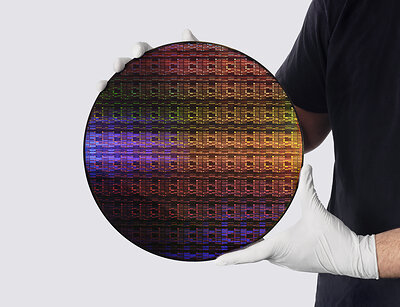
As the hyperscalers seek to diversify away from absolute GPU reliance and lower their cost-per-token metrics, custom application-specific integrated circuits (ASICs) are commanding a rapidly expanding share of the silicon spend. Broadcom (NASDAQ: AVGO) and Marvell Technology (NASDAQ: MRVL) remain the premier institutional plays in this domain. Broadcom’s deep co-design partnerships with Alphabet and Meta position the company as an indispensable tollbooth for proprietary silicon platforms. Furthermore, Taiwan Semiconductor Manufacturing Co. (NYSE: TSM) remains the ultimate structural winner, operating the sole fabrication lines capable of producing sub-3nm nodes and advanced CoWoS (Chip-on-Wafer-on-Substrate) packaging at commercial scale.
2. Power Generation, Grid Infrastructure, and Thermal Management
The defining realization of the 2026 earnings cycle is that megawatt availability—not silicon supply—is the ultimate gating factor for artificial intelligence deployment. Datacenters require uninterrupted, round-the-clock baseload power, driving hyperscalers straight into long-term commercial pacts with independent power producers and nuclear utilities. Constellation Energy (NASDAQ: CEG), Vistra Corp (NYSE: VST), and GE Vernova (NYSE: GEV) are monetizing this dynamic through multi-decade power purchase agreements at premium capacity pricing.
Concurrently, the extreme power density of modern server racks—frequently exceeding 100 kW per rack—has rendered traditional air cooling obsolete. This shift has unlocked explosive demand for industrial-grade liquid cooling architectures and power distribution units. Vertiv Holdings (NYSE: VRT) and Eaton Corporation (NYSE: ETN) have secured multi-year order books directly from Microsoft, Amazon, and enterprise colocation providers, giving them rare visibility into cash flow growth and robust pricing power through the end of the decade.
3. High-Bandwidth Networking & Memory Subsystems
As distributed training and ultra-fast inference clusters scale to tens of thousands of interconnected chips, network bandwidth has become the primary operational bottleneck. Arista Networks (NYSE: ANET) continues to lead the transition toward 800G and 1.6T Ethernet switching architectures, capturing enterprise share over proprietary InfiniBand fabrics. On the memory frontier, Micron Technology (NASDAQ: MU) alongside South Korean counterparts are experiencing unprecedented margin expansion as high-bandwidth memory (HBM4 and HBM4e) commands record pricing, soaking up global wafer capacity and lifting broader DRAM/NAND pricing across the enterprise ecosystem.
Regulatory Compliance and Geopolitical Risk Mitigation
The accelerated buildout is not unfolding in a vacuum. Hyperscalers face an increasingly complex matrix of regulatory compliance mandates. In the European Union, the phased enforcement of the EU AI Act has placed stringent reporting and energy efficiency criteria on foundational models, forcing operators to allocate capital toward localized datacenter clusters to satisfy data sovereignty requirements.
Simultaneously, United States trade restrictions on advanced compute exports have compelled American hyperscalers to engineer bifurcated supply chains. Companies are actively diversifying manufacturing footprints across Southeast Asia, North America, and Europe to mitigate geopolitical exposure surrounding the Taiwan Strait. This geographical redistribution has created secondary tailwinds for engineering, procurement, and construction (EPC) contractors such as Quanta Services (NYSE: PWR) and Jacobs Solutions (NYSE: J), which are tasked with delivering turn-key utility connections and hardened physical infrastructure.
Frequently Asked Questions (People Also Ask)
Why are Big Tech companies accelerating AI capital expenditures instead of cutting back in 2026?
Big Tech hyperscalers are expanding their capital expenditures because enterprise customer demand for high-performance computing capacity continues to outstrip available supply. The industry has migrated from experimental model training to live, scalable inference applications and autonomous agent workflows. These real-time applications require continuous, 24/7 compute availability. Hyperscalers view under-investing as an existential risk that could permanently surrender enterprise market share and platform dominance to direct competitors.
Which stock sectors stand to gain the most from hyperscaler spending?
The primary beneficiaries beyond primary GPU suppliers include:
- Datacenter Infrastructure & Thermal Management: Companies providing liquid-to-chip cooling, busways, and power conditioning equipment (e.g., Vertiv, Eaton).
- Clean Energy & Independent Power Producers: Nuclear and natural gas baseload power generators entering long-term PPAs (e.g., Constellation Energy, Vistra).
- Custom ASIC Enablers: Semiconductor design and networking specialists partnering on proprietary cloud chips (e.g., Broadcom, Marvell).
- Advanced Memory Manufacturers: Producers of high-bandwidth memory (HBM4) modules essential for low-latency inference workloads (e.g., Micron).
How are rising infrastructure costs affecting hyperscaler profit margins?
While massive capital expenditures depress short-term free cash flow and increase depreciation expenses, hyperscalers are offsetting margin compression through operating leverage. They are optimizing core operational expenses, utilizing in-house custom silicon to reduce inference cost-per-token, and realizing accelerating top-line cloud software margins. The current capital allocation cycle is viewed as front-loaded balance-sheet asset deployment that establishes durable multi-decade competitive moats.
What are the primary investment risks associated with this AI infrastructure cycle?
The primary investment risks include physical electrical grid capacity constraints delaying facility energization, regulatory interventions surrounding carbon output and water usage, execution hurdles in next-generation chip packaging (such as advanced foundry yield rates), and the potential for a medium-term valuation re-rating if software applications fail to achieve enterprise monetization velocity in line with infrastructure outlays.
Future Outlook: Strategic Milestones to Watch (2026–2027)
The remainder of 2026 will serve as an operational proving ground for the hyperscale compute economy. Market participants should monitor several crucial performance indicators over the next four quarters:
- Grid Interconnection Velocity: Watch for regulatory approval timelines from regional transmission organizations (such as PJM and ERCOT). Datacenter deployments are increasingly constrained by utility queues, making utility co-location approvals a leading indicator of infrastructure execution.
- Next-Generation Silicon Ramps: The transition to 2nm process nodes and full commercial volume shipments of Blackwell Ultra and successor architectures will validate whether the hardware supply chain can sustain current gross margins without compressing hyperscaler operating returns.
- Enterprise Software Monetization (The ROI Pivot): As infrastructure capacity deepens, institutional investors will demand concrete metrics demonstrating that enterprise software vendors are translating compute access into recurring software license expansion, higher net revenue retention, and expanding operating margins.
The decisive Q1 2026 earnings reports confirm that the AI compute buildout is not a speculative bubble poised to burst, but an industrial-scale infrastructure transformation. While the primary hyperscalers absorb heavy depreciation overhead to construct the digital foundations of the modern economy, the suppliers providing the specialized silicon, networking pathways, thermal cooling architectures, and megawatt-scale electricity will remain the sharpest vehicles for capturing risk-adjusted equity alpha through 2027.