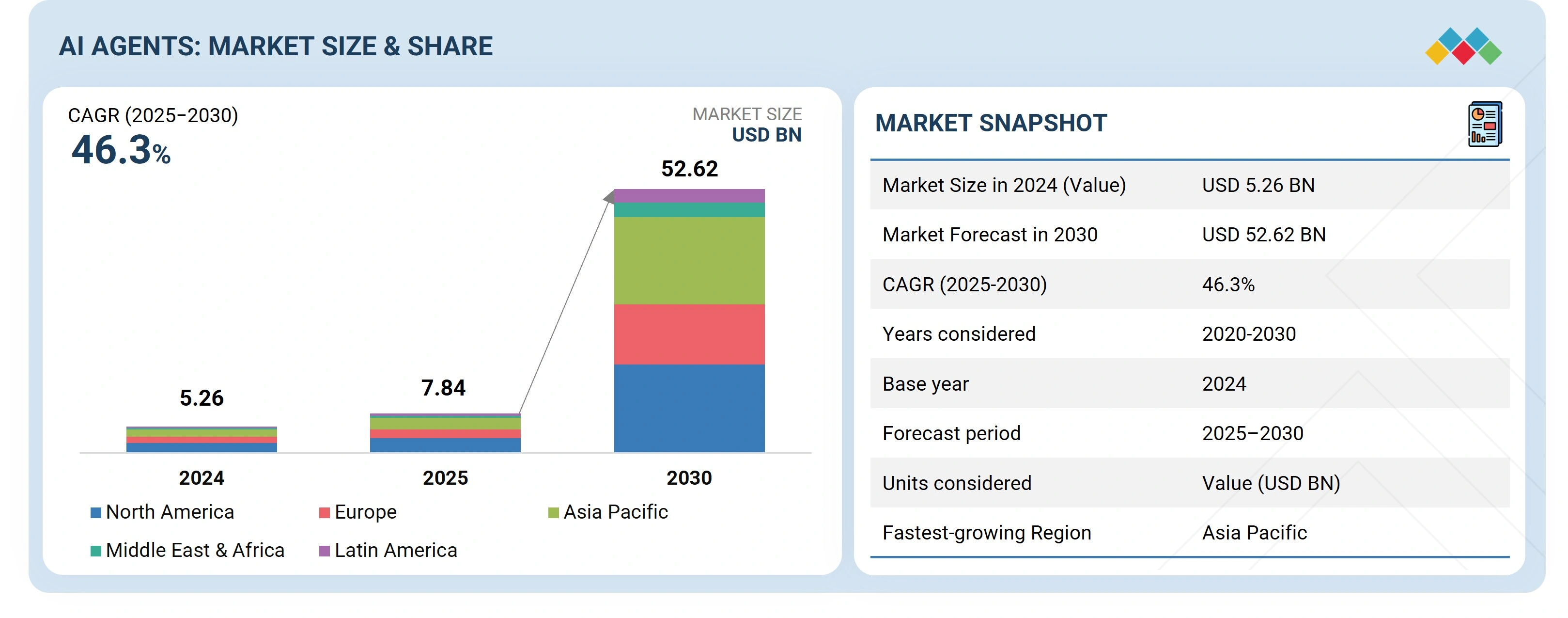
MADRID & LONDON — August 20, 2026 — In a definitive research dispatch released today by MarketsandMarkets, Spain’s enterprise technology landscape is revealed to be undergoing a structural transformation. The Spanish Agentic AI market is projected to surge from an estimated baseline of €380 million in 2025 to €2.85 billion by 2030, representing a compound annual growth rate (CAGR) of 44.8%. This rapid expansion marks a fundamental pivot away from first-generation, reactive generative AI models toward autonomous, goal-oriented multi-agent systems capable of executing complex enterprise workflows with minimal human oversight.
Driven by aggressive capital allocation from IBEX 35 conglomerates, deep cloud compute infrastructure investments in Aragon and Madrid, and a forward-looking regulatory posture overseen by the Spanish AI Supervision Agency (AESIA), Spain has unexpectedly positioned itself as Southern Europe’s premier testing ground for fully autonomous enterprise architectures.
Executive Takeaways
- Market Scale & Trajectory: The Spanish Agentic AI market will expand at a 44.8% CAGR to hit €2.85 billion by 2030, accelerated by enterprise adoption across banking, logistics, and telecommunications.
- Shift to Autonomous Execution: Enterprise IT spend is rapidly reallocating from passive large language model (LLM) copilot seat-licenses to outcome-based, self-correcting agentic architectures.
- Regulatory Dividend: Early implementation of the EU AI Act via Spain's AESIA agency in A Coruña has eliminated regulatory ambiguity, unlocking institutional venture capital and private equity deployments.
- SaaS Disruption: Legacy software-as-a-service (SaaS) providers relying on per-user subscription models face severe margin compression as autonomous, API-driven agent orchestration replaces human software interaction.
The Iberian Tech Transformation: From Generative Text to Enterprise Autonomy
For the past three years, corporate boardrooms across Madrid, Barcelona, and Bilbao treated artificial intelligence primarily as an efficiency tool for text generation, customer support summarization, and basic code assistance. However, financial disclosures from mid-2026 demonstrate that enterprise buyers are cutting back on discretionary copilot seat licenses in favor of agentic AI systems. Unlike legacy generative systems that require persistent human prompting, agentic architectures operate autonomously: they decompose high-level business mandates into sub-tasks, interact with disparate software environments, evaluate intermediate outcomes, and self-correct to achieve stated operational metrics.
According to the MarketsandMarkets wire data, the catalyst behind Spain’s adoption curve lies in the structural friction of its traditional enterprise operations. High operational overhead, complex multi-jurisdictional compliance across autonomous communities, and supply chain bottlenecks across Mediterranean trade corridors have forced Spanish enterprise leaders to look beyond point-solution automation.
“We are witnessing a structural transition from software that assists humans to software that acts as an autonomous economic agent,” notes Elena Rodriguez-Vidal, Senior Managing Director of Enterprise Tech at a leading European infrastructure advisory firm. “In Spain, the enterprise decision is no longer about improving employee productivity by 5%. It is about rebuilding back-office workflows, treasury management, and logistics fulfillment around multi-agent orchestrations that operate 24/7 with verifiable financial audit trails.”
Infrastructure Scalability & Sovereign Cloud Anchors
The architectural foundation enabling this surge is the massive buildout of hyperscale data centers across Spain. Over the past 36 months, global cloud infrastructure providers have injected over €6 billion into strategic regions, most notably the Aragon cloud hub and the Madrid metropolitan area. The presence of low-latency, localized compute capacity is vital for agentic systems, which require real-time, iterative execution loops and continuous context-window management.
Agentic workflows demand substantially more compute density than basic LLM inference. A single multi-agent task—such as autonomous fraud resolution in retail banking—may trigger dozens of internal reasoning cycles, real-time database queries, tool invocations, and risk assessment checks before finalizing a decision. Local enterprise-grade cloud facilities ensure that these multi-step agent interactions comply with sovereign data residency mandates while maintaining sub-50-millisecond latency budgets.
Furthermore, Spain’s pioneering role in establishing the Spanish Artificial Intelligence Supervision Agency (AESIA) in A Coruña has transformed regulatory compliance from a liability into a competitive moat. By offering a structured sandbox aligned with the EU AI Act, Spain provides multinational enterprises with legal certainty. European banking groups, telecom operators, and pharmaceutical firms are increasingly utilizing Spain as a regulatory-compliant launchpad for deploying autonomous AI agents across the broader European Union market.
Verified Data & Market Metrics Breakdown
The financial and operational metrics defining the Spain Agentic AI Market through 2030 illustrate a rapid shift toward high-yield, enterprise-grade deployments:
| Market Metric / Indicator | 2025 Baseline | 2028 Projection | 2030 Projection | Primary Strategic Catalyst |
|---|---|---|---|---|
| Total Market Value (€ Millions) | €380M | €1,240M | €2,850M | Enterprise shift from copilot seats to autonomous workflows |
| Leading Sector Share (% Market) | Banking & Financials (31%) | Banking & Financials (28%) | Logistics & Industrial (34%) | Supply chain multi-agent routing & automated trade execution |
| Dominant Deployment Architecture | Single-Agent Wrappers | Multi-Agent Orchestrations | Autonomous Dynamic Swarms | Advancements in low-latency sovereign cloud infrastructure |
| Average Enterprise AI Capital Allocation | 4.2% of IT Budget | 11.5% of IT Budget | 18.2% of IT Budget | Proven enterprise ROI and margin improvement in early adopters |
| SaaS Disruption Index (Margin Impact) | -2.1% YoY | -8.5% YoY | -16.3% YoY | Replacement of human user-seats by direct API agent executions |
Industry & Market Implications: Structural Winners and Disrupted Incumbents
The commercialization of Agentic AI is reframing valuation multiples and risk profiles across multiple sectors within the Iberian economy.
1. Banking & Financial Services: The Vanguard of Agentic Yield
Spain’s major financial institutions, including Banco Santander and BBVA, are leading global spend in agentic integration. Autonomous treasury agents now manage liquidity balancing across international subsidiaries, while multi-agent compliance systems execute complex anti-money laundering (AML) trace audits in seconds rather than weeks. By deploying self-correcting compliance swarms, Tier-1 Spanish banks report a 60% reduction in risk mitigation overhead, freeing up balance sheet capital and improving risk-adjusted enterprise returns.
2. Telecommunications & Infrastructure Orchestration
Telefónica and regional network providers have integrated agentic systems directly into core network operations. Autonomous agents dynamically route data traffic, optimize spectrum allocation, and trigger preventative maintenance protocols across 5G tower infrastructure without human intervention. This shift has significantly lowered operational expenditure (OpEx) while driving network resilience to historic highs.
3. The Disruption of Legacy Software and Traditional BPO
Conversely, traditional Business Process Outsourcing (BPO) providers and legacy SaaS vendors face acute operational headwinds. The historical enterprise software pricing power—rooted in charging €50 to €150 per human user per month—is breaking down. As autonomous software agents perform cross-system operations via underlying API layers, the need for human-facing software interfaces diminishes. BPO providers in Spain that rely on low-margin customer service labor or manual data entry are experiencing severe margin compression unless they pivot to managing enterprise agent architectures.
People Also Ask (Frequently Asked Questions)
What sets Agentic AI apart from standard Generative AI in enterprise applications?
Standard Generative AI models are passive systems that respond to user-entered prompts, producing text, code, or images. Agentic AI, by contrast, operates with autonomous agency. Given a high-level strategic goal, an agentic system autonomously evaluates context, plans multi-step execution paths, uses external computational tools and APIs, monitors its own output, and iterates to complete complex workflows without ongoing human guidance.
Why is Spain emerging as a key European hub for Agentic AI expansion?
Spain’s emerging market leadership is driven by three factors: major hyperscale cloud compute investments (AWS, Microsoft, Google) establishing localized low-latency data centers in Aragon and Madrid; a clear, structured regulatory sandbox managed by the Spanish AI Supervision Agency (AESIA) under the EU AI Act; and aggressive digital infrastructure investments by large IBEX 35 enterprise buyers seeking structural operational efficiencies.
How does the EU AI Act impact the deployment of autonomous AI agents in Spain?
While strict, the EU AI Act provides clear risk classifications and legal boundaries. Spain’s proactive establishment of AESIA in A Coruña allows enterprises to validate agentic systems within regulatory sandboxes before commercial rollout. This legal transparency minimizes regulatory risk for corporate investments, giving Spanish enterprises a compliance-verified timeline advantage over regional competitors operating in less defined environments.
What infrastructure is required to support multi-agent enterprise deployments?
Enterprise deployment of agentic AI requires high-density cloud compute, low-latency API orchestration layers, real-time context management databases (vector and graph systems), and comprehensive audit trail logging for risk management. Companies are increasingly adopting hybrid, sovereign cloud architectures to maintain low latency during dynamic agent reasoning loops while safeguarding proprietary enterprise data.
Future Outlook & Strategic Milestones Through 2030
As the Spanish Agentic AI ecosystem accelerates toward the €2.85 billion valuation mark by 2030, several critical milestones will define the landscape:
- 2027 – Standardization of Agent Interoperability Protocols: Expect European enterprise consortia to establish open-standard communication protocols enabling autonomous agents built by different software vendors to securely negotiate, execute financial transactions, and exchange data.
- 2028 – The Rise of Algorithmic Auditability: As agentic deployments scale, regulatory bodies will mandate continuous, automated compliance auditing. Spain’s AESIA is expected to release the first framework for "agent-auditing-agent" compliance protocols.
- 2029-2030 – Sovereign Swarm Architecture: By the end of the decade, over 35% of major enterprise decisions across logistics, energy distribution, and capital allocation in Spain will be managed by interconnected multi-agent swarms operating under explicit risk thresholds established by corporate boards.
The report from MarketsandMarkets clarifies that Spain’s enterprise market is moving past experimental tech pilots. The coming four years will separate enterprise leaders who successfully deploy capital into autonomous computational architectures from legacy incumbents whose business models remain tethered to manual workflow paradigms.