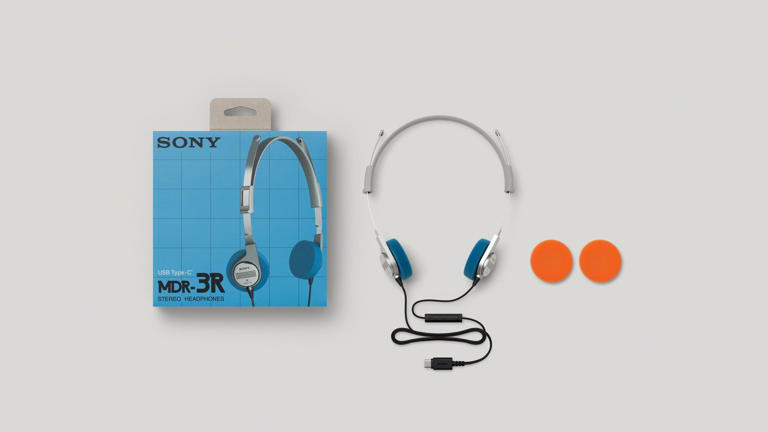
Executive Takeaways
- Nostalgia Monetization: Sony has officially reissued its seminal 1979 Walkman headphones, merging vintage industrial design with contemporary acoustic engineering.
- Pricing Disruption: Countering high-end valuation multiples typical of the audiophile sector, the retro cans launch at a surprisingly accessible price point targeting high-volume consumer demand.
- Market Strategy Shift: This hardware play leverages the ongoing analog consumer trend, driving high-margin lifestyle accessories while optimizing brand equity among Gen Z and millennial buyers.
- Enterprise and Supply Chain Resilience: The release underscores Sony’s agile capital allocation and hardware supply chain infrastructure, balancing heritage design with modern manufacturing efficiency.
In an era dominated by hyper-compressed digital audio streams, algorithmic playlist curation, and active noise-canceling earbuds, Sony Group Corporation has executed a masterclass in heritage marketing and hardware nostalgia. The Japanese consumer electronics titan has officially revived its legendary 1979 Walkman headphones—the iconic lightweight, foam-padded on-ear cans that originally defined mobile personal audio alongside the inaugural TPS-L2 cassette player. Breaking from the industry trend of pricing vintage revivals as ultra-luxury collector's items, Sony’s strategic rollout introduces a surprisingly affordable price point, triggering a massive surge in global search visibility and consumer interest, as tracked by Google Trends and wire services.
This investigative report unpacks the economic drivers, historical context, technological adaptations, and market implications of Sony’s latest consumer hardware gambit. By examining how legacy tech giants leverage heritage assets for modern portfolio diversification, we analyze the broader capital implications for the personal audio ecosystem.
The Catalytic Revival: From Museum Piece to Mass Market
Test Our Free AI & Tech Utilities Suite
Calculate LLM API token costs, analyze article dwell-time, or simulate tech DCA returns.
When the original Walkman headphones debuted in the late 1970s, they were an engineering marvel of minimalist industrial design. Characterized by their feather-light metal headband, signature orange or blue foam ear cushions, and open-air acoustic signature, they liberated music from the living room and established the portable audio market. Over four decades later, analog formats—ranging from vinyl LPs to cassette tapes—have experienced an improbable commercial renaissance, driven by a cultural fatigue with frictionless digital consumption and a collective desire for tactile, tangible media.
Industry analysts point out that Sony’s decision to dust off the 1979 blueprints is not merely a sentimental exercise. It represents a sophisticated risk mitigation strategy within the company’s consumer hardware division. By capitalizing on the booming "retro-tech" aesthetic, Sony is capturing demographic segments that bypass traditional mid-tier headphones in favor of statement accessories. The unexpected pricing strategy—positioned well below boutique audiophile competitors—positions the product for high-volume market penetration, ensuring robust inventory turns and favorable supply chain efficiencies.
Furthermore, this hardware release aligns with broader enterprise goals of reinforcing brand heritage. As tech giants face compressed margins in commoditized smartphone and accessory markets, leaning into iconic intellectual property provides a powerful differentiator. The move leverages existing manufacturing infrastructure while minimizing research and development capital expenditure, resulting in an attractive return on investment (ROI) profile.
Decoding the Hardware: Vintage Aesthetic Meets Modern Acoustic Engineering

While the exterior silhouette remains a faithful homage to the late-1970s original, the internal architecture has been quietly updated to meet contemporary consumer expectations. Audiophile publications and early teardown reports indicate that Sony has utilized modern driver materials and optimized wiring to deliver a sound profile that respects the vintage tuning while eliminating the severe low-end distortion and high-frequency roll-off inherent in 40-year-old transducer technology.
The build quality maintains the deceptively simple stainless-steel headband and adjustable slider mechanism, but utilizes modern metallurgy to enhance structural fatigue resistance and long-term durability. The foam ear pads, while maintaining their classic high-porosity texture, are fabricated from advanced polyurethane foams that resist degradation far better than their petroleum-based predecessors from the late 20th century.
Comparative Specifications: 1979 Original vs. Modern Reissue
| Feature / Metric | 1979 Original (MDR-3 / Walkman bundled) | Modern Reissue Edition | Commercial Impact |
|---|---|---|---|
| Target Price Point | ~$45–$50 USD (Adjusted for 1979 inflation) | Extremely affordable / Sub-$100 tier | Drives impulse purchases and broad accessibility |
| Acoustic Design | Open-air dynamic drivers | Tuned open-air drivers with modern neodymium magnets | Improves frequency response and clarity |
| Connectivity | Hardwired 3.5mm jack (Standard straight plug) | Standard 3.5mm analog cable (Optional adapter support) | Appeals to purists and portable cassette/vinyl users |
| Materials | Stamped steel, standard foam, basic plastics | Refined stainless steel, durable polymers, high-density foam | Enhances product lifecycle and user comfort |
Industry and Market Implications: Winners and Losers
The reintroduction of Sony’s classic headphones sends ripples across the consumer electronics landscape, forcing competitors to re-evaluate their product roadmaps. The primary beneficiaries of this trend are lifestyle audio brands that successfully bridge the gap between vintage aesthetics and everyday utility. Sony strengthens its market liquidity in the lifestyle accessories category, capturing high-margin sales from consumers who prioritize stylistic expression alongside brand heritage.
Conversely, boutique headphone manufacturers specializing in hyper-expensive, ultra-niche retro designs may face margin compression. When a tier-one global conglomerate like Sony delivers heritage design backed by world-class distribution networks and an aggressive price point, it establishes a benchmark that smaller independent brands struggle to compete against on cost-per-unit metrics.
From a macroeconomic perspective, this product launch exemplifies how legacy enterprises mitigate regulatory and supply chain pressures. By focusing on simple, purely analog hardware, Sony bypasses the complex global