WASHINGTON & BOSTON — As the global enterprise landscape confronts an unprecedented escalation in machine-speed digital warfare, the calculus of corporate risk management has undergone a permanent, violent shift. At the flagship THINK 2026 conference, IBM Chairman and Chief Executive Officer Arvind Krishna laid bare an uncomfortable reality facing boardrooms across the Fortune 500: as artificial intelligence accelerates the velocity, scale, and sophistication of cyberattacks, the primary existential threat to global enterprises is no longer whether vulnerabilities exist, but whether human-led security teams can deploy automated, frontier AI defenses fast enough to neutralize threats before catastrophic data exfiltration occurs.
This comprehensive investigative report examines the strategic imperatives, technological breakthroughs, and capital allocation shifts underpinning IBM’s watershed May 2026 initiative, "Putting frontier AI to work to strengthen defenses." Backed by deep enterprise integration through Red Hat infrastructure, this maneuver represents a defining moment for corporate risk mitigation, enterprise ROI, and the macroeconomic stability of digital supply chains.
Executive Takeaways
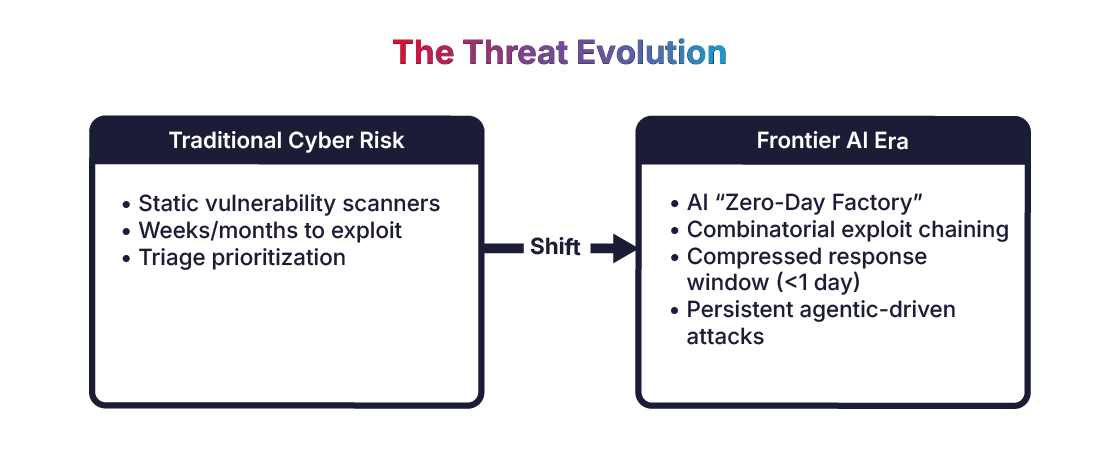
- The Asymmetric Threat Matrix: Malicious actors are utilizing generative AI to compress the vulnerability exploitation window from weeks to mere minutes, necessitating a total pivot toward autonomous, real-time remediation frameworks.
- The IBM-Red Hat Synergy: By combining IBM’s frontier foundation models with Red Hat’s ubiquitous hybrid cloud architecture, enterprises can deploy defensive AI models securely across on-premises, edge, and multi-cloud environments without sacrificing regulatory compliance.
- Capital Reallocation to Resilience: Chief Information Security Officers (CISOs) are aggressively shifting capital allocation away from reactive patch management and toward proactive, frontier AI-driven threat hunting and autonomous response systems.
- Valuation Multiples and Risk Mitigation: Wall Street analysts indicate that enterprises successfully integrating frontier AI into their security fabric will command superior valuation multiples, driven by drastically reduced exposure to systemic breach liabilities and regulatory penalties.
Comprehensive Narrative: The Catalyst, The Threat, and The Enterprise Imperative

For decades, cybersecurity operated on a deterministic, reactive paradigm. Security Operations Center (SOC) analysts combed through mountains of log files, triage alerts manually, and patched vulnerabilities long after adversaries had already mapped corporate perimeters. However, the commercial maturation of frontier AI models has shattered this equilibrium. Cybercriminal syndicates and state-sponsored actors have weaponized large language models to automate reconnaissance, generate polymorphic malware variants at scale, and launch coordinated social engineering campaigns that bypass traditional signature-based detection systems.
It was against this tense backdrop at THINK 2026 that Arvind Krishna articulated the definitive corporate strategy for the latter half of the decade. The core thesis is uncompromising: combatting AI-driven attacks requires deploying superior, enterprise-grade frontier AI defense systems capable of reasoning, adapting, and executing countermeasures at machine speed.
"We have crossed the Rubicon," notes a senior technology analyst tracking enterprise cloud architecture. "When adversaries use autonomous agents to scan, probe, and exploit infrastructure 24/7, human response times are a fatal bottleneck. IBM’s strategy is not merely about incremental software updates; it is about embedding cognitive reasoning directly into the fabric of enterprise infrastructure."
At the center of this strategy is the seamless integration of IBM’s advanced artificial intelligence portfolio with Red Hat’s industry-standard enterprise open-source ecosystem. Organizations can no longer rely on siloed, proprietary security tools that lack visibility across heterogeneous cloud compute architectures. By leveraging Red Hat Enterprise Linux and OpenShift platforms, IBM’s frontier security models can inspect containerized workloads, orchestrate automated containment protocols, and secure data pipelines across hybrid environments—all while maintaining strict regulatory compliance with evolving global data protection mandates.
Verified Data and Metrics Breakdown
| Metric / Dimension | Traditional Security Paradigm | Frontier AI-Driven Defense (IBM/Red Hat) | Enterprise Impact |
|---|---|---|---|
| Threat Detection & Triage Time | Hours to Days (Manual human review) | Milliseconds to Seconds (Autonomous reasoning) | Drastic reduction in dwell time for malicious actors. |
| Vulnerability Exploitation Window | Days (Exploits outpace patching cycles) | Real-time autonomous micro-patching | Neutralizes zero-day attack vectors before execution. |
| Infrastructure Scalability | Siloed tools requiring linear headcount growth | Centralized hybrid-cloud oversight via Red Hat | Lower total cost of ownership (TCO) and optimized capital allocation. |
| Regulatory Compliance Auditing | Manual, point-in-time compliance checks | Continuous, automated policy enforcement | Mitigates multi-million-dollar regulatory fines and liabilities. |
Industry and Market Implications: Who Wins, Who Loses
The strategic deployment of frontier AI for defensive fortification is triggering a profound structural realignment across global technology and financial markets.
The Winners: Enterprises that rapidly adopt autonomous, AI-driven security frameworks will capture substantial competitive advantages. By dramatically lowering their breach probability, these organizations protect their intellectual property, preserve customer trust, and avoid catastrophic financial downtime. Furthermore, platform providers like IBM and Red Hat stand to capture immense market share as CIOs consolidate fragmented security point-solutions into cohesive, AI-native enterprise architectures.
The Losers: Legacy cybersecurity vendors that rely on outdated, signature-based detection models face an existential squeeze. Enterprises are rapidly divesting from tools that generate high volumes of false positives and require exhaustive manual intervention. Companies slow to modernize their cloud compute architecture or those that treat cybersecurity as an afterthought rather than a core board-level priority will find themselves uninsurable, regulatory non-compliant, and highly vulnerable to market dislocation.
From a macroeconomic perspective, this shift redefines enterprise ROI. Security is no longer viewed merely as an operational cost center, but as a core determinant of corporate valuation. Institutional investors are increasingly evaluating an enterprise’s cyber resilience posture—specifically its adoption of frontier AI defenses—when assessing long-term valuation multiples and capital liquidity risks.
Frequently Asked Questions (People Also Ask)
What does "putting frontier AI to work to strengthen defenses" mean for enterprise organizations?
It refers to the strategic deployment of advanced, enterprise-grade artificial intelligence models to automate threat detection, analyze vast streams of security telemetry in real time, and execute immediate countermeasures against sophisticated cyberattacks. Rather than relying solely on human analysts to respond to alerts after an incident has occurred, frontier AI enables proactive, machine-speed defense across complex hybrid cloud environments.
How does the IBM and Red Hat integration enhance cybersecurity?
By combining IBM’s powerful AI foundation models with Red Hat’s flexible, open-source hybrid cloud infrastructure (such as Red Hat OpenShift), organizations gain the ability to deploy security models consistently across on-premises data centers, edge devices, and multi-cloud environments. This ensures comprehensive visibility, robust container security, and streamlined regulatory compliance without vendor lock-in.
Why are traditional security tools no longer sufficient against modern cyberattacks?
Modern cyberattacks are increasingly automated, executed at machine speed using generative AI and advanced machine learning algorithms. Traditional, signature-based security tools and manual human triage are too slow to counter polymorphic malware, zero-day exploits, and coordinated AI-driven reconnaissance, leading to extended dwell times and severe data breaches.
How does AI-driven security impact enterprise ROI and valuation multiples?
Integrating frontier AI into security architectures transforms cybersecurity from a reactive cost center into a strategic value driver. By mitigating the risk of devastating breaches, regulatory fines, and operational downtime, enterprises protect their bottom line, assure business continuity, and earn higher valuation multiples from institutional investors who prioritize robust risk mitigation.
Future Outlook: What Comes Next
As we look toward the remainder of 2026 and beyond, the intersection of artificial intelligence and cybersecurity will remain the defining battleground of the digital economy. Key milestones to watch include:
- Autonomous SOC Automation: The transition from human-supervised security operations centers to fully autonomous, self-healing enterprise networks capable of neutralizing complex multi-vector attacks without human intervention.
- Regulatory Standardization: Expect global regulatory bodies to introduce stricter compliance frameworks that explicitly mandate the use of advanced cryptographic and AI-driven safeguards for critical infrastructure and financial institutions.
- M&A and Ecosystem Consolidation: Acceleration of strategic acquisitions as major technology conglomerates seek to integrate proprietary frontier AI models with robust enterprise deployment fabrics.
Ultimately, the message delivered at THINK 2026 serves as a definitive wakeup call: in an era where adversaries operate at machine speed, corporate defense must be equally autonomous, intelligent, and uncompromising.