Executive Summary: Recent macro-intelligence circulating from Trading Economics and institutional desk analysis reveals an unspoken threshold governing Federal Reserve monetary policy. With gold tumbling to a 51-week low, capital is migrating frantically across asset classes. According to veteran market analysts, a sustained contraction in mega-cap technology equities will serve as an effective circuit breaker, forcing the Federal Open Market Committee (FOMC) to halt its rate-hiking cycle to prevent systemic contagion across corporate debt and venture-backed enterprise ecosystems.
Executive Takeaways
- The Implicit Put: Federal Reserve policy decisions remain implicitly tethered to equity market stability, specifically the performance of high-valuation technology giants that anchor major indices.
- The Valuation Squeeze: Elevated interest rates directly compress enterprise valuation multiples, forcing a radical shift in capital allocation, aggressive cost rationalization, and delayed infrastructure scalability investments.
- Macro Divergence: While commodities like gold press multi-month lows, the tech sector's health dictates systemic risk appetite and dictates whether the central bank can afford further quantitative tightening.
- Risk Mitigation Playbook: Institutional investors are aggressively recalibrating risk models, balancing cloud compute architecture expenditures against defensive fixed-income positioning.
The Anatomy of the Central Bank's Tech Dependency
Test Our Free AI & Tech Utilities Suite
Calculate LLM API token costs, analyze article dwell-time, or simulate tech DCA returns.
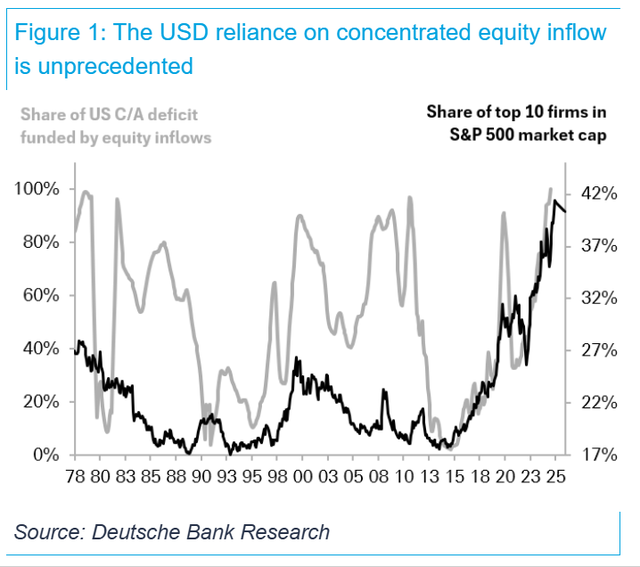
For the better part of a decade, the relationship between the Federal Reserve's monetary stance and the valuation of Silicon Valley and Wall Street's premier technology titans has evolved from a loose correlation into a symbiotic financial feedback loop. When Trading Economics flagged a potential pivot point—asserting that the Federal Reserve will abandon further rate hikes should the tech stock rout deepen—it underscored a stark reality: the modern US economy cannot decouple monetary tightening from the health of the Nasdaq 100.
Historically, central banks anchored their mandates strictly to core inflation prints, employment data, and wage growth. However, the financialization of the broader economy has rendered the equity market—and the technology sector in particular—a primary transmission mechanism for monetary policy. Mega-cap enterprises are no longer isolated islands of innovation; they are the foundational infrastructure of global enterprise ROI, dominant employers of high-wage labor, and the primary drivers of corporate debt issuance. When tech equity valuations contract severely, the wealth effect reverses, venture capital dry powder evaporates, and capital expenditure budgets for cloud compute architecture and enterprise software licenses face immediate contraction.
This dynamic creates a complex dilemma for Federal Reserve Chairman Jerome Powell and the FOMC. Continuing to raise the federal funds rate in the face of a cascading tech sell-off risks triggering a cascade of credit events. Corporate borrowers relying on floating-rate debt face crippling debt-service burdens, while private equity sponsors find leveraged buyout exits blocked. Consequently, market makers increasingly price in an emergency cessation of quantitative tightening the moment systemic stress materializes in the technology sector.
Catalytic Pressures: Gold's Retreat and Institutional Re-Pricing

The urgency of this narrative is heightened by anomalous movements across broader asset classes. Most notably, the recent plunge of gold to a 51-week low signals that traditional safe-haven flows are behaving counterintuitively amid high nominal interest rates. As real yields climb, institutional asset allocators are forced to re-evaluate their risk-adjusted return profiles. Equities—particularly high-multiple growth stocks—face intense gravity as discount rates applied to future cash flows rise.
The mechanism by which a tech downturn forces the Fed's hand is rooted in market liquidity and financial stability mandates. Consider the sequence of events:
- Multiple Compression: Higher risk-free rates compress price-to-earnings (P/E) ratios, dragging down the market capitalization of benchmark technology firms.
- Corporate Funding Strains: As equity values slide, secondary equity offerings and convertible debt issuances become prohibitively expensive, starving scaling enterprises of growth capital.
- Wealth Effect Contraction: High-income tech professionals experience stock option devaluations, immediately cooling luxury real estate, discretionary consumer spending, and localized metropolitan economies.
- Systemic Liquidity Shocks: Prime brokers and shadow banking entities heavily exposed to leveraged tech portfolios face margin calls, threatening broader market liquidity and forcing central bank intervention.
It is this final phase that the Federal Reserve fears most. A disorderly liquidation in technology equities threatens to spill over into the commercial paper and corporate bond markets, jeopardizing the smooth functioning of the broader financial plumbing. To avert a liquidity crisis, the central bank has historically displayed a low tolerance for prolonged equity drawdowns, effectively establishing a de facto policy floor.
Verified Data & Metrics Breakdown
To understand the quantitative parameters guiding current institutional strategy, the following matrix contrasts macroeconomic indicators, valuation metrics, and projected policy responses under differing market scenarios:
| Indicator / Metric | Current Baseline | Bearish Tech Scenario Trigger | Projected Fed Policy Response |
|---|---|---|---|
| Federal Funds Rate | Restrictive Territory (5.25% - 5.50%) | Rapid escalation of credit spreads | Immediate pause, followed by rate-cut signaling |
| Nasdaq 100 Valuation (P/E) | Elevated historical average (~28x) | Correction exceeding 20% from highs | Verbal intervention and liquidity backstops |
| Gold Spot Price | Testing 51-week lows | Capitulation driven by high real yields | Re-assessment of real economy strength |
| Enterprise IT Spending Growth | Tempered (+4% YoY) | Widespread software budget freezes | Monetary easing to stimulate corporate capex |
Industry & Market Implications: Winners and Losers
An environment where monetary policy is held hostage by technology sector performance produces stark divergences in asset performance and corporate strategy. Capital allocation frameworks across Wall Street are undergoing rapid restructuring to navigate this paradigm.
The Winners
- Defensive Fixed Income: Long-duration US Treasuries stand to rally aggressively if the Federal Reserve is forced to abandon rate hikes and pivot toward monetary easing in response to equity weakness.
- Cash-Rich Mega-Caps: Technology giants boasting pristine balance sheets, massive cash reserves, and positive operating cash flow can leverage market downturns to acquire distressed competitors and secure top-tier engineering talent at attractive valuations.
- Regulatory Compliance & Risk Management Sectors: Firms specializing in enterprise risk mitigation, debt restructuring, and financial auditing experience heightened demand as corporations scramble to optimize balance sheets.
The Losers
- Venture-Backed Startups: Early-stage and pre-IPO enterprises lacking positive cash flow find themselves trapped in a prolonged funding winter, forcing down-rounds, severe operational downsizing, or orderly liquidation.
- High-Beta Growth Equities: Companies reliant on continuous external capital injections to fund infrastructure scalability and top-line growth face sustained multiple compression.
- Cyclical Commodities: Industrial metals and certain precious metals like gold suffer collateral damage as market participants shift between frantic risk-off liquidations and currency safe-haven trades.
Frequently Asked Questions (People Also Ask)
Why would the Federal Reserve care about stock market performance when its mandate is inflation and employment?
While the Fed’s dual mandate explicitly focuses on maximum employment and stable prices, financial stability serves as a crucial prerequisite for achieving those goals. A severe crash in technology equities can trigger a negative wealth effect, freeze corporate debt markets, and lead to systemic credit crunches that directly threaten employment levels and overall economic output.
How do rising interest rates impact tech sector enterprise ROI and cloud architecture spending?
Higher interest rates increase the discount rate applied to future cash flows, heavily penalizing long-duration growth assets. Consequently, enterprise chief information officers (CIOs) face pressure to demonstrate immediate enterprise ROI, leading to delayed upgrades in cloud compute architecture and stricter scrutiny over IT budgets.
What does gold hitting a 51-week low indicate about current market liquidity?
Gold reaching multi-month lows in a high-inflation environment highlights the dominance of high real interest rates and strong demand for short-term cash equivalents. It demonstrates that institutional investors are heavily favoring yields available in money market instruments over non-yielding safe-haven assets.
Is there an official "Fed Put" guaranteeing intervention during equity sell-offs?
While Federal Reserve officials explicitly deny managing stock prices, market history suggests an informal, data-dependent threshold—often termed the "Fed Put." When asset market declines threaten to create broader macroeconomic instability or disrupt the functioning of the Treasury market, the central bank historically adjusts its monetary stance.
Future Outlook and Key Milestones to Watch
As market participants parse incoming economic releases and corporate earnings guidance, the interplay between Federal Reserve rhetoric and technology stock performance will remain the defining narrative of global financial markets. Institutional desks are advised to monitor several critical milestones over the coming quarters:
- FOMC Statement Language Shifts: Watch for subtle modifications in Federal Reserve press releases regarding "financial and credit conditions" as a leading indicator of policy sensitivity to equity market drawdowns.
- Enterprise Software Earnings Reports: Forward-looking guidance from bellwether enterprise software providers regarding IT spending commitments will dictate whether valuation multiples stabilize or compress further.
- Corporate Debt Maturity Walls: The volume of high-yield tech and speculative-grade corporate debt maturing in upcoming quarters will test the resilience of corporate balance sheets under restrictive interest rate regimes.
- Real Yield Trajectory: The tipping point where climbing real yields transition from an inflation-fighting tool to a destructive force for capital allocation and market liquidity.
Ultimately, the assertion that the Federal Reserve will stay its hand on rate hikes if tech stocks continue to decline reflects a modern financial reality: central banks can no longer afford to ignore asset market feedback loops. For institutional investors, navigating this environment requires rigorous risk mitigation, disciplined capital allocation, and constant vigilance over the shifting boundaries between monetary policy and market stability.