Executive Takeaways
- The Regulatory Shift: International metrology bodies have committed to phasing out the leap second by 2035, resolving a decades-long friction point between astronomical time (UT1) and atomic time (TAI).
- Enterprise Risk Mitigation: Multinational cloud compute architecture, high-frequency trading networks, and telecommunications backbones have long struggled with the unpredictable insertion of leap seconds, which routinely trigger distributed system crashes and data corruption.
- The Smearing Solution: Hyperscalers like Google and Meta have pioneered "leap smears" to artificially stretch time during insertion windows, protecting enterprise ROI but highlighting the fragility of legacy timekeeping infrastructure.
- Economic and Security Stakes: Beyond tech infrastructure, precision synchronization governs global capital allocation, cryptographic security, wire fraud tracing, and anti-money laundering (AML) timestamp validation.
The Chronometric Crisis at the Heart of Global Infrastructure
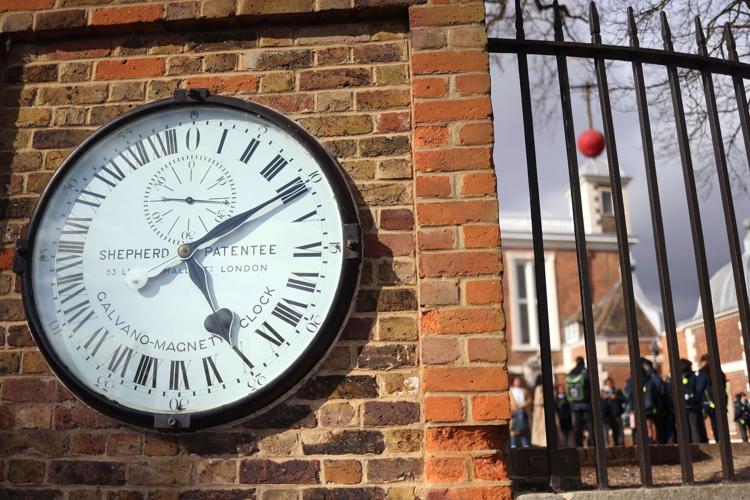
For more than half a century, the global economy has danced to an erratic, human-managed rhythm. Every few years, international timekeepers slip an extra second into our clocks—a cosmic adjustment designed to reconcile the hyper-precise ticking of atomic clocks with the decelerating rotation of planet Earth. But this digital patch, known as the leap second, has become an existential liability for the modern enterprise.
Behind closed doors in Geneva, Paris, and Washington, corporate technologists, defense contractors, and international standard-bearers are orchestrating a permanent divorce between our clocks and the stars. The international metrology community has set a firm deadline: by 2035 at the latest, the leap second will be abandoned, freezing Coordinated Universal Time (UTC) to atomic scales and allowing the divergence between Earth time and atomic time to accumulate unchecked.
For the uninitiated, a single second sounds entirely inconsequential. Yet in the realm of high-frequency financial trading, cloud compute architecture, and distributed enterprise data grids, a single uncoordinated second is an eternity. It is an invitation to systemic failure, data corruption, and catastrophic arbitrage anomalies. The impending abolition of the leap second represents one of the most significant structural modifications to global technical infrastructure in modern history.
Anatomy of a Chronometric Fracture: Why Atomic Time and Earth Do Not Match
To understand why the leap second is on the chopping block, one must examine the fundamental friction between two competing definitions of time. For millennia, humanity measured time by the rotation of the Earth relative to the sun. However, the Earth is an erratic timepiece. Tectonic shifts, gravitational interactions with the moon, post-glacial rebound, and core-mantle coupling cause the planet’s rotational velocity to fluctuate constantly.
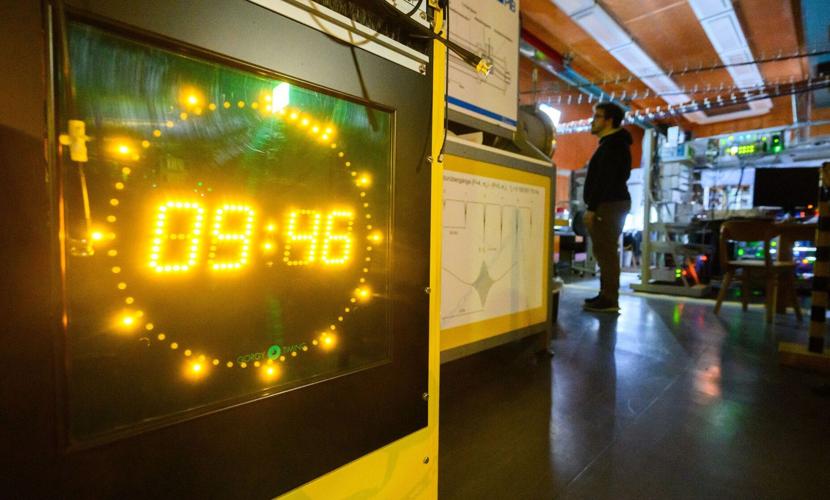
In 1967, the scientific community adopted the cesium atomic clock as the ultimate arbiter of time. Defined by the hyperfine transition frequency of cesium-133 atoms, atomic time is astonishingly stable—drifting by less than a second over millions of years. To bridge the gap between this flawless atomic standard and the erratic rotation of our planet, the International Earth Rotation and Reference Systems Service (IERS) introduced the leap second in 1972.
Whenever the discrepancy between astronomical time (UT1) and atomic time (UTC) threatens to exceed 0.9 seconds, the IERS orders a positive or negative leap second to be inserted into the global timeline, typically on June 30 or December 31. Since 1972, exactly 27 leap seconds have been added.
While elegant in theory, this mechanism has proven disastrous for software engineering. Unlike minutes or hours, which follow predictable mathematical progression, leap seconds are announced only six months in advance. Crucially, they cannot be programmed into automated operating systems using standard algorithmic logic. When a leap second occurs, computer clocks must either repeat a second (reading 23:59:60) or pause entirely. This discontinuity breaks sequential data logging, shatters network synchronization protocols, and creates chaos across distributed database transactions.
The Enterprise and Financial Toll: From Crashes to Capital Risk
The operational risk associated with leap seconds is not theoretical; it has repeatedly exposed vulnerabilities in mission-critical infrastructure. In 2012, when a leap second was introduced, a bug in the Linux operating system kernel triggered widespread CPU spikes and memory exhaustion across global networks. Major entities—including Reddit, LinkedIn, Yelp, and Qantas Airways—experienced severe outages, grounding flights and paralyzing digital commerce.
In the financial sector, where capital allocation decisions and risk mitigation strategies depend on nanosecond-level sequencing, the leap second is viewed as an unacceptable hazard. Under regulatory frameworks like MiFID II in Europe and SEC mandates in the United States, high-frequency trading (HFT) firms must timestamp all order events with microsecond precision. A sudden, unannounced leap second can scramble trade sequencing, leading to regulatory non-compliance, contested executions, and multi-million-dollar disputes over market liquidity.
Furthermore, forensic investigators, cybersecurity analysts, and compliance officers rely on immutable timestamps to track illicit capital movements, wire fraud, and money laundering schemes. When system logs are distorted by leap second anomalies, reconstructing the exact sequence of cyber-attacks or illicit wire transfers becomes exponentially more difficult, compromising financial crime investigations and regulatory oversight.
The Private Sector Mutiny and the Rise of the "Leap Smear"
Exasperated by the erratic scheduling of leap seconds and the failure of international bodies to modernize quickly enough, major technology conglomerates took matters into their own hands. In 2012, Google quietly pioneered a technique known as the "leap smear."
Rather than forcing system clocks to jump or stutter by a full second at midnight, Google’s Network Time Protocol (NTP) servers began gradually lengthening every second over a 24-hour period surrounding the leap event. By stretching milliseconds across an entire day, internal enterprise servers experienced seamless time progression without breaking application logic.
Meta (formerly Facebook), Amazon Web Services (AWS), Microsoft, and Apple rapidly adopted similar smearing protocols. While this decentralized workaround mitigated operational failures for Big Tech, it created a fragmented timekeeping ecosystem. Different cloud environments, legacy mainframes, and corporate data centers were running on subtly divergent interpretations of time, complicating cross-platform data integrity and infrastructure scalability.
Recognizing that private workarounds were no substitute for global standards, technology titans joined forces with metrologists to lobby the International Bureau of Weights and Measures (BIPM). At the 27th General Conference on Weights and Measures (CGPM) in Versailles, delegates voted overwhelmingly to adopt a resolution to sunset the leap second by 2035, allowing the tolerated discrepancy between atomic time and Earth rotation to grow for at least a century before any corrective action is required.
Comparative Metrics: The Old Regime vs. The Post-2035 Era
| Metric / Parameter | Legacy Regime (1972–2024) | Post-2035 Consensus Framework |
|---|---|---|
| Time Standard Anchor | Coordinated Universal Time (UTC) synced to Earth rotation via leap seconds | Continuous atomic time scale (TAI-aligned), letting Earth rotation drift |
| Adjustment Frequency | Irregular (every 18 to 40 months based on IERS observations) | Zero insertions planned for at least 100 years |
| Enterprise Risk Profile | High systemic exposure to server crashes, data packet loss, and log corruption | Eliminated disruption windows; predictable linear time progression |
| Financial & Regulatory Compliance | Vulnerable to trade sequencing disputes and forensic timestamp drift | Flawless audit trails and synchronized high-frequency execution validation |
Industry and Market Implications: Who Wins, Who Loses
The elimination of the leap second will create profound macroeconomic and operational shifts across multiple sectors. Understanding the distribution of winners and losers is essential for institutional investors and corporate strategists navigating this transition.
The Winners: Hyperscalers, Fintech, and Telecommunications
Cloud infrastructure providers, telecommunications carriers, and algorithmic trading desks emerge as the primary beneficiaries. By removing the technical overhead of managing leap seconds and leap smears, enterprises will achieve greater infrastructure scalability and reduced maintenance expenditure. Financial institutions gain absolute legal certainty in trade execution timestamps, mitigating regulatory penalties and eliminating microscopic arbitrage discrepancies. Furthermore, global navigation satellite systems (GNSS) and defense networks will operate with minimized risk of timing desynchronization.
The Losers: Legacy Maintainers and Astronomical Institutions
Organizations reliant on strict astronomical alignment—such as celestial navigators, deep-space tracking stations, and traditional geodetic surveying operations—face a period of adaptation. While atomic time will continue to serve digital systems, astronomers will be forced to explicitly calculate the growing delta between atomic clocks and planetary rotation (UT1). Additionally, software vendors maintaining legacy enterprise resource planning (ERP) systems will incur substantial remediation costs to rewrite timekeeping modules that assume perpetual leap-second compatibility.
Frequently Asked Questions (People Also Ask)
What is a leap second and why was it created?
A leap second is a one-second adjustment periodically added to Coordinated Universal Time (UTC) to bridge the discrepancy between ultra-precise atomic clocks and the gradually slowing rotation of the Earth. It was established in 1972 to keep civil time synchronized with solar time.
Why are international bodies eliminating the leap second?
Unpredictable leap seconds wreak havoc on modern computer networks, cloud architectures, and financial trading platforms. Because they cannot be programmed with standard mathematical algorithms, they frequently trigger system crashes, data corruption, and regulatory compliance risks.
What happens when the leap second is abolished in 2035?
Civil time will remain permanently locked to atomic time, allowing the difference between atomic time and Earth rotation to accumulate over centuries. Metrological organizations have agreed to permit a larger discrepancy window (at least 100 seconds) before considering any future macro-correction.
How do tech companies currently handle leap seconds?
Major cloud providers and tech giants utilize a technique called "leap smearing." Instead of inserting a sudden extra second at midnight, servers artificially stretch milliseconds over a 24-hour window, ensuring smooth continuous operation for enterprise applications.
Future Outlook: Milestones to Watch on the Road to 2035
As the international metrology community and national governments operationalize the 2035 mandate, corporate leadership teams and IT architects must monitor key milestones to ensure seamless risk mitigation and infrastructure adaptation.
Over the next decade, standard-setting bodies including the International Telecommunication Union (ITU) and the BIPM will finalize the exact mathematical framework governing the permitted divergence threshold between atomic time and Earth rotation. Enterprises operating legacy mainframes must audit their codebase, deprecating hardcoded assumptions regarding leap seconds and transitioning fully to continuous time synchronization protocols.
Ultimately, the abolition of the leap second marks a profound philosophical shift: humanity is prioritizing the unbroken, flawless predictability of digital machinery over the chaotic, organic rhythms of our spinning planet. For global markets, financial crime investigators, and digital infrastructure titans, it is a necessary evolution—a triumph of precision engineering over cosmic imperfection.