Executive Takeaways
- Unprecedented Efficacy: Phase 2b/3 trial data demonstrates that Moderna and Merck’s personalized mRNA vaccine (mRNA-4157/V940) combined with Keytruda reduced the risk of recurrence or death by 49% and distant metastasis or death by 62% in high-risk melanoma patients over a multi-year follow-up period compared to Keytruda alone.
- Next-Generation Computational Biotech: The therapy leverages artificial intelligence and cloud compute architecture to analyze a patient’s unique tumor genome, identifying up to 34 novel patient-specific neoantigens to construct a bespoke therapeutic mRNA sequence within weeks.
- Pipeline Re-Rating & Strategic Hedging: The success validates Moderna’s post-pandemic platform pivot, unlocking multi-billion-dollar non-COVID pipeline asset valuations while insulating Merck against Keytruda’s looming 2028 loss-of-exclusivity patent cliff.
- Enterprise Bio-Infrastructure Scaling: Commercial success hinges on transitioning individualized neoantigen therapy (INT) from clinical single-batch operations to high-margin, scalable enterprise supply chains capable of meeting global oncology demand.
Comprehensive Narrative: The Architecture of Individualized mRNA Oncology
In what marks a watershed moment for clinical oncology and biopharmaceutical capital allocation, long-term clinical data confirms that a personalized mRNA cancer vaccine, deployed in combination with standard-of-care immune checkpoint inhibitors, fundamentally alters the prognosis for late-stage melanoma patients. Developed jointly by Moderna, Inc. (NASDAQ: MRNA) and Merck & Co., Inc. (NYSE: MRK), the investigational individualized neoantigen therapy known as mRNA-4157/V940 has delivered statistically significant, durable protection against tumor recurrence following surgical resection.
The results from the randomized Phase 2b KEYNOTE-942/mRNA-4157-P201 trial represent the first clinical demonstration of an individualized mRNA treatment successfully intercepting solid tumor recurrence in a adjuvant setting. By training the patient’s endogenous immune system to recognize unique mutational signatures, the combination therapy targets microscopic residual disease—the root cause of post-resection relapse—with surgical precision.
The Molecular Mechanism & Computational Engine
Unlike off-the-shelf biologics or generic immunotherapies, mRNA-4157/V940 is inherently customized. The clinical workflow operates at the intersection of high-throughput genomic sequencing, cloud compute architecture, and advanced lipid nanoparticle (LNP) formulation:
First, surgical biopsies of the patient’s resected melanoma tissue undergo Next-Generation Sequencing (NGS) alongside a control blood sample. Proprietary machine learning algorithms evaluate the sequence to identify somatic mutations distinct to the patient's cancer cells, predicting which novel proteins—termed neoantigens—are most likely to trigger a robust human leukocyte antigen (HLA)-bound T-cell response.
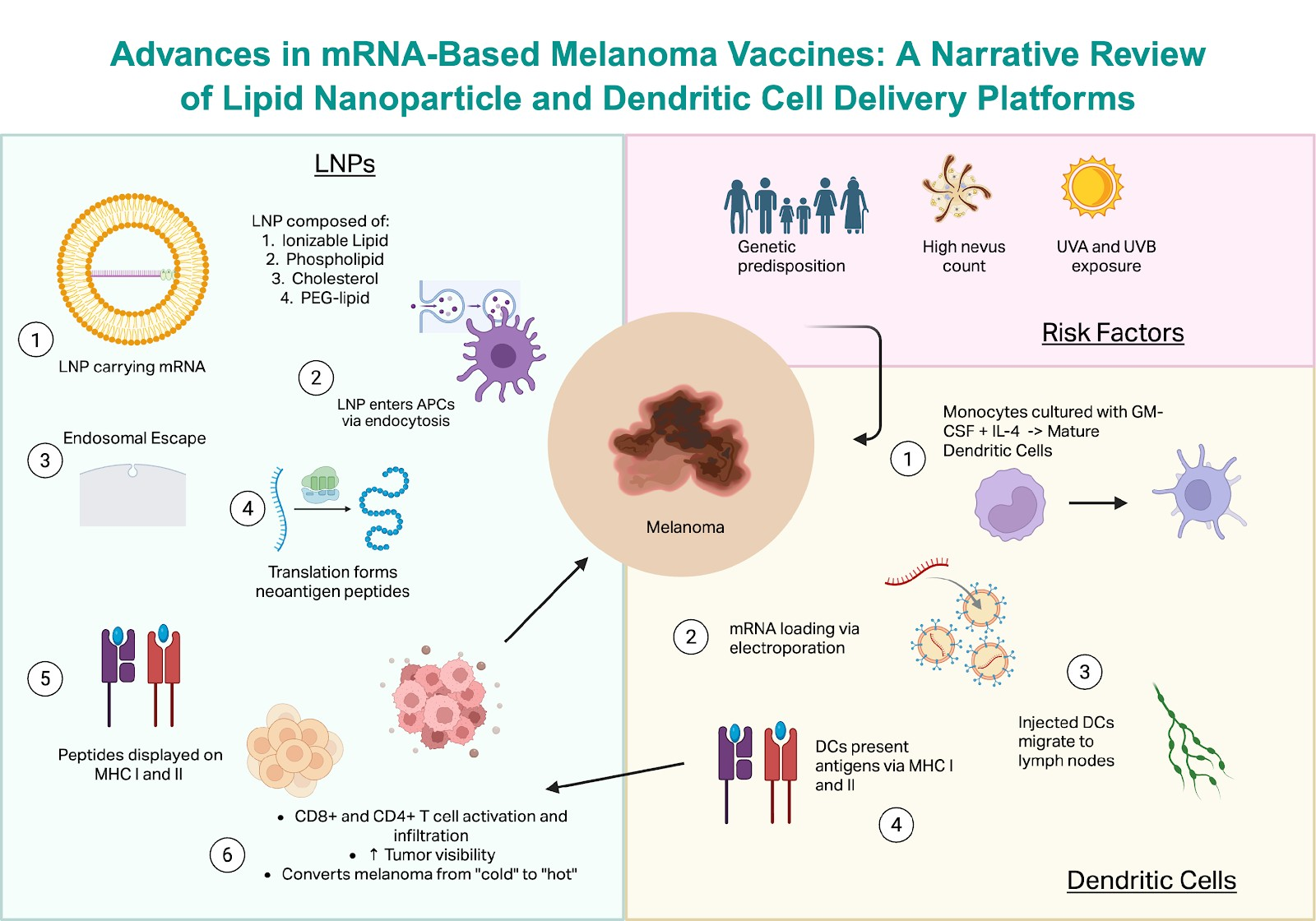
Once the 34 optimal neoantigens are identified, a novel mRNA molecule encoding these precise epitopes is synthesized. Encapsulated within a protective LNP delivery mechanism, the personalized vaccine is administered intramuscularly. Upon injection, patient cells transcribe and translate the mRNA, presenting the neoantigens to dendritic cells. This primes CD4+ and CD8+ T-cells to mount a targeted, multi-epitope cytotoxic immune attack against any lingering cells harbouring those exact genetic markers.
When administered alongside pembrolizumab (Keytruda)—Merck’s anti-PD-1 monoclonal antibody that strips away the tumor's "invisible cloak" by blocking checkpoint suppression—the dual mechanism unleashes an amplified, highly targeted anti-tumor immune response while mitigating immune evasion.
Clinical Trial Findings & Statistical Significance
The KEYNOTE-942 trial evaluated 157 patients with resected Stage III or IV high-risk cutaneous melanoma. Patients were randomized 2:1 to receive either 1 mg of mRNA-4157/V940 every three weeks for up to 9 doses combined with 200 mg of Keytruda every three weeks for up to 18 cycles, or Keytruda monotherapy alone.
At a median follow-up of approximately three years, the trial demonstrated a primary endpoint hazard ratio (HR) for Recurrence-Free Survival (RFS) of 0.51 (95% CI: 0.288-0.906; p=0.019). This indicates a 49% reduction in the risk of disease recurrence or death compared to Keytruda monotherapy, the current standard of care.
Equally critical was the secondary endpoint of Distant Metastasis-Free Survival (DMFS). Melanoma that recurs as distant metastases (e.g., in the lungs, liver, or brain) carries a dismal mortality profile. The combination regimen yielded a DMFS hazard ratio of 0.38 (95% CI: 0.172-0.844; p=0.015), cutting the risk of distant metastasis or death by 62%. The safety profile remained manageable, with adverse events largely consistent with known Keytruda toxicity profiles combined with mild-to-moderate, transient systemic mRNA reactogenicity (fever, fatigue, and injection-site pain).
Verified Data & Clinical Metrics Breakdown
The clinical parameters and statistical outcomes of the KEYNOTE-942 trial illustrate the transformative nature of combining personalized neoantigen therapy with checkpoint inhibitors:
| Clinical Parameter / Metric | Keytruda Monotherapy (Control) | mRNA-4157/V940 + Keytruda (Arm) | Statistical Impact / Delta |
|---|---|---|---|
| Primary Endpoint: Risk of Recurrence/Death (RFS) | Baseline Standard of Care | 49% Risk Reduction | Hazard Ratio (HR) = 0.51 (p = 0.019) |
| Secondary Endpoint: Distant Metastasis/Death (DMFS) | Baseline Standard of Care | 62% Risk Reduction | Hazard Ratio (HR) = 0.38 (p = 0.015) |
| Neoantigen Target Capacity | 0 (Non-targeted immune boost) | Up to 34 Patient-Specific Neoantigens | Bespoke multi-epitope T-cell priming |
| Manufacturing Lead Time (Biopsy to Dose) | Immediate (Off-the-shelf) | 30 to 45 Days (Targeting <30 days) | Requires automated bio-infrastructure |
| Target Indication Profile | Stage III/IV Cutaneous Melanoma | Resected Stage III/IV Cutaneous Melanoma | Adjuvant high-risk prevention setting |
| Regulatory Status | Approved Standard of Care | FDA Breakthrough & EMA PRIME | Accelerated approval review pathway |
Industry & Market Implications
The institutional implications of this milestone extend far beyond oncology clinics, dramatically altering enterprise valuation metrics, strategic capital allocation, and therapeutic supply chain logistics across the biopharmaceutical landscape.
Re-Rating Moderna & Insulating Merck’s Loss of Exclusivity
For Moderna, the robust long-term clinical data provides critical validation for its core platform, proving that mRNA technology was not a single-act pandemic anomaly. Wall Street equity analysts had severely discounted Moderna’s valuation as COVID-19 vaccine revenues contracted from peak annual highs of over $18 billion to under $3 billion. Successful commercialization of mRNA-4157 unlocks a massive non-communicable disease platform, re-rating Moderna's Total Addressable Market (TAM) and justifying sustained high R&D expenditure.
For Merck, mRNA-4157/V940 acts as a critical strategic defense mechanism against Keytruda’s upcoming patent cliff. Keytruda, which generates over $25 billion in annual revenue for Merck (representing roughly 45% of total corporate sales), faces loss of exclusivity (LOE) starting in 2028. By pairing Keytruda with a proprietary, patent-protected mRNA vaccine, Merck creates a sticky, high-efficacy combination therapy that cannot be easily replaced by generic anti-PD-1 biosimilars, preserving market liquidity and enterprise cash flows well into the next decade.
The Enterprise Manufacturing Challenge: Scale vs. Customization
The primary bottleneck to achieving commercial viability lies in manufacturing logistics and gross margin optimization. Traditional biopharma models rely on mass production—manufacturing thousands of liters of a single drug product to achieve economies of scale. Individualized Neoantigen Therapies invert this operational model: each batch is synthesized exclusively for a single patient.
To maximize enterprise ROI and scale delivery, Moderna and Merck are investing heavily in automated, modular bio-infrastructure. Cloud compute networks must seamlessly digest high-volume genomic sequence data, execute AI neoantigen scoring, and send digital blueprints directly to automated mRNA synthesizers. Streamlining this workflow to reduce turnaround times from 45 days down to under 21 days is vital to prevent disease progression prior to first dose administration while protecting overall gross margins.
Frequently Asked Questions (People Also Ask)
How does a personalized mRNA cancer vaccine differ from traditional cancer vaccines?
Traditional prophylactic vaccines (such as the HPV or Hepatitis B vaccines) prevent infectious viral causes of cancer, whereas therapeutic cancer vaccines treat pre-existing malignancies. Unlike legacy off-the-shelf cancer vaccines that target single shared tumor antigens across broad patient populations, personalized mRNA vaccines (like mRNA-4157/V940) are custom-designed for each individual. Using tumor genomic sequencing and machine learning, the vaccine encodes up to 34 patient-specific mutations (neoantigens), directing the immune system to target the exact mutational profile of that patient's specific cancer.
What were the primary outcomes of the late-stage trial for melanoma?
In the KEYNOTE-942 Phase 2b clinical trial, high-risk stage III/IV resected melanoma patients treated with the combination of mRNA-4157/V940 and Keytruda experienced a 49% reduction in the risk of disease recurrence or death compared to those receiving Keytruda monotherapy alone. Furthermore, the combination therapy reduced the risk of distant metastasis or death by 62%, establishing a robust, durable benefit across prolonged median follow-ups.
When is the personalized mRNA melanoma vaccine expected to be commercially available?
Moderna and Merck have initiated global Phase 3 confirmatory trials (INTense-001). Given that the drug has received FDA Breakthrough Therapy Designation and EMA PRIME status, regulators are expected to evaluate submission filings under accelerated review pathways. Industry analysts project potential commercial availability by late 2025 or early 2026, contingent on positive interim Phase 3 efficacy and safety readouts.
Can this personalized mRNA technology be applied to other types of cancer?
Yes. Because the platform targets neoantigens generated by genetic mutations, the underlying technology is tumor-agnostic. Moderna and Merck have expanded clinical development into Phase 2 and Phase 3 trials evaluating mRNA-4157/V940 in non-small cell lung cancer (NSCLC), cutaneous squamous cell carcinoma, and renal cell carcinoma. High-tumor-mutational-burden cancers represent primary expansion targets for personalized mRNA oncology platforms.
Future Outlook & Strategic Milestones
The commercial trajectory of individualized mRNA cancer vaccines is transitioning from clinical proof-of-concept to industrial scaling. Over the next 12 to 24 months, several critical operational and regulatory milestones will define the platform's long-term enterprise value:
- Phase 3 Clinical Execution (INTense-001): Full enrollment and interim data readouts from the global Phase 3 trial evaluating resected high-risk melanoma patients across multiple international trial centers will provide definitive statistical evidence for global regulatory approval.
- Pipeline Indication Expansion: Data readouts from ongoing Phase 2 clinical trials in non-small cell lung cancer (NSCLC) will demonstrate whether the efficacy observed in melanoma translates to higher-volume solid tumor markets.
- Bio-Manufacturing Automation: Completion of specialized commercial-scale manufacturing facilities, such as Moderna’s dedicated INT manufacturing center in Marlborough, Massachusetts, designed to handle tens of thousands of individual batch operations simultaneously through robotics and cloud compute automation.
- Payer & Reimbursement Models: Health economics and outcomes research (HEOR) will be paramount. Biopharma executives must establish innovative value-based reimbursement frameworks with private and public healthcare payers to justify premium pricing structures for custom, single-patient therapies.
The integration of deep learning genomic analytics, mRNA synthesis, and systemic checkpoint inhibition represents a paradigm shift in oncology. By systematically transforming unique tumor mutations into targeted immunotherapy drugs, Moderna and Merck are laying the groundwork for a scalable, high-margin asset class that redefines post-surgical cancer care.