Executive Takeaways
- Commercial Supremacy: US commercial revenue has outpaced federal government sales for the first time in Palantir’s history, validating its enterprise software pivot.
- Upgraded Guidance: Management raised its full-year revenue outlook, signaling robust infrastructure scalability and accelerating enterprise ROI.
- The AIP Catalyst: The Artificial Intelligence Platform (AIP) bootcamp strategy has drastically reduced sales cycles and compressed customer acquisition costs.
- Valuation Multiples: The structural transition from defense contractor to enterprise SaaS titan redefines Palantir’s capital allocation and market liquidity profile.
For nearly two decades, Palantir Technologies stood as an enigmatic titan of the defense and intelligence apparatus—a secretive purveyor of data-mining architecture deeply entrenched within the US Department of Defense, the CIA, and allied intelligence agencies. Its valuation, risk mitigation models, and long-term capital allocation strategies were inextricably bound to federal procurement cycles, defense spending bills, and geopolitical friction.
That era has officially closed.
In a watershed financial reporting cycle that has reverberated across Wall Street, Palantir raised its full-year revenue outlook as US commercial sales eclipsed US government revenue for the first time. This seismic shift is not merely a bookkeeping milestone; it represents a profound structural metamorphosis. The company has successfully transitioned from a specialized defense contractor into a dominant, high-margin enterprise software powerhouse, redefining its market valuation multiples and altering the competitive landscape of big data and artificial intelligence.
The Genesis of the Pivot: From Gotham to AIP
Test Our Free AI & Tech Utilities Suite
Calculate LLM API token costs, analyze article dwell-time, or simulate tech DCA returns.
To understand the magnitude of this transition, one must examine Palantir’s historical architecture. Founded by Alex Karp, Peter Thiel, and a cohort of engineers in 2003, the firm initially built its reputation on Gotham—a platform designed to integrate disparate data streams for counter-terrorism operations. Later, Foundry was introduced to bring similar enterprise-grade data integration to corporate boardrooms. However, selling to Fortune 500 executives proved agonizingly slow. Traditional enterprise software sales cycles involved protracted proof-of-concept phases, entrenched legacy IT gatekeepers, and profound corporate skepticism regarding data privacy and security.
The turning point arrived with the commercialization of the Artificial Intelligence Platform (AIP). Rather than relying on traditional, drawn-out sales pitches, Palantir deployed an aggressive, immersive go-to-market strategy known as "bootcamps." Instead of asking prospective clients to imagine what Foundry and AIP could achieve over months of negotiations, Palantir engineers worked side-by-side with corporate technologists to build production-ready applications in days.
This radical compression of the sales cycle catalyzed enterprise ROI. Chief Information Officers and Chief Technology Officers struggling with cloud compute architecture optimization, data silos, and generative AI implementation found an immediate, secure solution. Consequently, US commercial customer acquisition surged, laying the groundwork for the revenue crossover that has now stunned market skeptics.
Financial Mechanics: Dissecting the Balance Sheet and Growth Vectors
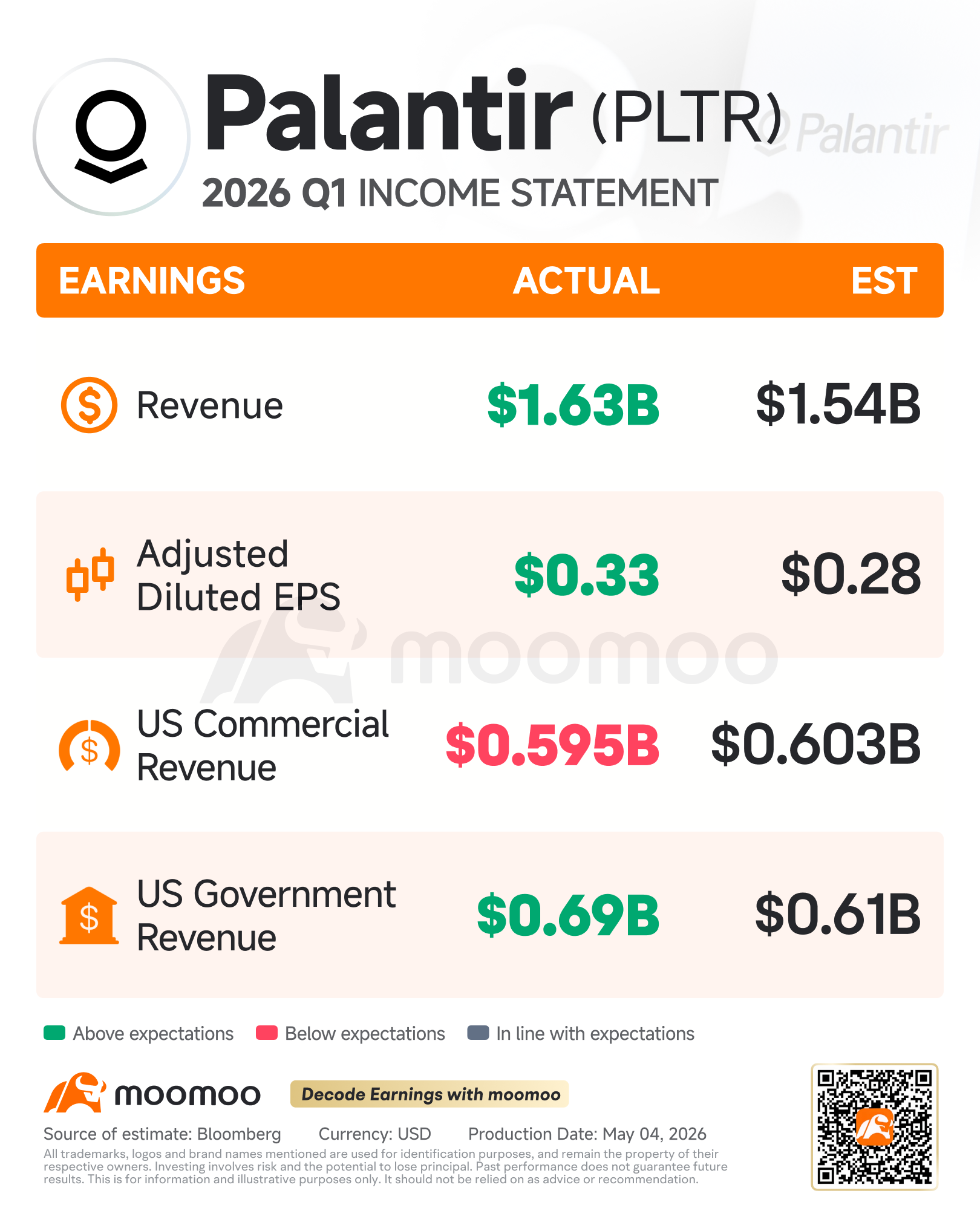
The latest financial metrics underscore a fundamental re-rating of Palantir’s business model. While federal government contracts continue to provide a massive, stable baseline of recurring revenue, the velocity of growth is firmly anchored in the domestic commercial sector.
Management’s decision to raise its full-year revenue outlook reflects high visibility into upcoming enterprise deployments. Gross margins remain exceptionally robust, reflecting the proprietary nature of Palantir’s ontology-based software layer. Unlike service-heavy IT integrators, Palantir’s software scales efficiently, allowing incremental revenue to flow directly to the bottom line without proportional expansions in operating expenditure.
| Metric / Category | Historical Profile (2020–2022) | Current Trajectory (Post-AIP Inflection) |
|---|---|---|
| Primary Revenue Driver | US Federal Government & Defense | US Commercial Enterprises |
| Sales Cycle Duration | 6 to 18 Months (Procurement Heavy) | Days to Weeks (AIP Bootcamps) |
| Valuation Multiples | Defense Tech / SaaS Hybrid Discount | Premium Enterprise SaaS Multiple |
| Regulatory Compliance Focus | FedRAMP High & Defense Security Standards | Enterprise Governance, SOC2, & GDPR |
This structural evolution fundamentally changes how institutional investors calculate Palantir’s valuation multiples. Historically penalized by analysts who viewed its revenue as lumpy, unpredictable government work tied to federal budgeting impasses, the company is now being evaluated alongside top-tier enterprise cloud and AI infrastructure giants. The predictability of enterprise software subscriptions, combined with high net retention rates, provides a compelling investment thesis.
Industry & Market Implications: Who Wins, Who Loses
Palantir’s commercial breakout sends shockwaves across the broader enterprise software and IT consulting ecosystems. The competitive dynamics of the software market are shifting rapidly:
- Enterprise Software Incumbents: Legacy enterprise resource planning (ERP) and database giants face mounting pressure. Palantir’s ontology layer sits cleanly on top of legacy data silos, extracting value without requiring painful rip-and-replace migrations. This threatens traditional database and analytics vendors who have struggled to offer cohesive, generative AI-ready workflows.
- System Integrators & IT Consultants: Traditional consulting firms that traditionally billed billions of dollars for multi-year digital transformation projects are experiencing a direct threat. When Palantir demonstrates that enterprise-wide AI applications can be deployed in days rather than years via bootcamps, the traditional multi-year consulting engagement model loses its luster.
- Institutional Capital and Market Liquidity: The inclusion of Palantir in major equity indices, paired with consistent profitability and surging commercial cash flows, has unlocked massive institutional demand. Market liquidity has deepened substantially, insulating the stock against macro volatility that typically plagues unprofitable growth equities.
Frequently Asked Questions (People Also Ask)
Frequently Asked Questions
What caused US commercial revenue to surpass US government revenue for Palantir?
The crossover was driven primarily by the rapid adoption of Palantir’s Artificial Intelligence Platform (AIP) and its immersive "bootcamp" sales methodology. By allowing prospective enterprise clients to build functional, production-ready AI applications in days, Palantir dramatically shortened sales cycles and accelerated customer conversion across the US commercial sector.
Does this commercial shift mean Palantir is abandoning its government contracts?
No. Palantir's government business continues to grow and remains a foundational pillar of stability and high-margin recurring revenue. Rather than a retreat from the public sector, the milestone reflects the extraordinary, outpaced growth rate of the domestic commercial enterprise division.
How does AIP differentiate Palantir from other enterprise AI competitors?
Palantir’s core differentiator is its proprietary "ontology," which maps an organization's data, actors, and workflows into a cohesive digital twin. While competitors offer disparate large language models or point-solution toolkits, AIP securely connects foundational AI models directly to operational enterprise data with strict access controls and real-time execution capabilities.
What are the financial implications of Palantir raising its full-year revenue outlook?
Raising full-year guidance signals to institutional investors that management has exceptional revenue visibility, sustained enterprise demand, and strong operating leverage. It reinforces confidence in free cash flow generation and supports higher valuation multiples relative to legacy IT peers.
Future Outlook: Milestones and Macro Risks to Monitor
As Palantir enters this new chapter, equity analysts and enterprise technology strategists will monitor several critical milestones to gauge the durability of its commercial expansion:
First, international commercial execution must match domestic success. While the US commercial engine is firing on all cylinders, replicating the bootcamp model across complex regulatory environments in Europe and Asia-Pacific presents distinct operational hurdles, particularly regarding stringent data sovereignty laws and localized data privacy frameworks.
Second, customer concentration and net retention rates will dictate long-term margin stability. Ensuring that initial AIP bootcamp conversions translate into expansive, multi-million-dollar enterprise contracts across diversified industry verticals—ranging from healthcare and finance to manufacturing and logistics—remains paramount.
Ultimately, Palantir has crossed a historic Rubicon. By proving that its software can conquer the Fortune 500 commercial market with the same lethal efficiency it brought to defense intelligence, the company has permanently rewritten its narrative. The era of the pure defense contractor is over; the reign of the enterprise AI titan has begun.